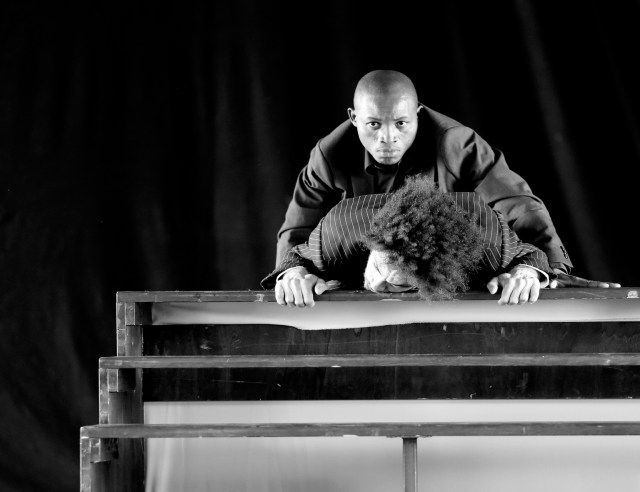
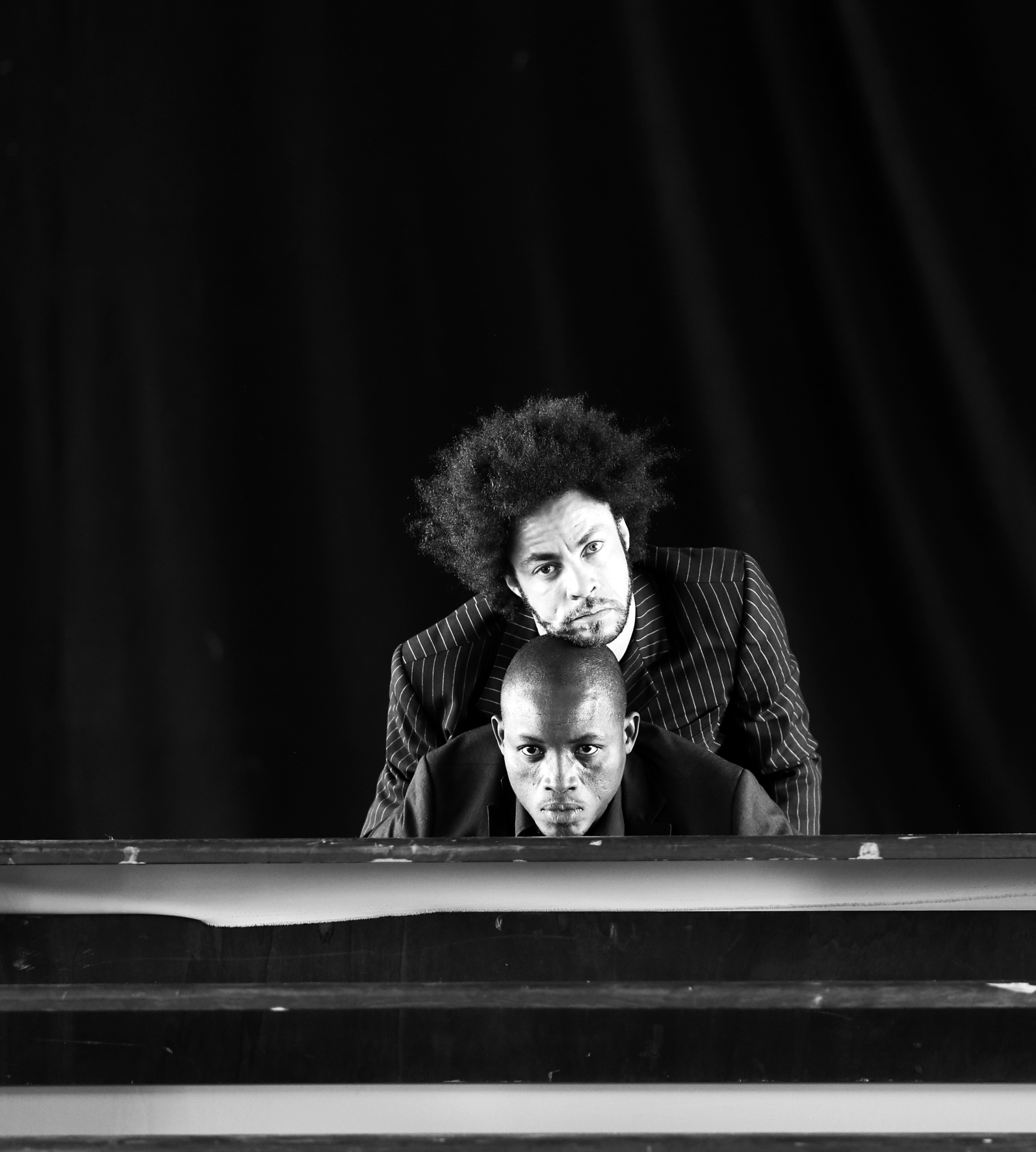
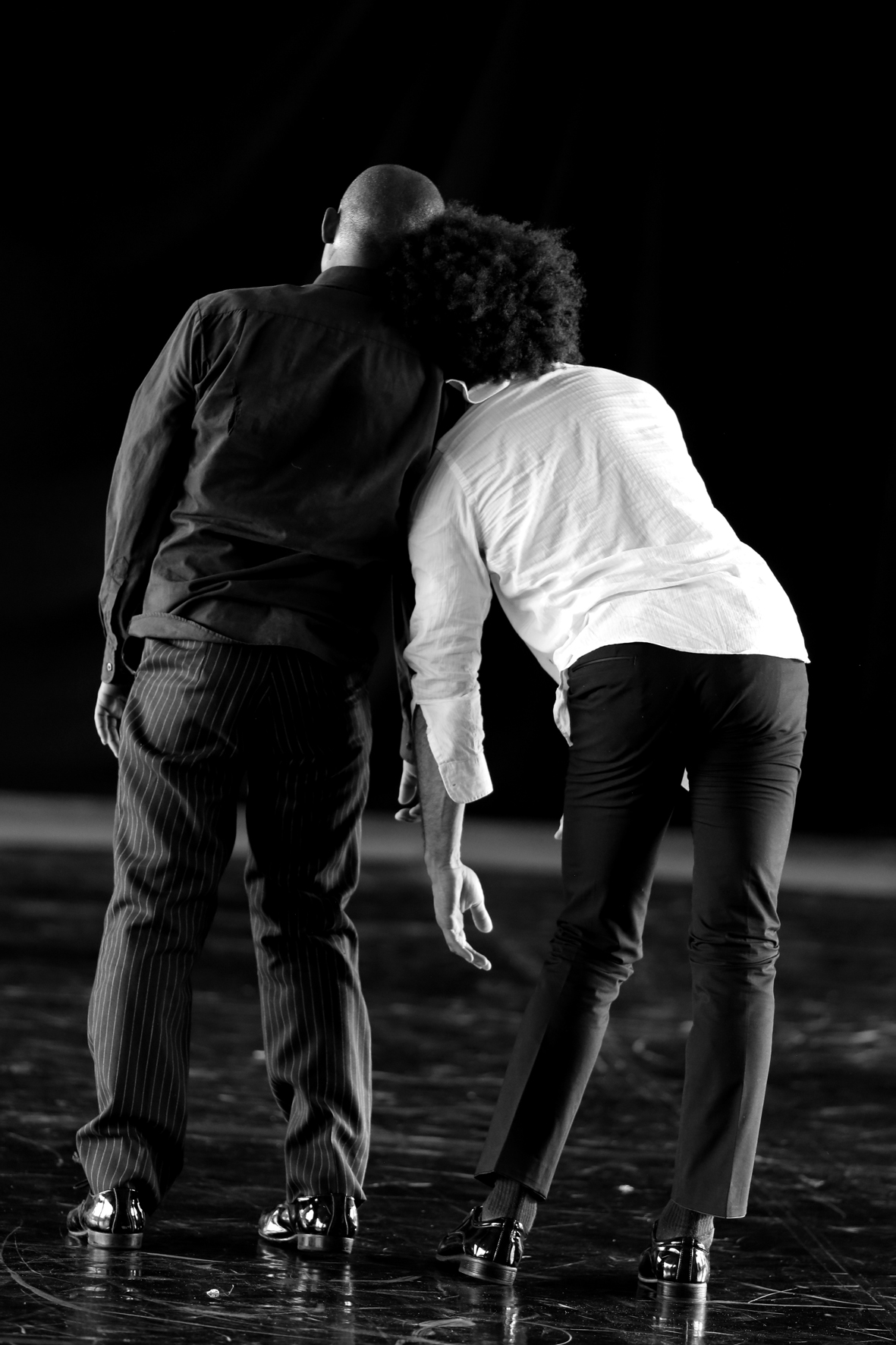
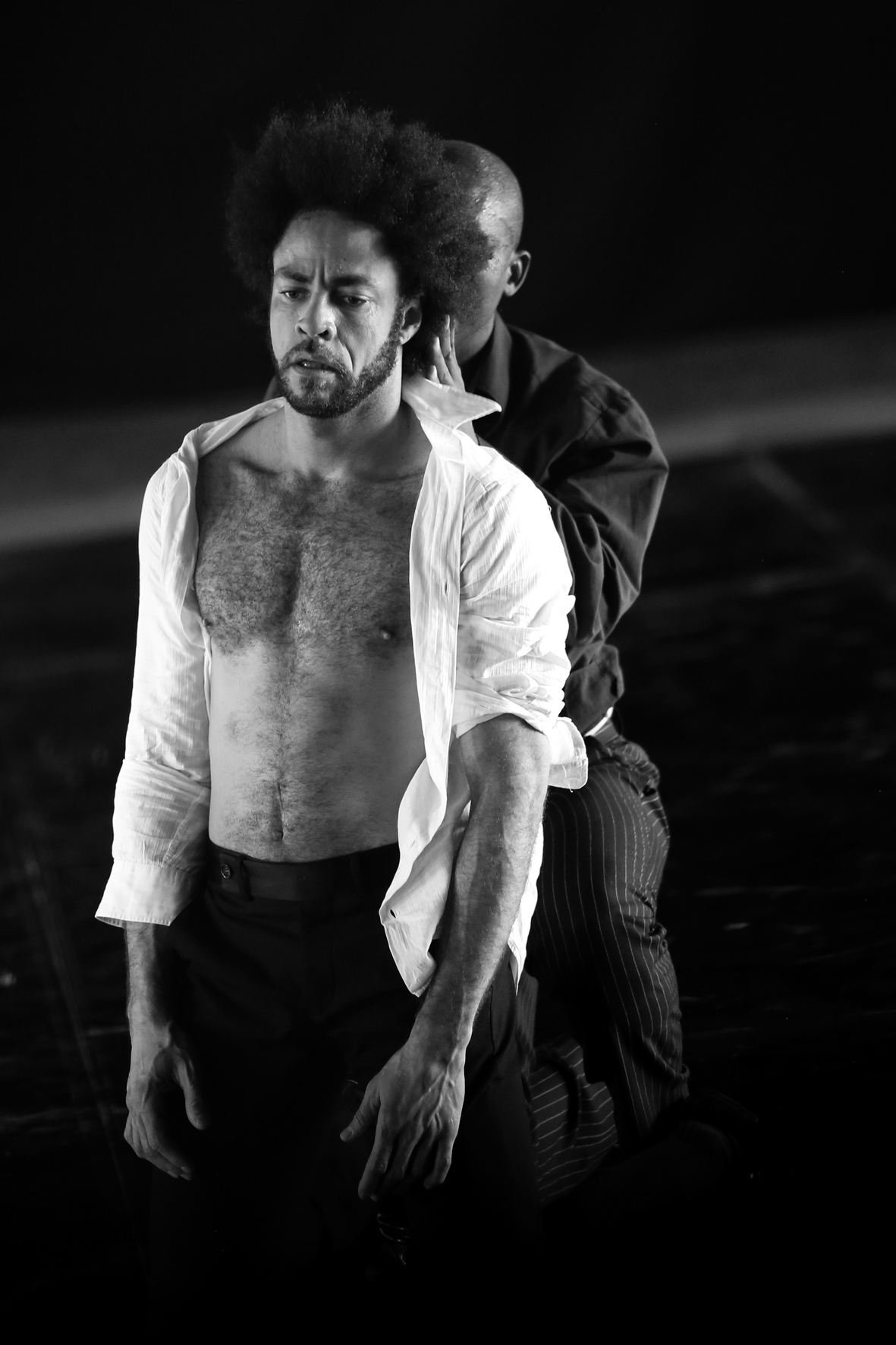
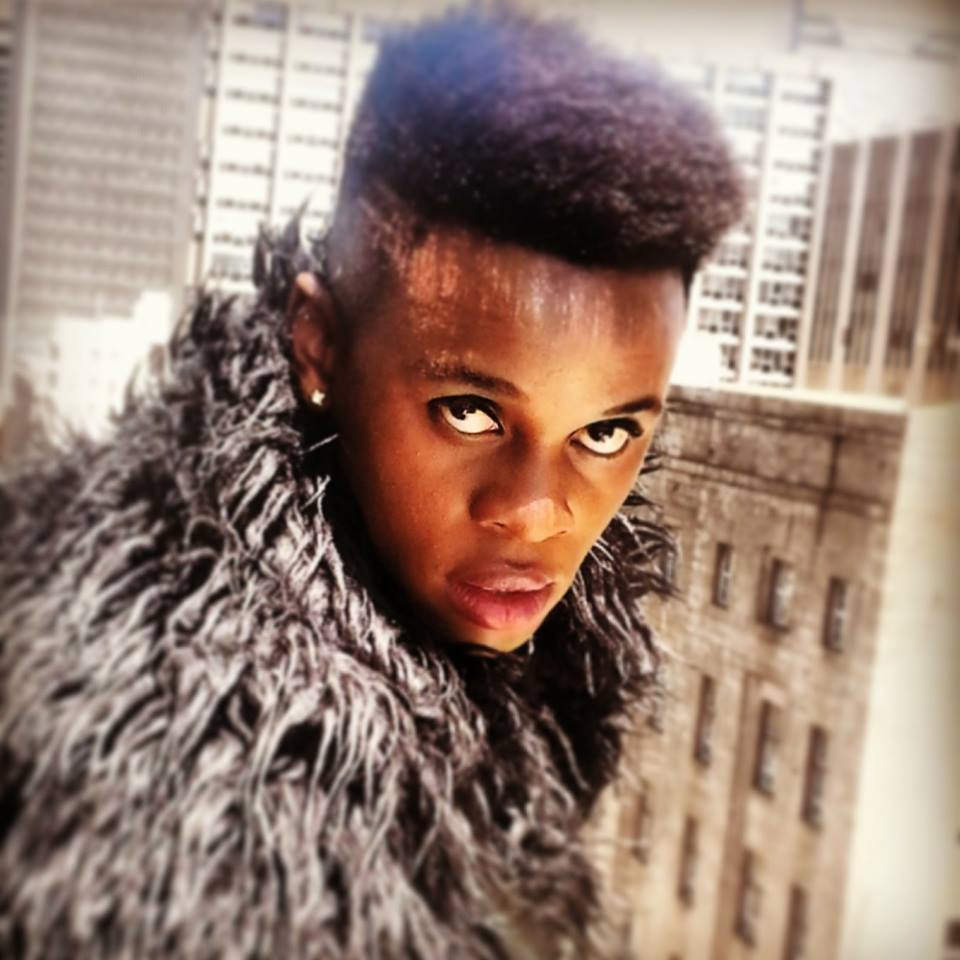
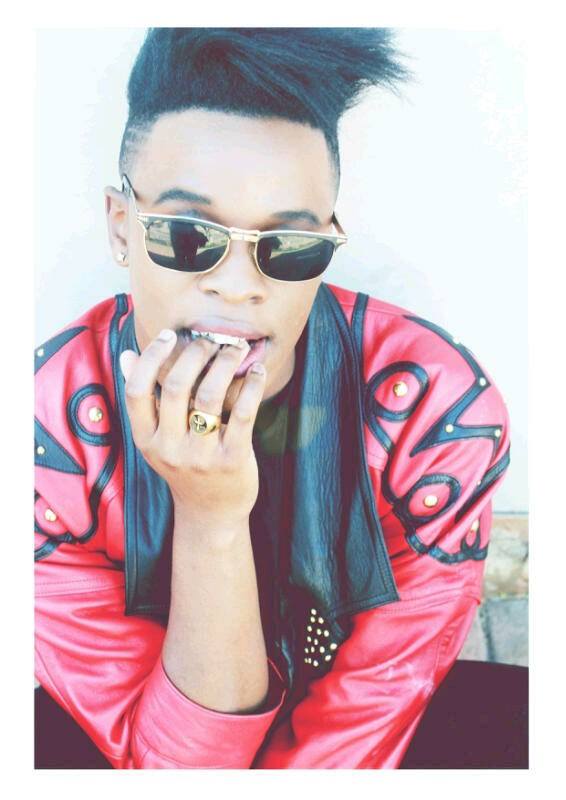
2014 March 26: Lucky Ronni @ Studio 44


2014 March 26:  Lucky Ronni @ Studio 44

Constanza Macraz/ Dorkypark
City: Berlin, Germany
What: During rehearsals

Photos by Zanele Muholi
Camera used: Canon 6d with 50mm lens.
1:8

Lucky Ronnie 3 sm_4551

Lucky Ronnie 4 sm_4573

Lucky Ronnie 5 sm_4520


Lucky & Ronnie embrace sm_4604

Lucky Ronnie2 sm_4577  Lucky & Ronni sm_4572


Lucky & Ronni xsm_4582

Lucky & Ronni sm_4568

Lucky & Ronni sm_4594

Lucky Ronnie sm_4458


About the dancers in these photos
currently on AiR @ Constanza Macraz


Lucky Kele
 specializes in traditional and contemporary African dances. He grew up in Katlehong (ZA), a township in the East Rand known for its criminality and poverty. He translates the memory of a rough childhood in his tormented dance. As a choreographer he conceived many works that have been presented in various festivals in Africa, the US and Europe.

Ronni Maciel was born in Carmo, Brazil. He studied ballet in Rio de Janeiro and danced for the Balé Teatro Guaira, the state ballet of Curitiba, Brazil. In 2006 he joined the company of Constanza Macras/DorkyPark and moved to Berlin. In 2013 he choreographed the German premiere of Chico Buarque’s “Ópera do Malandro” at the Neuköllner Oper Berlin. In the same year he co-choreographed and performed in the film Anahí’s Room by director Ivalo Frank. Ronni’s latest solo piece, “Diversion”, premiered at Platforma in Berlin, 2013.
Interview with Lucky to be aired on Inkanyiso channel (Youtube) next week.


Posted in Beauty, Contributors, Independence, Life, Power of the Arts | Tagged , , , , , , , , , , , , , , , , , , , , , , , , , , , , | 4 Comments

2014 March 28: What we did is history now


2014 March 28:   What we did is history now

Valerie_3743

Valerie am missing you_3790

Valerie & Sly_3755

Valerie & Sly_3749


Val in a joyful mood_3784

Val & Sly sm_3783

sly_3726

Sly_3722

sly sm_3726

Sly sm_3722

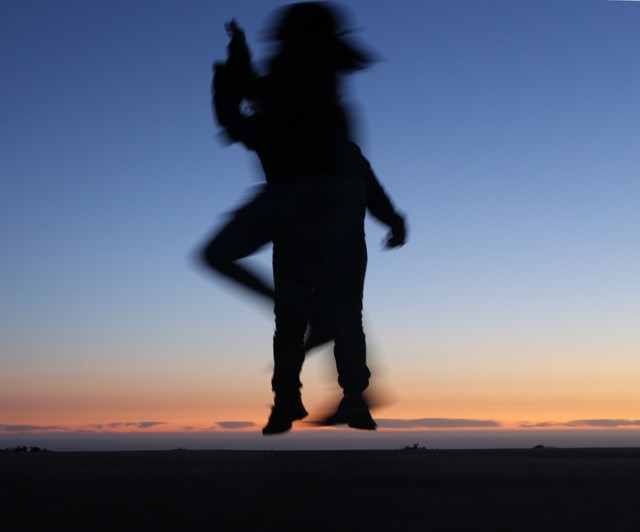
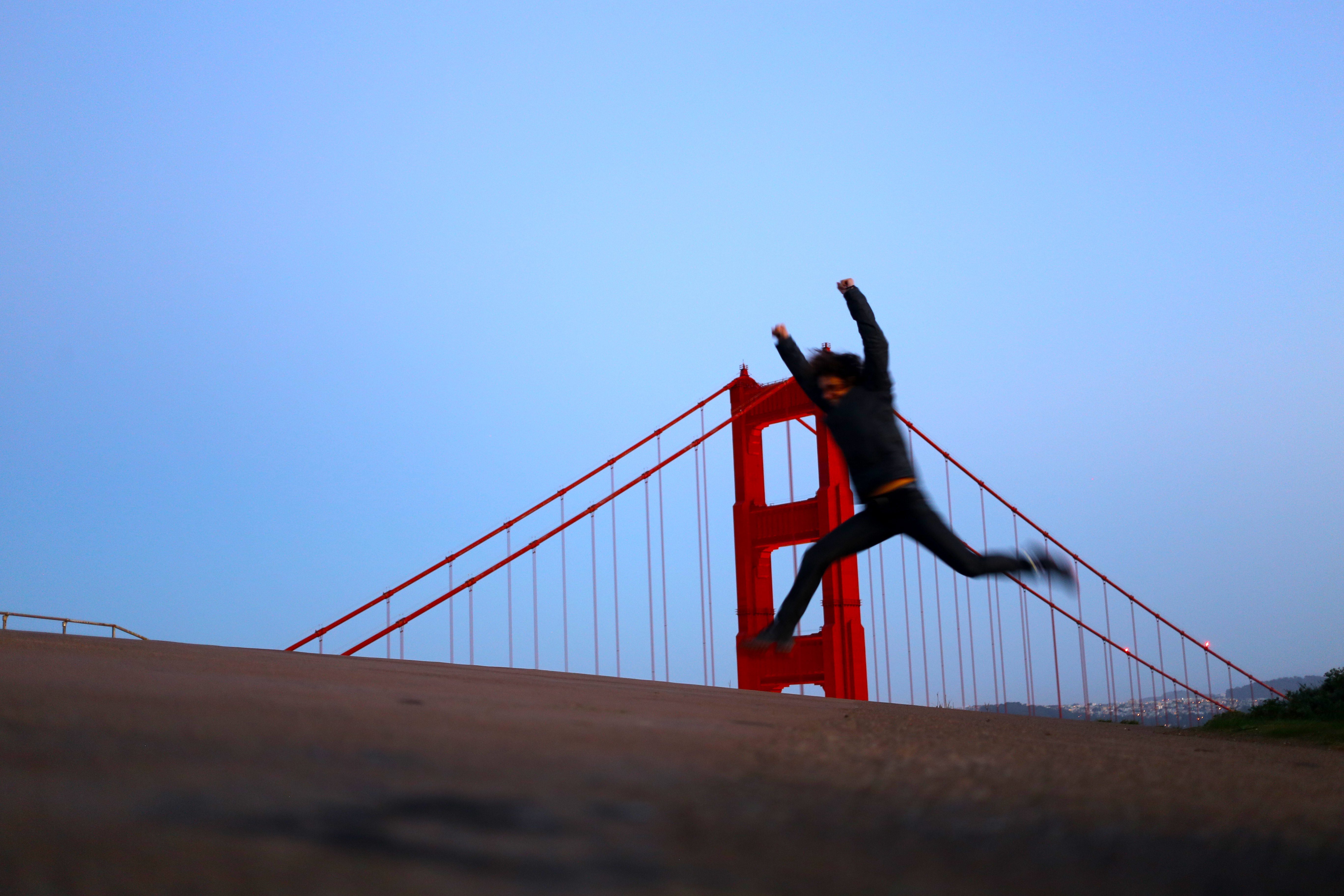
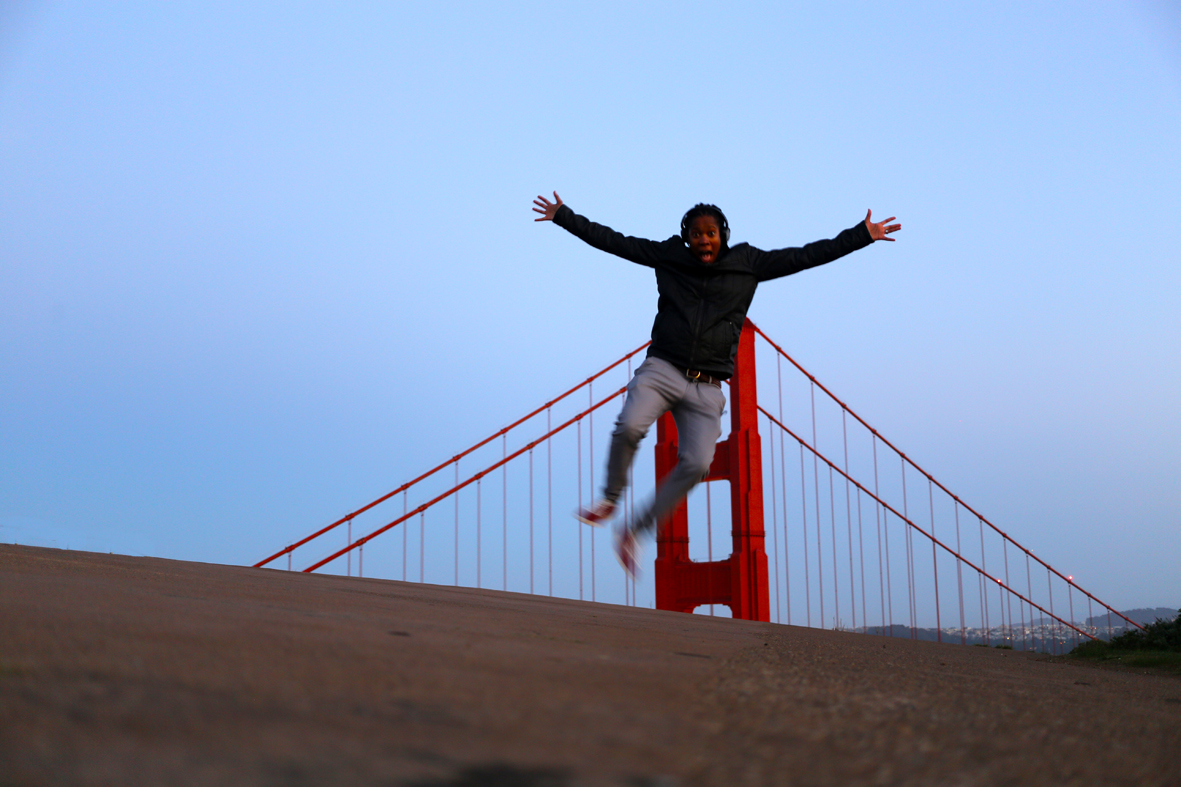
Sly Moon & Bridge_3815

Sly and Valerie sm_3718

Sly and Val off ground_3806  Sly and da moon sm_3816

Sly & Val off ground_3802

Sly & Val off ground best_3803

sly & val off da ground_3782

Val_3789

© Zanele Muholi

Where:  San Francisco Golden Gate Bridge
Country:  United States
Featuring:  Selaelo ‘Sly’ Mannya and Valerie Thomas
When:  14th March 2014
Camera used:  Canon 6D with 85mm lens. f stop: 2.8
How: The photos were taken set on multiple shots.

The story about how we ended up doing this will follow.
Sly and Val will share their part.


To be continued…


Posted in Connections, Contributors, Evidence, Experience, Exposure, Family, Feelings, Gratitude, Human Beings, I can't do it ALONE, I was (T)here, Knowledge, Love, Love is a human right, Media works, Networking, Open relationships, Our lives in the picture, Performance, Photography, Politics of representation, Power of the Arts, Power of the Voice, Proud lesbian, Queer Power, Queer visibility, Recognition, Records and histories, Reflection, Relationships, Sharing knowledge, Speaking for ourselves, Textualizing Our Own Lives, Visual Power, Visualizing public spaces, We Are You, We Care, We Love Photography, We Still Can with/out Resources, Zanele Muholi | Tagged , , , , , , , , , , | 5 Comments

2014 Feb.21: Gay fear, pay… TEAR


Our love contested by critical judgment of the world.
I’ve faced crucifixion.
Like the two thief’s, I’m damned.
Buried and burnt in eternal fire, coz it seems our fire is wrong.
To hell with what we feel- literally.

Layers of blankets can’t hide how u feel about me.
A boiling kettle let’s off steam.

In the face of judgment it’s YOU who are damned.
Damned to live a lie.
Damned you!

I long since embraced myself.
I’ve walked the journey to “being.”
I’m aware, of the stares, chats and murmurs.
Utters of poison to infect my BEING
and lock me INSIDE myself.

But I refuse to die alive.
I refuse to dance to your tune or theirs,
MY LOVE.

The irony of a sacrifice.
Alone in the struggle with you…

Is it love, or fear that prevents you to hold my hand when
I most want you too…when
I most shiver, but walk on…

I battered my pride in exchange for BEING.
A price paid by struggle in my efforts to regain that pride.
And as I shiver and long for you to grab and hold my hand
at the sight of their glaring, piercing eyes.

You walk on…
AWAY from me.
TOWARDS their shadow.

As tears fall IN my MIND…I walk on, smile on my face.

Dared not stumble…
My pride is at stake.
The little gained.

It’s not our love… but my love.
And you call yourself a man…
the irony of that.


by Aluta Humbane
© Feb. 2014


Previous by Aluta


2014 Feb.14: “Black South African visual artist lesbian, Zanele Muholi, in a transparent coffin of love and loss” 


Posted in Gay, Knowledge, Memory, Queer poetics, Queer Power, Queer visibility, Queer Youth, Textualizing Our Own Lives, We Are You, We Care, We Still Can with/out Resources, We were (t)here, When Love is a Human Right, Writing is a Right | Tagged , , , , , , , , , , , , , , , | Leave a comment

2014 March 23: When men fear women will take over

by Yaya Mavundla

Men are so intimidated by women that they are even scared women will take over. It’s a sad case but then again, it needs attention because it will put women’s lives in danger.

This past weekend (20-22 March 2014) I attended Mercedes-Benz Fashion Week Joburg at Sandton Convention Centre and Celebrity Fashion Show at Melrose Arch and in both spaces I faced same challenges.

On Thursday I was not really keen on attending but when Lesiba Mothibe convinced me that we go I thought let me just go especially because I always enjoyed Marianne Fassler and Abigail Betz shows. Luckily we still had enough time to get ready and still catch both shows as Marianne was showing at 19h30 and Abigail at 21h00.

Lesiba was so excited and told me how she adores Marianne Fassler. We rushed and took taxis to JHB CBD and went to the Gautrain at Park Station to Sandton. We got at the station on time and the train took exactly 8min and we were in Sandton. We then immediately rushed to Sandton Convention Centre where the Fashion Week by Africa Fashion International was happening. We collected our accreditation and went inside and sadly, we found the show halfway in, so we could not watch the whole collection by Marianne but we still got to experience the whole collection by Abigail which were both amazing!

During the interval waiting for the next show it got so busy that you literary feel like you are in Times Square in New York. Countless celebrities, cameras flashing as if they had seen Kim Kardashian and Kanye West walk past and you got to experience different looks/fashion.

The backstage was worse in a way that for a moment if you had watched Devil Wears Prada you will believe it that it is déjà vu.

People in general have issues seeing a women carrying a camera, worse if they are dressed up with make-up and the works. I was constantly asked to show my wristband when I wanted to go backstage even though my lanyard was written photographer and all photographers had access to the backstage and after showing them the wristband I will get the look “are you sure you are a photographer?” 

Little did I know that the worst was yet to come! When Abigail Betz show started I decided I would not sit in my allocated seat but will stand where other photographers are. The last time I saw such angry people was on a movie I watched at the Out In Africa film festival opening a years ago that I even forgot what it was called. Men were so angry that I had come to distract them. I really do not know how because we all had the same view of the runway. I was constantly asked to move because they are trying to take photographs of the models but mine was “I am doing the exact same thing you are trying to do, so let’s respect each other”. They really didn’t get the idea of why would someone with make-up and high heels be a photographer, it’s for men.

Just after the show, people that knew me asked me questions, if am I now a photographer?
Why would I do men’s job, but still the same people wanted me to photograph them and asked questions like “are these going to be on your blog?”
“When can I check
it out” I’m like people are so typical, it sad.

Just when I thought it was better, when I was at the Celebrity Fashion Show I felt like it was World War III. I was literary attacked by one photographer who came to me and said I’m blocking the view for the people who are seated, I mean the runway is like approximately 110 metres long.
I couldn’t believe it!
My response was, “where do you come in? can’t they say this themselves?”

 “Well I will not move because basically what you want to do is stand here on the same position I’m standing” He decided to move and go somewhere else.  From that experience I learnt that most men are cowards, they know there are always people who are capable of doing what they do better than them.  People that are women specifically have chances of making it as big in the industry that is associated with men. That boosted my confidence and love to photograph events.
The power we possess can make the world be in a stand still.


To interact with me follow me on twitter and Instagram @YayaRSA.

You can follow Inkanyiso on twitter @Inkanyiso_Org or Zanele Muholi @MuholiZanele


Previous by Yaya

2014 March 25: Mzansi reacts on Mzamo “Mzamie” Gcabashe eviction from Big Brother


Posted in Another Approach Is Possible, Articles, Fashion, Fashionista, Friendships, ReClaim Your Activism, Recognition, Relationships | Tagged , , , , , , , , , , , , , , , , , , | Leave a comment

2014 March 25: Mzansi reacts on Mzamo “Mzamie” Gcabashe eviction from Big Brother


by Yaya Mavundla

Bubbly, honest, fashion forward, dramatic and of course smart are some of the things that comes up when one thinks of the KwaZulu Natal, Durban born Mzamo Gcabashe.
Amongst so many things that he does, he’s such a great dancer and singer. I remember when I first saw him dance to a Beyonce hot single “Single Ladies” at Miss Gay Durban 2010 that I had booked him for to perform at I was blown away!
I literary melted!
Such a great performer that some of our artists fail to deliver in their concerts.

Mzamo Gcabashe (2013) Photo by Zanele Muholi

Mzamo Gcabashe (2013)
Photo by Zanele Muholi

I then saw him perform again at KZN LGBTI Fashion Show where I was one of the models in 2010, such a great voice. He sang a song by Lady Gaga, “Bad Romance” and the whole auditorium came to a standstill.

When he told me he was in Joburg I knew he is here to work and he will make it, especially with such a great combination he has, they call it a full package. I always say talent isn’t good enough on it own and I know with Mzamo it is indeed a full package.

Early last month I heard he will be on Big Brother Mzansi and I was so excited. Not only because I know him on a personal level and as a friend but with the fact that he is openly gay, smart, knows his story.  What was the most important fact was that he won’t make fun of us on national television and will be the total opposite of what the society perceive when they think what Black Gay Man is like or how  he behaves. I knew I could count on him to changing such stereotypes and I was right.

On the first day of Big Brother I checked my twitter and came across @TrendsSouthAfrica tweet #Mzamo is now trending in South Africa I was not worried at all that he might be trending because of the wrong reasons.

I then clicked on #BBMzansi which is a hash tag of Big Brother on twitter and what I read there was amazing. The fact that people acknowledged the fact that Mzamo is Gay but behaved just like anyone else who the society consider normal.
People were praising Mzamo on twitter, I was so happy.

I knew he was not going to win million rand, for one, they expected a Gay guy who will be over the top, too much make-up, someone who will subscribe to what seems normal and exciting on Big Brother and someone who will basically seduce men because they are Gay. We all know that in the world we live in, Gay people are associated with sex and drama which is what I always thought it’s sick and I can’t associate with people who think that about me! Mzamo didn’t do that, he proved the whole nation wrong.

As smart, consistent and frank as Mzamo is, that not what Big Brother wanted for them to survive and get more viewers. We all know, TV programmes survives not to be canned because of the numbers, no numbers, no slot on TV. Mzamo was perhaps a let-down to the producers and people at home who find entertainment when a black gay guy or anyone else do silly things such as the incident of Lexi and Mandla who had sex and their pictures of the two naked men went viral on social media, and of course that attracted more people to watch the show.
Mzamo didn’t do any scandals that will attract more viewers and it was time for him to go.

What I know is that most people especially his parents and friends are proud of Mzamo.
 No one will ever search for Mzamo on google and read about his dirty laundry.
For me, Mzamo being on TV is so much about activism and that will help sensitize most people in our society.
I’m sure there are parents who have changed their minds about their children after watching Big Brother. There are parents who now understand that all the stigmas that are associated with LGBTI people are actually not valid. Mzamo made us as LGBTI people look normal, which is what the people we grew up with fail to understand about us. I am proud.

Mzamie, a photo grabbed from his facebook album.

Mzamie, a photo grabbed from his facebook album.

When Mzamo was announced as one of the house mates that were evicted I was sad, I went on twitter to check what the rest of the people who follow Big Brother Mzansi thinks.

People were furious, they were sad and they didn’t expect it.

The eviction happened after I read a tweet from Candice Nkosi “@Leornard_Sifiso: Umzamo akayi ndawo” she tweeted.
I read harsh tweets from others that read: “BULLSHIT! I’m never watching Big Brother, how could they let Mzamo go”, the other one read “They want people who will have sex, kiss on screen and abuse alcohol and Mzamo was the total opposite hence the eviction” while the other one read, “Ay ave ehleba, akahambe”.

Reading all these tweets made me realise that Mzamo made such an impact while on Big Brother.


"This is the future... watch out this space"

“This is our starlet … watch out this space”

To interact with me please follow me on Twitter and Instagram @YayaRSA or follow Inkanyiso AND Muholi on twitter @Inkanyiso_Org @MuholiZanele


Previous by Yaya


2014 Feb.8: Mixed emotions at Miss Valentine 2014 in Daveyton


Posted in Allies, Fashionista, Out Loud & Proud, Power of the Arts, Power of the Voice, Privilege, Queer Africa, Queer visibility, Recognition, Records and histories, Respect & Recognition from our community, revolution, Self acceptance, social activist, South Africa, Stylish, Talented, Textualizing Our Own Lives, Together we can, Townships, Visual democracy, Visual history is a Right not a luxury, Visual Language, Visualizing public spaces, Vote, We Are You, We Care, We Love Photography, We Still Can with/out Resources, Writing is a Right, Youth voices, Zulu is a South African language | Tagged , , , , , , , , , , , , , , , , , , | 4 Comments

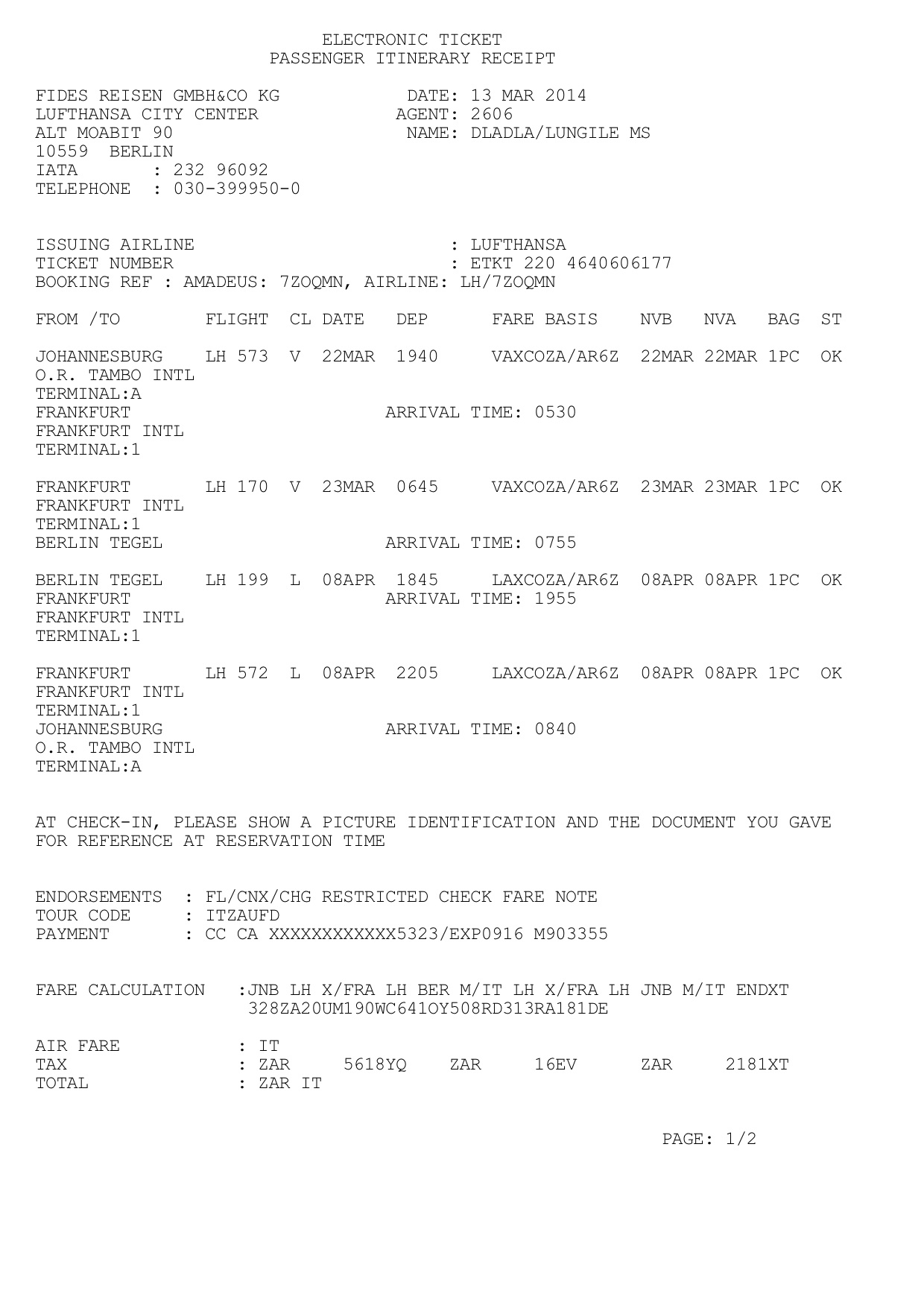
2014 March 20: Black lesbian denied Schengen visa by German Embassy


The invitation letter that Lungile received from DorkyPark. Author's signature was removed for security reasons.

The invitation letter that Lungile received from DorkyPark. Author’s signature was removed for security reasons.


“For reasons unknown”

Lungile Dladla, a South African lesbian, activist and participant in the world acclaimed Faces and Phases portraiture series by 2013 Prince Claus Laureate, Zanele Muholi, has been denied a visa to travel to Berlin, Germany where the series is showing as part of a larger exhibition at Schwules Museum.

Dladla was invited by Constanza Macras/ DorkyPark German theatre in Feb.2014.
She was scheduled to travel to Berlin on the 22nd of March for a duration of two weeks to perform her poetry and songs in collaboration with Muholi and a member of the theatre. She has been replaced by Maureen Velile Majola, an activist and poet who already had a Schengen visa in her possession at the time of the crisis. Unfortunately, the hosts had already purchased the ticket for Dladla and were forced to change it at a price.

The organization Inkanyiso was founded by Muholi to work hand in hand with the participants in her visual projects, as contributors and affiliates, both home and away. It aims to provide opportunities for the individuals featured in Muholi’s work to meet with and perform for different audiences in various places as an interactive and learning opportunity for both parties.

A spokesperson for Inkanyiso has expressed deep disappointment at the rejection of Dladla’s visa application:

“We were dismayed that her visa application was denied, for unclear reasons. There could be a myriad of reasons that stopped them from issuing the visa because they cannot even state clearly to the host at Dorkypark why Dladla was not granted visa by the German Embassy.

Was it because she is unemployed, although all her travel costs were fully covered as well as her accommodation and living expenses during the two week stay.
Was it because she is a black lesbian – out – activist?
Was it because she is HIV positive, as she narrated her story in her  published article?”
2013 February 28: I am not a Victim but a Victor…?

So many questions, all of which leave a bitter taste. One never likes to acknowledge that one has been discriminated against but it appears likely. And if “common sense” applies, is it the case that unemployed people cannot travel anywhere because they are poor?


Berlin e-ticket Dladla

Dladla presented all the documents requested for her application: return tickets paid in full, travel insurance and a commitment from her host to cover her food and expenses in Berlin. Most importantly, she was a participant in an exhibition and was due to perform in a reputable Berlin theatre. This expectation was cruelly shattered.

Embassies should be made aware how insulting it is that we in South Africa open our gates for their citizens to enter but when we want to visit their countries, they make it impossible, even with the requested supporting documents.  I think that it should be made known to the embassies that contrary to popular belief, we do not all wish to live overseas.  We love our home country and relish our climate, good food and the kindness of our people. However, we also can expand our horizons by travelling and experiencing other culture.
Obviously the scales of power are tipped but something needs to change.  It’s a new day and a new dawn is breaking.

Other South Africans invited by Constanza who were granted visas include:
Mamela Nyamza who will be performing at Studio44, Berlin on the 28th & 29th March 2014.
Lucky Kele and Ronnie Maciel (Brazil), both will be performing @21h00 on the same day.
Maureen Velile Majola will also join AIR, Zanele Muholi & Jelena Kuljic in a Live Performance on the 5th April 2014 at STUDIO 44.
Mmakgosi Kgabi from Botswana now based in SA will perform Shades of a Queen at the same studio on Sat. 29th March 2014.


Posted in Allies, Another Approach Is Possible, Archived memories, Archiving Queer Her/Histories in SA, Art Is A Human Right, Articles, As we are, Captioned, Creative writer, Creative Writing, Creativity, Lesbian Youth, LGBT rights activist, Life, Life Stories, Media works, Networking, Photography, Political Art, Politics of existence, Politics of representation, Poverty, Pretoria, Race, Reflection, Relationships, Sexual minorities, Sexual orientation, Visa application | Tagged , , , , , , , , , , , , , , , | 1 Comment

2014 March 21: Whose Democratic rule?

by Thozie Mathe

South Africa passed its first democratic Constitution in 1996, ending a 50-year regime of institutionalized discrimination known as apartheid, and 300 years of legal discrimination. The new laws, in contrast, institutionalized the principles of non-discrimination in the Bill of Rights, explicitly prohibiting   discrimination on the grounds of gender and sexual orientation. In addition it created various institutions responsible for safeguarding the principle of non-discrimination and the Bill of Rights, amongst which are the Commission for Gender Equality (CGE) and the South African Human Rights Commission (SAHRC), both considered in this paper as NHRIs (National Human Rights Institutions).

Despite the legal speak in the Constitution; the message has not trickled down to layman South Africans.  Evidence shows that the high rates of deaths in the LGBTI community are a direct result of hate crimes. Who do we point fingers at and blame?
Who is killing LGBTI people?

I start by pointing my finger at families who refuse to accept their gay children.  They are committing hate crimes. It’s amazing that people love gays and lesbians from afar but cannot handle having them in their own families. The people that affirmed me were the ones that I was not related. On the other hand, my family members have no qualms appreciating and cherishing other gays and lesbians from other families.  Because my own mother and father are openly hostile to my sexual orientation, it allows my neighbors to attack me at will.  This just makes me an easy target because gossip travels fast, and soon everyone will believe I do not deserve to exist because my own parents do not.

Anguita (2010 p.7) states that,

“Despite the protection and legal equality of women and LGBT (lesbians, gays, bisexuals and trans) people, the social reality is quite different. Gender-based violence is a widespread problem in South Africa, which has the highest rate of rape in the world. And LGBT people are frequently attacked, both verbally and physically, because of the widespread intolerance and prejudice against them in the population.”

The Hate Crimes Statistics Act of 1990 defines hate crimes as,

‘‘Crimes in which the defendant’s conduct was motivated by hatred, bias, or prejudice based on the actual or perceived race, color, religion, national origin, ethnicity, gender or sexual orientation of another individual or group of individuals’’

That means any form of hate against homosexuals is a hate crime. It’s difficult to wrap around one’s mind how parents can despise their blood because they disapprove of their intimate partner. It is a shame and almost a smite to God.  Such crimes serve to victimize and intimidate not only individuals, but also entire groups of people. The threat of being victimized because of some status characteristic, such as sexual orientation, promotes silence and invisibility amongst members of the target group.

By grounding homosexuality in biology, many gay rights advocates hope to establish and legitimate the naturalness of homosexuality, thereby proving that gays and lesbians deserve the same civil rights afforded to heterosexuals.  Because of the negative connotation that anti-gay forces have imparted on the word ‘choice’, it appears that gay rights proponents have distanced themselves from the word, not wanting to align themselves with anti-gay rhetoric.

Seeking to reject anti-gay assertions that being gay is a choice, gay rights advocates have resorted to an essentialist and biological discourse concerning homosexuality.   The word ‘choice’ has indeed been employed by anti-gay rights advocates in negative and condemning ways. Underneath the anti-gay rhetoric that being gay is a choice is the notion that it is the wrong choice. The response to anti-gay groups’ should be the message of the ‘born this way’ response.  It says sorry I’m gay, but I can’t help it – I was born this way.

Emphasis should not be placed on choice, but rather explore what diverse ways individuals create and experience sexuality, desire, and romance?  Ultimately, what are the various ways individuals choose to love one another?

Maybe we need not to be afraid then of the word ‘choice’ and instead use it as a source of pride, empowerment, and political force. Therefore the rainbow nation and my fellow comrades in force  and the national gay rights should emphasize the need to choose, choose what to wear, choose what to eat, choose who to love, choose which career to take, choose what to say, choose, choose, choose!. By saying so I feel like we all have the responsibility to choose the being that you want to be.

Fox p. 42 says

The “I was born this way” mantra is restrictive and defensive. More empowering and progressive mantras for the gay rights movement might be: I choose to be as gay as I want; I support the freedom to choose who and how I love; or Love is always a choice.”

I am in agreement with that. We need to expand the sentence to a much more elaborative sentence as per Fox’s assertions.

Classifying individuals as either homosexual or heterosexual creates a false divide between bodies, ultimately reinforcing a sexual hierarchy. Heterosexuality is viewed as the natural, default mode and homosexuality as an inferior deviation from this. Thus heterosexuality becomes the dominant sexuality and homosexuality in need of explanation, tolerance, or subjection.


References

1.A paper by Anguita L.A, Tackling corrective rape in South Africa
2.Fox C., Articulating Sexuality
3. South African Constitution

__________________


‘Natural’ at home ‘choice lady’ outside

My heart pains
My soul thrives
My breath is wasted

No longer do I count the days of going home
Cities have been my home
Even then I am scared, I shiver, I am traumatized
My living ancestors would come after me

The horse riders will come after me
I am in a black zone
If I meet any home girl they will tell my ancestors about me
Then they will come after me.

I live a double dotted life
At home where acceptance is rare
I am a girl
A girl that should be married
A girl that should be dragged by the boys
For them that is a norm
For them that is natural and God likes it.
I am to be called by names mfazi to makoti
I am supposed to charm men for I am their ground

I have surrendered myself to rape
Before my own people organize it for me as a cure
I am natural at home
I have sustained sexual pains from the one my parents chose for me
I told him three times before he penetrated me
I screamed like a baby but he was on top
I told him it’s painful and he;
He  said ‘kuzoba ngcono’ (it will be better)
I told him not to do it before I bleed
But it was late I was all red

My home was small
Couldn’t even see the cow I live in the kraal
For a minute I felt like it’s better to…
To talk to the cows than humans
For me my family was just strangers I meet in the market.
I was told to allow boys to grab me as long as they wanted.
For a minute I said “I hate men”
Every time I went to fetch water that man was at the tap
He would always whisper “I want more”
And eventually he got more when I went to the shop
Then I did not cry………I was strong………

Now I am in town
I met people of my kind
Kept my Zodwa’s name in my heart
Could tell her what I went through at home…….

Here I live like I am in heaven
I live like God is on my back
I swear God is only found in towns
My pain is gone but the scars left

I wear what I want to
I kiss who I want to kiss even in my dreams
I talk to her any time but not about everything

If I talk to her about this she will leave me
I live a double life
I live a life of being un-cherished to being cherished
From unaccepted to accepted
From being unloved to loved

I live a beautiful life where God exists
Until they kill me in town I shall rest
As long as I won’t feel much pain as that of home
I will die happy and excited
Then tell God about what that man did to me
And therefore indicate to him that I repent if homosexuality is wrong
But it is a good life I ever had than that of sleeping with a man.

My heart is so strong it awaits rest.

________________

About the author

Thozi  Mathe is a student at Walter Sisulu University (WSU) in Umtata.
She is currently studying towards her B.Ed degree.
She is an LGBTI activist interested mostly in gender studies.
She is a poet and contributing writer for Isivivane 7, an anthology of poets, writing mostly gender based poems.
She is the founding member of Rainbow-WSU, an LGBTI society at WSU.

Posted in Homosexuality, Life Stories, Living by example, Love, Walter Sisulu University, We Are You, We Care, We Still Can with/out Resources, When Love is a Human Right | Tagged , , , , , , , , , , , , , , , , , , , , , , , , | 3 Comments

2014 March 21: Part 2 A retrospective on my life and work as an activist in South Africa

Johannesburg, May 17, 2013

(Part 1 describes how I first came to South Africa and became involved in lesbian and gay activism here, namely, through my role as the J-FLAG representative to the ILGA conference hosted by Johannesburg in September 1999. The saga continues…)
Part 2

I met a number of big names at that ILGA conference: Prudence Mabele, Nomfundo Luphondwana, Thulani Mhlongo, Peter Mohlahledi, Mazibuko Jara, Carrie Shelver and Sharon Cooper, to name a few.
And I met Zanele Muholi. A smooth-talking, quick-acting “playa” who seemed to be everywhere at once, she fascinated me.
She was a diamond in the rough, yearning for more but as yet not even imagining the major force for black lesbian visibility that she was to become. Then, as now, her mind skipped from idea to idea like a child happily playing in puddles.
Two ideas that have remained constant with her, however, were the need for black lesbians to organise so that we can speak on our own behalf, develop our own capacity and resources, and claim our social and political space; and the importance of documenting our lives.

But to be honest, when I moved here to join her eight months later, activism was the furthest thing from my mind. Apart from simply experiencing myself in a different space for a while, I had two imperatives – explore the relationship with Zanele, see where it took us; and develop my career as a mediator, counsellor and trainer. These were underpinned by what continues to be the primary driver behind all my major decisions – the desire and willingness to evolve spiritually.

And so the move to SA – which involved handing over my law practice to my junior associate, selling whatever disposable property would move, and sub-letting my flat with all my cds, photos, objets d’art, books, furniture and other worldly possessions that I was not taking with – was, in essence, a giant leap of faith.

I have had to call on that faith many times in the years since. The first occasion was when I went to renew my visa three months after my arrival and was told, instead, that I had two weeks to leave. I’d come in on an exemption which was not renewable, and the clerk dealing with my case was unimpressed by my argument that the decision in NCGLE vs the Minister of Home Affairs (1999) gave me spousal immigration rights.

Luckily, an immigration consultant who just happened to be right at that counter in that moment to overhear my plight, was. He was white, gay, and eager for the opportunity to develop a speciality in such cases, and so offered to assist me for free. Although I don’t have official records to prove this, I’m convinced that we were the first black lesbian couple to take advantage of the space opened up by that decision, even before the Dept of Home Affairs had had a chance to make the necessary regulations to give effect to it.

But getting my permanent residence permit turned out to be the least of my challenges. Inasmuch as I felt that South Africa needed, and still needs, the services of skilled mediators, I could not believe how difficult it was for me to find work in that field. I found myself wondering if Zackie Achmat, the General Secretary who presided over the dissolution of NCGLE, had made good on his threat to have me blacklisted, when my report from the mediation at the conference disclosed that he was a primary target of the discontent!

In between the search for work, I kept myself busy attending workshops and doing short courses, including the Lifeline personal development and counselling skills programme, and the FAMSA Divorce Mediation and Basic Counselling Skills courses. I even volunteered at both organisations for a while.

My first paid assignment was from Pumi Yeni – representing a provincial HIV/AIDS organisation whose name I can’t quite remember – to do a workshop on Community Leadership and Project Management for a group of community workers, mostly gay, drawn from various organisations in and around KZN.
My next was to run a women’s project at Behind the Mask (BTM), then in its nascent stages. The project comprised a women’s rights workshop, and the pilot of a skills training programme for black lesbians.

Both were through Zanele’s connections – Pumi was her home girl, and she met Bart Luirink, the Dutch journalist/activist who founded BTM, at that same ILGA conference where she met me.

Zanele had a great deal of faith in me, much more than I ever had in myself, and she believed I was meant to do great things in and for the LGBTI movement/community in South Africa. She convinced me that my inability to find work in any other sector was a sign that activism was my destiny.

 (to be continued….)


About the author

DONNA A M SMITH is a poet, life coach and facilitator based in Johannesburg, South Africa.
She can be contacted at powersource.smith@gmail.com

Posted in Behind the Mask (BTM), Dept of Home Affairs, Know Your SA Queer History, Lessons learnt, LGBTIs in Africa, Life, Life Stories, Love | Tagged , , , , , , , , , , , , , , , , , | Leave a comment

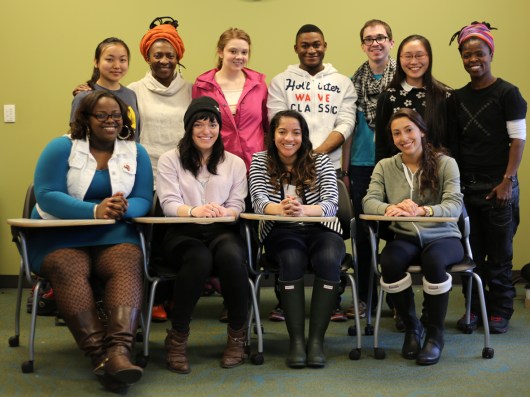
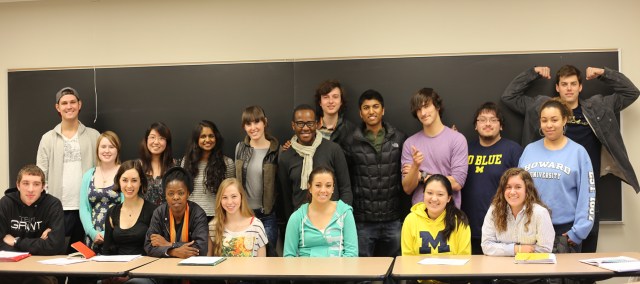
Photo of the Day from Human Rights and LGBTI in Sub-Saharan Africa class

Photo of the Day from Human Rights and LGBTI in Sub-Saharan Africa

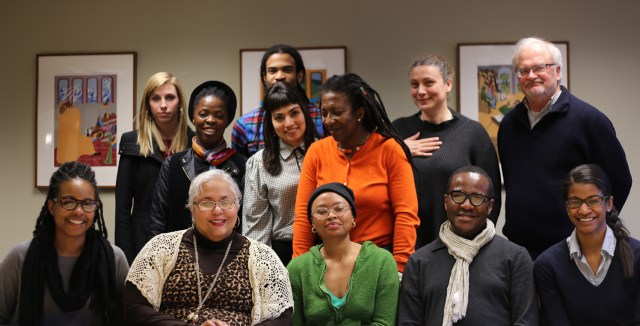
Top left – right: Van, Frieda, Ally, Francis, Brandon, Minami, Muholi
Bottom row from Left to Right: Katie, Vivien, Munira and Gabby
© Valerie Thomas (2014/03/19)

by Prof. Frieda Ekotto
Department of AfroAmerican and African Studies
UNIVERSITY OF MICHIGAN

__________________________

Program in International & Comparative Studies, International Institute
Wednesday 12-3pm

Human Rights and LGBTI in Sub-Saharan Africa

This course will approach human rights debates that revolve around gendered and sexualized violence, particularly as it pertains to LGBTI individuals in Sub-Saharan Africa. We will examine how laws serve to repress and mask the pain of disenfranchised subjects, and we will search for traces of what cannot be said in order to address and expose suffering from a variety of angles and reassess the position and agency of the dispossessed. By looking for silent cultural norms and the traces of what cannot be said, we will consider both cultural factors that lead to widespread homophobia and the suffering of individuals who are subject to its power. As part of this attention to unspoken assumptions, we will address preconceived notions about Sub-Saharan African cultures and the LGBTI individuals who live there.

To consider the relationship between legal systems and the silencing of individuals, we consider how and why governments seek to criminalize private activities that do not infringe upon the rights of others or in any way justify the intervention of the state. We will read theoretical and primary texts and watch films that analyze and critique an essential paradox in our attitude to privacy: some see no problem when a state, in the absence of any proven harm, tramples on privacy in cases of homosexuality, but find no contradiction when the same state is reluctant to violate the sanctity of the private sphere in instances of extraordinary harm, such as domestic violence against women and children, a scourge that blights the lives of many. We will also consider how taking a balanced approach to the right to privacy is made even more complicated by the fact that attitudes towards privacy are often shaped by culture or religion, and thus by deeply held beliefs.

Course themes will include the study of violence and other human rights abuses that stems from homophobia in relation to the following: cultural and political iterations of private and public space; violence perpetrated or condoned by states (such as violence by law enforcement and criminal justice systems); depictions of LGBTI individuals in popular media sources; and the silencing of the voices of LGBTI individuals who wish to speak about their lived experiences. These themes draw from current and groundbreaking conversations about LGBTI issues in Sub-Saharan Africa, which have heretofore been left unaddressed.

In addition, while we will focus our attention of Sub-Saharan Africa, students will be asked to reflect upon similar debates that are current in the United States. For example students will apply insights we gain through our theoretical observations to similar topics in the United States, and, in addition to considering local factors, students will consider how international relations—such as the activity of the Christian right in Sub-Saharan Africa or, by contrast, pressure from figures such as Hilary Clinton and Ban Ki-moon, both of whom have made statements against homophobia—become part of human rights conversations within Africa and impact the lives of LGBTI individuals.

[…]

[…]

Texts:

Aidoo Ama Ata’s Our Sister Kill Joy (1977) ISBN-13: 978-0582308459

Chimamundi Ngozi Adichie’s The Thing Around Your Neck (2009) ISBN- 978-0-307-45591-8

Bessie Head’s A Question of Power (2009) ISBN-13: 978-0435907204

Barry, Marima’s The Little Peul (2010) ISBN 9780813929637

Martin Karen and Xaba Makhosazana’s Queer Africa: New and Collected Fiction (2013) ISBN-978-1-920590-33-8

[…]

Articles

– “Karmen Gei: Sex, the State, and Censorship in Dakar” by Steven Nelson (Spring 2011 African Arts, UCLA)

Green-Simms, Lindsey and Unoma Azuah, 2012, “The Video Closet: Nollywood’s gay- themed movies,” Transition, Vol 107.1, pp. 32-49.

Green-Simms, Lindsey, 2011, “Just to see” in Thamirics/Intersecting No. 22, pp. 203-224.

Macharia, Keguro, 2013, “Blogging Queer Kenya” in Journal of Commonwealth and Postcolonial Studies. Vol. 1 No.1, pp. 103-118.

Films:
A Jihad for Love by Parvez Sharma (2007)
Sokari Ekine Presentation: Imagined Futures 2009
Woubi Cheri by Laurent Bocahut and Plilip Brooks (1998)
Getting out of Nkuta by Céline Metzger ( (2010)
Karmen Gei by Joseph Rama (2009)
Dakan by Mohammed Camara (1997)

January 2014
Wednesday 8

-Introduction
Film: Karmen Gei by Joseph Ramaka (2009)

Wednesday 15
Reading:
1)- “Karmen Gei: Sex, the State, and Censorship in Dakar” by Steven Nelson (Spring 2011 African Arts, UCLA).
2)- “The Erotic Tale of Karmen Gei: The Taboo of Female Homosexuality in Senegal” by Frieda Ekotto
Film: Karmen Gei by Joseph Ramaka (2009)

Wednesday 22
Reading:
1)-“Introduction” by Ayo A. Coly in African Studies Review. Vol. 56, No. 2 Sept. 2013. Pp.21-39.
2)-“ A Macro-Level Analysis of Homophobia in Africa”
by Patrick R. Ireland in African Studies Review. Vol. 56, No. 2 Sept. 2013. Pp.47-66.
Film: A Jihad for Love (2007)

Wednesday 29
Film: Dakan by Mohamed Camara (1997)
Reading:
1)- “Confronting the Politics of Nonconforming Sexualities in Africa” by Sylvia Tamale in African Studies Review. Vol. 56, No. 2 Sept. 2013. Pp. 31-45.
2)- “Some Reflections on Postcolonial Homophobia, Local Intervention, and LGBTI Solidarity Online: The Politics of Global Petitions” by Henriette Gunkel in African Studies Review. Vol. 56, No. 2 Sept. 2013. Pp.67-82.

March 2014
Wednesday 12
1)- View Zanele Muholi’s visual work
2)- Research on Zanele Muholi on line
3)- Reading: Bessie Head’s A Question of Power

Wednesday 19
Guest Speaker: Zanele Muholi
4)- Reading: Bessie Head’s A Question of Power

Wednesday 26
Reading:
– Bessie Head’s A Question of Power

April 2014
Wednesday 2
– – Martin Karen and Xaba Makhosazana’s Queer Africa: New and Collected Fiction (2013)

Wednesday 9
– Aidoo Ama Ata’s Our Sister Kill Joy (1977)

Wednesday 16
– Aidoo Ama Ata’s Our Sister Kill Joy (1977)

Conclusion

Posted in Evidence, Experience, Expertise, Exposure, Expression, From Johannesburg via San Francisco to Michigan, Know Your SA Queer History, Response, revolution, When Love is a Human Right | Tagged , , , , , , , , , , , , , , , , , , , , , , , | 14 Comments

2014 March 18: Sharing South African Queer Knowledge with students in America


2014 March 18:  Sharing South African Queer Knowledge with students in America

Photo album by Valerie Thomas

Quote of the day

Is South Africa a country?


Charles G CompLit class _4061

Frieda Ekotto

The University of Michigan

Introduction:

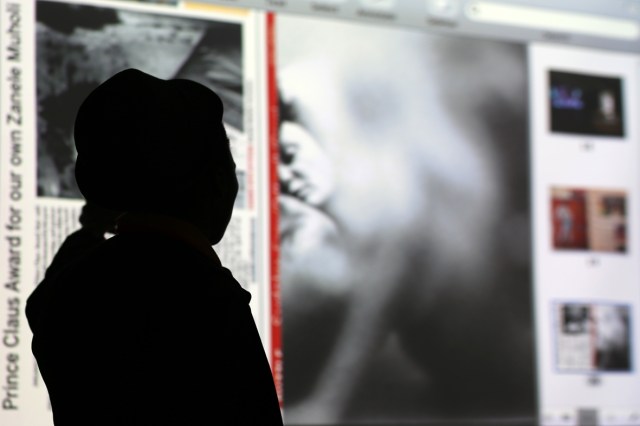
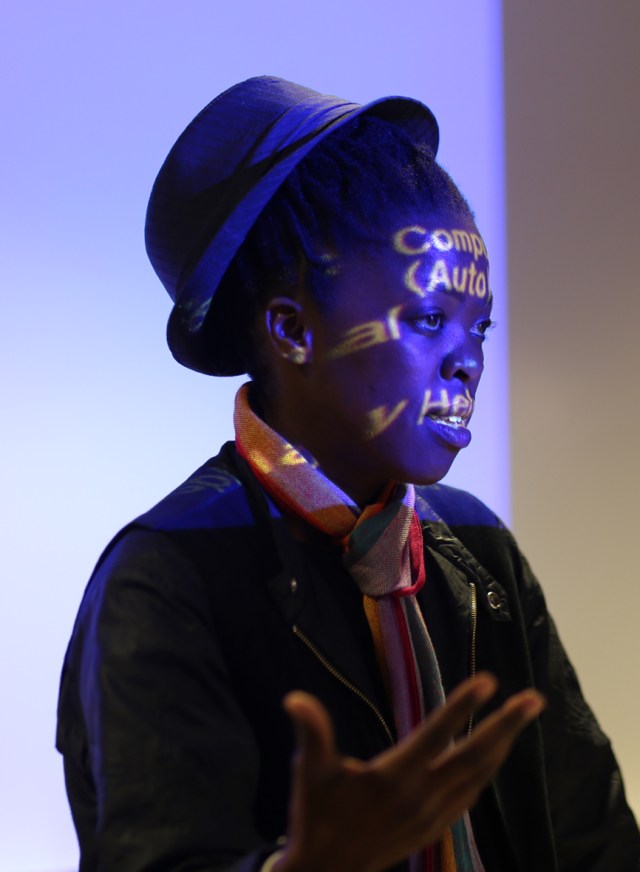
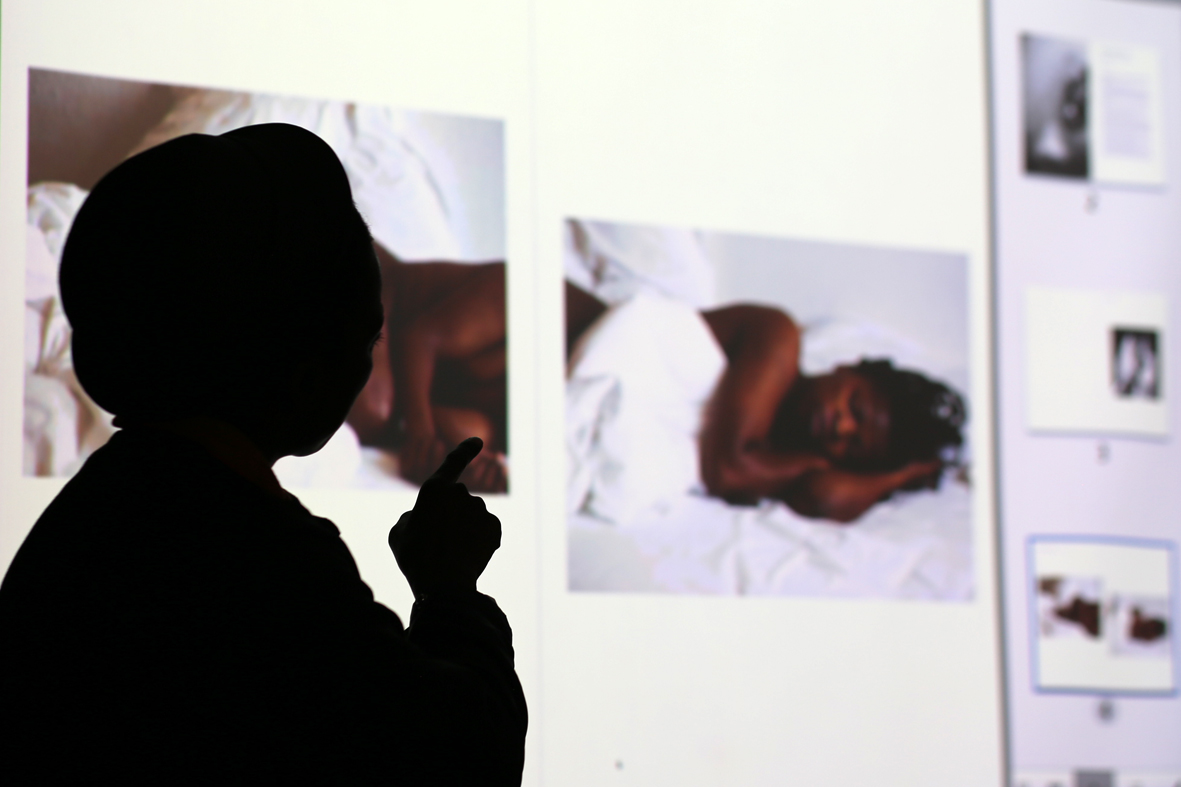
Zanele Muholi Speaks at the Africa Workshop at the University of Michigan, Ann Arbor.

It is my pleasure to introduce to you to Zanele Muholi one of the most celebrated South African Visual Activist of her generation.

A South African artist, Muholi’s visually stunning photographs and films document the beauty and love of black, lesbian South African women. They are part of Muholi’s larger project to create a historical archive that ensures the visibility of the black lesbian community in South Africa, of which she is a part. As she writes, “It is important to mark, map and preserve our mo(ve)ments through visual histories for reference and posterity so that future generations will note that we were here.” In preserving and presenting the histories of black lesbian women, she creates a space for the articulation of their subjectivity, knowledge and experiences.

Muholi addresses political, heteronormative, economic and racial inequalities and injustices by insisting on the beauty and humanity of all members of her community. This allows her to counter rhetoric that demonizes lesbians as well as narratives that represent them simply as victims. Having herself been asked to serve as a research subject for “experts” who wished only to document violence, Muholi decided that rather than allow others to speak for her, and thereby serve as the object of problematic and often fetishizing depictions, she would create her own photographs, films and essays. By producing images that show lesbian women as beautiful and loving, and by stressing their important roles as members of communities, families and the nation, Muholi offers direct intervention into economic, political and social-cultural forces that work to silence their beautiful presence and the many ways that they contribute to society.

Muholi’s photographs are portraits of women who love other women. Sometimes they are couples, smiling and embracing in intimate moments. Sometimes they are single individuals, posing for a portrait. In this way, Muholi’s visual activism is similar to my current book project, Vibrancy of Silence, which explores the lives of Sub-Saharan African lesbian women through attention to silence, desire and love, terms which I have chosen in order to shift conversations about lesbian women in Africa away from violence to their humanity. In this way, both of our projects are part of a larger movement to counter discourses that commodify and pathologize black women’s sexualties.

Muholi’s work is of international importance. It has been exhibited extensively throughout Europe and the United States, as well as in South Africa.

Please join me in welcoming Zanele Muholi to the Africa Workshop.

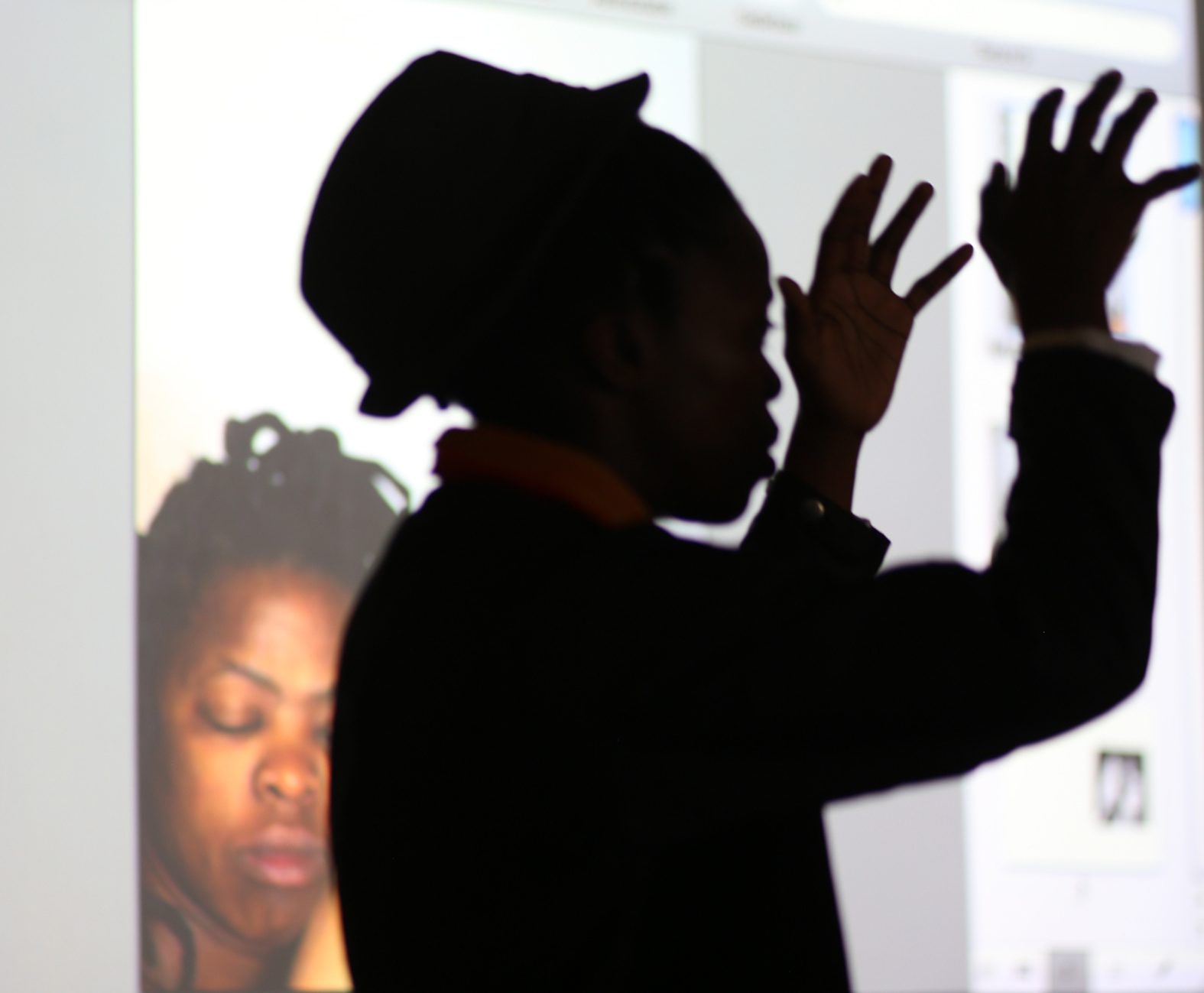
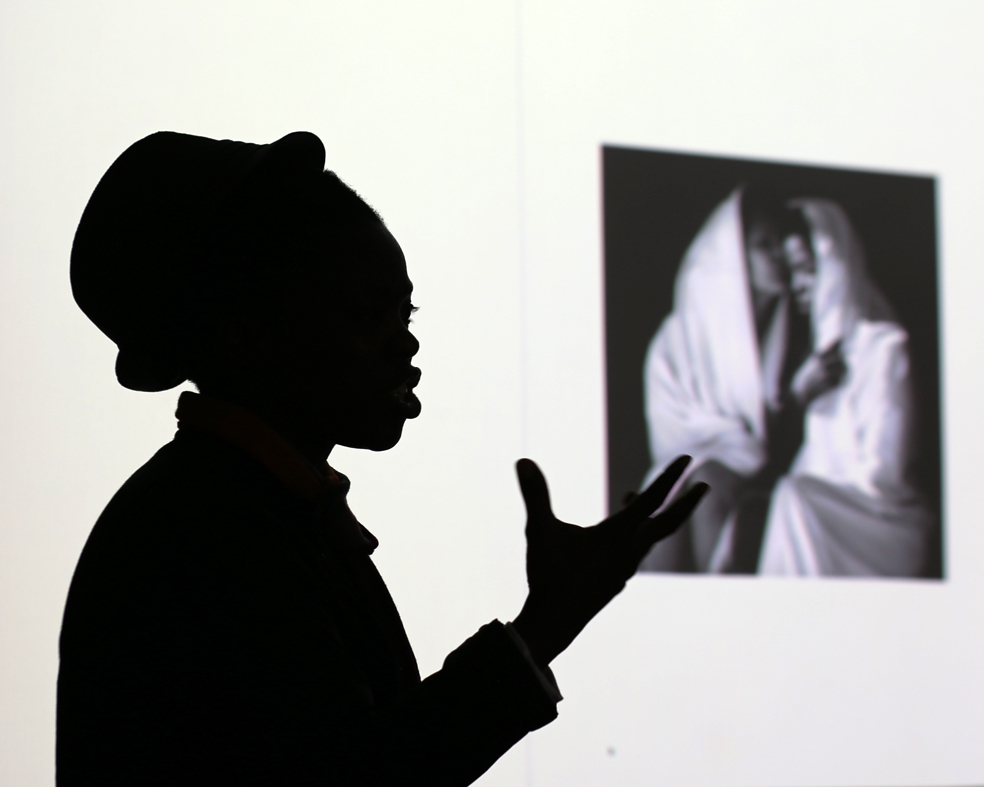
muholi_4080


Muholi projected_4120

muholi_4115

muholi_4121

After Africa Workshop presentation_4156

Michigan University is almost done where I shared my work on how I explored visual activism.
Thanks to Prof. Frieda Ekotto for the invitation, generosity and hospitality, let alone her permanent commitment to open up spaces to African experts to share their experiences. She is defending queer voices and unapologetically combating any forms of invisibility in academic spaces and beyond.
We need more professors like her who truly believe in human rights.

To my dearest academic friend and African ‘Foucault’ – Charles Gueboguo, I love you and respect your expertise. Listening to your teachings in Invisibility class forced me to rethink of ‘Invisibles’ in South Africa…
My gratitude to Valerie Thomas for documentation bang.

Sisonke!

Posted in Department of AfroAmerican and African Studies, Expertise, Human Beings, Human body, Human rights, Interpretation, Introduction by Frieda Ekotta, Knowledge, Life, Life Stories, Love, Love is a human right, Mainstream media, Of Love and Loss, Our lives in the picture, Penetrating mainstream spaces, Power of the Arts, Public spaces, Questioning, Questions & Answers, Readings, ReClaim Your Activism, Sharing knowledge, South African Black Female Photographers, South African Visual Activism, Textualizing Our Own Lives, Visual Activist, Visual Activist in the classroom, Visual democracy, Visual history is a Right not a luxury, Visual Language, Visual Power, Visual Voices, Visualizing public spaces, We Are You, We Care, We were (t)here, Women who have sex with Women, Women's Work, Writing is a Right, Zanele Muholi | Tagged , , , , , , , , , , , , , , , | 15 Comments