2019 April. 11: Makaziwe she exists

by Lindiwe Dhlamini 

A blissful evening filled with pride, joy, warm energies and what I could call; an educational spiritual awakening. The opening of Makaziwe exhibition on the 30th of March 2019 saw the community of Tembisa and outside guests gracing the #Yes4Youth Community Art Centre. It was a night to witness the beauty and talent displayed on the walls. The Centre was established to support local artists and it did not take much for the organizers of the event Dineo Mnyaba, Shirley Mtombeni and Collen Makgongwa to bring an experience that supersedes the perceptions of galleries, their location and assumed audience.

This group exhibition was born from a true-life story inspired by a young woman named Makaziwe who has survived most of the harsh realities of life. Makaziwe (let her be known) has her story turned into a theatre performance piece written by Shirley and produced by Dineo. They were inspired to find other creative ways to keep the spirit of Makaziwe alive that is how an exhibition idea was embraced.

Although the event started over an hour late, one could not deny the talent and powerful messages that the images on the wall were telling. Speaking to the artists gave a much deeper understanding of their work. There was a total of eight artists that were showing, seven women and one man. I was very impressed with the level of talent and felt honored to be allowed the time to interview the showing artists.

Phumzile Nkosi, photographer, a queer, traditional healer and Faces and Phases participant exhibited her own body of work. With a theme titled; ‘Nkosazana ka Baba’ which means my father’s daughter, she displayed images of what I see as gender disruption. It was self-portraits of her wearing what is socially identified as “women’s two piece or “twee stukke” as it was called in the 90’s, a fawn checked skirt and blazer. She wore this with silky black stockings, the images were a cohesion of getting dressed where in some of the images, she is only wearing a vest, underwear and in a process of pulling up her stockings. Her message was “I wear as I wish, it does not define my sexuality”. I found this very powerful as it disrupted the norms of gender and offers us the opportunity to question the social constructions of clothing and gender identity or expression.

Cleo Matiwane a young talented film maker turned photographer who was motivated by the theme to submit her powerful work titled; ‘Consent’. A topic so relevant and highly important in the current world we live in where rape culture and violence has become our everyday norm. Cleo’s work displayed participants with their mouths covered with red tape written CONSENT in black. Cleo’s message was clear, women are human not sexual objects they deserve respect and consent is paramount in these interactions.

Mosa Sekele a film student who was showing works of a trapped woman fighting to be free and seen. Her body of work highlighted the struggles of a young woman who deals with her past and seeking to break free from those bounds. Mosa’s participant; Luthando Simoyi is seen in sequence showing different types of entrapments from daily struggle, in the end she is seen smiling and happy to have broken free from those bounds. Mosa shares the passion of telling woman stories in order to be seen and known. Although it was her first exhibition, her story line and chosen images indicates a passion that will flourish beyond measure if the fire is kept burning. I loved her passion when the presentations opened, you can feel she believes in letting her be known.

Bud’abuphangwa Mtombini the only male showing artist in Makaziwe says he is concerned about the levels of violence against women in South Africa. Bude had beautifully drawn images which carried emotionally heavy yet powerful messages about women. He states that; this body of work was inspired by daily living experiences of the women around him in his community. In his series, he covered issues of rape culture, education, silencing, body shaming, heartbreak, poverty and sexuality. He argues that his drawings were designed to show men the power of a woman which is not acknowledged much in his community. He says that; women are stronger than what we men think and growing up around women has taught me to raise my voice through action, hence I am participating in this exhibition, I want these women to be known and seen; Makaziwe”.

Lebogang Molote showed work that filled with bright, beautiful colors. Her images had a sense of familiarity with who we are as Black people and how we choose to express our cultural differences through attire. Lebogang’s work was a reminder of who we are and where we come from, its presented in a modernized expression shown by the women in her images. The pride on their faces wearing traditional attire in relation to tribal judgements that women may face because of their body sizes, skin color or their age. Instead, Lebogang, chose to celebrate these women regardless of the negativity that the world imposes on women and what they choose to wear. “I am choosing to let these women be known that they exist and that they are beautiful in their own skin”.

Matheko Malebane in her series used images of a young woman half nude covered in animal skin mat. Matheko described her work as a journey one takes with creation of anything like, beautiful art. Indeed, her images reflected the beauty of loving our own skin, bodies, hair and our flaws. In this body of work, Matheko is highlighting the transitions to womanhood and the policing of women’s sexuality expression by society. Her model, Nosisa also gives you the facial gestures that suggests the different phases of being and existing in a world that polices women’s bodies and how they are displayed in an artistic form. Matheko’s message was short and clear; “Black woman, own your sexuality”.

Sinethemba “Okima” Mthembu her work was of dual art where she had drawn images and photographed images all of which were conveying the same message. Okima identified her artistic talent to be for and about women empowerment. She started drawing as young as 12 years old as a way to speak out as a timid child growing up. Her images were filled with nuanced voices of demanding to be heard, seen and acknowledged. Okima themed her work; ‘Define the soul not the body’. Her reasons were direct and her message; “I wanted to unmask the faces we wear daily to hide the scars of society”.                                                                                                                                                                                                                                                                                             Charmain Carrol was the final showing artist. Her work was displayed on a Plasma screen as a slideshow and not only did that make you want to view it, the message was just as important as the display. She first spoke about how she was happy to be showing her work in a township where exhibitions are not a norm. Carrol works with young people teaching creative arts in the Eastern Cape, where she grooms young artists in a rural area known as eNgqwara. Her selection for Makaziwe was much broader whereby she is highlighting issues of religion, spirituality, same sex love, fashion and death. Her view is that; “let her be known that we are here, Queering love and religion – fashion and art, let her be known she exists”.

 The show was a success, the messages from the images and the artists were as valuable as the time they took to create such intelligible and thought-provoking work. Dineo, Shirley and Collen really got something going with this concept. I love what they are doing as it was fun and educational. The space was perfect for that kind of content to be displayed in a township, where most of the hate crimes against Queer people happen, where violence against women and children is normalized. Where issues of body shaming, violence and consent never get discussed. They have decided to open Tembisa Arts Centre, which will continue highlighting the important issues highlighted in Makaziwe.

Related Posts:
2018 Dec. 25 Leptie and Babalwa’s Wedding

2015 Aug. 14: A football match like no other

2015 July 8: Reflections of co-organising an exhibition


Posted in 2012 ReFiguring Women, Against violence on women and children, Black Women in Media, Celebrating Women, Exhibition, Exhibition opening, Exhibitions, South African visual history through the eyes of young women, South African Women in the field of Arts & Culture, Uncategorized, Women in South African Arts, Women loving women, Women suffering, Women who have sex with Women, Women's Arts In South Africa (WAISA), Women's power, Women's Pride, Women's struggles, Women's Work, Young Black Women and Photography, young women, Young Women and Visual Activism | 3 Comments

2019 April. 11: An open lecture with Yithi Laba exhibitors

by Lindiwe Dhlamini

Photos by Lerato Dumse

It is exactly a month since the opening of the Yithi Laba exhibition at the Market Photo Workshop (MPW) from 28 Feb – 22 April. The showing artists; Neo Ntsoma, Lindeka Qampi, Honorary Professor and French Laurette honored Sir. Zanele Muholi and Ruth Motau hosted presentations to the students, fellow photographers and the public about their journey in photography in relation to 25 years of democracy.

Bernie Searle could not make it due to other commitments; her work remains an inspiration to many. The presentations took place at the MPW Auditorium, which was overflowing with other people sitting on the stairs. Although, there were technical glitches at the beginning, which led the event to start 30 minutes later, Velile Maureen Majola moderated the event very well. In the room there was also people from Gauteng TV who came to document the event and our very own Inkanyiso crew was present as usual with some of the participants from Faces and Phases, friends and family members of the presenting photographers.

Neo was the first speaker, the Vryburg born multi-award-winning photographer shared parts of her journey many of us did not know. The audience was impressed with the amount of work that Neo has shot over the years with the highlight being shooting inside the house of the revolutionary Mother Theresa. Neo’s journey started in 1992 at the Cape Peninsula University of Technology (CPUT) where she was met with a lot of difficulties, which led her not to complete her studies. She states, “I felt like I did not belong” Neo spoke about the racial and gender discrimination that was very visible. She would use her images to voice out those harsh realities she was facing then.

y2fe4a0af-ed44-44c4-8f04-a0488683ff04

Neo further spoke about how she used photography as a tool “to show the beauty of the Black race”. However, her resilience was met with an expulsion for not wanting to conform to the white supremacist system which wanted to see Black images in debilitating conditions and nothing that empowers them. Neo states that her Yithi Laba selection was chosen to remind her of why she wanted to do photography in the first place. Her images of famous musicians who are still celebrated legends today are a true reflection of the beauty that we rarely saw on mainstream media in the 90’s and that is what Neo wanted to show the world.

Up next was the multi-talented Lindeka Qampi, a force to be reckoned with. A woman so powerful, humble, resilient, hardworking and talented. Lindeka has won a much deserved Mbokodo Award in 2015 and continues to break boundaries with her style of photography. Her use of trash as props and turning it into beauty, to resemble her struggles and achievements in life. Lindeka started photography in 2006 when she was 36-years-old and has since used it as a way to tell her story. Lindeka is a rape survivor who uses art to break the silence and to encourage others to do the same. In a poem she wrote titled; Inside my heart she verbalizes how the trauma forced her to hide her pain which destroyed her – “silence destroyed my inside body and my soul”.

y7c540f10-80e2-4569-a23c-139aae568694

Lindeka continues to be a role model for many survivors and the young people that she trains in the Photography Xperience workshops, teaching art and photography with Inkanyiso crew. Currently, she does self-portraits and uses the Land as a theme to tell the stories and to highlight the lack of housing and land for the poor in her community. Lindeka left the audience with these important words; “do not limit yourself, combine other forms of arts to tell your own story”.  

“A shutter button has no gender” these are the words uttered by the legendary multi-award, honorary Professor and French Laurette Sir Muholi who is the brains behind the Yithi Laba exhibition. Muholi’s work continues to challenge the norms of society and it has transformed even more with the recent works in Somnyama Ngonyama where the lens is on Muholi. All their projects seem to be a way of making noise without annoyance just an invitation of self-introspection for the viewer to interpret the work how they experience it.

yIMG_3509

Muholi’s selection for Yithi Laba centered Love as the message for the viewer yet, if you take a deeper look you see the variations of this love displayed in the images. Self-love, love of others, love of space and time. The contradictions force you to question how you see this work, to love it or not – it is there to be seen. Having shown in many countries Muholi has shared those spaces with fellow Queers, who would have never had the opportunity to travel abroad. Their presentation was nothing short of this love and expression of it through out. The message was simple it is all done in the name of LOVE – of photography, telling stories, self, family, friends, country, race, beauty and of course love of life. Muholi’s parting words remain; we must never wait for others to define who we are, who to love or how to love”.

 To close off the informative, fun and inspirational presentation session was none other than one of the first Black woman photographers in the country; Ruth Motau. Born and bred in Soweto, Meadowlands Ruth did not let where she came from limit her dreams. She has worked hard to earn a spot as one of the first mentees of the late David Goldblatt whom she honored during her presentation. Ruth is an MPW alumni for the class of 1993 and her work over the years has been reflective of the hard work she has put in.

Ruth’s selection for Yithi Laba is a journey of self-identity, spirituality and praise. In this body of work, she challenges the viewer to remember their own relations with spirituality and interrogates the modern-day religion. The way in which Ruth expresses and tells her story through the use of photography is relevant even though the images were taken over a decade ago. Her words of encouragement are testament to the latter; “whatever you do is a journey, always tell your own story.

yE73FB2A6-47F4-4941-90C8-3BDD5BF2D484

By the time the Question and Answer session arrived most of the audience was anxious to ask questions and furnish words of love and support to the photographers. An interrogation of key issues of access and support for upcoming photographers were some of the issues raised. What stood out, was the possibility of a book by Black female photographers that can be used by Photography students in institutions of higher learning and hosting the South African Photography Festival were some of the suggestions made by the audience.

For those who have not seen the show or would like to bring friends and family, Yithi Laba is on show till 22 April 2019 following an extension.

Related Posts:
2019 Mar. 18: Traffic tracing at the Yithi Laba exhibition – Week 1

2019 March 3: Yithi Laba Exhibition Opening

2019 Mar. 1: Yithi Laba State of Photography Address

2019 Feb. 20: Yithi Laba exhibition

Posted in Uncategorized | Leave a comment

2019 April. 10: Alex Total Shutdown

Text by Maureen Velile Majola

Photo Album by Akhona Hailele

The residence of Alexandra Township

As per Wikipedia Alexandra Township was established in 1912 on land that was originally owned by a farmer, a Mr H.B. Pepenfus, who tried to establish a white residential township there, naming it after his wife Alexandra. However because it was (at that time) a considerable distance from the centre of Johannesburg, this was not a great success. Consequently, in 1912 Alexandra was proclaimed as a so-called “native township” because the township was proclaimed before the South African 1913 Land Act, it was one of the few urban areas in the country where black people could own land under a freehold title.

Alexandra is now 107 years old and the living conditions of its people keeps deteriorating. The township was built on 800 ha of land, which was designed to fit a population of about 70000 people. The township is over populated and it consists of informal settlements mostly. The houses and yards which were created at the beginning of Alexandra have since been covered by other structures that have emerged over the years.

107 years of Alexandra and 25 years of Democracy later, the residence of Alexandra took to the streets to protest against the City of Joburg for neglecting the community. They started demanding that the current Mayor Mr Herman Mashaba must come to Alex to address the community and hear their grievances. But the Mayor has not come to Alex or even made effort to listen to the community that he serves and that he promised two years ago that he was going to transform it.

The residence of Alex are angry at the City of Joburg for putting little to no effort into changing the township. There has been a great number of illegal mushroom structures that have been erected over the years and most of those structures are said to have been built by foreign nationals. A great number of elderly people in the community are still living in one roomed houses with their children, grandchildren and their great grandchildren. There is no privacy in the homes and a lot of the children are exposed to sexual behaviours at a young age because everything happens under 1 room and some children see their parents having sexual intercourse. The housing issue doesn’t just affect the home structure but it also affects how the child grows up and the things they get exposed to at a tender age.

The township’s pavements have since become nonexistant in most streets because people have built shacks or illegal houses on them, some houses are built on top of drainage systems and water pipes, which are now leaking with water on a daily basis. The city of Joburg has failed the community of Alex in more than one way. The new RDP houses that were built years ago are owned by foreign nationals who claim to have tittle deeds to the houses yet our own South African residence of the community are still waiting for houses, they are stuck with C forms that are not helping them with anything.

The community came together on the 5th of April at the Alex San Kopano Hall with hopes that Mayor Mashaba would show face and hear what the community had to say, but to their dismay he didn’t come and he didn’t even send an apology but instead he mocked the community members by taking to the streets of twitter and saying Alexandra Township is not his problem but that of the ANC government.

Residence were angered by the Mayor’s no show on Friday and they decided that they will march to the City of Joburg Regional offices in Sandton, that they will occupy Sandton and demand to be heard by the Mayor and for him to personally receive the community’s memorandum. The community gathered at Alexandra San Kopano on the 8th of April and started with their peaceful march to Sandton. The march moved from San Kopano 12th avenue to Joe Nhlanhla Street, where it turned at 9th Avenue and went to Selborne Street, proceeded straight towards Pan Africa on 1st Avenue. The community kept singing saying “siyongena sigijima esandton, hayi uMashaba uyasaba” and “10km into encane, 10 km into encane” as they marched towards Arkwright Avenue in Wynberg.

Thembani Manana, a young woman from Alex stood on top of a tyre and addressed the community as we were marching. She told them that they must not push through the pipe line and to make sure that we don’t leave anyone behind as we need to all arrive in Sandton as one community. Thembani in our interview with her emphasised that this was not a political march but this was a march by the community of Alex trying to get the attention of the Mayor and that we should look at all the factors that are affecting our community. Thembani was amongst the leaders and organisers of the protest.

The march proceeded towards Grayston Drive in Sandton, the entire Grayston intersection was closed off. For the first time in years the residence of Alexandra closed off the big road that goes to the big square mile of South Africa that generates billions of Rands for the country. The JMPD commander Spires, instructed the masses that they were not allowed to take tyres into Sandton, they cannot burn anything there. This was confusing as they were allowed to carry tyres in Alex, this showed how different the two areas are, this said a lot to me as a young person who grew up in Alexandra because I got to understand the power dynamics of the community and Sandton.

The march proceeded to the City of Joburg offices where we waited for hours to speak to the Mayor but he never came. Outside the CoJ’s office the community gathered singing and chanting for Mashaba to come and address them. We spoke to a group of women who expressed that this march is important for the community of Alexandra and the Mayor and his office must stop trying to make it seem as though the march is one of the political party’s propaganda but the Mayor must come and face the community of Alexandra and listen to their plea.

We spoke to mam Dikeledi Ntsimane who told us that she was in the struggle and her left eye was shot with rubber bullet. She expressed that even after everything she went through she still stays in a one room house, stuck with a C form that was issued to her by the department of housing but she still has no house. She expressed how painful it is to see some of the community members who’ve been waiting for houses have passed on without receiving their houses and how foreign nationals have houses yet they don’t have them. She told us that she wishes that Meyer Mashaba could come and listen to their grievances.

Mayor Herman Mashaba sent his City Manager to speak to the community of Alexandra and address them, but councillor Marema informed the city manager that he will not address the people of Alex as they are not there for him but for the Mayor. He was told if the Mayor fails to come and address the community then they will call on the President of South Africa to come to Alexandra on Thursday the 11th of April 2019. The memorandum was not handed over to anyone and the community made its way back to Alexandra Township in a peaceful march. When the march reached Pan Africa in Alex, the police started to open fire and they shot at a few woman saying they were vandalising and kicking tomatoes. But to my surprise the tomatoes were there even in the morning when we passed there. By this time Pan Africa had almost 30 police cars and vans that were making their way into the community saying they need to make sure that they don’t close the roads or strike again.

Mayor Mashaba truly disappointed the community of Alexandra by not showing up, now we wait for the President to come and address the community.

Related Posts:

Car Handover Ceremony to Ntethelelo Foundation

2014 May 7: Voices of Some Black Queer Born Frees

Posted in 25 Years of Democracy, Akhona Hailele, Alexandra, Bringing photography to the community, Community, Community based media, Community education, Community Mobilizing, Community outreach, Community Police Forum (CPF), Community visit, Community work, Documentation; Filming; Photography; Community, March, Marches, Maureen Velile Majola, Respect & Recognition from our community, Uncategorized | 1 Comment

2019 April. 10: The pain of losing Miss Tee Menu

Tributes continue to pour in for Miss Tee Menu, a gentle soul who was known and loved by many. The community of Daveyton, a Township located on the east of Johannesburg  and the LGBTI community in different parts of South Africa were shocked to learn of the passing of this 24-year-old on Sunday morning.

Ms Tee Menu post

Miss Tee Menu, Parktown 2014 and Miss Tee Menu, Daveyton, Johannesburg, 2017 © Zanele Muholi

Menu, a Brave Beauties participant was a hairstylist and designer, she worked with her mother to design dresses that she usually wore at beauty pageants. Menu entered her first pageant Miss Gay Daveyton 2013 and is the former Miss Gay Jozi 2014 Queen.

Brave Beauties participants and photographer (from back left: Lesiba Mothibe, Miss Tee Menu, Ntsantsa, Kim Monoto, Roxy Msizi, Yaya Mavundla and Prof. Zanele Muholi. Pic by Lerato Dumse

The tragic news of Menu losing her life in a car accident started circulating Sunday morning. Many family, friends, colleagues and community members have taken to social media to share memories and mourn their beloved Miss Tee.

A memorial service has been set for Thursday April 11 at Miss Tee’s home 3537 Mina Nawe Phase 1, Daveyton 5-8pm.

Previous titles include:
 Miss Gay Daveyton Photogenic 2013, 
 Miss Uthingo 2013,                                                                                                                                 Miss Simply Blue 2013
2nd Princess, Miss Gay Soweto 2013 
2nd Princess, Miss Valentine 2014 
1st Princess, Miss Valentine 2014 – Miss Personality, 
Miss Gay Queen of Queens 2014 
Miss Gay Jozi 2014.

Related Articles:

2014 June 13: The first young transwoman from Daveyton to win Miss Gay Jozi 2014

2014 May 18: Glitter, drama & perfection at Miss Gay Jozi 2014

Posted in Bastille Day photos by Zanele Muholi, Brave Beauties, Brave Beauties participants, Daveyton, Daveyton Ekurhuleni Municipality., Daveyton township, Daveyton Uthingo, Death, Death tore us apart, First transwoman from Daveyton to win Miss Gay Jozi, From Daveyton township with love, Miss & Mr Gay Daveyton 2014, MissTee Menu, My name is Zanele Muholi, Thabo Menu, Uncategorized, Winner: Miss Tee Menu from Daveyton | Leave a comment

2019 April 5 “I am Winnie Mandela” concert

Text by Velile Maureen Majola

Photos by Akhona Hailele

It’s the 4th of April 2019; I woke up feeling excited about attending the concert. We left the house and made our way to Constitution Hill where the concert was held at the Women’s Jail. This is the same place where women in the struggle where jailed, ill-treated, threatened and tortured; yet here we are two decades post democracy, celebrating our Mother Winnie Mandela with a beautiful concert that consists mostly of women. This concert is happening on a Thursday evening, now Thursday is a day in which a lot of women gather for prayer (umthandazo womama) and many others attend ladies nights.

The concert started with a series of images of our late mama Nomzamo Winnie Madikizela Mandela, which were shown on the screens. The images were of uMama in the struggle; police confrontation, her children, Mam Winnie and her then husband Nelson Mandela. These images gave us a clear indication that uMama suffered a lot under the apartheid government and yet she still loved and cared for her children. The images showed us the Power of a woman who makes sacrifices.

Rorisang Thandekiso who was the M.C. for the day spoke about the importance of wearing iduku (head wrap), that as African women iduku is a sign of respect and honour. We were requested to have a moment of silence and in our silence we needed to think about the change we want to make in our communities, country and the world, to think about our impact in society. This really got me thinking about my own contribution to my community and what I could do that will have a positive impact in my community.


We enjoyed an open mic session that was opened by Zulu Boy, who reminded us that we are Black and we should be proud of who we are. He then sang a song from the struggle that reminded us that our ancestors died for this freedom that we enjoying today. Right after him we heard from a woman called Maritjie who is white but considers herself as a black woman because she resonates. She shared a glimpse of her story and highlighted that her own race didn’t take care of her when she was on the streets but it was the black race that took her in and gave her a sense of belonging. She spoke about doing away with segregation in our spaces and finding a way to work together as women without looking at race.

We enjoyed music from Morena the Squire, he sang a song dedicated to women, mothers and all those who’ve made sacrifices for their families. In this melody he was speaking of all the sacrifices women make daily and saying how he appreciates everything women do. He then made us dance with his dance song saying ngihlanyiswa wuwe (I’m driven crazy by you).

Shortly after his performance Rori announced that Buhlebendalo was about to come on stage, the crowd got really excited and shouted with joy. Buhlebendalo walked in chanting welele welelele carrying a metal cup that reminded me of my grandparents’ home. She then appraised her ancestors as a sign of respect since she is a traditional healer and needs to acknowledge their presence in the space. She sang a song saying lalela abantwana and another that says uNomzamo uwanyisile amabhunu uNomzamo we could just see her ewanyisa amabhunu during the struggle. Her strength and endurance is proof that indeed ubanyisile. She then sang a song that says ‘’Ndingu Nolwazi, Sphokazi, Mandlakazi, Thembakazi” she spoke of how we can speak for ourselves as women, how we can ask if we need help and how we are capable of doing things for ourselves. She then saluted Mam Nomzamo with a song and did a cover from South Africa’s most talented singer, the late Brenda Fassie titled Too late for Mama. With this song she had us all feeling really emotional and remembering how women are killed on a daily basis and how they struggle to fend for their families daily.

Busiswa then came on stage and called on all the queens and saluted them. She proceeded to say “If we can learn anything from the legacy kamam Winnie is that if uyistarring you must be a starring.” She brought the house down chanting she’s alive, she didn’t die, she multiplied, we danced and did the vosho dance with her in celebration that indeed Mam Winnie dint die but she multiplied in us all.

Berita took to the stage singing thandaza mpefumlo wam, siphinde sidibane. The song moved us deeply and sent us to a new trans that made us think about our departure and what would happen to our souls, if we’ll meet on the other side or not.  She did a Neria cover by Oliver Mutukudzi. She moved our spirits, we remembered all the fallen music heroes who didn’t just give us music but gave us soul.

Wanda Baloyi (African cocktail) sang “Ngiyekeleni ngihambe, ngibuyele ekhaya, sengikhathele, ayikho into engiyihlalele lapha. Baba ngthi wee thathi inkomo zakho, uyithathe la oyibeke khona, sengikhathele, ngibuyele ekhaya” This song evoked a lot of emotions from within, thinking that at times when Lobola has been paid a man starts to think he owns you and you are his property. She sang about how we must do away with that culture in not so many words.

The legendary Candy sang xhiloyini wani tsikelela moradzuwa. Impilo ifana nevili, namhlanje yimi kusasa nguwe. She invited Nonidee from Nigeria to join her on stage and sang together. Nonidee sang his new single called fix me. Dj Olwe took to the desk and made us shake what our momma gave us. We danced and laughed as he played. His movements and actions just told you how much he enjoys doing what he is doing.

Zoe came in with her soulful, spirit filled sounds. She sang about Mama Winnie and had us all sitting on the floor of Con Hill Women’s Jail. It was right after midnight and we could feel the spirit of mama Nomzamo coming alive through Zoe. Haibo wavuka owesfazane ngengoma. She sang siyolobola ngani iinkomo zobaba zemuka nomoya, she rendered it so well that she had us all singing along. She has soul in her singing. Her song I’m not alone reminded me that I am not alone, but I have angels surrounding me day and night.

This was not just a musical concert but this was the second coming of Mam Winnie. This was her rebirth and she has indeed multiplied in the spirit and souls of young and old women in South African and beyond. Her/Story is the foundation of a new type of women in our times, the type that says we will not look down but we will empower and encourage one another in our different capabilities. Oh our Mother lives, she is alive in us all and we too have the power that she possessed, the power that drove her and directed her to becoming one of the most prominent women in the world.

#IAmWinnieMandela

Previous by Velile Maureen Majola:

2013 Aug. 12: Sizakele and Salome’s commemoration hit a slump

2013 Aug. 6: My body as a subject of hate crime

2013 June 21: The Princess of Norway pitched just for Muholi


Posted in ANC, Baitiri Lumka Seleka; Charmain Carrol; Kopano Sibeko; Lerato Dumse; Lesego Tlhwale; Maureen Velile Majola; Nation Mokoena; Nqobile ZL, Baitiri Lumka Seleka; Charmain Carrol; Kopano Sibeko; Maureen Velile Majola; Lesego Tlhwale; Lerato Dumse; Nation Mokoena; Nqobile Zungu; Rene Mathibe; Zanele Muholi, Constitution Hill, Maureen Velile Majola, SA Constitution, South African Constitution, Uncategorized, Winnie Madikizela-Mandela | 1 Comment

2019 April. 2: Endless Summer Experience

by Nkosi Buthelezi
On the 31st of March 2019, we attended one of the Top 50 events in Durban, headlined by Kwesta featuring various local artists, including DJ Tira, and Dladla Mshunqisi. The Endless Summer Experience was supposed to start at 12h00 pm, unfortunately we were disappointing as audiences sat for four hours with no performances and the event hadn’t officially started. However, people kept coming in and the venue was getting packed as some of the young DJ’s performed their sets to warm up the stage for Kwesta. VIP audiences were initially entertained with food and drinks. As more people walked in, the atmosphere was slowly warming up and the MC was finally introduced.

The first performance was at 18h22 it was a duet of rappers, followed by a group of young men singing a Vusi Nova cover. Around 19h15 Dladla Mshunqisi took the stage and entertained the crowd. Later on, Thando the musician performed three of her songs, thereafter various DJ’s followed. DJ Tira only got on stage at 20h26, the main artist Kwesta was nowhere to be seen and had not even passed his greetings to the crowd. At 21h00 the main act whom many people bought the tickets for had not performed yet.

There was so much disappointment later at the VIP as the food and drinks started running out at 20h30 and the tables were empty. The show was supposed to start at 12:00 but it started hours late and the headlining artist Kwesta had not even arrived. People were drinking alcohol as they waited and it was mostly the youth.


Some people including ourselves the Inkanyiso team decided to go home before the show ended with so much disappointment as what we had come for was not delivered.

Posted in Durban, Durban Gay Centre, Durban Pride march, From Durban to Cape Town, From Durban to Johannesburg, From Durban to London, From Durban to Paris, Johannesburg comes to Durban, Uncategorized | Leave a comment

2019 April. 1: Ukuba: The Journey of Becoming 

by Wendy Khumalo

Ukuba: The journey of becoming, is a collaboration between Thembi Mthembu and Thalente Khomo who are both members of the Amasosha Art Movement.

The Bodies of work are about self-discovery of agitation of feelings which invoke conversations about being

The Photographers 

Thembi Mthembu holds a Bachelor of Technology Photography Degree from the Durban University of Technology (DUT). Thembi’s work speaks about “being still in the midst of turmoil.” She also prefers not to interpret her work but the viewer to interpret it themselves.

Thalente Khomo holds a Diploma in Photography from Durban University of Technology. She is studying further toward acquiring her Bachelor of Technology in Photography Degree also from DUT. Her work speaks about reflections of the past and present but this specific work below is called Umthunzi Wesithunzi Series 1. The black and white signify the past and the blue represents the present. This piece below is about a shadow of shadows, how scary shadows can seem.

The Curator 

Below is the interview with Nomusa Musah Mtshali curator of Ukuba: The Journey.

Wendy: Hi

Musa: Hi,

Wendy: What’s your Full name and surname?

Musa: My full name is Nomusa ‘Musah’ Mtshali.

Wendy: Why were the body of works arranged the way they were?

Musa: For those who haven’t been at the “The Office 97”, the space is small and intimate, which to me meant the works need to tie and link together to tell a solid and bold story. That was not difficult since all the works were already in the exhibition space by the time I had to exhibit them. I aimed at showing the audience two perspectives to one story, in accordance with their message. We paid more attention to colour and style so each work is placed in accordance with and a compliment with the other.

Wendy: As a curator of the Ukuba – The Journey, how did you plan for the exhibition?

Musa: “I have known Thembi Thembu and Thalente Khomo since year end (2018).  In November 2018 we all took part in IsiZukulwane exhibition, which took place at Ikomkhulu Art Space. During the isiZukulwane exhibition, I got introduced to their works and concepts. I found that they both talk about their relationship with the spaces they exist in, what they love about themselves and their surroundings. When I heard about The Office 97, I thought it was a great idea for both of them to collaborate.”We were all out one day, Thembi and Thalente were talking about the exhibition procedures and at this point, they haven’t talked about who would curate, exhibit and how. I only knew a day before the exhibition that I would curate the show. Since I have known their works from November 2018 I knew there will be a cohesive theme, which meant to keep the exhibition in that theme.

Wendy: How many people were at the exhibition?

Musa: The office 97 is trying to integrate a working environment with the arts culture that already is there in Durban and all three of us are members of Amasosha art Movement based in Durban. Most of the audience members are friends and alliances of Amasosha and since The Office 97 is still new we didn’t have much of an audience.

Wendy: What was your target audience?

Musa: I believe art is for everyone who co-exist with it and those who want to invest in it.

My target audience is open-minded people who are acceptable to empathy and the value in one’s story, people who challenge the norm and open to change.

Wendy: Why did you specifically have those performances?

Musa: We had those performances because of their spoken word and the ability to take a person from where they are into another place and they are talking about the journey of being .

Wendy: According to you, did you achieve your objectives and what were they?

Musa: Thalente and I had a talk about how we as human beings we are learning in the school of life. How as a person, you learn and re-learn everyday.

This exhibition to me is a tangible result of that conversation. It shows how important it is to know your story and be able to tell your story without fear; also trust that in this journey of being and becoming you are not alone but with people who understand that “indlela ibuzwa kwabaphambili” and every story deserves to be heard.

Performances 

The performances were electrifying, they all came from an honest place. We were serenaded by Zintathu, Lindo, Lisoh and Bright who all performed in isiZulu with background music that set the mood. One of the poems performed was about death (ukufa) and fitted with the order of the day, which was The Journey. I still get goosebumps just from thinking about the performances.

The Audience 

First Thursday Exhibition, which was a collaboration of two young photographers who are taking big strides. This Exhibition was mostly attended by Young African Creatives, Amasosha Art movement and Inkanyiso Media team. The support Thembi and Thalente received from the Durban art community was totally astounding.

Amongst the attendees Osmosis Liza, who is a Lecturer at DUT (Photography Department) and she is also Project Manager of PhotoBooth Collective that Thembi is a part of. Prof Sir Muholi also graced us with their presence and congratulated the young photographers and gave some invaluable advice.


Posted in Active Black Lesbian Artists in South Africa (ABASA), Artists, Black Lesbian Artists, Black Queer Artists, Durban, Durban Pride march, Exhibition, Exhibition opening, Exhibitions, Fine artists, South African Artists, South African artists hit New York, Uncategorized | Leave a comment

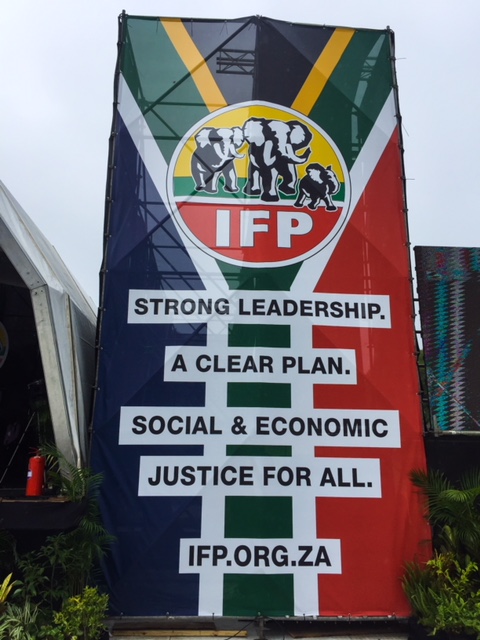
2019 April 1: I.F.P – Inkatha Freedom Party Manifesto Launch

by Wendy Khumalo

Sunday 10th March 2019 was a beautiful sunny morning. We woke up early to go shoot at the Durban Beach Front. We shot church people performing a baptism in the ocean; it was my first time witnessing this. I snapped away, I had to capture this moment Id heard about and hadn’t seen before.

As we carried on walking on the beach we saw some people wearing Inkatha Freedom Party (I.F.P) regalia and Mam Lizzy Muholi went over to them and asked what was happening, there were a lot of them at the beach. They then informed Mam Lizzy that there was an IFP Manifesto Launch taking place at Chatsworth Stadium, starting at 10h00.

As we walked towards where we had parked the cars, we saw Prof Muholi and Dr Bajabulile Dhlamini. Mam Lizzy informed them about the IFP Manifesto Launch, Prof suggested we go, as this would be good for our portfolios. When we received the go ahead from Prof, I envisioned myself shooting Prince Mangosuthu Buthelezi (uNtwana kaPhindangene) *smiles*. I was eager as this would be my first political assignment and could not contain my excitement.

We were super hungry as we were at the beach from 07h00 and the time was 09h30. We went to Spar to grab a few stuff. We then headed off to Chatsworth Stadium for The IFP Manifesto Launch.

On the road leading to the stadium we saw buses and lots of people wearing IFP regalia, to my surprise there were also lots of Indians. Initially I thought, of course they’ll be Indians we in Chatsworth, which is predominantly an Indian area. We arrived just after 10h00 and Mam Lizzy saw a photographer wearing a Media lanyard and asked them where to get it, as we were a team of five of us covering this event from Inkanyiso Media. In order to all have access, we needed media access, which we received with no questions asked. All they requested was the name of our organization. We received a complementary pack with snacks, fruit, water and program of the day.

We went our different directions to capture the Manifesto moments. The mood around the stadium was jovial and the people were eagerly awaiting the Inkatha Freedom Party President Prince Mangosuthu Buthelezi MP in song and movement chants. IFP has claimed itself as the party for social cohesion hence the Indian dances with Zulu dances entertaining the crowd, as we all waited in anticipation for the key note speaker Prince Mangosuthu Buthelezi.

image1 (1)

The Key Note speech 

The Inkatha Freedom PartyPresident addresses the loyal masses that turned up in numbers, to listen to this important 25-years-of-democracy Manifesto. Prince Mangosuthu Buthelezi observed protocol with a special mention to his guest of Honor the King of Congo, who had come to support his comrade and Royalty associate.

In his introduction, the Prince mentioned the work he has done in Congo and the rest of Africa. The Manifesto outlined Gender Based Violence, being tougher on crime, corruptions and most importantly getting the economy working. The IFP emphasized being trusted by the voter and the leader also mentioned that he has always been a man of integrity.

IFP has been a party that has believed in education, ‘we built a lot of school and universities. We are behind the recent up rise against crimes, we are totally against gender based violence.’  IFP was the first party who fought for widows to get their widower’s land and title deeds, as law didn’t allow it at the time.

This for me was a first and an eye opening experience as growing up in the 80s we new the IFP to be hooligans (izindlavini) but I experienced something totally different. The IFP members were receptive to all of us (media) people although we were wearing jeans. It was such a refreshing and liberating experience, I’m thankful to Inkanyiso Media for the opportunity.

Previous by Wendy:

2016 Jan. 26: My Educational visit to Jozi Maboneng – LGBTI

Posted in 2019 Elections, 25 Years of Democracy, IFP, Uncategorized | Leave a comment

2019 March. 30: Day 3 of Documenting teachers in KZN

A review by Thobeka Bhengu

Plan for the day 9:00-5pm

Shooting at Gugulethu Primary School in KwaMashu and Thamela Primary School in Umlazi

Gugulethu Primary School: Interview the school Principal
Interview a former student
Interview former colleagues
Establishing shots & cutaways of Gugulethu Primary School in KwaMashu
Shooting cutaways at Thamela Primary School in Umlazi

Today we visited Gugulethu Primary School where we were supposed to interview the principal and colleagues. However, the principal had to decline to speak on behalf of the school without the consent of the district office. She fully supported our visit and suggested that we return as soon as she gets consent. The principal also arranged interviews with Khuzwayo’s former HOD, two colleagues and a student for Inkanyiso team to interview.

The team interviewed Nonhlanhla Mthimkhulu who has worked at the school for 17 years as a cleaner. Mthimkhulu spoke about the kind of person that Khuzwayo was at the school and still is; she mentioned how loving and caring Mam Khuzwayo was and still is. She recalls how she wasn’t just a teacher but was more than just an educator to the pupils she taught. Mthimkhulu witnessed Khuzwayo go an extra mile for pupils that are being abused or going through hard times at home.

The second interviewee was Mbalenhle Qumba, a Grade Seven pupil who was taught by Khuzwayo in Grade Three. Talking about Khuzwayo as her former teacher, the student became very emotional as she spoke about how there has been a vacant space since she left and how she made them laugh.

The team interviewed another colleague Duma Mkhonza-Khanyile, who started teaching at Gugulethu Primary School in the year 2000. Mrs Khanyile and Mam Khuzwayo were allocated to share a class. Khanyile spoke about learning a lot from Khuzwayo and recalls how when they shared a class she was disciplined and encouraged teachers to always be active and committed in the classroom. She also spoke about how Khuzwayo donated and helped students with buying them uniforms, groceries and worked closely with the social worker.

Lastly, the team interviewed another colleague Philile Mkhwanazi, who is also a teacher at Gugulethu Primary School. Mkhwanazi went to the same school with Khuzwayo and worked together at Gugulethu Primary School.

The needs of the school raised by the interviewees were as follows:

  1. A school Library
  2. Sports grounds
  3. Kitchen
  4. Textbooks
  5. A security guard and security measures
  6. Computer room
  7. Renovations in classes

All interviewees spoke highly of Mam Khuzwayo’s dedication to her former profession and going an extra mile with students who require extra help. They also spoke about the difficulties facing the school, amongst the common issue of no libraries and little resources. They also spoke about access to taps and sinks around the school and inside the toilets. Having taps and sinks will help with accessing clean water from the tap and hygiene issues. The school also has a huge security issue, with the fence broken down in other parts of the school and also the issue of electricity in the classrooms where cables were stolen.

As we celebrate 25 years of democracy, it is important to reflect and also find ways to empower ourselves and play an active role in the betterment of our schools as we look to address the lack of basic amenities in some of our schools. Partnerships, collaborations, fundraising initiatives, sponsorships and community participation are some of the effective strategies to develop our schools in our disadvantaged communities.

Posted in 25 Years of Democracy, Basic Education, Community education, Education, Educational strategies, Educations, Future, Uncategorized | Leave a comment

2019 March. 29: Day 2 of Documenting teachers in KZN

Documenting Nonhlanhla Khuzwayo (a retired teacher)

A review by Thobeka Bhengu

Photos by Terra Dick

Plan for the day 11:00-5pm Shooting at Durban North


Interview Nonhlanhla Khuzwayo at her home                                                                   
Interview her daughter (Baphile Khuzwayo)
Establishing shots & Cutaways of Gugulethu Primary School

The team documented Mam Nonhlanhla Khuzwayo at her home in Durban North. Mam Nonhlanhla is a retired teacher, who dedicated 28 years teaching primary school learners. Khuzwayo welcomed us with open arms at her home. She looked polished as if she was about to leave her house for an important meeting. We met her niece Buyile who spent the rest of the day with us and seemed to enjoy having us around.

The team started by interviewing Baphile Khuzwayo, Mam Khuzwayo’s daughter. She described her mother as loving and disciplined at home and as a teacher.
Baphile described her mother in two words, as a powerful and a strong woman. On her mother as an educator, she described her as someone who gives a pupil their autonomy and allows learners to interpret the work or text in their own way. On the state of schools and the important values that would assist in the education system Baphile said, “I think parents give too much responsibility to the teachers. Teaching starts at home. Discipline starts at home.”

Nonhlanhla Khuzwayo was born in Umlazi, Durban and lost her parents when she was at college. She started teaching from 1983 at Nombika Primary School (Ndwedwe), Myeka Primary School (Ndwedwe) and Tholamandla Primary School (KwaMashu) temporarily and was hired as a full-time teacher at Siphosethu Primary School (Ntuzuma), Phuthumani Primary School (KwaMashu), Dukemini Primary School (KwaMashu) and finally landed at Gugulethu Primary School in the year 2000 where she taught for 15 years. Boasting 28 years of teaching, Khuzwayo retired in 2015. Leaving her job was hard for her because of the love for her work and young people. Khuzwayo raised her children on her own after her divorce in 1991. This is when she realized she had to work harder, thus besides teaching, she also sold goods so as to earn more money to take care of her children. Mam Khuzwayo spoke of her financial struggles, hardships after selling her home and a number of challenges that she was able to overcome. Khuzwayo currently leaves in a safe, tranquil and suburban neighbourhood in Durban.

Some of the values that Khuzwayo learned along the way was respect for others, your superiors, be dedicated to your work and be able to take instructions as provided. She also learned to fix her mistakes and not be defensive when she has made a mistake. She further highlighted the role of a teacher in school and how teachers have to assume multiple roles in the classroom and the difficulty of executing all these roles at once. On celebrating 25 years of democracy and looking at the challenges and achievements in the 25 years Khuzwayo shared how “a lot has changed in the education system for the better including the end of corporal punishment, respect of the rights of others regardless of their age and how circumstances at home and at school can be the cause of bad behaviours.” She spoke about teenage pregnancy as a major challenge, drug abuse, kids experimenting with sex at an early age and unsafe abortions due to fear of being judged. She also addressed the issue of acceptance of LGBTI+ children and how parents need to accept their children instead of disowning their LGBTI+ children.

Khuzwayo has plans to travel, open a space to share experiences amongst the elderly and young people. As we wrapped up our day with Mam Khuzwayo, we agreed to meet again the following day at Gugulethu Primary School, to interview her former colleagues and students.


Posted in "Free from My Happiness", 25 Years of Democracy, A new visual history, A tribute, Abantu, Community education, Education, Educational strategies, Educations, Uncategorized | Leave a comment