2014 June 16 From Joburg to Sao Paulo to Toronto

Muholi’s Travel Log

The past week in Toronto was a fantastic blur.  I arrived on Sunday, 15 June 2014 after five 5 years since my last stay there.  I went to Ryerson University and it is where I studied MFA: Documentary Media in 2007 – 2009.

Arriving at the airport in the morning without a companion is always challenging, considering exhaustion, fatigue and baggage.
Nobody from the hosting organisation met or picked me up at the airport. Although my dearest friend, Fikile Mazambani offered I thought to myself let me rather explore the morning breeze alone. Anyway it was too early for her to be up at 5h25, which was my landing period.

I travelled aboard Air Canada, from Sao Paulo to Toronto in economy class.
You probably know what I mean. My journey was +10 hours long  (with 1-2 hour of bad turbulences flying over water) freaked me out.  The meals in economy class had their own classified issues!    When we had taken off and it was time to eat, I could not eat their ‘food’, which seemed to be cardboard chicken, tomato stew and some mixed over cooked rice.  Not dissing the chef though or those responsible for cooking for passengers on board. I just could not!
I asked the flight attendant for some bread and red wine instead.  Just to have the flight attendant bring me the small bread roll – a stale bleached flour white bread roll that could hit you in the face and dent your cheek – was an issue.
The air hostess gave it to me with much attitude.

I swallowed this hard bread layered with my hardship.  Bread for me means constipation because my body doesn’t process it easily.  I knew what was to follow but I had to live.  The bible says, Jesus survived on bread and red wine so I followed suit and slept immediately afterwards.  I woke up in time for breakfast which I could not eat either. I did not even look at what they were serving.

Immediately after we landed in Toronto, I went through customs and there were long queues.  I was greeted by a nice happy colourful rainbow art – which much reminded me of Odili Odita’s work.

I walked down the stairs avoiding the escalator to access customs.  When I got there, there was a long queue and two customs ushers were at the front of the line, showing people which line to get into, i.e. citizens were to go in one line and non-citizens in another.  A man got upset because one of the ushers had sent him to a counter that was not manned, after standing for a long time in the initial longer line.  He eventually was attended to.

I travelled with a lot of students from Brazil who animatedly spoke in Portuguese.  I saw the welcome to Canada signs that were in both English and French (insert picture).   Ahead of me was a mother with her three children and one of the children started talking to her mom about me and the mom just listened without turning to look at me.  I immediately imagined myself in that child’s shoes and how I could not talk about someone and prompt my mom like that.  Maybe it’s because I am from a different era/group.

The family soon branched off and they headed to a different queue and I to another.  The customs official was super nice and I was soon on my way to claim my baggage.  When I went downstairs I remembered that unlike at the OR Tambo Airport I had to pay $2 for the trolley – a necessity to lug my bags.  In my mind, this was just rude, paying R20 for something that I will never own – not a plastic bag – but something that will be left behind at the airport.  I had no choice but to get one and proceed.

I stopped at Tim Hortons and bought some doughnuts and coffee.  It felt so déjà vu because it reminded me of my broke school days!  Tim Hortons makes you have that good angel, bad angel dilemma because you know it’s wrong but you know you cannot resist it.  You want the sugar and it brings back many memories.  Oh the nostalgia!

I took the escalators and went down to be met by a cool breeze – uncharacteristic of this North American city in June.  Usually it is unbearably hot at this point.  I pushed the trolley towards the black cabs that look like limos.  Two cab drivers greeted me and I greet them back.  One of them quickly announced to me that it would cost me $55 to go to Toronto.  The subway does not open until 8 over the weekends and my flight had arrived at 5:08am.  I had no choice but to take the cab as I had a lot of luggage.

I was immediately reminded of the classism or internalized racism that people in Toronto do not realize (or do they) they are engaging in.  The driver had made his assumptions upon seeing me, and had felt it important to ‘warn’ me of the cost. I told him I could afford it and when I told him where I wanted to go his eyes grew wide.  I needed to be dropped off at the Double Tree at the Hilton Hotel.  The cab was $55 CAD and I handed him $60 CAD and realized he hand offered me my $5 change which is R50….


To be continued…


RIC Poster_1330


Related links

2014 June 17:  Muholi’s Ryerson (RIC) Talk


Posted in Canadian dollars, Culture of reading and writing, English and French, Language, Recognition, Records and histories, Reflection, Respect & Recognition from our community, Sexuality, Sharing knowledge, South African Artists, Textualizing Our Own Lives, Women's power, Words, Writing is a Right, Zanele Muholi | Tagged , , , , , , , , , , , , , , , , , , , , , , , , , , , , , | 1 Comment

2014 June 17: Muholi’s Ryerson University (RIC) Talk

by Fikile Mazambani

Image
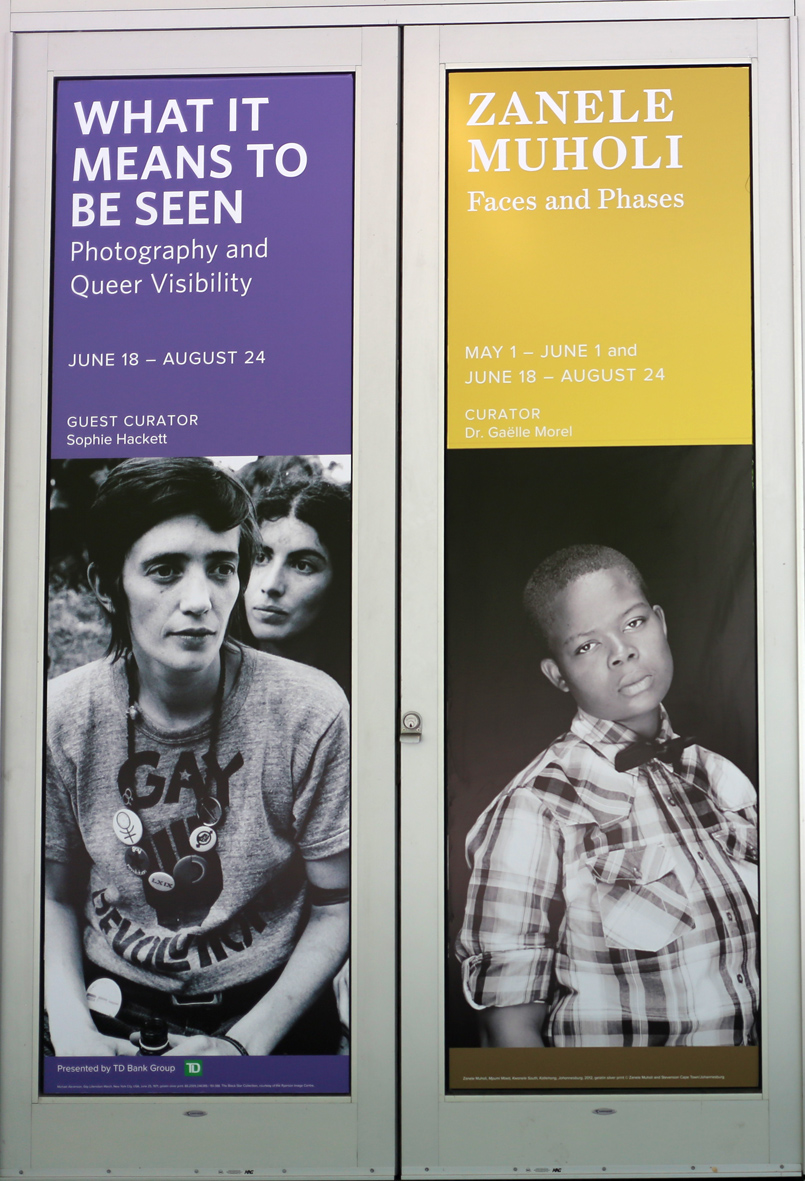
36 of more than 240 black and white portraits that make up Faces and Phases (2006-2014), hung in the Ryerson Image Centre as part of an exhibition meant to coincide with Toronto’s World Pride celebrations.

Image

Zanele Muholi, a Ryerson University documentary media alum turned visual activist, was at hand to give a talk about her work, and this particular project that radically challenges the conventional perception of black lesbians, transgendered peoples and their visibility in South Africa and beyond.
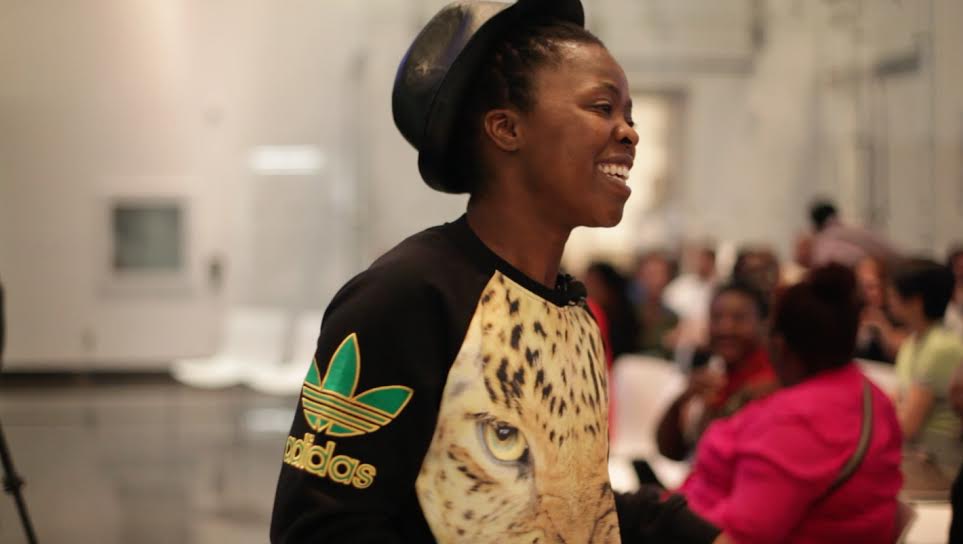
After tinkering and setting up, the ever self-assured but humble Muholi opened up her lecture by acknowledging those that had shaped her academically, spiritually and otherwise.  The room was almost to capacity and it included; the curator, Gaëlle Morelof the show whom she acknowledged for the opportunity to exhibit in that space.  Whilst also challenging the limited number of black lesbians who would follow suit after the 2014 World Pride Toronto brouhaha had died down or indeed those who had exhibited before her.

Politics of visibility are what birthed her entire work and most importantly the F&P project.  While preparing her thesis, she faced a let down upon realizing that even in the Western world, there was still a stark invisibility of African black lesbians in the scholarly world.  She acknowledged Kamplex, one of the participants in F&P series, whom she had shot while in Toronto in 2008.  “I told myself that I am not going to be angry at someone else for not acknowledging my existence.  I told myself that I was going to create my own history and visibility”.

Muholi’s work may sound easy but it is not as black and white.  She explained that to date she has shot over 500 portraits but she commiserates with her work first and has to feel he connection spiritually, for the portrait to make the cut.  During question time, a concerned audience member queried if she was not outing people by showing them internationally.  She explained her work process and ethic stating that she carefully chooses who to work with because she understands the gravity of her subject.

There are three things that she would not do; out someone – because that was not her skeleton, engage with underage lesbians because she did not want to seem to be coercing anyone or for members of the society to assume that she was promoting lesbianism and would not put up anyone’s portrait with no consent form in place.  Soon after she showed a short documentary entitled “We Live in Fear” of how she engages the participants, whom she refuses to call subjects, as well as her process of shooting.

Her talk shifted to the daunting topic of ‘curative’ rapes, detailing how, as much as South Africa decriminalized homosexuality on paper, it was still a raw subject culturally because it is very much a patriarchal institution and one that will not change soon.  She wondered if the men who were committing heinous crimes of rape, murder and disfiguring lesbians were feeling threatened or we were seeing the after effects of apartheid that had left many uneducated and under or unemployed and thus on the prowl.

Another audience member asked why a woman of colour would verbalise the word ‘curative’ rape to which Muholi explained the context of where she came from saying “in South Africa we do not usually use the term ‘a person of colour’ due to our Apartheid past, there are four classes of race –  White, Indian, Coloured and Black. The person of colour expression does not apply there but perhaps the society that we live in shapes how we term these things.”  Always inclusive, she asked another South African activist, Phumi Mtetwa, to speak to that, to which she explained that it was a term used to explain a situation in a place that demands a man be with a woman, that the woman is violated under the guise of ‘curing’ them of lesbianism.

It was a night of uncomfortable truths, but ones that had to be spoken on nonetheless.  With anything, if you must take people on your journey, there will always be turbulence and then a settling down of the flight.

Muholi showed other works that she had produced over a period of time.  While the issue of black lesbians being killed in South African townships was very real and raw.  She also wanted to showcase that there was life on the other side of the spectrum.  She presented photographs from her Of Love and Loss (2013 -2014)series.  It showcases the 2013 first township lesbian wedding in Katlehong as well as a gay wedding that took place in Daveyton township, 2013.
She spoke of the ZaVa series in which, she and her partner, Valerie are co-producing.  They explore their being, they juxtapose their contrasting selves as well as tastefully share their intimacy.

Closing comments with a smile... Photo by Zinnia Naqvi

Closing comments with a smile… Photo by Zinnia Naqvi

The talk ended because of time, but the audience was still very much captivated and wanted hear and learn more.  She thanked all those that had made it possible for her to exhibit at this space and reminded them, once again that it was important that they make black lesbians a part of their roster.  I think she was saying that, to move away from tokenism, this space needed to be accessible to all.
She asked “Where do the queer youth from Regent Park go?
Where do the queer youth of Rexdale and Galloway go?”
speaking on youths who live in these marginalized communities, who struggling to access such august spaces because they have never been open to them.

Her work is not always welcome and recently an exhibition featuring her work, amongst other artists, called Dak’Art, Dakar Biennale, Senegal – was shut down by authorities.  When asked if she got any support from home, she did not mince her words. “It is lonely where I sit and only this year was I asked to exhibit  at Wits Arts Museum at theWits University.
Sometimes I just want someone to ask me how I am doing”
.  Support, according to her, came mostly from the people she worked with in her projects.  She never got any awards from home until she became internationally acclaimed.  Besides winning numerous prestigious prizes, Muholi is also an Honorary Professor at the Bremen University (Arts & Design Dept.) in Germany.

A project dedicated to her late friend, Busi Sigasa (1982 – 2007), Muholi had vowed to not be silenced by anyone.  Even though she lost a lot of her work through a theft of her hard drives in her Cape Town apartment in 2012, she did not slow down and when an elected official called her work porn, she was not daunted either.  Earlier in the night, Muholi had spoken of how she had borrowed her professor’s magazine that had a lesbian on the cover and she had vowed to put a black lesbian on a magazine cover one day.  I would dare to say this Prince Claus laureate is well on her way.

f&p and what it means_1331

On the 18th of June, 2014 there was an opening reception of Faces and Phases and What It Means to be Seen: Photography and Queer Visibility exhibition.
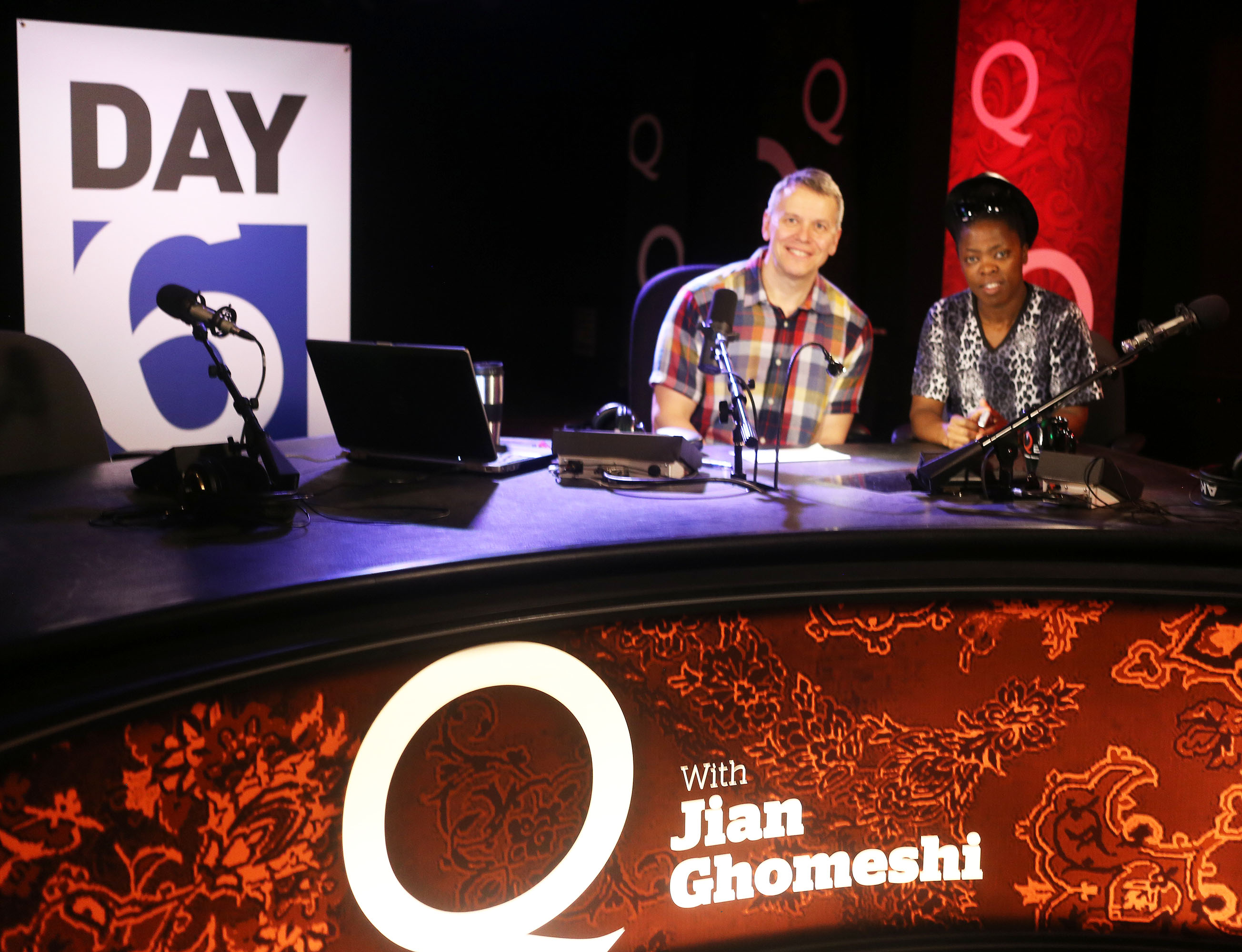
After the talk the audience was able to mingle with her and get more of her one on one time.  Previously on the 16th of June, 2014 she was interviewed on Canada’s state radio CBC1 as well as on CP24, a popular television news programme, on the 18th of June.  Not forgetting GlobalNews.ca
Image

Image

Just as she came, she was gone, for her next exhibition at the Singapore International Festival of Arts O.P.E.N.
(Open. Participate. Enrich. Negotiate), which will be opening on Thursday June 25, 2014.


Previous articles by Fikile


2014 March 5:  More than an activist


and


2013 Nov. 4:  From Market Photo Workshop to Bremen University


Posted in Black Lesbian Artists, Mainstream media, Public spaces, Queer Africa, Ryerson University, Visual Arts, Visual democracy, Visual history is a Right not a luxury, Visual Language, Visual Power, Visual Voices, Visualizing public spaces, We Are You, We Care, We Love Photography, We Still Can with/out Resources, We were (t)here, When Love is a Human Right, Women's power, Women; Voices; Writings; Education; Traditions; Struggles; Cultures, Words, Writing is a Right | Tagged , , , , , , , , , , , , , , , , , , , , , , | 16 Comments

2014 June 22: An intimate portrait of Somalian trans-woman

by Abdi Osman


Image


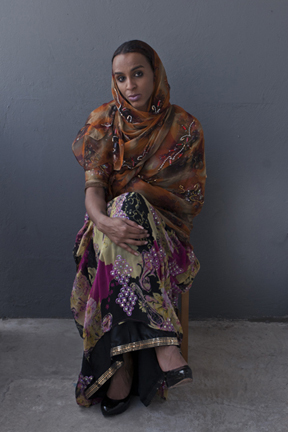
Labeeb
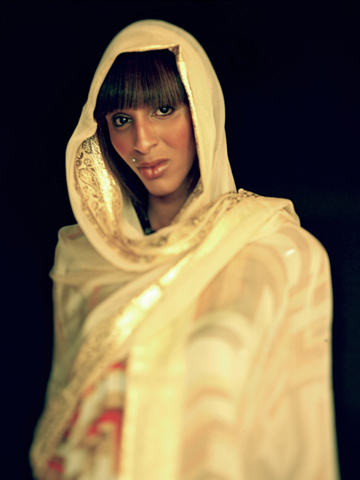
is an intimate portrait of Sumaya, a Somali trans-woman.
The project consists of large-scale colour photographs, and a double-projection video. Some of the photographs are studio portraits where Sumaya sat for the artist; others depict Sumaya in her daily life. One video also documents aspects of her daily life, while the other portrays Sumaya performing a Somali ritual usually reserved for women. This practice is one that Somali women undertake when preparing for a special occasion or ceremony. The practice itself is a hybrid: traditional and religious. The double projection is meant to add texture and complexity to Osman’s attempt to engage with questions of gender, sexuality, and culture. The videos speak to the hybrid cultural expressions of Sumaya and other persons like her.
These images place African-born trans-people directly within the traditions of their African/black cultural heritage.

Labeeb-7

While posing questions concerning gender, culture, and religion, the videos examine how the body can move into new states of being. They are themselves “trans-ing” practices, crossing the traditional with the new all-in-one body. This work pushes back against claims made by some African leaders that there are no African queers in their countries.

Osman’s work puts African/black trans-people on record. It questions how we understand the various roles bodies play or perform, and which bodies or genders are understood to perform them—in particular, assumptions we make about female, black, queer, and trans bodies.

Image

Image


About the photographer, Abdi

Abdi Osman is a Somali-Canadian multidisplinary artist whose work focuses on questions of black masculinity as it intersects with Muslim and queer identities.

Osman’s video and photography work has been shown in Canada and internationally in both group and solo exhibitions. He holds an MFA in Documentary Media from Ryerson University, and B.A. in African Studies from the University of Toronto.

Previous work has been supported by a grant from the Ontario Arts Council. His photographs are also in private collections and the Art Bank of the Canada Council for the Arts. Some of his work was in the year-long group show DiaporaArt: Strategy and Seduction by Canadian Artists from Culturally Diverse Communities at Rideau Hall.

Abdi was a 2010 artist-in-resident at the McColl Centre for Visual Arts in Charlotte North Carolina. Most recently in 2012, he was a fellow at The Interdisciplinary Center for Culture and Creativity (ICCC) at the University of Saskatchewan.


Posted in Another Approach Is Possible, Art Edutainment, Art Is A Human Right, Photographs, Power of the Voice, Recognition, Records and histories, trans bodies, trans-ing, Uncategorized, Video, Visual democracy, Visual history, Visual history is a Right not a luxury, Visual Language, Visual Power | Tagged , , , , , , , , , , , , , , , , , , , , , , , | 2 Comments

2014 June 20: Difficult Screenings

By Pam Dlungwana


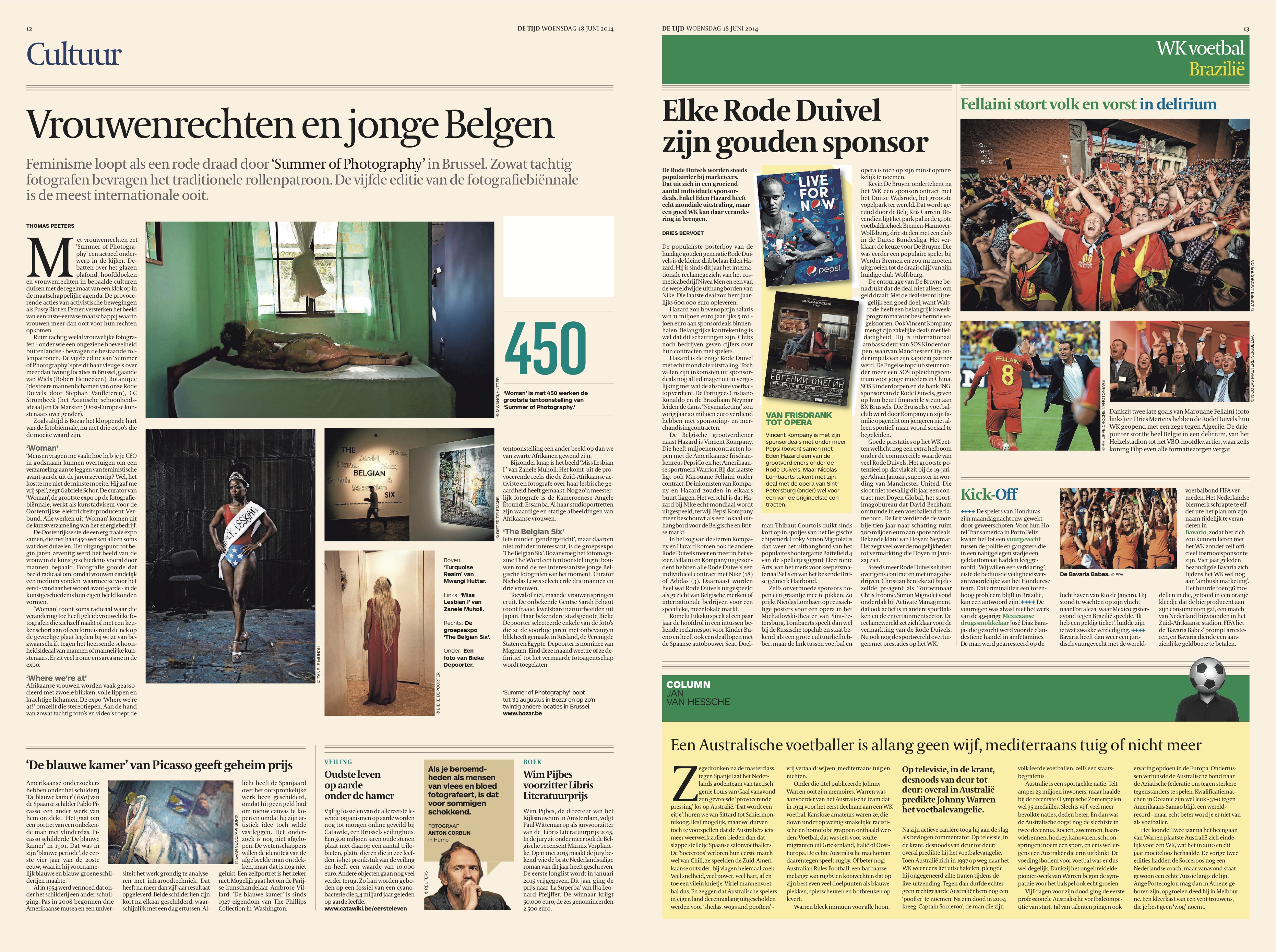
Where We’re At! Other Voices on Gender is an exhibition curated by Christine Eyene at the Bozar Palais Des Beaux-Arts Brussels as part of the month of Photography 2014. As a curatorial project it aimed to amplify the voices of women artists from the Caribbean, Africa and the Pacific whose works focus on identity, the body, gender and sexuality from their personal and socio political perspectives. The works offered as part of this exhibition ranged in medium from photography to video and some sculpture and expanded into various platforms as panel discussions and talks further beefed up the programme.

Of the works selected for this exhibition Zanele Muholi’s Miss Black Lesbian (2009) series; which served as the festival poster, featured alongside the triptych Caitlin and I (2009) and the Amsterdam red light district inspired Being (T)here (2009).


DeTijd_20140618_SOP2014

On Monday in the main exhibition hall, artists hung around too nervous to fly off in case TV crews wanted interviews as this was the morning dedicated to such matters. This room served as a bit of a waiting room with jackets and scarves littered all around as artists paced back and forth listening in on the interviews of others. The juxtaposition of Zanele Muholi’s work and Angele Etoundi Essamba’s made for a subtle reckoning of decades and generations of photographers of colour challenging the stereotypical objectification of the black female body. Both artists works dominated this part of the exhibition and formed part of the backbone of the themes explored in other areas of the show.

 Zanele was also asked to screen the film ‘Difficult Love’ (2010) which was followed by a panel discussion with Christine Eyene, Sassia Lettoun of Amnesty International and me. The purpose of hosting the panel discussion was to further explore issues presented in the documentary, to expose South Africa’s rather attractive Constitution and contrast it with the realities of township based black lesbians in the present day SA. The panel was also meant to serve as a platform to enlighten audiences on the origins of Inkanyiso and it’s role in documenting queerity in South Africa.

The 8pm screening and panel discussion came after a day of interviews and walkabouts with various media from 11am which was followed by a private pre-opening for funders and partners at 6pm. Meeting with Christine earlier we’d talked of her nomination of Inkanyiso for a local grant.  She shared her enthusiasm for the work the platform achieved, its reach in terms of vocality and relevance within the continent and shared her hopes for its growth. Sitting in the panel with her I was comforted by her sensitivity with regards to the subject matter of the film. Her nuking sensationalism as it threatened to take over the conversation and her informed and unflappable manner throughout the event.

Sassia was a passionate voice of the blue-barb-wired candle, her command on LGBTI issues throughout the continent as well as her organisations’ involvement in each case added further depth to the conversation. When it came to audience participation I loved best a question on why it is we are seeing such an increase in violence, intolerance and state sanctioned homophobia in Africa. I was ready to name and blame American religious fundamentalists; and did actually, but Christine found an example much closer to home. She reminded me that when I was Paris last year there had been a huge anti gay marriage protest and sighted that there seems to be such fires flaring up in all continents but that Africa somehow manages to captivate global audiences as if it suffers from such ills all on its own. To close the evening Sassia stated rather glibly that whenever governments need a diversion, they are sure to find a crowd to protest some anti gay law or another. The discussion was longer than the film, the connections made feel as though they might outlive this life.


Previous by Pam

2014 June 20:  Spana my child


Posted in Black Female Body, Discussion, Event, Interviews, lgbti, Life, Media clippings, Organisations, Paris, Platform, programme, queerity | Tagged , , , , , , , , , , , , , , , , , , , , , , , , , , , , , , , , , , , , , , , , | 3 Comments

2014 June 23: The lovely couple on vacation in Cape Town

© Photos by Charmain Carrol
2014/06/07 – 09


Previous article

2014 June 10: The Ndlela’s are still committed to love


by the pool

shopping for sovenours

going up table mountain

finally

beautiful

freinds from korea

something is funny

capturing her better half 1

capturing her better half

capturing the view

view of robben island from table mountain

  happy moments

let me help you up

exploring the mountain

love is in the air

lions head

special call from home

checking her out

love is in the air-1

view of the 3 sisters from the top

viewing of cape town

houtbay

the tour bus

watching the sun set in sea point

on top


freinds3

on his knee once again

exploring 1

with Angel

shopping in gugulethu

where the magic happens

preparing our meal

feeding each other

enjoying

mzolis meat

group pic

with Zola and Yolisa


Their s2013 Wedding photos are on the link below

2013 June 15: The Durban Lesbian Wedding of the Year


© Photo by Charmain Carrol
2014/06/07

Posted in Black Lesbian professionals, Black lesbian visibility, From Durban to Cape Town, Holiday photos, Laughter, Lesbian couple, Life Stories, Love is a human right, Memory, Our lives in the picture, Penetrating mainstream spaces, Politics of existence, Politics of geography, Politics of representation, Portrait, Support, Table Mountain, The Ndlela s, Togetherness, Visual history, Visual Language, Visual Power, Visual Voices, Visualizing public spaces, VMCI members, We Love Photography, When Love is a Human Right, Women who have sex with Women, Women's power, Women's Work, Words, Writing is a Right, Ziningi & Delisile Ndlela, Zulu is a South African language | Tagged , , , , , , , , , , , , , , , , , , | 6 Comments

2014 June 17: Uprising with EPOC and the black LGBTI community in Ekurhuleni

by Lebo Mashifane


June 16 is known as Youth day in South Africa. On the 16th of June 1976, there was an uprising in the township of Soweto, with students protesting the introduction of Afrikaans in schools, a way to keep up racial segregation in the educational system.
All subjects had to be now taught in Afrikaans, a language of the oppressor and not familiar with the people.  The authorities clamped hard on the students, maiming and killing protesters, many of them youths, in the process.  Hector Pieterson, who was
carried by a fleeing Mbuyisa Makhubo, succumbed to the violence.  2014 marks 38 years since blood was shed in Soweto, surrounding areas and beyond.

Every year the day is celebrated in memory of the lost lives that fought for the liberation of black South African students.

Image


In 2014 June 16, the Ekurhuleni Pride Organising Committee (EPOC) organised a march and an after party in celebration of Youth Day. The after party was
held at Mpumi’s Tavern in KwaThema. The LGBTI’s of KwaTsaDuza, KwaThema,
Tsakane, Duduza – neighboring townships of Ekurhuleni, East of Gauteng) were
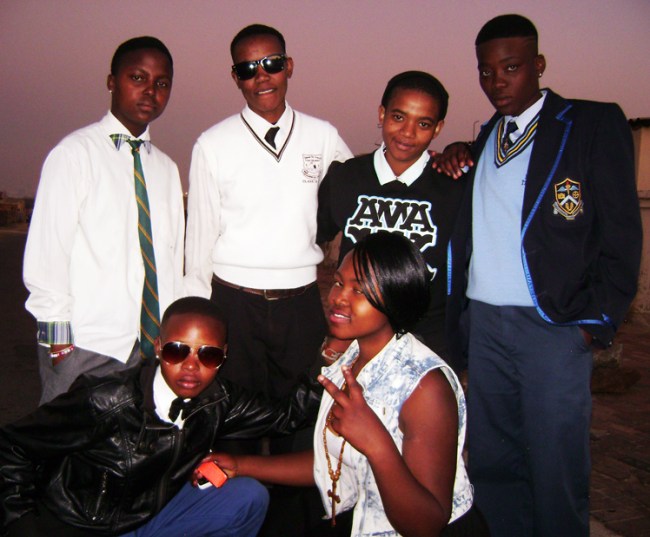
dressed in their uniforms to celebrate Youth Day because the Youth of 1976
had put their lives on the line for post-Apartheid generations not to be taught in Afrikaans. Further comments from organisers and attendees are to follow.


Image


The after party was attended by about 50 people. To me personally June 16 is a remembrance of what struggles the youth of 1976 were faced with.  They did that for us, younger generations that followed, to be liberated from the mental incarceration by European oppressors. My message to the current youth is this ”let’s leave drugs and beat drums to celebrate our liberation… Let’s put our fists down and lift up our pens to sign our gratitude as B.E.E’s in our celebration”.

Image

Some quotes from the attendees:

Shane Mokae (19)
“The reason for the event was to give an awareness to the community about the LGBTI community and I will not really say I was participating. I was just supporting the group that hosted it and the people that told me about it was the group called EPOC. I felt really touched about the event because it might change the way people see the homosexuals, my views about the youth is that things get to change and they are not done like before so I’m saying the struggle still continue for the LGBTI community but our heroes and heroines fought against the oppression.”

Simphiwe Munyai (19)
”A friend of mine told me about the event. I’m a fan lesbian not an exact lesbian. I felt welcome and I enjoyed the event a lot and it was all about celebrating the lives of the students who died in Sharpville fighting for a better education for everyone we would not be having this kind of education if it wasn’t for them”

Lerato Dumse (25)
”Youth Day is very important to me as it serves as a reminder of the power that rests within young people. The struggles might be different, but they still exist and June 16 reminds us that we also have to do something. The event at Mpumi’s was a relaxed and laid back event, but I didn’t have the time of my life.”

Tshepo Mosamo (20)

”It was a day obviously enjoyed and well planned, we came from the local rank distributing Safe Sex Packages, educating the young and old about the importance of Safety and Health. Many were impressed by how much we knew about maintaining our health, at our age. Youth Day should be considered a sacred day of nothing but remembrance. I’m a proud LGBTI youth and it should be known that so many of them died for a reason, that of liberated opinions and power of speech.”

Nokuthula Tshili (36)
”I organized an event at a friend’s place it was mainly gays and lesbians, commemorating the day and celebrating the achievements that we see in South African education today. They fought back and we reap the fruits. It is more a celebration, not a struggle anymore.”

Bontle Khalo
Bontle says her age remains confidential.
”On Monday the 16th of June in Duduza rank, KwaThema we had a community awareness campaign. Its purpose was to reach out to the community of KwaThema and inform them about LGBTI issues. We gave people pamphlets, and by people I’m referring to ordinary citizens, street vendors, taxi drivers who were around the area
that time. Pamphlets about EPOC’s information were handed out and we also
provided them with safe sex packs and we also gave them our details in case
they need to contact us at a later stage.”

Zandi Mabaso (17)
”The June 16 event was fabulous and it was something really out of this world. It was my first time being at such an event and it is a day that I will definitely remember for the rest of my life.  I came with a few butch lesbians namely: Shane, Refiloe, Masemola, Luyanda & Siyanda, Ntsiki etc.
These people literally forced me to attend the event with them and that’s why I came. I met new people and I had new experiences and got to do new stuff that I would rather not talk about. Youth day to me means that I must enjoy the free life and Education that the students died for. I still do learn in Afrikaans and I think they also fought so that we can have a choice as to whether to learn in Afrikaans or not.”

Rose Matusse (35)
”I was at home, with my two brothers and my partner.  We went to Mpumi’s place where we met with lgbti and had some drinks. I was invited by one of my friends Ntsupe Mohapi from EPOC. My view on youth day is that it’s a remembrance of the
youth that fought and died for us, even though it’s not celebrated in a correct way because today’s youth wear uniform and go to taverns to drink alcohol, that is wrong.”

Popie Nozipho Masangu (39)
”On the 16th of June we had a campaign organised by EPOC LGBTI. The Campaign
was to teach people about lgbti people and for the community to accept us.
We chose this day because we also have young people who are gays and lesbians who also suffer because of people discriminating us. The event went well. We distributed pamphlets and people were supporting us.  Youth day is a special day to remember youth who died fighting for their rights.
Now children are free to be taught in their languages. They are not forced to learn Afrikaans at school. June 16 is not just for people to celebrate and party but to remember those kids because of them we are educated and free to use our own languages.”

Khanyisile Mtungwa (28)
”I knew about the event through Facebook. As a member of EPOC, I was also
part of the planning of the event as we shared ideas. The results turned out quite impressive. The event was good, we handed out pamphlets and t-shirts walked to the after party. And the pub that we went to is not discriminating. They did not judge us or abuse us, so all in all it was good.”


Previous by Lebo


2014 May 26:  EPOC (out)reaching effort


Posted in Afrikaans, After party, Apartheid, Archived memories, Archiving Queer Her/Histories in SA, Art Edutainment, Duduza, Ekurhuleni Pride Organising Committee (EPOC), Gauteng, Inkanyiso media, June uprising, KwaThema, KwaTsaDuza, Liberation, Lost Lives, March, pamphlets, Protests, Safety and Health, School uniforms, Solidarity, Speaking for ourselves, T-shirts, Tavern, Tsakane, Visual Activist, Visual Arts, Visual democracy, Visual history, Young talent | Tagged , , , , , , , , , , , , , , , , , | 1 Comment

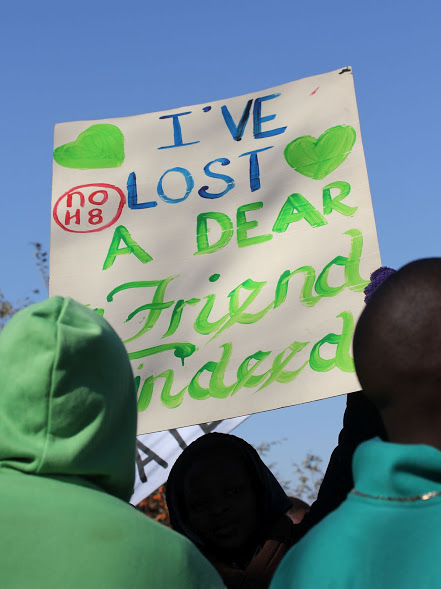
2014 June 16 : Remembering Thapelo with a broken heart

by Tsepo Kgatlhane


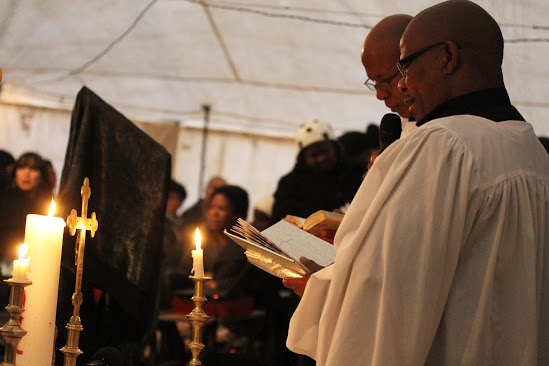
The funeral service of Thapelo Makutlhe at home in Kuruman on the 16th June 2012.                                   © Photos by Zanele Muholi (2012/06/16)


Lebo Mathosa once said: “You cannot deny death. You cannot fear it. I am sure that God has a better place for us, if you are a good believer.”

This memorial is written to celebrate a life not yet lived.
How do I start?
What can I say?
Why did you have to go?

This year, on the 16th June 2014, marks 2 years since your untimely death. Life went on. Everybody moved on, but I can’t help but still miss you and wonder what and where you would have been now, for you had big dreams for yourself and your community. Your passing has left an enormous hole in my life, but your life filled mine with so much growth and everything that was wonderful.

I run out of words trying to articulate the pedestal on which I placed you in my heart.  Today l remember you still and have that blissful feeling in my heart. Only you and I understood the kind of bond we shared hence the world shall never understand why in every step l take l miss you.  Even though l didn’t spend every day with you, each moment we had felt like a lifetime. I respected the way you carried yourself.

I honour the passion you had for life, the unapologetic attitude in taking courageous action towards fulfilling your dreams and being entirely yourself without letting the world determine that.  In my spirit l still find moments to tell you how much life would have been insanely whole with you cracking jokes with me and showing your crazy dance moves. I loved that, you are a friend that had his own weaknesses yet your strength outshone the rest, you never let anything keep you down.

Every time l do something to change the world l do it for you too because you were different, you were a change and those close to you knew how much you cared for the world – selfless and adventurous. Unaware of how much your passing left a mark in my life, you cleaned my mirror and made me understand how crucial it is that l live for the moment. I will always remember you Thapelo Makuthle.


Poem

Gone but not forgotten
This is more than just a
memorial note
It’s an oath
I’m doing it for us both
More for you than for me
You have inspired me to be
the change I want to see,
To be the best that I can be

Although it’s been hard
Since you left me
I know you’re looking down on me
I know that you are proud
of me for embracing me.
Your memory lives on
in all that I do,
You do too.

Not a day goes by that I
don’t think about you.
What you would have said,
What would you do?
 Your death brought death
and turned it to life!
All my days I will keep you
alive, in all that I do.

Like I did when I collected shoes.
You are here still.
All through the Winter, Spring, Summer
and Autumn.
You may be gone but you are not forgotten.


Previous by Tsepo


2014 June 11:  I am an educator


Related links


2012 June

Thapelo Makuthle’s service


http://www.youtube.com/watch?v=p6piy1aBJzQ


Thapelo Makuthle’s funeral


http://www.youtube.com/watch?v=UGRhrQC3VgI


2012-06-18-4

One of the friends who attended Thapelo’s funeral in Kuruman…


2012-06-18-6
Laid to rest respectfully by family, relatives and friends…
after the moving service from the family church.

2012-06-18-10…the Pastor who opened the memorial service the day before the funeral.

2012-06-18-5
Shaine Griqua who denounced the act of violence.
Shaine is the one who alerted me about brutal murder of Thapelo Makuthle, and expressed the need to document  memorial and funeral service.
My friends Funeka Soldaat, activist and director of FreeGender and Justin Davy, filmmaker and videographer joined me on that trip from Cape Town to Kuruman, Northern Cape.


2012-06-18-8
During the funeral service which was held at Makuthle’s home in Kuruman.

2012-06-18-1

Distinguished friends from all walks of life attended Thapelo’s funeral… 

2012-06-18-7

Holding the memorial programme, Funeka Soldaat, … denouncing…
was there to give support to the family and 
 local activists…

2012-06-18-11

 Funeka giving a hug to Thapelo’s mother…

2012-06-18-2
 Two pastors read the scriptures before the cortege left the home for cemetery


2012-06-18

The family loss is our loss as the LGBTI community in South Africa…

Before the coffin was lowered

Before the coffin was lowered


Posted in 2012 June 16, Archived memories, Archiving Queer Her/Histories in SA, Art Activism in South Africa, Blackness, Coffin, Commemorating the queer youth we lost along the way, Commitment, Committed, Contributors, Education, Emotional support, Empowerment, Evidence, Exchanging Queer thoughts, Female Photographers, From Cape Town to Kuruman, Hate Crimes, Hate crimes Victims names, Justin Davy, Northern Cape, Thapelo Makuthle's funeral documented by Zanele Muholi/ Inkanyiso, Videography, Zanele Muholi documented Thapelo Makutlhe's funeral in 2012 | Tagged , , , , , , , , , , , , , , , , , , , , , | 2 Comments

2014 June 10: The Ndlela’s are still committed to love

by Charmain Carrol

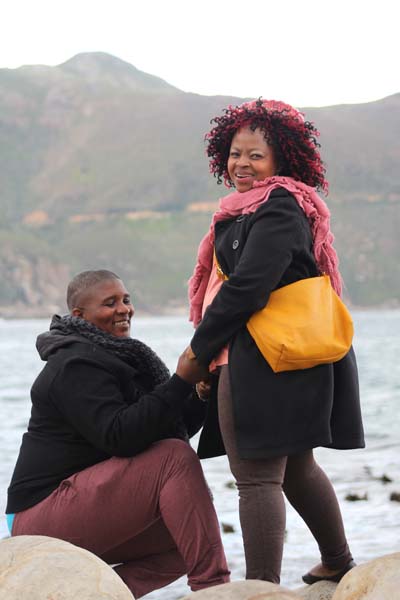
On the 6th of June 2014, I had the pleasure of accompanying the Ndlela’s to Cape Town, to celebrate their first wedding anniversary.  It seems like it was just last month when I attended their wedding in Durban on the 15 of June 2013.

kiss the bride_0249

Archived wedding photos from 2013/06/15

newly weds_5397


On my way to Johannesburg O.R. Tambo International airport all I could think of was how long it had been since I had been to Cape Town.  It was 10 years to be exact. I kept on wondering about the changes. Were there drastic changes to the place and the people I knew?

I landed at the Cape Town International Airport after 23h40 and there they were, Mrs and Bab’ Ndlela, waiting and happy to see me just as I was excited to see them.  It was around 12 am in the morning when we met since we all came from different cities. They boarded they flight from Durban and I, from Johannesburg. We went to the hotel that we were booked in, in Green Market square situated at the city centre.

We got up in the morning to the buzz of the market opening as we walked down through the market browsing at the amazing stuff that was on sale, on our way to have breakfast.

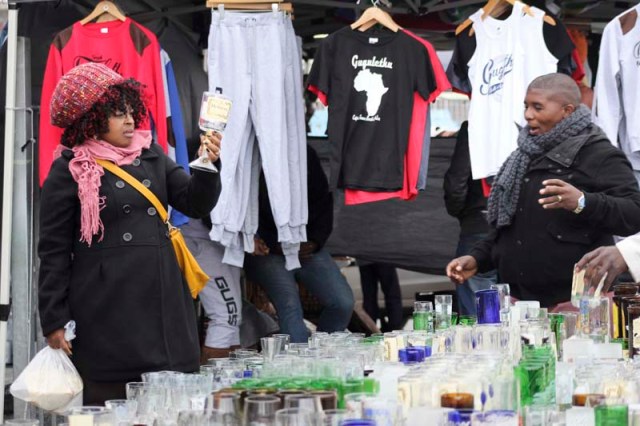
We caught up over breakfast. I wanted to find out what they would like to do and which places they would like to see and visit in Cape Town.  Shopping was on top of the list as we went past all the shops and window shopping, but realised that we needed hats and scarves as Cape Town was freezing cold.

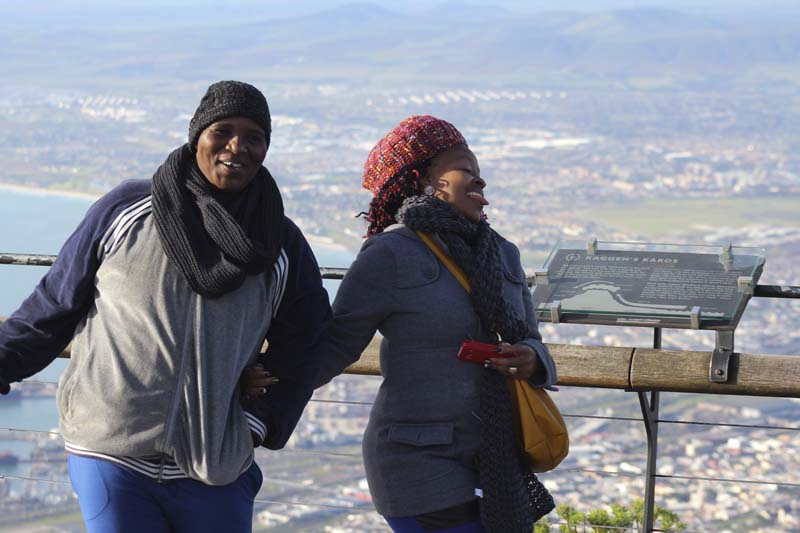
I took photos of everything we did and ended up on the red tour bus and to the top of Table Mountain.  Mam’ Ndlela was afraid to go on the cable car but Bab’Ndlela assured her it was okay, she would not die alone.

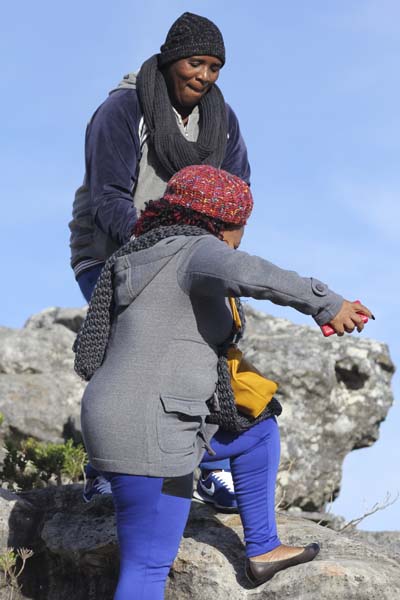
Finally, we got to the top and as much as it was cold they had fun meeting people and taking photos of each other, helping each other to the top of big rocks.  They seemed so in love and in sync with each other.  I looked at the way they smiled with each other, the way the laughed and hold hands through my camera lens.  It seemed they were falling in love all over again.  The could not stay away from each other.

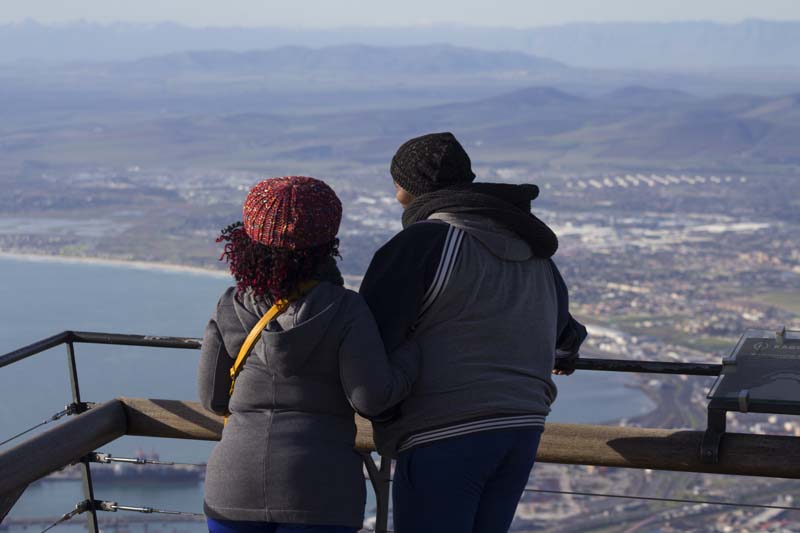
Bab’Ndlela read everything that was on the stones, every little inscription that was there had his attention.  We saw Robben Island from the Top of Table Mountain and they were both intrigued by how people had lived on the island as prisoners.

When we got back down from the mountain we had some cappuccino and scones before finishing our tour, that took us next to Camps Bay right, Sea Point, Waterfront and back to town.

The next day my friend Yolisa came to take us around as she had earlier promised.  She came with her husband Zola, who was such a gentleman driving us all over Cape Town.   We went to Hout Bay and ended up KwamZoli in Gugulethu.

I stood in a long queue to buy meat and some drinks but had trouble finding somewhere to sit.  We went next door and waited for out meat to be done and had some drinks, while we browsed the stalls outside kwaMzoli.

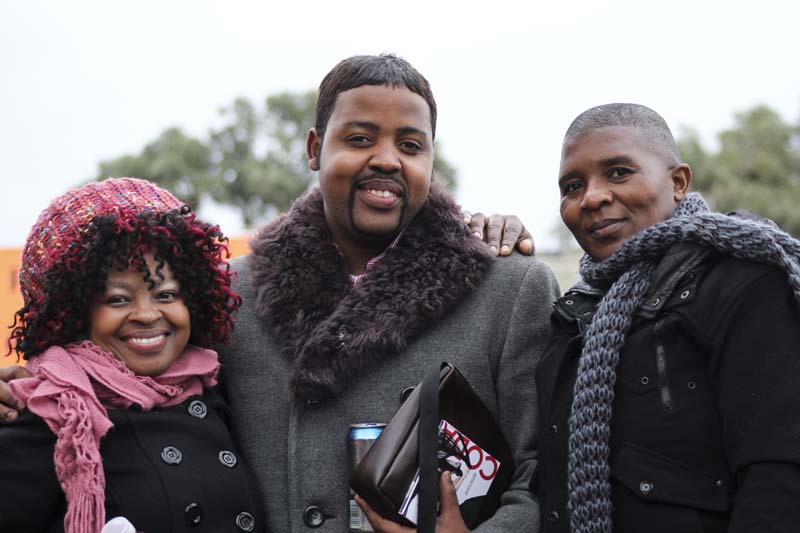
Familiar faces started popping in; Zimaseka Salusalu, Vice and Noluntu had came to see me as cold as it was.  We met new people too. Everyone was happy to be in our company. Mam’Ndlela was now mamMfundisi as she was recruiting ibandla (congregation) and said she would be back with uBab’Mfundisi and maybe open a branch in Cape Town.

On the 9th June 2014 we had to return to our homes. It was sad to part, but it was time for us to leave and get back to our realities.

Cape Town was awesome.


Previous article

2013 June 17:  The Durban Lesbian Wedding of the Year


Posted in Archived memories, Archiving Queer Her/Histories in SA, As we are, Beauty, Black Lesbian, Black Lesbian Congregants, Black Lesbian professionals, Black lesbian wedding, Members of VMCI in Durban, Relationships, Solidarity, South Africa, Speaking for ourselves, Textualizing Our Own Lives, Traditions & Customs, Visual Activist, Visual history is a Right not a luxury, Visual Language, Visual Power, Visualizing public spaces, We Are You, We Love Photography, We Still Can with/out Resources, We were (t)here, When Love is a Human Right, Women's power, Women; Voices; Writings; Education; Traditions; Struggles; Cultures, Words, Writing is a Right, Zanele Muholi, Ziningi & Delisile Ndlela, Zulu is a South African language | Tagged , , , , , , , , , , , , , , , , | 3 Comments

2014 June 21: Continuity … Muholi ongoing Visual Activism


Exactly a year ago.

@ Kunstplass 5 gallery
Where: Oslo, Norway
Captured with iPhone 4 by Valerie Thomas


Related link

2013 June 21: The Princess of Norway pitched just for Muholi

Posted in Archiving Queer Her/Histories in SA, Art Activism in South Africa, Art Edutainment, Art Is A Human Right, Evidence, Exchanging Queer thoughts, Exhibition opening, Experience, Expertise, Exposure, Norway, Video archiving, Visual activism, We Still Can with/out Resources, We were (t)here, Writing is a Right | Tagged , , , , , , , , , , , | Leave a comment

2014 June 21: Vanessa and Nana’s engagement party

Image

Photos and text by Charmain Carrol.

Four months ago…

Where:  Midrand, Johannesburg
When:  23rd March 2014

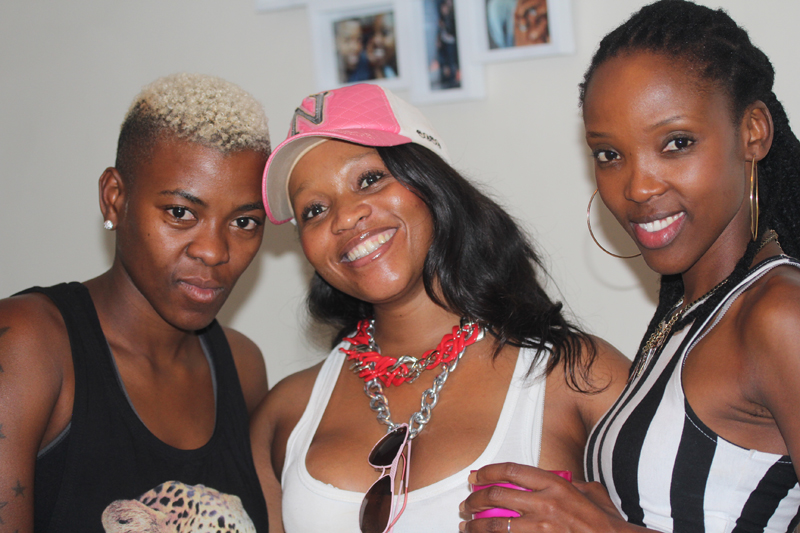
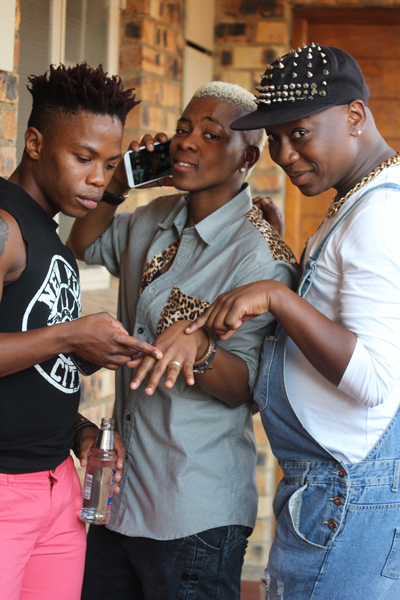
Bathini Dambuza and I were honoured to attend yet another engagement lunch of two of our fellow lesbian sisters held in Midrand, Johannesburg. The couple who got engaged is Vanessa Mathebula (24) and Ntokozo Mthalane (27. Ntokozo is a professional dancer and Vanessa is a medical rep.
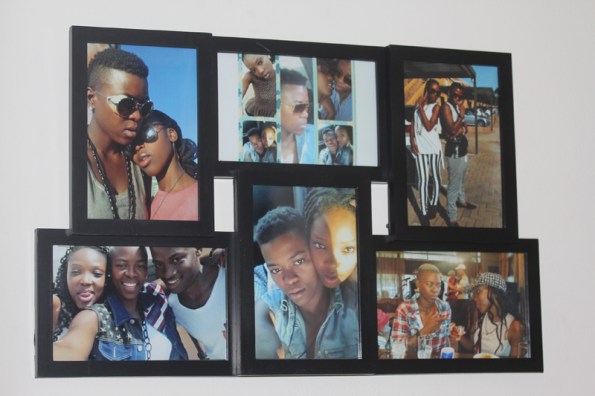
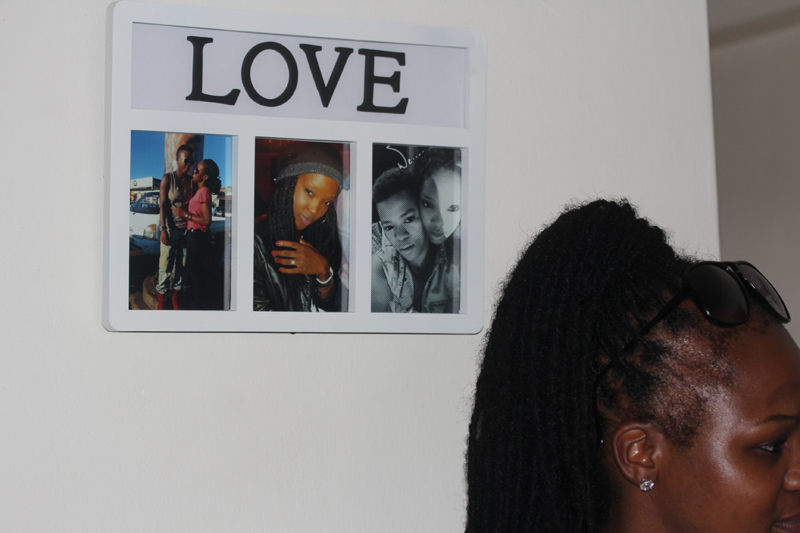
As you walk into their apartment there are pictures of them on the walls and one could sense the warmth and homely atmosphere. The kitchen counter was full of food that the couple had prepared for the guests.

IMG_3147

Close friends and family were there to support and celebrate with them. The couple started dating on 9th February 2013. On the 14th March 2014,  Ntokozo (also known as Nana) proposed to her sweetheart and on the 23rd March 2014 a lunch was held in which many friends and family witnessed their engagement.

Amongst the family members who came to support the couple was Vanessa’s mother.  I managed to steal  some few minutes from her as she was very busy with preparations. She was very hands-on as to not just being there but also contributing by capturing the moments of her second eldest daughter’s special day. I asked her how she felt about the engagement since there’s so much hate crimes reported in our society and she said, “I have accepted my daughter and her partner as part of the family. As long as they are happy, I will support them”.

As the day progressed a lot of dancing took place and we couldn’t help but notice how the couple couldn’t get their hands off of each other, stealing kisses here and there one could tell how in love the couple is.

Previous by Charmain

2013 Feb. 8:  “Let your voices be heard”

IMG_3155

IMG_3048

IMG_3022

IMG_3028

IMG_3212


IMG_3320


IMG_3038

IMG_3220


IMG_2997

IMG_3188

IMG_3210

IMG_3005

IMG_3004

IMG_2992

IMG_3000

IMG_2999

IMG_3136

IMG_3162

IMG_2982

IMG_2979

IMG_3182

IMG_2995

IMG_3195

IMG_2996

IMG_2957


IMG_3154

IMG_2962

IMG_3277 IMG_3057 IMG_3296

IMG_3255

IMG_3316

IMG_3290

IMG_2988

IMG_2976

IMG_3201

IMG_3120

IMG_2977

IMG_3046

IMG_2955

IMG_2954

IMG_3224

IMG_3203

IMG_3137

IMG_3121

IMG_3305

IMG_3327

IMG_3307

IMG_3030

IMG_2985

IMG_3216

IMG_3205

IMG_3178

IMG_3328

IMG_3317

IMG_3185

IMG_3012

IMG_3104

IMG_3187

IMG_3149

 IMG_3119

IMG_3025

IMG_3179


IMG_3208


IMG_3180

IMG_3333

IMG_3173

IMG_3310

IMG_3322

IMG_3253


Posted in Black Butches and Femmes, Black Lesbian, Black Lesbian Artists, Black Lesbian Dancers in South Africa, Black Lesbian professionals, Black Queer Born Frees in South Africa, Black Queer Professionals, Blackness, Butch identifying lesbian, Crea(c)tive senses, Creating awareness, Emotional support, Gender distinction, Midrand, Photo album, Speaking for ourselves, Special event, Visual Arts, Visual Language, Visual Power, Visual Voices, Visualizing public spaces, We Care, We Love Photography, We Still Can with/out Resources, We were (t)here, When Love is a Human Right, Women who have sex with Women, Women's Arts In South Africa (WAISA), Women's power, Women; Voices; Writings; Education; Traditions; Struggles; Cultures, Words, Writing is a Right, Young talent | Tagged , , , , , , , , , , , , , , , , | 8 Comments