2013 April 13: Reasons why we as lesbians (not all lesbians) shun +HIV people…

Opinion

Fri, 12 Apr 2013 19:44:14

This is my opinion and I’d like to apologize to my brothers and sisters if this is going to offend anyone…

A response to the latest post titled… on 10.04.13

 “It is rather strange that as lesbians we fight so hard to not be discriminated against yet it is so easy to shun on a HIV positive person as if being associated with them is a death trap…”

It is not all encouraging if you’re in one of the many places, be it home, school, work or church especially church where self appointed moralists like to stick their prurient noses into other people’s bedrooms but the fact that their curiosity as to how you got infected will always be there.

The fact that it is not a death sentence does not outweigh the fact that it is a life threatening disease with very unbearable final assault on ones health. It can be argued that it is no different from other fatal chronic diseases like diabetes and cancer and that the end results are the same, but the stigma surrounding the virus is incomparable to any other disease.

So, while under the employment of a certain HAST clinic, during one of the lazy days and with willing and open clients. I found myself pondering on the same horrible question
“How did you get infected” and I stuck my nose into their bedroom affairs and the responses were a bit unsavory.

However, whatever happened or failed to happen did not change the fact that some of them are my friends, family and proud African men and women old enough to be my parents who in their own way left footprints in someone’s life.

HIV is not a hereditary disease. Unlike diabetes, cancer and any other life threatening diseases we cannot say that it runs in the family. It is acquired. And unlike these other chronic illnesses, it comes with a huge baggage of stigma, whether it is true to the person infected or not, it still has stigma attached to it.

When I stuck my nose into other people’s bedroom affairs, unsavory as they may be, these are the reasons I got, the reasons that do nothing to reduce the stigma:

• My partner cheated or I cheated unknowingly with an infected person – Cheats!

• I had a little to drink and my libido took charge instead of my brains – Irresponsible!

• I couldn’t use protection/condom, it’s such a mood killer, worse still, I do not eat candy in a wrapper – *speechless*

From my beautiful lesbian sisters overflowing with swagg

• Gloves are such a turnoff, they look like I’m performing a medical procedure instead of making love

• Dental dam has shifting tendencies and I really can’t taste the oysters

• I never use a condom because I don’t have sex with people who have penises, which is true. But I wonder whether the shared toy has been conveniently forgotten.

Then there are our classic blondes
(apology to those with the beautifully colored hair or weave)

• S/He couldn’t have had it,
s/he looked so good,
so clean, has a job and is so successful

• I took antibiotics, herbal medication before and after having sex

• I showered/washed my privates after having sex, I assumed the virus would be washed away (thanks to our leader with many partners whom their sexual practices are unknown)

And they still wonder how they got infected…

If I could, I would call this ‘The wisdom of the educated ignoramus’

If I were to have a blog based on these wonderful special people who get paid about R1000 per month for half a year, get free groceries, free specialized expensive medication, who have specialized research done based on them and can have rallies and have protest marches if those needs are not met, just because they have the virus.
I would either be very popular, have no family nor friends or dead not because they are not only strangers who can build or break my career, but because they are also my friends, my brothers and sisters, my family.

I am not even surprised that the number of virus chasers had increased over the years…

So, my opinion as well…

People don’t like being around HIV people not because they have a life threatening disease but because like most lesbians out there, they have attention neurosis
(A made up condition for people who like attention because they perceive themselves as different from others, demand attention and allow that to define them).
Not to mention that self pity is not a very attractive dress to cover oneself in.
(Not all of them are like that, but the case of one rotten potato spoiling their entire sack is true and really suck in this case)

S/he doesn’t want to be my friend because I’m lesbian = s/he doesn’t want to be my friend because I’m +HIV.

And the really true reason could be personality incompatibly or you simply don’t click/connect!

There is a small percentage of women who have acquired the virus due to Medico legal reasons.
I sympathize with them but for their sake I hope they live as positively as they can because self pity might also cause them friends not the virus. The same goes to those born with the virus.

So whether we like it or not, aware of it or not because, it might be done with your knowledge/consent or behind your back. People will always stick their prurient noses in your bedroom affairs when you’re +HIV until you explain how you got infected or just live your life so positively that your glow outweighs their curiosity

I salute those who have lived their lives and still continue to do so fully, positively and with so much radiance that their HIV status does not define who they are but their true selves shine so brightly that their lives become an inspiration to others.

—————————————————–

About the author

Clear Peaceful Mind known as Didi is a graduate from NMMU.  Currently working for the Department of Health (DoH).
She is a peaceful, clear minded mother of a pigeon pair, a daughter and a sister.
A writer of short stories and poems based on experiences, feelings, emotions but still faced with the introverted impossibility of writing one paragraph, in third person about herself.

Posted in Allies, Archived memories, Career, Profile, Treatment Action Campaign (TAC), Victims | Tagged | 11 Comments

2013 April 13: Tears in my sister’s eyes

She’s been hurt,
harmed and destroyed by these dogs called men”

Marks and scars never to disappear have bee left in her body.

She’s been taken for a ride and made to believe she was going to win this time around,
by our falsely imposed justice system…
the fucked up justice system!

One keeps on asking and wondering
When is it all gonna go away?

When will women be taken into serious consideration by our country,
its citizens,
the government
and its ministers?

You’re beaten up, raped and molested

Yet, no matter how hard you cry no matter how high you scream…

They just keep on passing you by.

They enjoy your screams
laugh about it
they mock you
called you names.

They praise their stupidity and foolishness about you.

They share their cowardly insults about you
while forgetting the most important lessons
to be learned and perceived in life about life…
love each one as brothers & sisters so did say GOD!

by Busi Sigasa
© 2006

_____________________

Both Busi Sigasa & Buhle Msibi were commemorated by Inkanyiso, family, friends and allies at an event attended by more than 100 people at Goethe Institut, Parkwood, Johannesburg on the 6th April 2013.
Inkanyiso would like to express our gratitude to all those who took their time to honor to Busi & Buhle’s lives.

Related articles

2013 April 5:   Short vigil for our late activists

and

2013 March 8: Public Event announcement

Posted in 1982 - 2007, Gratitude | Tagged | 8 Comments

2013 April 12: Bros B4 Ho’s at the OIA film festival opening

On the 12th April 2013 Inkanyiso crew and I attended the annual South African Gay & Lesbian Film Festival hosted by Out In Africa (OIA) in Johannesburg. The event that has been hosted annually for the past 20 years wasn’t as I had anticipated. The event didn’t meet my expectations, and am sure those that took their time to go there would share my sentiments.

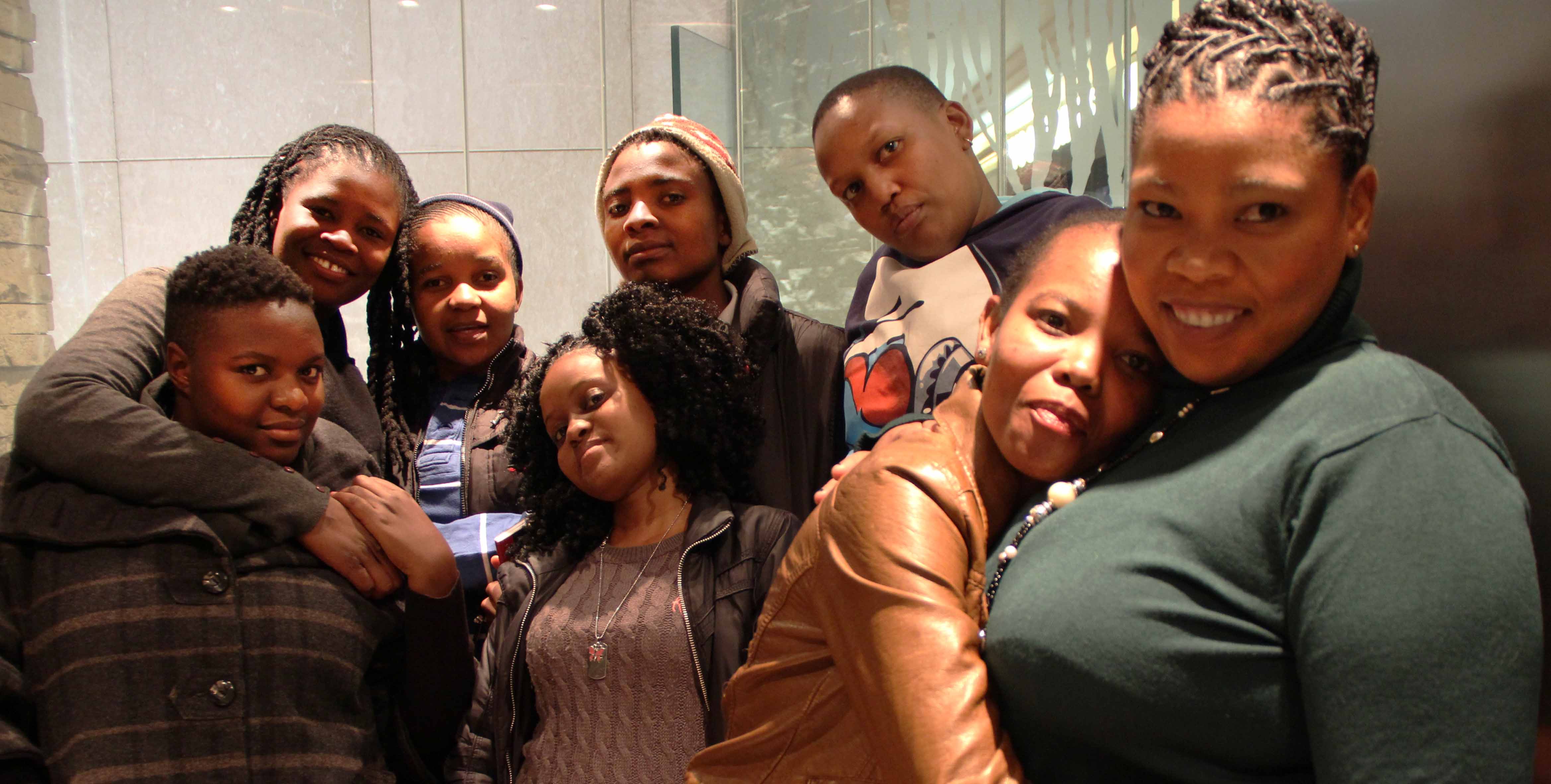
12.04.2013 Some of Inkanyiso crew at NuMetro, Hyde Park, Johannesburg. L-R: Maureen Velile Majola; Bathini Dambuza; Nqobile Zungu; Kopane Sibeko; Lerato Maduna; Lesego Tlhwale; Baitiri Seleka and Charmain Carol. Photo by Collen Mfazwe

12.04.2013
Some of Inkanyiso crew at NuMetro, Hyde Park, Johannesburg.
L-R: Maureen Velile Majola; Bathini Dambuza; Nqobile Zungu; Kopano Sibeko; Lerato Dumse;
Lesego Tlhwale; Baitiri Seleka and Charmain Carol.
Photo by Collen Mfazwe

As someone who hasn’t missed the festival open night for the past five years, I was rather sad about how the event has turned out to be due to lack of funding. Out In Africa is one of those unique initiatives that showcase films that mainstream media wouldn’t consider screening.  It gives young and upcoming directors the chance to show their talents and also give LGBTI films a chance to be seen by those who want to see them.

OIA has wrote in their website that the festival they are hosting now might be the last festival for a while. If funding to host these significant events doesn’t start rolling in, our visibility as LGBTI’s in terms of films and documentaries is as good as non-existent.

The festival will be screening a range of different films from South Africa and abroad from 12 April to 21 April 2013 at Nu Metro cinemas at Hyde Park, Johannesburg and at the V&A Waterfront, Cape Town.

Yesterday screening opened up with three South African produced and directed films and documentaries.

Nu Metro, Waterfront, Cape Town.Bros B4 Ho's troupe just after their documentary screening at Nu Metro, Waterfront, Cape Town

Nu Metro, Waterfront, Cape Town.
Bros B4 Ho’s troupe just after their documentary screening at Nu Metro, Waterfront, Cape Town.
Photo by Zanele Muholi (21.04.2013)

The South African programme features movies such as Kinsey, directed by Karmen Wessels; Bros B4 Ho’s, directed by Samantha Lea; and Two Stories, directed by Justin Archer, Martin Bleazard and Rosanna Scott.

The films were a mix of emotional rollercoasters starting with a documentary telling the story of Nosiphokazi Fihlani, a corrective rape survivor, who lives in the Grahamstown township and stands bravely against those who discriminate against her and so inspires other lesbians to be open in a community that wants to keep them silenced.

The documentary was a touchy topic for LGBTI’s in South Africa especially black lesbians.
It showed a gruesome side of homophobia, the director’s re-enacted the rape scene showing explicitly what Fihlani went though. The scene raised a lot of questions from the audience on whether it was the right thing to make Fihlani relive the rape scene and also whether that didn’t tamper with her healing process.

Another scene that raised concerns was that of Fihlani frequenting in shebeens and her heavy drinking tendencies. The audience questioned whether her recovering/healing is genuine or she is using alcohol to deal with her situation.

The documentary for me wasn’t different from all the other doccies that have addressed hate crime and corrective rape in the past. Like the usual documentaries, the film covered one side of the story, even when they went to the street to interview random people; it was all about how they hate lesbians and it made me wonder if everyone guy in Khayelitsha has animosity towards lesbians. Didn’t they find people who accepted lesbians.

I long to see a documentary on LGBTI topic that shows heterosexual people that accepts and understand gays and lesbians. I mean not everyone is against homosexuality; some people are understanding and open to positive dialogue.

Bro’s B4 Ho’s a documentary about the drag king troupe in Cape Town was a breath of fresh air.
A light doccie showcasing the lives of 6 extraordinary women, as they write themselves into the history books as South Africa’s first ever Drag King troupe. The film took us on a journey of female masculinity, how they interpret their masculine side as females. They perform in different gay clubs around Cape Town entertaining people in their drag attires.

However, for me as a butch lesbian, I wondered how was them dressing up as men different from me being in predominantly men clothes on a daily basis. Or am I a drag king also? Beside them performing and mimicking male celebrities, I didn’t see anything different from a transgendered individual trying to fit in the heterosexual society.

Overall the programme was good, had us glued to the screen for an hour tops. The festival is still on until the 21 April 2013 in Johannesburg and Cape Town.

Other movies that will screen are Beyond the Walls (Hors les murs) directed by David Lambert, a Belgian, Canadian and French co-production; four productions from the US, namely Four, directed by Joshua Sanchez; How to Survive a Plague, directed by David France; Interior. Leather Bar, directed by James Franco and Travis Mathews and Love or Whatever, directed by Rosser Goodman.

UK directors Ross MacGibbon and Matthew Bourne’s Swan Lake 3D; Céline Sciamma from France’s Tomboy; and M. Caner Alper and Mehmet Binay from Turkey’s Zenne Dancer are the other films on the programme.

Tickets cost R50 each. Bookings can be made at 08 61 24 63 62 or www.numetro.co.za. Let’s go there in numbers and support the festival as it is there to preserve our history and making sure it is not forgotten.

by Lesego Tlhwale

____________________________

Previous articles by Lesego

2013 March 31: I Stand Corrected in Soweto

and

2013 March 24: Recognition of LGBTI Activist should be a culture

and

2013 March 16: Dangerous love


and

2013 Feb. 12: A dildo is not a man; it’s a fantastic toy…


and

2013 Mar.1: Definitely NOT “Gaysbian”
Check the OIA programme here.

http://www.oia.co.za/

Posted in Activism, Africa, Allies, Art Activism in South Africa, Collaborations, Contributors, Crea(c)tive senses, Exposure, Expression, Films, Inkanyiso crew, Lesego Tlhwale, Life Stories, Out In Africa (OIA), Questions & Answers, Records and histories, Visual history, Women; Voices; Writings; Education; Traditions; Struggles; Cultures | Tagged | 11 Comments

2013 April 10: Another black lesbian activist has fallen

Report by Christie van Zyl

As fellow South Africans especially members of African National Congress commemorates 20 years of Chris Hani’s brutal killing in Boksburg, Johannesburg
(April 10, 2013).

Freegender members, allies and the black lesbian community at large gathered at Khayelitsha Site B X Section, Cape Town to celebrate the life of Nomawabo Mahlungulu, who was an HIV activist.  I can’t ignore the thought that rushes through my mind, if Nomawabo will be remembered 20 years to come as her death coincdes with that of Hani’s.

Nomawabo in a blue t-shirt with fellow members of Freegender

Nomawabo wearing a blue t-shirt with fellow members of Freegender

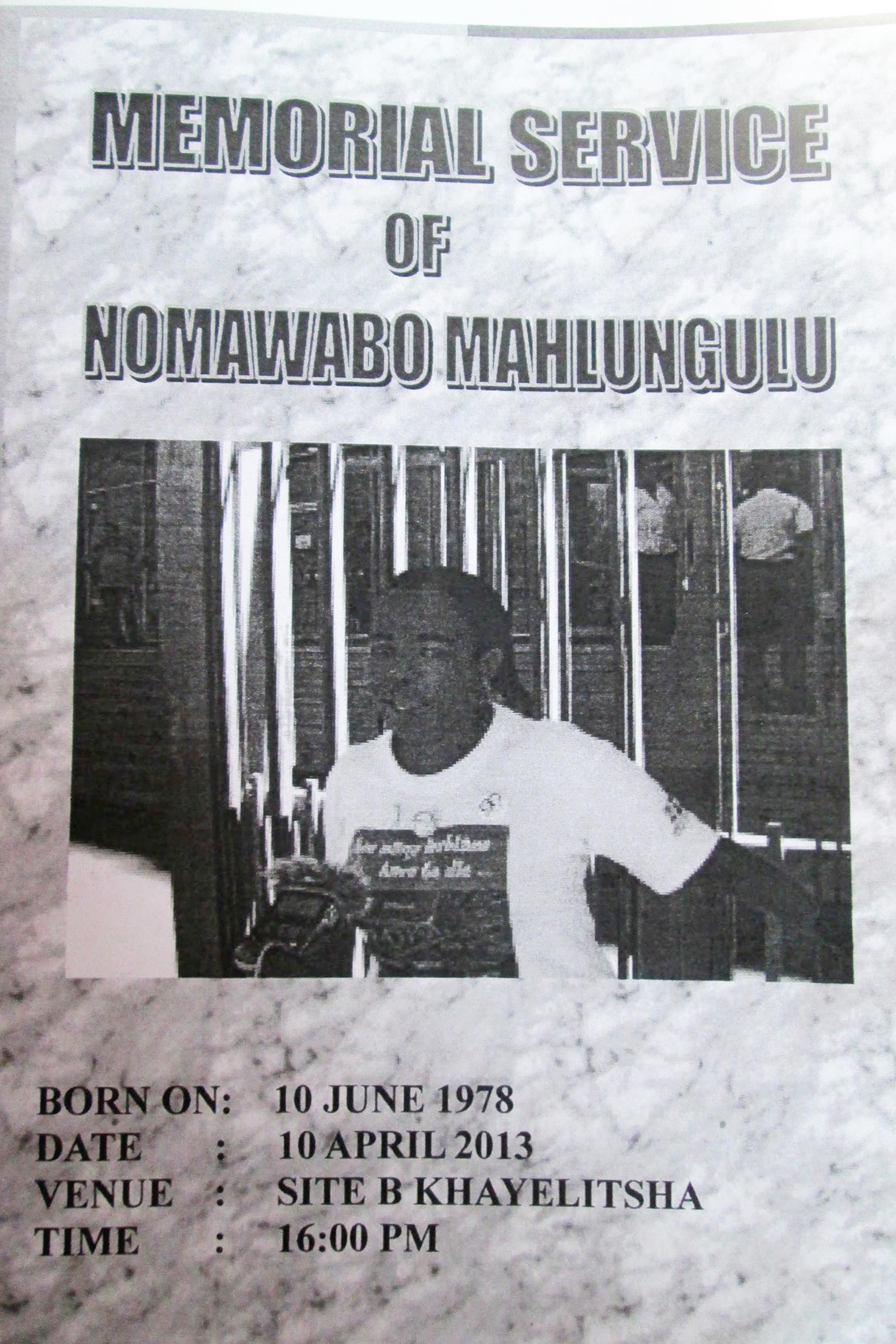
She was a member of TAC (Treatment Action Campaign), as well as Freegender member and was a lesbian herself. The dearly loved Nomawabo, nicknamed ‘Wawa’ was diagnosed with HIV in 2003 and her illness took a turn for the worst in November 2012. She was diagnosed with second term of TB (tuberculosis) and unfortunately passed away on the 30th of March 2013 at the Khayelitsha district hospital. We gathered for her memorial service today on the 10 April 2013 at 16:00pm.

Memorial programme

Memorial programme

Though sad, It was a lovely service with a lot of joy in celebrating Nomawabo’s life but I could not erase the thoughts I had in my mind about the difficulties that the family are having with putting her to rest. I spoke with Siya Mcuta of Free Gender, Khayelitsha who has been in liaison with the family about the burial of their daughter, sister and aunt. Siya tells me that it has been difficult to plan this funeral because the family does not have any money, no insurance and Nomawabo also had no funeral policy.
She went on to tell me that Nomawabo’s mother had appealed to her Umbutho (stokvel) to cover the costs of her daughter’s funeral but her appeal was rejected; partial costs of the funeral were covered by a friend of Nomawabo’s, who was willing and was able to put Nomawabo down as a beneficiary of her stokvel and in this way the cost of the coffin and the umkence (mortuary) were paid. Siya tells me that they are still in need of money to pay for food and transport for the funeral. They need to cover transport for the family to get to the church and the cemetery and for the funeral attendants to get to the cemetery too.
The desperation has gotten to such a point that there have been suggestions to make attendants pay for transport to get to the cemetery. She further went on to say that they are still also looking for venue to hold the service of the funeral and hopes that it will not cost anything even though they are struggling to secure a church because Nomawabo was not a church goer.

As I went on to question the lack of support in laying Nomawabo to rest, Siya told me that Nomawabo was not affiliated with any church and did not attend church. This makes it difficult to find a church that is willing to help with a service and venue, as it stands she is still not sure where Nomawabo will be buried either. It strikes me hard that even at a time when someone needs to be laid to rest petty politics about whether someone attended church or not can get in the way of making sure they have a respectable sending off; and this is in Christian faith is beyond understanding to me because Jesus said ‘my children come as you are’.

As I began to suggest to Siya that maybe it would work if we put a tent in the yard and have the service there as had been done for Sihle Sikhoji last year in November.  She mentions that Nomawabo’s family lives embacweni (in a tightly knit cluster of housing), therefore there would be no space to erect a tent for the service.  She further mentions that she is not even sure what is going to happen when the body is brought home on the morning of the funeral because of the space limitation at Nomawabo’s home. She assumes that we will meet directly at the church. Siya ends our conversation by telling me that she finds it sad that the people that would usually be willing to help were not interested in helping due to the stigma of HIV and lesbianism. The honour of of giving someone a respectable send-off can be jeopardized by the boundaries of discrimination even when a person is no longer part of this world, it makes me feel shame and guilt and heartbreak; how do we ensure that one’s passing receives the respect that is due to each individual.
Of the many speakers that were present at the service today, I was sincerely shocked by the statement made by Norute Nobula of the TAC (Treatment action campaign) who spoke about Nomawabo’s struggle with HIV. Norute stated distinctly that she had seen the reports from the hospital and made a clear distinction that even though Nomawabo was a great activist in our communities and made a huge difference in the lives of LGBTI and HIV members of the community.  Nomawabo was however not taking her treatment correctly and that death is the result of that kind of negligence.

As a HIV positive community and nation we need to be more aware of taking care of ourselves and taking care of the ones who feel too weak to take care of themselves.

Wawa's mother second from left

Wawa’s mother second from left

Funeka Soldaat addressing the memorial attendees

Funeka Soldaat addressing the memorial attendees

This statement takes me to a comment made by Funeka ‘Tafura’ Soldaat, who made a plea with the lesbian community that we need to stop stigmatizing HIV, Funeka appeals to lesbians to be more open in giving support to our HIV positive community members. A very true plea indeed, it is rather strange that as lesbians we fight so hard to not be discriminated against yet it is so easy to shun an HIV positive person as if being associated with them is a death trap, when will we learn that HIV positive members need as much support as possible; such as do we when we come out of the closet and face rejection from our own family members. Lesbians we need to check ourselves before we wreck the ones we love and care for around us.

Hymns were chanted repeatedly one after the other during speeches and between speeches, the one hymn that particularly stood out for me said: “Zonke izizwe zisondelene, bonke abantu basondelene, ewe sisondelene” (All nations are close together, all people are close together, yes we are close together); this hymn was chanted incessantly and on one account joyfully accompanied by members of the community forming a close knit circle and throwing their hands into the centre of the circle to symbolize unity and togetherness.

Mamfundisi blessing the memorial

Mamfundisi blessing the memorial

A beautifully administered service lead by a female pastor (Mamfundisi) of the Imboniselo Zion Apostolic church who ended the service by telling us that ‘uNomawabo wayekhona emzabalezweni’ (Nomawabo was present during the struggles); and that as we walk out of the church heading home and we fear for our lives thinking about rape and death, we should remember Paul’s words that say ‘I know pain, I know hunger; I have taught myself contentment’. Mamfundisi further went on to make an appeal to the parents of the community to support the youth and be without discrimination as every thought should be that they are parents first.

Nomawabo ‘Wawa’ Mahlungulu will always be celebrated as never liking to talk but always loving to sing!

Born: 10 June 1978

Deceased: 30 March 2013

Memorial Service: Khayelitsha Site B, 10 April 2013

Funeral: Khayelitsha Site B, venue still to be confirmed, 13 April 2013

___________________________

Some previous articles by Christie

2012 November 20:    Mourning in commission
and
Videos on YouTube:
Blog contributions on Freegender.org
Press conference on Sihle’s Sikhoji’s murder
Exactly eleven days ago at the memorial service of Sihle Sikhoji


Posted in 1978 - 2013, Abantu, Activism, Africa, Allies, Archived memories, Art Activism in South Africa, Articles, Before You, Black Lesbians, Black Lesbians & Allies Against Hate Crimes, Chris Hani, Christie van Zyl, Community, Community Mobilizing, Contributors, Creating awareness, Death, Expression, Family, FreeGender, Friendships, Funeka Soldaat, Funeral costs, Health, HIV/AIDS, Homosexuality, Khayelitsha township, Lack of Resources, Life Stories, Networking, Nomawabo 'Wawa' Mahlungulu, Organizations, Poverty, Readings, Records and histories, Relationships, Send-off, South Africa, Townships, Treatment Action Campaign (TAC), Tuberculosis (TB), Visual history, Women; Voices; Writings; Education; Traditions; Struggles; Cultures | Tagged | 19 Comments

2013 April 9: I refuse to be abused

I refuse to make love to the hands that twist my wrists

Hands that declares that love insists

To justify itself with fists

The same love that covers my face with mucous spits…

As I recapture how your fingers created sensual sexual traces

Allowing you to make love to my special sacred places

Funny how we moved from sexual to face trashing stages

And after such tragedy you still insist on making love faces

And then you vow that you love me on those bases…

So in sweet bitter thought
as I reflect

On how your gentle touch also had a concurrent negative impact

To my confidence because you’re soft hands had a facially impairing effect

Inducing the reality that how we met has become the day I live to regret

Because I…

I fear the smile that once left me amused

The touch that never made my body refuse

So I guess that gave you power,
power that you so rottenly misuse

By constantly leaving me
economically, emotionally, mentally, physically and sexually abused

Am amazed by how you think your tired apologies will reimburse

My pride, my love, my smile and
my beauty that you repetitively curse

So I repeat that I refuse

To be abused.

by Kopano Sibeko
© 09/03/2013

________________________

About the author

Kopano is a young South African, feminist, activist and writer. She is also a daughter, sister and lover of life.
She studied and completed National Diploma in Journalism at Tshwane University of Technology (TUT).
Interned at Alex Pioneer and Community Media for Development Productions (CMFD).
Have previous wrote for Forum for the Empowerment of Women (FEW) and GenderLinks.
Currently volunteering for Inkanyiso as a reporter/ journalist focusing mainly on lesbian youth affairs and women’s lives in Alexandra and surrounding areas of Johannesburg.

Related articles

Dangerous love

Posted in Community, Connections, Creating awareness, Documentation; Filming; Photography; Community, Jealousy | Tagged , | 17 Comments

2013 April 2: Do good even when faced with difficulties

Text by Lerato Dumse
Photos by Nqobile Zungu

Members of Victory Ministries Church International (VMCI) spent their weekend at camp Jonathan, Camperdown in Pietermaritzburg, KwaZulu Natal. Perched up on a mountain, the camp is about an hour from Durban. It provides tranquility, and is a good choice to spend the Easter weekend.

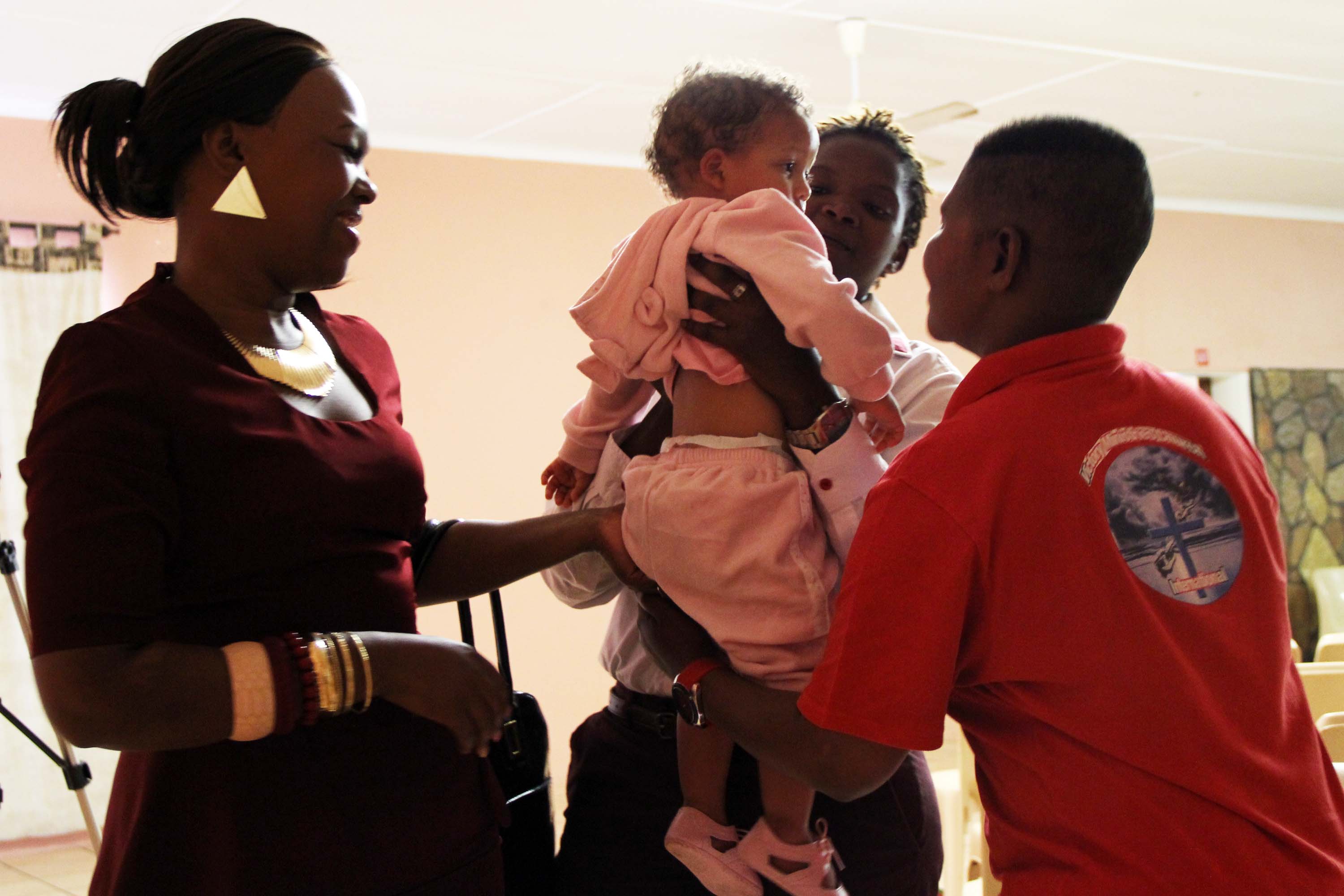
The service started with the introduction of a new member, Zenande Zungu. Pastor Zungu and her wife were happy to announce the successful adoption of their two (2) year old daughter with the congregation.

Zenande being introduced to some members of VMCI

Zenande being introduced to some members of VMCI

The first service was on the 29 of March (good Friday) morning, the church’s vibrant choir started the service with a worshiping session.
The “seven words service” saw different members of the church delivering scriptures in relation to the crucifixion of Jesus.

L-R: Pastor Z. Zungu and the wife MaGesh Zungu during the VMCI Easter service

L-R: Pastor Z. Zungu and the wife MaGesh Zungu during the VMCI Easter service

(1) Luke 23:34 “Father forgive them…”.

(2) Luke 23:42 “I will be with you in paradise” the verse was delivered by Mr Chauke who urged the people to emulate Jesus and do good even when faced with difficulty.

(3) John 19:26-27 “Mother, behold your son…” Magwaza encouraged people to take care of children even if they are not theirs.

(4) Matt 27:46Eloi! Eloi! Lama Sabathani?”
When bab’ Mkhize delivered the message people got on their feet applauding hard. Speaking of betrayal by those we trust, Mkhize advised the congregants to stay close, cry and trust in the Lord at all times.

Let thy Holy Spirit come into our hearts, Amen!

Let thy Holy Spirit come into our hearts, Amen!

(5) John 19:28 “I’m thirsty…”

(6) John 19:30 “It is finished…” Here Chauke reminded everyone that
Jesus died for us and our sins.

(7) Luke 23:46 “…unto your hands…” Pastor Hazel who has her own church in Mpumalanga concluded the scripture reading. She reminded people that they can’t commit their spirits to God, without living for him.

Saturday was started with a 5am prayer followed by aerobics before breakfast was served. Workshops were presented by both baba and mam’ Zungu. Presenting first, Pastor Zungu spoke about the principles that govern the church. Emphasizing that VMCI was not a gay church but God’s church with homosexual members.
“People who want to pursue a romantic relationship must follow the correct procedure of paying lobola or getting engaged then marrying before they can be open about their relationship “said the Pastor. Reiterating that the church doesn’t support vat ‘n sit (cohabiting) as she believes that creates a bad impression.
I must also admit that in all homosexual events or gatherings I have attended, I’ve never seen so many of those attending spotting wedding bands as is the case at VMCI.
When mam’ Zungu presented she spoke about lesbian mothers, focusing on butch lesbians.
As a mother herself, she told the mothers to embrace it “all kids are a blessing from God, some things start bad and end beautifully. Even those who conceived their kids through rape or hate crime” she said. We were then treated to a friendly game of soccer, with the youngsters challenging the older members of the church. The Saturday evening service was also headed by mam’ Zungu.

She told of the pain she endured as a young person and how those experiences have made her a better person. In her sermon she spoke about how she was desperate for love and even searched for it in the wrong places. Her story touched many, especially a young woman who got the strength to share her own story of looking for love and three failed suicide attempts.

The final service was on Sunday morning, everyone came looking stylish to celebrate the resurrection of Jesus. Pastor Zungu preached about how a new person was born in all who were at the camp and they should live their lives as new beings.

L-R: Pastor Zungu, Maureen Velile Majola with Zenande & MaGesh on 30.03.2013Photos by Nqobile Zungu

L-R: Pastor Zungu, Maureen Velile Majola with Zenande & MaGesh on 30.03.2013
Photos by Nqobile Zungu

______________________

About the author and photographer

Lerato is a young journalist, activist who is passionate about documenting LGBTIs lives in KwaThema and surrounding areas.
 Lerato studied Journalism at Tshwane University of Technology (TUT).
Also worked as a reporter for Ekurhuleni News; Springs and Brakpan Advertisers.

Nqobile is a photographer, activist currently documenting various activities for Inkanyiso. She studied Aircraft avionics and qualified as an aircraft instrument mechanic. Previously worked for National Airways Corporation (NAC)

Previous articles by Lerato

2013 April 2: He loves us all, just go to church and find God

and

2013 March 28: Failed justice

and


2013 March 28: Feather Awards (re)viewed

Posted in Allies, Community, Community Mobilizing, Creating awareness, Faith, Holy Spirit, Hope, Love, Photos by Nqobile Zungu, Readings, Scriptures | Tagged | 9 Comments

2011 May 11: Inkanyiso in solidarity with African human rights defenders

Kampala, UGANDA

Human rights defenders; Activists and allies singing ‘We are the World’, the night when Anti-homosexuality Bill was thrown out of the parliament.
A video produced live by Inkanyiso (2011)

Posted in Abantu, Activism, Africa, Allies, Before You, Collaborations, Connections, Creating awareness, Records and histories, Relationships, Transgenderism in Africa, Zanele Muholi | Tagged | Leave a comment

2013 April 2: He loves us all, just go to church and find God

by Lerato Dumse

When you stand outside while the church service is in action, you will assume that Victory Ministries Church International (VMCI) is a typical church. Its only when you walk in that your eyes are greeted with an unfamiliar sight, as the majority of congregates are from the gay and lesbian community.

Magesh, the First Lady of VMCI (pastor's wife) helping a member of the church as she is overcome by the holy spirit.

Magesh, the First Lady of VMCI (pastor’s wife) helping a member of the church as she is overcome by the holy spirit.
Photo by Nqobile Zungu

The church is based in Diakonia (Durban), has about 200 members and is led by Pastor Zungu who identifies as a black lesbian. It is refreshing to be in a religious setup, especially Christianity and not have to worry about homophobic utterances or people staring at you like you are invading their space. The church is divided into two groups Intsika who are the masculine members and iDwala the feminine members.

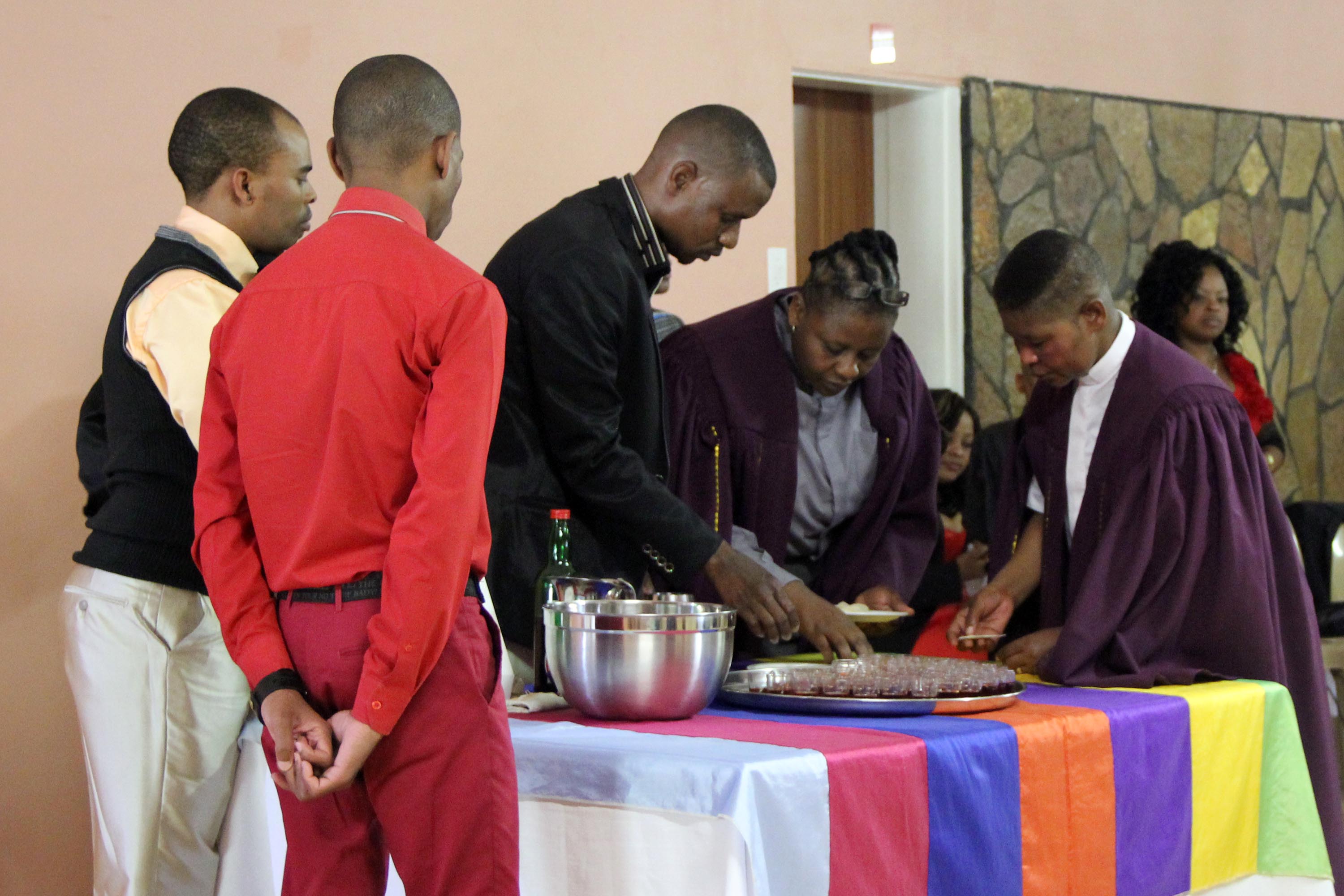
Pastor Zungu on the right preparing for holy communion during 2013 Easter service, Camperdown. KwaZulu Natal. Photos by Nqobile Zungu

Pastor Zungu on the right preparing holy communion for the congregants during 2013 Easter service,
Camperdown in KwaZulu Natal.
Photo by Nqobile Zungu

vmci2_7766

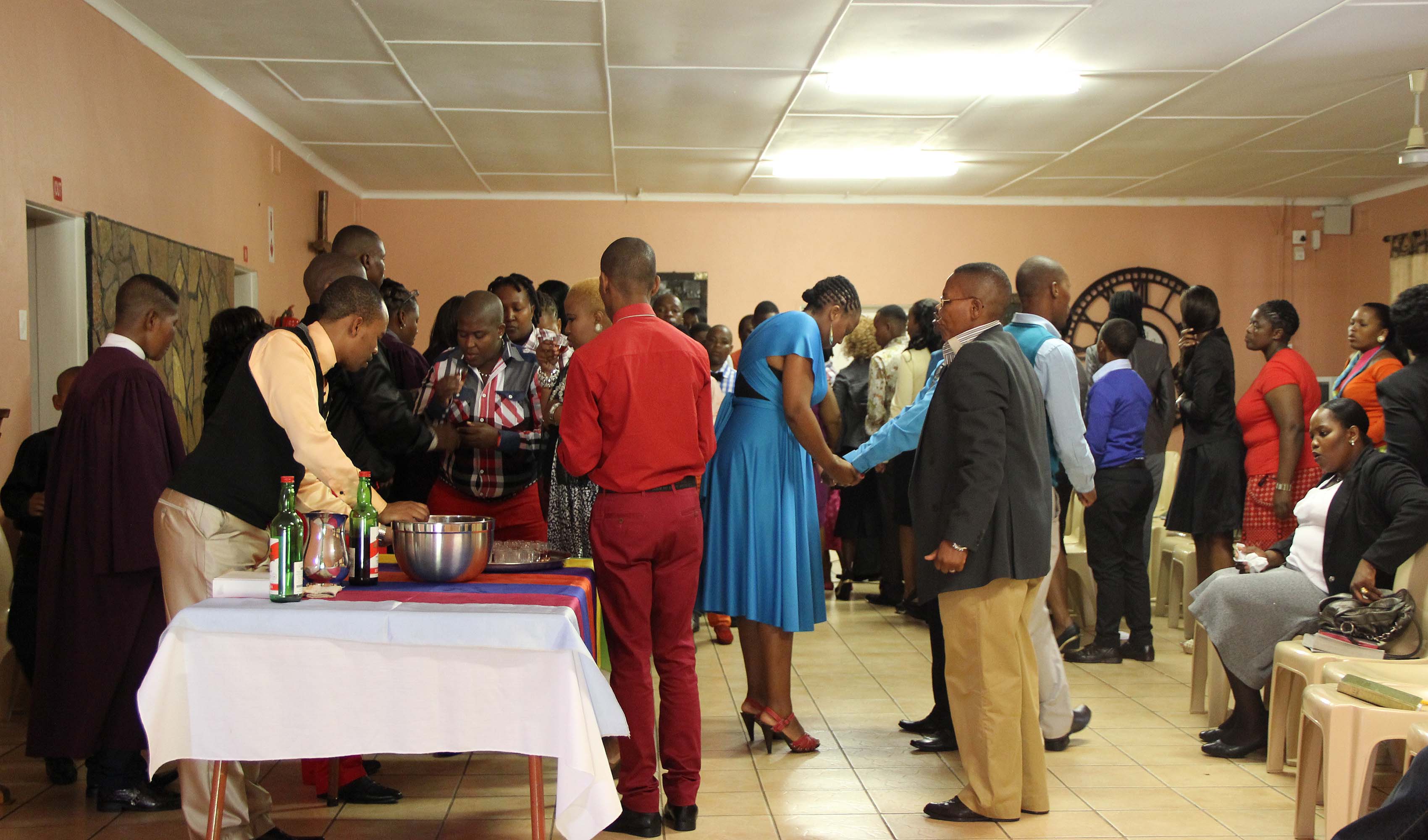
MaChauke helping with the serving of holy communion…
Photo by Nqobile Zungu

Sthombe who is part of intsika says being lesbian doesn’t mean you don’t know God,
“we are all God’s children and he loves us all”.
The church was established in 2005 and faced pressures from heterosexual churches and the community. They got through that before having internal squabbles which resulted in bab’ Zungu as she is affectionately known quitting and reviving the church again in 2009.
Growing from strength to strength Pastor Zungu says one of the biggest challenges was killing the notion that VMCI is a gay church. “We are a church of God, some members when they start coming to church don’t think they are worthy of being born again christians and having a relationship with God”adds Zungu.

An elderly couple in the church known as Gogo and Mkhulu (Grandma & Grandpa) say their spiritual level has been increased since joining the church. One of their daily activities is reading the bible together, Gogo says even when she and Mkhulu quarrel they are forced to reconcile because they can’t read the bible while angry with each other. Gogo who supports the church’s stance on no alcohol and drugs believes the church has helped her to be accepting of different sexualities. Pastor Zungu had encouraging words for homosexuals who don’t feel comfortable going to church. she said: “God makes no mistake in creating us; he loves us all, just go to church and find God” concludes Pastor Zungu.

Previous articles by Lerato

2013 March 28: Failed justice

and

2013 March 28: Feather Awards (re)viewed

Posted in Activism, Black Lesbians, Community, Community Mobilizing, Connections, Contributors, Creating awareness, Expression, Institution, Networking, Photos by Nqobile Zungu, Records and histories, Spirtitual activism, Visual history | Tagged | 16 Comments

I take photographs to remember those who cannot speak freely and to be remembered.
I believe photography to be my first language, a calling that I received from my ancestors so that I could voice my issues and concerns. Whatever I have captured and still capture is for the world to see that we exist as black lesbians, women, trans men, intersexed, trans women – as queer Africans.

I identify as a visual activist, though many say I am an artist now. I continue to document the many layers of my community, and I aim to create positive images for our future generations. For almost a decade now, I have captured black South African queers ranging in sexualities and genders from black lesbians to effeminate gays, lesbian men, drag queens and trans men. They represent my alternative extended family. Yet I have been feeling a longing in the past two years for something else. I realized some time ago that none of my pictures –at least none known to the world- are of my bio family. I have travelled and related experiences of my adopted family and community in so many places, but I feel an emptiness, a kind of guilt, about the lack of time I have spent on my own bio family, and this haunts me, because it is my family that defines so much of who I am today.

As an insider in the black queer community – being an African lesbian myself, I have shied away from capturing my personal life and my background. I have rarely invested the time to explore the intimacies I shared with my beloved family, including details of my mother’s life and my childhood with my siblings, their children, and the many other relatives who shared space with us. Few people know I come from KwaZulu-Natal, and fewer still know I was born and raised in Umlazi township, Durban. Today I am ready to share more because I am in mourning.

There is a photo project I never had a chance to complete, because my beloved mother Bester Ziqubu Muholi passed away from us on 27 September 2009. The project is called Massa & Mina(h), and it is conceived as a tribute to my mother who worked as a domestic worker for forty-two years. Her last stable job was with the Harding family. It was only sickness that forced her retirement in 2002. The last time I saw Mrs Harding was more than decade ago, though she was part of my mother’s life long after she stopped working for the Harding family. It was always curious to me that two women would share parts of their personal lives and struggles despite the years of apartheid that kept one woman in the perpetual role of servant and the other in the life-long role of Madam. I remember in 2006 when my mother was very sick and in severe pain, yet she insisted on calling Mrs Harding while in the hospital. In 2007, Mrs Harding came to see my mother’s house in the township to help her bury Goodman, my brother. I recalled that my mother nursed Mrs Harding’s two sons when they were babies. I remembered so many things as I saw her again at my mother’s funeral.

I was not even in South Africa when the cloud of death enveloped us. I received the sad news while in Amsterdam. I received a call from my ex-intimate partner Liesl. “Please call your sister Ntomb’zane at home – it is about your mother”. When I insisted on knowing “What about my mother?” she told me my mother had passed away at five-thirty that morning.

I tried to calm down, but my mind did not indulge. The last time I had called mama was about two weeks before. I had promised to phone her that Wednesday, but I never did due to my hectic production schedule. I went upstairs to the bedroom I had occupied for more than two months. Tears did not come. Thoughts of procrastination and making empty haunted me. Even when she died I was busy with photography – projects, deadlines and being worried about other personal assignments. I had always wanted to avoid thinking about what might happen to her when I was far away from home. The last time I had seen my mother was in July when I was home for a few days before I departed for Amsterdam.

The night before her, I had an exhibition at the studio at which I was an artist in residence. At the end of the evening, I shared some photos of my mother with six friends. The morning after, when I heard the news about mama, a sharp pain hit my chest. I took a glass of rose instead of a painkiller. I sat down next to the “beamer” that had projected the photos of Mama the night before and continued talking about my mother’s struggle of raising eight children on a domestic worker’s income. What was on screen was the last newspaper clipping titled “Work as usual for Bester Muholi”.

It is an article that was published in one of the community newspapers in the area where she worked. It spoke about her dedication to her work in order to fend for her children. My father’s name is mentioned, too, though I never met him. He died a few months after my birth. Unlike my other siblings I am the only one who never knew him. He was a foreigner in South Africa. He came from Malawi to seek employment as a tradesman in the 1950’s. I always wanted to know more about him from my mother, but it is too late now. What is left behind for me is a photo of him, a memory for us and our children. All I know is my mother loved him.

Liesl last visited my home in May, and I requested that she take photos of my mother for me. She did. At least we have that record. You know, for me photographs are evidence of existence. They are part of the process of how I am able to understand life. Taking photographs and looking at life in likeness is healing.

I remember one evening in 2006, when I visited home, my mother was not well and her feet were swollen as a result of the diabetes she suffered from. Sabine was my partner at the time and she offered to rub Mama’s feet. Mama brought one foot up to her. Her soft foot, though burning, was embraced by white hands, and I could see from her eyes that she enjoyed that sense of touch. I recall thinking, Gone are the days when white people recoiled from black skin, and they were not allowed to spend time at black people’s home’s. That very night, my white lover and I shared a bed with my beloved mother, who was in pain. The four-room house is sparse in furniture, but we never minded sharing. Sabine is my former lover, and though we have parted, she is still a close friend. You know, it is crazy, but we never bother to think about how sometimes the women we love remain in our mother’s lives forever. My mother never stopped asking about Sabine, or about her mother, whom Mama welcomed into her home in 2005.

Mama saw all my past lovers as part of her family. I write this keenly aware that some of my friends have difficulties with their same sex lovers being accepted in their homes. But I never had such challenges. My ex-lovers are still welcomed at home even though my mother is gone, because she taught my family to accept and respect the intimacy between me and them. She accepted each one, not as a friend or as my sister, but as my lover. I never had to officially “come out” to Mama either. In 1995 I moved in with a woman who was quiet abusive and, when I called my mother for help she simply came to Johannesburg and spoke to us both, just like she would any of her other children who happen to be heterosexual.

At Mama’s funeral I know many relatives I have not seen in years were mistaking my white lover for Mama’s former Madam. But to this day, my sexuality has never been up for too much discussion among my relatives because my mother always responded positively and with respect on my behalf. I remember one day when my aunt asked me when they would meet umkhwenyana -the husband. My mother just said, “Zanele is not interested in men”. I knew from that day that even though my Mama had never had the opportunity for higher learning, she understood love. Love for her children, especially for me, her “special” child. I had supported my mother financially and emotionally as much as I could and therefore she had no expectations of ilobolo – the traditional bride price. I know it is not the same for many of us. My mother treated me like all her other children when it came to love and spouses.

My mother came to us for one last night on Friday 2 October 2009. She slept at home though her movement and voice were silenced by death. According to our Zulu tradition, if a person has died from natural causes, the family may bring the deceased home one last time. Her presence was felt by all of us. Catholic Church women in royal blue uniforms carried her coffin into the house at four-thirty in the afternoon, singing songs in celebration of Mama’s life. This proved that she was indeed a staunch member of the church. We held a vigil that night, and in disbelief I looked at the people, my family and especially the young ones, and I bled. I felt as though I had never said enough to Mama for her to understand how much she meant to me. She was my child, my next of kin.

I have truly lost a woman I loved.

My mother had her children, and then I had her until the last day I spent with her in July. I regret not hearing her last words. I hate the thought of not being called the day she was taken to hospital. I wonder if she thought of me that night when she was passing. Did my Mama ask for me when she got to the hospital? I still want to hear her story. I want to hear how apartheid affected her, impacted on her. I want to hear about her domestic work and the challenges that came with it, both for her family and her relationship with Mrs harding. I want to know how she managed to support us with her meager salary and still pay for our Bantu education. I still need to know so much more about her. You know, for so many I thought that my mother was not a dying type. She survived so many storms, lost so many people in her life – all her family, her mother, three sons, and even grandchildren. My sister Ntombi told me that I must not worry – “Mama suffered from so much pains Zanele, do not worry. Uphumlile manje!”

October 3, 2009, was the day of Mama’s funeral. I had only three hours of sleep and I these in the one other bedroom in the house. I see it clearly now. Two white plastic chairs covered with some upholstery material became my bed for those moments. On the actual bed two female relatives slept head to toe. The space was limited as the room was also full of groceries. Silver pots adorned the top of the imbuia wardrobe. There was cow bile in the corner. Fresh air came in from the window parallel to the bed. In the kitchen and outside women were peeling vegetables. Samp and beans was boiling in the three legged pot.
My nephew Xolani (died on the 10th Feb. 2013 after suffering from HIV complications – he was buried on the 17th February 2013) cooked beef. Everybody was occupied and every room in my mother’s house was full of people on that day. The funeral itself was held at St Alphonse Roman Catholic Church which is situated only a few meters from our home in Umlazi. It is the landmark that we use when we give directions to people who want to come visit home.

I took a bath before the funeral, though I did not bother looking for any fresh clothes to wear. I had no change to spare on clothing for my mother’s funeral. When I heard the news of her passing I had no funeral policy, no big bucks in the bank. I had just finished school abroad and I was still in debt. At the art residence in Amsterdam, I only received a stipend, I had nothing to spare. When I received the news, friends who heard my muted screams gave me some financial support. So, I dressed up in my black cargo pants, black striped shirt and the black jacket I had bought at a second hand shop in Toronto.
It happened to be one of my favorite items. I put on my crazy, not so clean, Nike sneakers and jumped in the car that my lover had hired for that weekend. For sure, those who had heard from my mother that I was overseas expected wonders in terms of dress code. Unfortunately for them, I was so plain. There is no glamour in mourning the passing of my beloved. Some strangers were probably astonished by me wearing pants in church, let alone at a funeral: in my culture, good African women are supposed to wear skirts. But I reminded myself that my Mama would not have minded about what I was wearing. Because of my mother’s funeral, I rediscovered church. Seated in the front row was my family. Usually when functions like this happen family members get special attention and better seats. I decided not to sit with them as I needed to take photos of this journey. My mother’s coffin was placed on the front podium, with just one wreath of flowers, a blanket, and a framed photo of her that I had taken in 2003. She had just turned 67 and I wanted to capture her as she transitioned through different stages of her life. She had on a purple doek, her glasses, and an orange and white two piece skirt and shirt. She looked so healthy then.

The last time we had spoken Mama had complained about painful feet and a swollen stomach.
The doctors had drained water from her stomach and were still conducting further tests to check what caused all the complications. She had known that she had diabetes and heart problems that caused difficulties for the blood to circulate. Then the doctors had discovered that she cancer of the liver.

As the songs were sung, and minimal speeches were delivered in church, I moved around trying to capture the best shots, but all in vain as I could not concentrate. In Zulu we call this uzodlula that means one becomes an extremist during bereavement in the family. I guess thats what happened to me as I continued to document Mama’s passing journey. Luckily Thora Matekane agreed to document the major part of the funeral for me pro bono, and Bongi Louw had a second camera. Inside the church the man who managed the service, our pastor’s deputy requested the men to take off their hats in church. He walked close to Bongi and me and said to me “Men are not allowed to wear hats inside the church”. Then, after looking at Bongi, who is more masculine than me, he said “for you women, it is fine.” I was stunned. I did not know that I was so obvious … my blackness/lesbian identity/sexuality was pronounced.

The beat goes on! – a personal journey to be continued.

So much has happened since this story was written.
2013 will mark 4 years after my mother’s death.

Reclaiming the L-word  Cover photo by Zanele Muholi

Reclaiming the L-word
Cover photo by Zanele Muholi

The story was first published in 
Reclaiming the L-word
Sapphos daughters out in Africa
 edited by Alleyn Diesel
ISBN 978-1-920397-28-9

_____________________

About the author

Zanele Muholi studied Advanced Photography course at the Market Photo Workshop in Newtown, Johannesburg in 2003, and held her first solo exhibition at the Johannesburg Art Gallery in 2004.

In 2009 she was awarded her Master of Fine Arts degree in Documentary Media from Ryerson University in Toronto. Muholi’s thesis mapped the visual history of black lesbian identity and politics in post-Apartheid South Africa.

Zanele Muholi s portrait  (2013.03.08) in Geneva, Switzerland. Photo by Valerie Thomas

Zanele Muholi s portrait (2013.03.08) in Geneva, Switzerland.
Photo by Valerie Thomas

Zanele Muholi is the founder of Inkanyiso.
Muholi was also employed as a photographer and reporter for Behind the Mask, an online magazine on LGBTI issues in Africa.
In 2002, co-founded the Forum for the Empowerment of Women (FEW), a black lesbian organization dedicated to providing a safe space for women to meet and organize.
She researched and documented the stories of hate crimes against the gay community in order to bring forth the realities of “corrective rape”, assault, and HIV/AIDS, to public attention.

Latest related article on Muholi’s work

Power of the victor

Posted in Abantu, Africa, Allies, Archived memories, Art Activism in South Africa, Before You, Black Lesbians, Creating awareness, Expression, Forum for the Empowerment of Women (FEW), Founded, Life Stories, Organizations, Profile, Records and histories, revolution, Visual history | Tagged | 22 Comments

2013 April 7: The game we played and lost

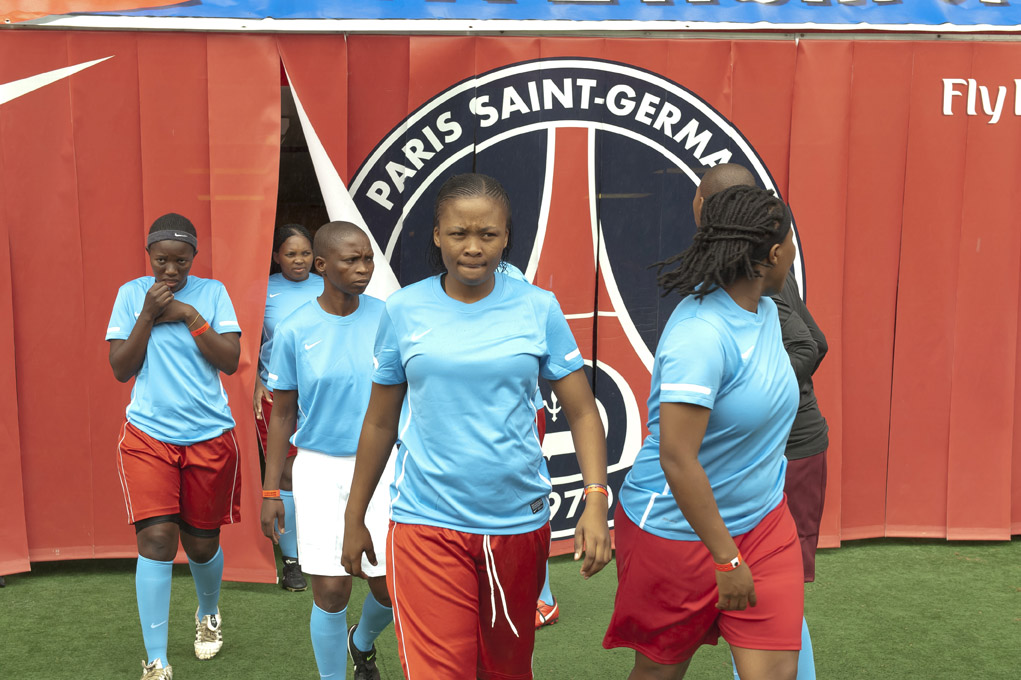
2012 June, Paris. FRANCE

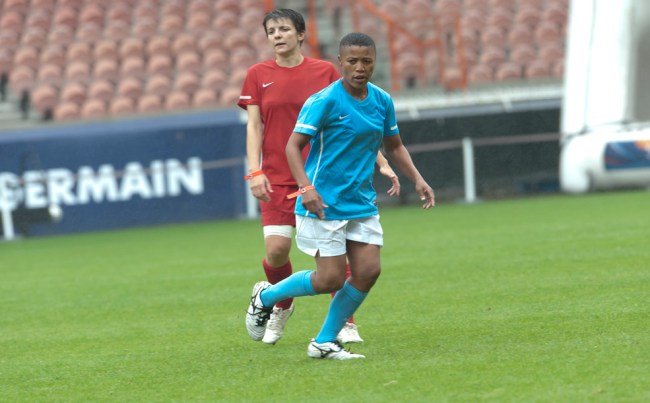
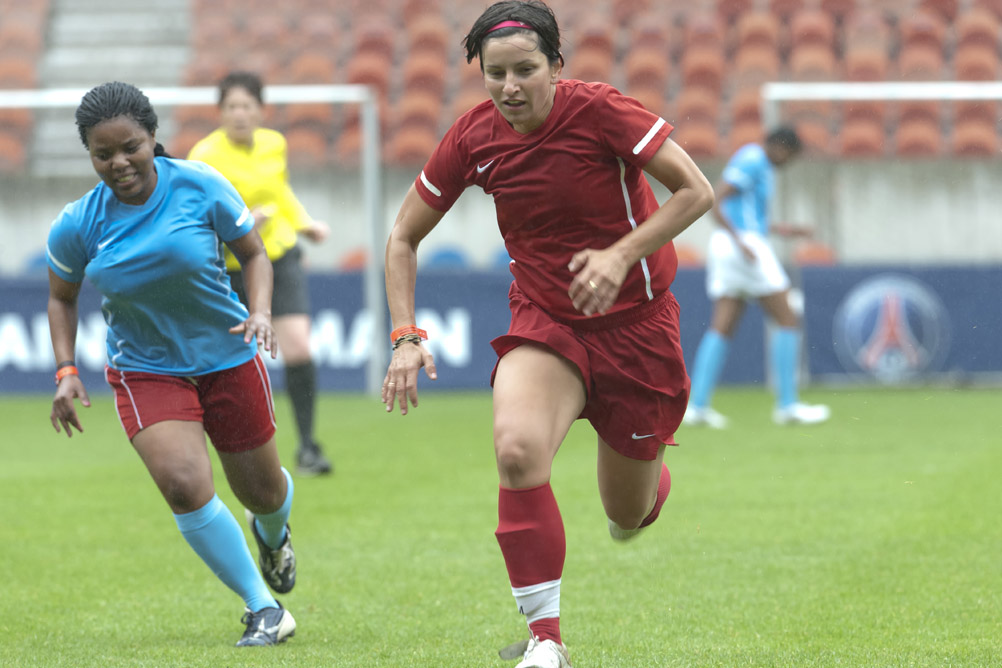
A friendly match  between Equipe Les Degommeuses a lesbian soccer team based in Paris, France and Thokozani Football Club from Umlazi, Durban.

… for Foot for Love

Muholi centred_DSC5809

TFC entering stadium_DSC5834

TFC_DSC5908

sli_DSC6287A

ImageImageImageImageImageImage

Photos by Laurence Prat
http://www.laurenceprat.com

About Equipe Les Dégommeuses

and

Thokozani Football Club (TFC) was formed by Zanele Muholi in her hometown, Umlazi, Durban in December 2008 out of necessity to increase women’s participation in sport, especially in soccer.

In February 2009, the team formally registered with South African Football Association (SAFA) under women’s division and is currently playing for the ABSA league.

Thokozani is named after one of our fallen sisters, Thokozani Qwabe, a black lesbian soccer queen who was brutally murdered in Ladysmith, KZN in 2007 for loving other women. Another related incident of a hate crime involving a lesbian soccer player is that of Eudy Simelane who was found murdered in 2008, in KwaThema, Springs.
More…

Posted in Action; Referee, Activism, Africa, Black Lesbians, Collaborations, Connections, Contributors, Creating awareness, Exposure, Expression, Friendships, Networking, Records and histories, Women; Voices; Writings; Education; Traditions; Struggles; Cultures | Tagged , | 8 Comments