2019 May 22: 25 years 25 artists Exhibition

By Mercury

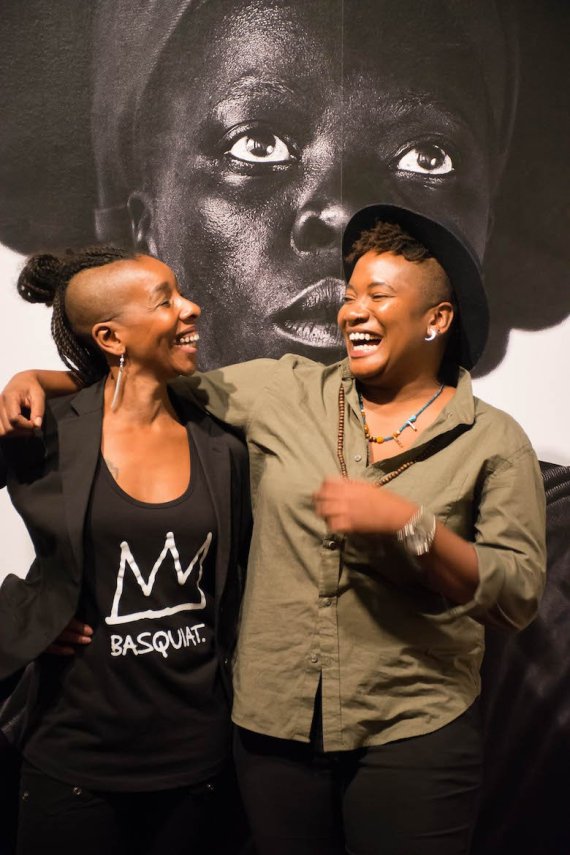
“When you are doing an interview that is the only time you reflect on yourself” said Professor Sir Zanele Muholi. This is how Muholi was feeling before the interview took place. Interviewed by Thobeka Bhengu and Lebo Mashifane in Durban on the 15th of April 2019.

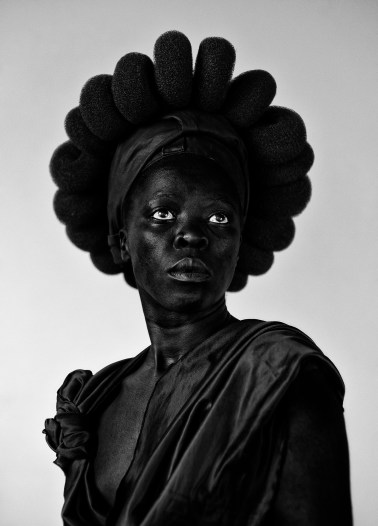
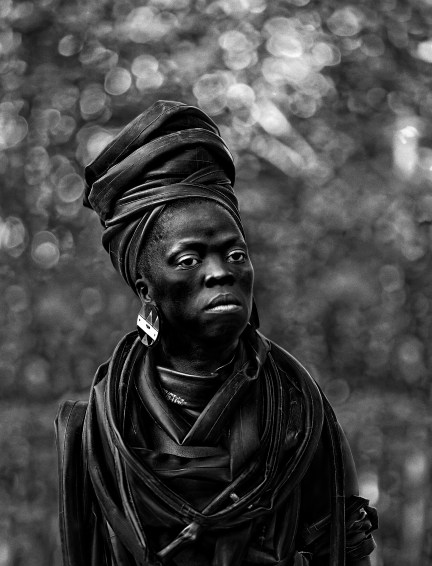
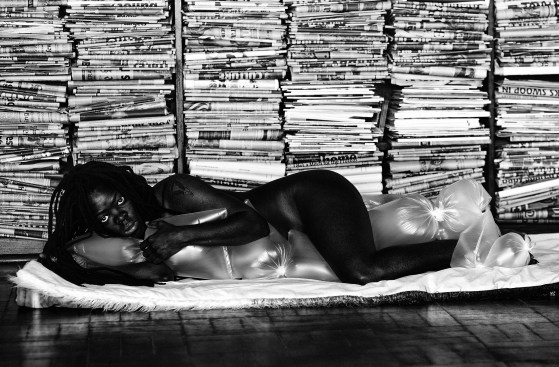
One might argue that Muholi was nervous because of the presence of young people who were attentively listening to the interview while professor spoke. Celebrating 25 years of democracy and 25 artists residing in Durban were given space and opportunity to interpret Somnyama Ngonyama. Speaking proudly and enthusiastically about the interpretations of 25 artists opening to the public on the 8th of May 2019 in Durban. The exhibition is called Ikhono laseNatali.

Zanele Muholi during Ikhono exhibition speech by Lerato Dumse

25 years of democracy means sharing spaces and giving thanks to life.” said Muholi. Muholi who is a visual activist spoke about how art is seen and received in the world. “One has to be published, curated and exhibit in order for them to be recognised” said Muholi.

Muholi expressed disappointment at how there is no recognition of artists in the city despite it being number three in the top cities in the world according to Tourism South Africa. “There is no art residency nor a photo festival here, there is no space for artists”

Muholi is also a philanthropist and a business person they reminded everyone to understand that artists are professionals. They should not be looked down upon but rather they should be respected. Muholi believes books should be written by South Africans because we know the country better than anyone. Professor’s closing remarks were “do not wait for people to define us”.

Previous by Mercury

2018 Nov. 6: Loss

2019 Jan. 12: Land discussion

Posted in Exhibition, Exhibition opening, Exhibitions, Muholi Internship & Mentorship Programme, Muholi presentation, Muholi travel diaries, My name is Zanele Muholi, Reflection, Reflections, Text by Mercury, Text by Mercury Nonkululeko Duma, Uncategorized | Leave a comment

2019 May 22: Watching Tswalo at Playhouse

by Lebogang Mashifane

“Birth Life Death

Men Women Children

You Me Us

1 2 3

4 5 6

And 7

We black out”

Those were Billy Langa’s closing words on his performance Tswalo, showing at the Playhouse Theater in Durban from 8-11 May 2019.

Tswalo, which means birth, is given life through this performance – one hander, bilingual, fusing poetry, song, dance, sound and light; based on an abstract delivery of life, from the beginning of nothingness to evolution of mankind. The performer plays the role of several characters and throughout the performance is a blanket as a prop. The blanket also has several significances as a garment, royalty, a baby, a spirit, a transformation of roles by both the performer and prop.

Billy Langa interview.jpg

Billy’s body moves steady, strong and swiftly  from that of a female, a male, an animal, an old person, a young person and a spirit. His delivery of song, dance and poetry with clear respiratory reveals his stamina and experience as a performer. He also interacts with the audience where he picks a dance partner, a female closest to the stage. After dancing with her, he then gets the audience to applaud for her and applaud again for her beauty, and applaud again.

In the play is brilliant work of physical art that clearly expresses the evolution of mankind from apes, this is also revealing different stages using lighting and how the performer and lighting technician were in sync was remarkable. There is also a part where the  performer depicts a baby in the stomach of a pregnant mother. Just by watching that scene you can feel submerged in the amniotic fluid and the sounds he makes that could resemble a heart beat, a kick and also a knock of the being inside another. The storytelling in spoken word hits the conscience and evokes the spirit of Ubuntu and the feeling of love.

Tswalo Tickets.jpg

Throughout the play one gets mixed emotions of struggle with the spirit as “there is war in the heavens, power as native identity is portrayed, romance when his parents meet, fuzzy joy when they dance, taking instructions when the spirit of the elderly brings forth the child that and tells the parents to give the child strength, wisdom and humility and that the child can not go astray in the presence of the parents.

Inkanyiso crew conducted an interview with Billy Langa. Langa’s roots that stem from Kwa Zulu. He is Pedi speaking even though his Culture is Ndebele with a isiZulu surname. Hence a English and Sepedi play was performed in KZN, to bring it back to its roots. He also mentions that the piece was written over a period of 6 months by him working with Mahlatsi Mokgonyana who was based in Cape Town at the time. They created the writing process in bits and sending it online until it was a full script. After performing at the National Arts Festival last year they arranged with the Playhouse group to bring the play to Durban.

Inkanyiso crew with Billy Langa.jpg

After his last performance, having performed twice a day, Billy Langa was still energetic and welcoming to speak to us about his craft that has been a journey since 2012 and on going.

Previous by Lebogang Mashifane:

2019 March 22: Difficult Love in Mexico

2016 Aug. 3: Erection elections

2015 Jan.17: My Durban virgin- ity breaks

2014 Dec.25: My pleasant Christmas

Posted in Uncategorized | Leave a comment

2019 May 22: I am ready to love you

Shattered apart she patiently amended my being

Yes

She shed my heart with hers

Connected the missing dots with each kiss to bring me back to reality

I realised it was time to let love precisely hers to cleanse my once rotten soul

It was a moment I have long for to belong

in her arms I felt safe

My heart was sheltered

She crept up in the right moment to calm the storm and uncertainties I have liberated on in fear to tell someone’s daughter to love me

She shouting from the top of her lungs the much-needed melodies to sweeten the bitter taste left by love before

Replicated her vessels with bravery she stood tall filling my empty cup with once dared love I have dreamed of

Flowing in my mind she retrieved in my medulla to work in spaces I have long forgotten the visibility of them will bring joy yet again, I felt alive

Not knowing what to do, I surrendered to her love open for possibility I was ready to love

In anticipation of yet another empirically feeling when she carries her heart to give to me while she graze in love do help me grace, I have found the one.

Nobody has submitted her love for me in an audience full of watchful eyes her soul stood film absolutely with nothing but love shouted in shiver

Her eyes are still filled with love

I can’t wait to journey in destiny together settled in our hearts we have become one

Her promise still remain to hold me despite my torn apart heart she never left nor complain shed my heart with hers

I am ready to love you

@Mercury

16/05/19

Related posts:

2017 Aug. 31: My experience in Poetry form

2013 June 27: Butch & … Menstruation is Art

2013 Sept. 6: Your cheating ways is your business not mine

2016 April 24: “Only a few people really know my sadness

Posted in Poem, Poem by Lebo Mashifane, Uncategorized | Leave a comment

2019 May 20: Ikhono lase Natali exhibition opening.

Text by Rev T Moema

Photos by Lerato Dumse


Host: Prof Zanele Muholi                                                                                                    Curators: Bajabulile Dlamini and Thobeka Bhengu.                                                              MC: Christie van Zyl.
Place: KZNSA Gallery, Ethekwini, South Africa.
Date: 17 May 2019

By 6 pm the place was packed with exuberant art lovers, and the atmosphere was charged with high vibrational energy. Call it micro society representation on the opening night-yes it was, people of the rainbow and beyond our borders were represented.
A civil crowd that absorbed every minute of the programe, from opening prayer which echoed the  importance of unity and equality of all humans, poetry, songs and key speech offered by the affable Prof Muholi.
To the last minute of the evening which ended with scrumptious African delights.
Throughout the night, energy was oozing from  art adorned walls to the people.
Theme scripture: Proverbs 18:16 is a powerful statement that reveals the answer: “A man’s gift makes room for him” (NKJV). What you were designed to be known for is your gift. God has put a gift or talent in every person that the world will make room for. It is this gift that will enable you to fulfill your vision.


The opening night bears testament to the scripture that when a talent is stirred up, latent creative force is allowed to unfold and express itself in the most amazing ways. The first talent to evolve fearlessly and without othordox boundaries and limitations associated with local artist, is that of Prof Muholi.
Their ever unfolding gift has now become a gateway of artists to draw from their wells of creativity, as Sir Muholi commissioned 25 artists to interpret Somnyama Ngonyama, in the process others found an opportunity to stir up their gifts and found themselves in the presence of greatness, a room was made for the 25 artist to show the work of their hands to the world, evident is a plethora of art ardoning the walls of KZNSA Gallery.
God uses Muholi as a precision tool in the hands of Divine  to unearth, discover and direct talent to its genius.
A rare gift in the world inflamed with individualism and self absorption, they abundantly share their resources to lift others up. Lastly I believe this is one of the clear expressions of black excellence, Progress and pride……

Related posts:
Posted in 2018 Somnyama Ngonyama Book Launch @ WISER, Art, Art Activism, Art Activism in South Africa, Art Edutainment, Art Is A Human Right, Exhibition, Exhibition opening, Somnyama Ngonyama, Uncategorized | Leave a comment

2019 May. 2: Third New York City award for Muholi

By Thobeka Bhengu

As South Africa was celebrating Freedom Day on the 27th of April 2019, ten days before the South African National Elections, just a few days after the severe flooding at Muholi’s hometown, Durban, South Africa; Muholi and friends headed to New York City to attend the annual Amref Artball honoring Sir Zanele Muholi with The Rees Visionary Award in Brooklyn, New York City.

The Rees Visionary award is bestowed to artists that have created exceptional work that educates and inspires. The Artball is a celebration of African cultures, art including an art auction to raise funds for Amref health programs. The event marked the third time that Muholi received an award in New York City. In 2016 the visual activist was honoured with the prestigious ICP Infinity Award for Documentary and Photojournalism as well as Africa’S Out! Courage and Creativity Award.

_IMG_0059 copy

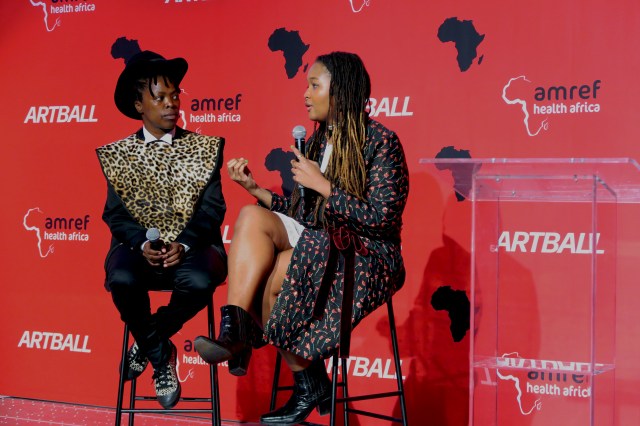
The programme for the evening included a conversation with Kimberly Drew, art auction, Muholi’s video presentation and the ball or evening entertainment. To kick off the evening, Sir Muholi sat down for a talk with Kimberly, who is a curator of Black Art and Experiences. Kimberly sat with Muholi to discuss how Muholi became a visual activist and the significance of documenting LGBTI+ people and archiving stories of black queer people in South Africa. They also spoke about the importance of language and how we have failed deaf queer people of colour in our queer language. The conversation also looked at how Muholi has broadened their scope of activism by shifting focus to the education of black youth by sharing photographic skills with young people from underprivileged communities in KwaZulu-Natal under the Mobile School of Photography project.

Muholi further spoke about the responsibility of the artist in the community and the world as narrators in their own right; where they addressed and highlighted the power of collectivism, which entails sharing information, sharing knowledge and resources with other artists. In addressing these issues, the new project that Muholi has borne as a result of trying to share information and resources is currently underway where Muholi has commissioned more than 25 Durban based artists to interpret Muholi’s Somnyama Ngonyama portraits.

To close off the conversation, Muholi invited attendees interested in partaking in any of the projects to come to South Africa and share their skills and time with the young people that Muholi and the larger Inkanyiso team are working within Durban, South Africa.

_IMG_9246

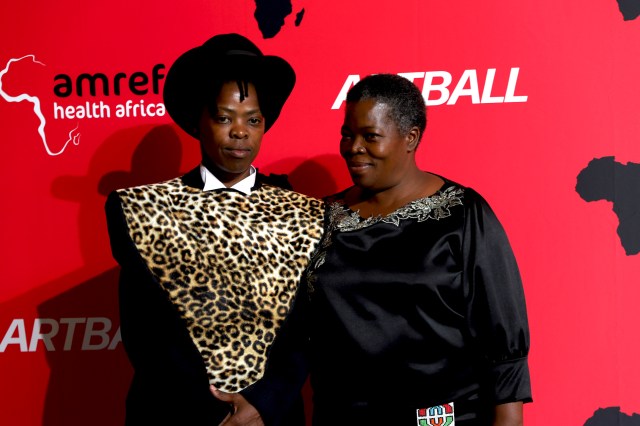
The Artball attracted a full house of people and as the evening went on, more people kept coming in. The Amref Health Africa Group CEO, Dr Githinji Gitahi presented the award to Muholi after the video presentation of Muholi’s work. The Rees Visionary Award is meant for people who use their power to inspire and empower and was accepted by Muholi as the team and family accompanying them ululated and sang ‘Zizojika Izinto’, which is a struggle song that assures that things will change. A song befitting this auspicious evening and this honour bestowed on Muholi. The visual activist accepted the award and dedicated the award to Lerato Dumse, who has been a colleague and Muholi’s confidante. Muholi thanked Amref, attendees and the team that accompanied them for being part of their journey and encouraged everyone to keep on buying art. As the formalities came to an end, the ball formally began which was filled with music, dancing and networking.

_IMG_9207

Related posts:

2019 April. 27: Muholi receives visionary award.

2016 Feb. 7: Second Infinity award for South Africa

2015 May 28: The last London supper

2015 May 28: Day Two in London

2016 June 4: Muholi honored with Courage and Creativity award

Posted in 2013 Index awards, 2013 Prince Claus award, 2014 Mbokodo awards, 2015 Outstanding International Alumni Award, 2019 Rees Visionary Award, Award ceremony, Awards, Faces and Phases book launch in New York, From New York with love, New York, New York City (NYC), Ryerson University Alumni Awards, South African artists hit New York, Uncategorized | 1 Comment

2019 April 28: Sebenza Durban Experience

by Wakhe Sebenza

Day 1

Friday, 05 April 2019

A day filled with hope, solutions and the unexpected for Umbelebele secondary school

If the misconception amongst parents in public schools that education is the responsibility of the school and the government is still a “thing” well that’s no longer the case for Umbelebele Secondary School. For lack of a better word, a “special committee” set in a round table discussion with the school principal, Mr Khanyile about the challenges that the school is facing, most importantly the solutions to those challenges and bringing hope to children to achieve the unexpected. When the principal mentioned they are aiming for at least 80% from a 33% they achieved last year, it wasn’t a joke, it all seemed possible. Broken windows and old buildings with no lights are not going stop the school from achieving what they are aiming for.

Scratch the term “Special committee” we used earlier before we get caught in politics of special committee that no one knows about or no one elected, let me tell you about the kind of people who gathered in that round table. The renowned Visual Activist, Prof. Sir Zanele Muholi took with them alumnis of Umbelebele Secondary School and also brought their friends who can be able to assist as well as Inkanyiso crew, a non-profit organization. The group sat with the school Principal in order come up with programs that can assist the students with the skills that they need to eventually become successful and productive participants of their society. With the understanding that a nation that does not take care of its youth has no future and does not deserve one, as a South African anti-apartheid politician and revolutionary OR Tambo once said the African proverb: “it takes a village to raise a child.” This is coming to life for Umbelebele Secondary School. Take this journey with us, be part of it, let’s grow together, looking forward to what we will create together.

Signing out for now: Wakhe Sebenza

Day 2

Saturday, 06 April 2019

Another approach to Environmental Education

It is our responsibility to take care of the environment. We must protect our environment from anything that leads to an unhealthy environment and threatens the health of humans, animals and plants. This has been the lesson for the longest time for a school child falling asleep behind the school desk, awakened by the school bell to get some snacks and let the packet fly all over the school grounds after finishing and we know what that does to our environment.

The truth is; environmental education will never stop just because people don’t care. This is a long-term health threatening issue, which leads us to another approach to this matter and that is where Inkanyiso comes in. It’s a non-profit organization established by the renowned Visual Activist Sir Zanele Muholi.

Of course you wonder, “Where do they fit in now “ when Sir Muholi’s work is presumed for focusing on race, gender and sexuality. Suddenly we learn there are no limits to this Visual Activist, in Celebration of 25 years of Democracy in South Africa, nothing will stop Sir Muholi to do what they do best.

Matric students from Umbelebele Secondary School were taken to Ushaka Marine to allow everyone to explore environmental issues, engage in problem solving and take action to improve the environment. That was not the only lesson for the day; all of them were given cameras and taught the skill of photography. Like any photographer would tell you it has taken them years developing their skills, so how fortunate are these students who are starting photography while they are in Matric? Thanks to Inkanyiso, Thank you Sir Muholi.

Signing out for now: Wakhe Sebenza

Day 3

Sunday, 07 April 2019

Banyana Banyana vs Jamaica

We are moving closer to the FIFA Women’s World Cup in France in June and July 2019. In that Women’s World cup spirit, a FIFA international friendly match between South Africa and Jamaica took place at the Moses Mabhida Stadium on Sunday the 7th of April 2019.

Class of 2019 from Umbelebele Secondary School had an opportunity to join Inkanyiso organization members to watch the game. I don’t even know how to pen down the excitement on those students, most of them it was their first time being at a stadium.

This may look like “Just for fun” but it was beyond just fun, some of the students were writing during the game while others were taking pictures and of course everyone was slowly becoming a soccer coach. That always happens when you are watching soccer, the feeling that you can do a better job than the people on the field. It was all beautiful to watch, both the match and the students. This also helps them in choosing their career path, it is very important to take these students to different fields to explore the careers out there for them to make better choices.

Banyana Banyana led at 1-0 at half time after a goal from Linda Motlhalo in the 20th minute but the game ended at a draw of 1-1.

Signing out for now Wakhe Sebenza

Day 4

Monday, 08 April 2019

Spelling Bees

Another day in Umbelebele Secondary School with Inkanyiso organization, this time we were there for the “spelling bees”, Participants to spelling words orally being the class of 2019. Of course Inkanyiso always delivers more than the promised, therefore it wasn’t only the spelling bee day, guest speakers who are experts in their fields were brought along to encourage and share their expertise with the students.

One of the guest speakers was Ms Ruth Motau, a social documentary photographer influenced by photojournalism and the marginalization of black people and communities. Ruth’s message was clear, if you want to be fulfilled, happy, content, and experience inner-peace and ultimate fulfillment, it’s critical that you follow your dream. Unlike the old days when we were not exposed to a lot of career choices, students of today are fortunate they are exposed to these careers, well not all schools but that is what Inkanyiso is trying to assist Umbelebele secondary school with by bringing experts from different fields to the school.

The legendary musician Winnie Khumalo was also the guest along with her Daughter Rethabile Khumalo who is also a musician. Winnie Khumalo who is a South African Soweto born singer, actress and pop star, shared her journey with the students. Saying she was introduced to the music industry at the tender age of 15 and she has worked with some of the big names in the music industry, including people like the late Brenda Fassie. Questions like how does she handle bad publicity were asked which shows we had young musicians in that class who also want to make it big within the space. Did I mention we actually had musicians from the students? Course yes they sang and we were left in disbelief at how some people just sound angelic.

One last word, can the schools focus more on spelling? The students have lost the ability to spell words correctly and spelling remains the most relentlessly tested of all the literacy skills, but it is the least taught.

Signing out for now Wakhe Sebenza

Day 5

Tuesday 9 April 2019

Reflecting and compiling a report on work we have done from Day 1, Friday, 5 April 2019 to Day 4.

Day 6

Wednesday, 10 April 2019

Articulate Africa Book and Art Fair

God created diversity, man created bigotry, who do you trust? 

Durban is hosting the 2019 edition of the Articulate Africa Book and Art Affair to celebrate the best authors and artists in South Africa and Africa. This fair also brings together other creative fields such as Crafts, Food and Music. Let’s talk about the seminar I attended this day, it focuses on religious rhetoric that has been frequently used over history to exclude the LGBTQ community from worship. The conversation is created around questions such as, Is it really a sin? Is both society and religion moving towards being more accepting of sexual diversity? What type of challenges are still being experienced? Under the subject: “God created diversity, man created bigotry, who do you trust?”

Meet the Panellists:

Chwayita Ngamlana, B member of LGBTIAQ+ community, author of “If I stay right here,” a book based on abusive relationship she was in for 2 years with her ex girlfriend. Yes, LGBTQ couples also experience dating abuse just like heterosexual couples do, Thank you.

Siya Khumalo, known for his controversial take on current affairs, author of “You Have to be Gay to Know God”, Where he unmasks techniques used by the power-brokers of our time and shows how gay people, in particular, bear the brunt of politicians’ and pastors’ schemes to gain wealth by fleecing the poor and harnessing popular prejudices. He tackles DA vs. ANC, unpacks corrective rape, and African cultures and communities and how these things affect gay people. Splicing in political and religious commentary, and using his own life experiences to make sense of these topics.


These are the only two panelists who made sense, yes there were other panelists who were there but they were not members of the LGBTIAQ+, they couldn’t even say the acronym correctly. I suggest we don’t go there. Those people left me questioning the purpose of that seminar, in my understanding that was to unpack the religious objection of the LGBTIAQ+ and engage in solving that issue, but the Brothers and Sisters in that panel were not about that life. They kept talking about the gospel of love, meaning that God loves everyone but also saying something about standing for the “Truth” and that Ladies and Gents means a man must marry a woman, yep that’s their “truth”. Where does that truth of theirs leave the LGBTIAQ+ community? What exactly were they on that panel for? I was left confused.


Dear world


We can’t force you to love the LGBTIAQ+ community because we understand what love is and how it works and we can live without being loved by yo., We can love ourselves enough, but can we get some respect from you? Can we be recognized as human beings?


Thank you

Wakhe Sebenza


Day 7

Thursday 11 April


Articulate Africa Book and Art Fair

Getting young people hooked on books


Children are undoubtedly the future builders of the nation. The love for books and reading is a value that should be introduced in children from a young age as literature shapes the way we live. It is our responsibility pass down our knowledge, skill and values to the future generation.

Articulate Africa Book & Art Fair invited young exhibitors to show us that “age isn’t anything but a number”. The panel consisted of the following Children’s books authors:


Lebohang Masango, Author of Mpumi’s Magic Beads, a story about friendship, self-esteem, discovery and beautiful hair in the big city of Joburg. It follows the sudden adventures of Mpumi, Asante and Tshiamo as they see the world around them from new heights and realise all of the fun waiting to be discovered outside of their classroom. Can you already imagine how delightful is this story for Children?


Thabisile Mthethwa of Dudu and Sipho, a kiddies’ brand that focuses on two animation characters of colour. The brand has two main characters: Dudu, a girl with a trusted companion the Calabash; and Sipho, a mischievous boy who has a springing stick that rescues him whenever he gets into trouble. She says Dudu and Sipho are here to tell Afro centric stories that have not been told before, infusing the old with the new. “The beginning of many adventures.


Elinor Sisulu, a human rights activist, political analyst and an author of The day gogo went to vote, a picture book about a historical event of voting for the president of South Africa. It is seen through the eyes of a little girl named Thembi. The story captures the emotion between Thembi and her great grandmother and it covers the election of Nelson Mandela and the struggle to be allowed to vote.


Did you know that we have child authors aswell? Yeap, on the panel also there was an 11-year-old writer Amr Sallie to encourage other young people to read and write as South African Storyteller Ms Gcina Mhlophe said, in order to be a writer you need to be a reader, she also joined later as a panellist who also encourage children to read.

Parents are urged to buy books for children and encourage them to read because that’s one of the challenges our authors are facing when trying to get a publisher, they are told they don’t have a big buying audience. Amongst other challenges they are facing, cost are high to get published which leads to self publish and that’s a challenge on its own getting a book out there in terms of marketing and promotion of the book.


Posted in "Free from My Happiness", "Sheshisa isikhathi siya hamba" by Sicka Shaz Mthunzi, Durban, From Durban to Johannesburg, Grades at schools, High school, Johannesburg comes to Durban, Reflection, Reflections, School, School of Image Arts, School uniforms, Uncategorized | Leave a comment

2019 April 21: Muholi to receive Rees Visionary Award

Text by Theo Tyson
P
P
ArtBall 2019 – an annual fundraiser for Amref Health Africa in the USA – will honor South African visual activist Zanele Muholi with the Rees Visionary Award.
Named after its late founder, surgeon and artist Dr. Tom Rees, the Rees Visionary Award is given to artists who are creating exceptional work that educates, inspires, and emboldens the viewer through these challenging times. Muholi’s work, which addresses issues of human rights, especially that of the LGBTQI+ community, is vital and powerful. Zanele Muholi is a living icon of activism and social justice. Through evocative black and white photography and documentary films, they provide a politically and culturally charged critique of our society in relation to the Black body and more specifically, the bodies of LGBTQI+ people of color, especially in South Africa where individuals are being murdered for their identity and sexuality.
Zanele Muholi explores black lesbian, gay and transgender identities and politics in contemporary South Africa; 25 years after apartheid, documenting the change and lack of change over the course of more than two decades. For the series “Faces and Phases” (2006-present), Muholi photographed more than 500 portraits of South Africa’s lesbian community.

“The portraits are at once a visual statement and an archive,” Muholi has said, “marking, mapping, and preserving an often invisible community for posterity.” Muholi’s sensitive portraits challenge the stigma surrounding gays and lesbians in South Africa, debunk the common rhetoric that homosexuality is un-African, and address the preponderance of hate crimes against homosexuals in their native country. Among other subjects, Muholi has captured the survivors of “corrective rape”.

P
P
In April 2012, thieves broke into Muholi’s Cape Town apartment and stole over 20 hard drives holding years of photographic documentation, suggesting the continued controversy and sensitivity surrounding the issues that Muholi’s works confront. Yet, Muholi persists. The opposition they encounter only serves to fuel their drive to document the lives of those individuals who have been oppressed, marginalized, and brutalized, crafting an immense body of work to serve as a personal and communal archive of lived lives. Muholi is relentless in their pursuit of opportunities to expand the narrative albeit through residencies or new photographic series.

With “Somnyama Ngonyama”, which is isiZulu for Hail the Dark Lioness, Muholi turns the camera on themselves, illustrating their place and perspective on the documentation of their own existence. Curated by Renee Mussai of Autograph London, this series of self portraits have inspired and engaged an intersectional audience. In the internationally acclaimed exhibition featuring more than 70 photographs, Muholi uses their body as a canvas to confront the politics of race and representation in the visual archive. Muholi’s psychologically charged portraits are unapologetic in their directness as they explore different archetypes, personal and collective histories, contemporary politics, and global events.


Somnyama at Spelman 2018

 26 Sep 2018
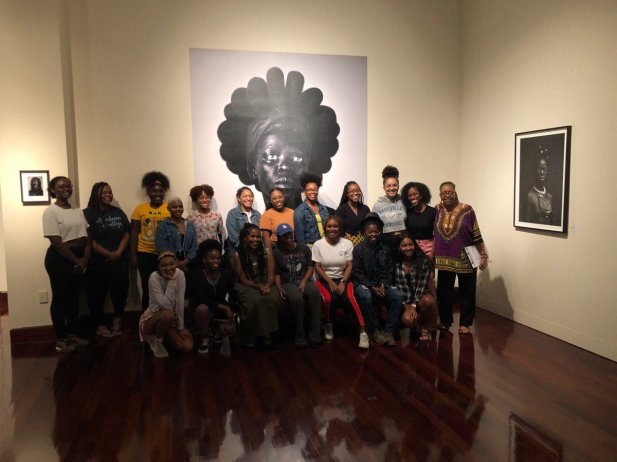
Dr. Kuumba and the CWS 400: Black Female Body in American Culture class talk with artist and visual activist, Zanele Muholi, at the Spelman College Museum of Fine Art.

Somnyama Ngonyama employs the conventions of classical painting, fashion photography, and the familiar tropes of ethnographic imagery to critically rearticulate contemporary identity politics. By increasing the contrast in the dark complexion of their skin, Muholi interrogates complex representations of beauty, pride, and desire. Gazing defiantly at the camera, Muholi challenges the viewer’s perceptions while firmly asserting their cultural identity on their own terms. When the exhibition debuted at Spelman College Museum of Fine Art, it produced myriad programming and community outreach including poetry commissions and dance performances using Muholi’s work as inspirational guidance and gestalt. Visitors were visibly moved by the works hung on black, grey, and white walls – seeing themselves and their ancestors in the contemporary imagery of historical oppressions and future liberation.

SpelZanelePRIDE

2018 Oct. 13: Theo Tyson with Lyrispect who hosted #SpelZanelePride event, inspired by touring exhibition of Zanele Muholi exhibited at @spelmanmuseum in Atlanta https://bit.ly/2RHzxHB            Photos by Adrianna Clark


Portraiture and self-portraiture illuminates identity. AMREF’s acknowledgement of Muholi’s tireless efforts for an international acceptance and importance of the Black body that is inclusive of the LGBTQI+ community is a catalyst for support and awareness of continuing photography projects such as Brave Beauties as well as endeavors in film. Their arresting work is a contribution towards a more democratic and representative South African black visual history. Through this positive imagery, Muholi hopes to offset the stigma and negativity attached to queer identity in African society.
P
P
For details on ArtBall 2019 benefiting Amref USA, visit https://www.amrefusa.org/usa/en/how-you-can-help/events/artball-2019/
P
P
theo tyson| fashion + art
social: @ms_theotyson
P
P
Related articles
P
P
Posted in 2019 Rees Visionary Award, Amref Health Africa, Article by Theo Tyson, Atlanta, “marking, mapping, and preserving, Black body, documentary films, LGBTQI+ community, Marginalization, photographic series, social justice, South African black visual history, Spelman College Museum of Fine Art, Spelman College, Atlanta, transgender identities, Uncategorized | Tagged , , , , , , , | 2 Comments

2019 April. 27: Muholi receives visionary award.

Text by Lerato Dumse                                                                                                                          Photos by Prof. Z Muholi

Professor. Sir. Zanele Muholi a multi award-winning visual activist will be honored today April 27 2019 with the Rees Visionary Award. The accolade is given to artists for “creating exceptional work that educates, inspires, and emboldens.”

Ntozakhe II, Parktown, 2016

Ntozakhe II, Parktown, 2016

The Amref Artball and award ceremony which takes place in New York City; USA is described as a “celebration of African cultures – of African art, African music, and African healthcare solutions.” The event coincides with South Africa’s National Freedom Day, with 2019 marking 25 years since black South Africans were first allowed to vote, signalling an end to Apartheid.

Basizeni XI, Cassilhaus, North Carolina, 2016

Basizeni XI, Cassilhaus, North Carolina, 2016

In a statement released by Amref they wrote, “Muholi’s work, which addresses issues of human rights, especially that of the LGBTQI+ community, is vital and powerful.” Amongst other photographic bodies of work produced by Muholi, (Somnyama NgonyamaFaces and Phases and Brave Beauties) is featured and taught in many universities, as well as exhibited around the world.

Apart from having a charity gala and a Contemporary African Art auction, tonight’s event will feature a conversation with Muholi facilitated by Kimberly Drew. The Rees award is the third time that Muholi receives an award in New York City. 2016 saw the visual activist honored with the prestigious ICP Infinity Award for Documentary and Photojournalism as well as Africa’S Out! Courage and Creativity Award.

Julile I, Parktown, Johannesburg, 2016

Julile I, Parktown, Johannesburg, 2016

Muholi’s self-proclaimed mission is ‘to re-write a black queer and trans visual history of South Africa for the world to know of our resistance and existence at the height of hate crimes in SA and beyond’. The activism that drives Muholi’s work has led the philanthropist to continue expanding mobile projects under Inkanyiso (www.inkanyiso.org), which they founded in 2009, as a forum for queer and visual (activists) media.

Related Posts:

2018 Nov. 15: Yaya win Socialite of the Year at Feather Awards 10

2014 Oct. 31: Mbokodo awards honor the first ladies of our heritage

2016 June 4: Muholi honored with Courage and Creativity award

2016 Feb. 7: Second Infinity award for South Africa


Posted in 2012 LGBT Recognition Awards, 2013 Index awards, 2013 Mbokodo awards winners, 2013 Nov. 14 Feather awards, 2013 Prince Claus award, 2015 Outstanding International Alumni Award, A new visual history, Articles; South African Celebrities; Arts; 2013 Feather awards; Lerato Dumse; Song; Dance; Kelly Khumalo; Thembisile Ntaka; Brenda Mntambo; Recognition; Thami Kotlolo; Gays & Lesbians; 5th Feather, Award ceremony, Awards, Feather Awards 10, From New York with love, My name is Zanele Muholi, New York City (NYC), Recognition, Respect & Recognition from our community, Ryerson University Alumni Awards, Self recognition, South African artists hit New York, Uncategorized | Leave a comment

2019 April. 12: Free State Arts Symposium The Essential Ingredient 

Review by Thobeka Bhengu

 On the 21st of March 2019, Inkanyiso Media team in support of Sir Zanele Muholi attended the 3rd annual Free State Arts Symposium (FSAS) 2019, the queer edition, which looked at the essential ingredient. The symposium brought under one roof various artists, activists, photographers, theatre practitioners and researches who shared their work, ideas and the essential ingredient in their work.

Nosana Sondiyazi, the co-founder of the Free States Arts Symposium and the recently elected Free State Provincial LGBTI sector Chairperson welcomed the guests and was also the master of ceremony for the day-long symposium. She spoke briefly about how she realized that Free-State based art practitioners began to make information transparent around opportunities and share platforms that are accessible to them by inviting a variety of local practitioners.

She expressed that artists required information about how their work could be seen in these theatres, arts festivals and performance spaces; and it was about time the Free State Art Symposium had a queer edition that provided a platform for discussions and deliberations amongst queer artists.
Mam’ Thoko Nogabe who is an arts activist and Board Secretary of the National Arts Council welcomed the guests on behalf of the National Arts Council which has partnered with the FSAF. Nogabe spoke about how Free States artists are not applying and pleaded with the artists to respond to the funding calls and submit their applications for financial support.

Steve Letsike, the National Chairperson of the South African National Aids Council was the first speaker who acknowledged the importance of Human Rights Day and spoke about the Bill of Rights and how we can use the document to protect rights. She spoke frankly about how sectors like sports, arts and culture have been left behind in a democratic South Africa and how as artists, we ought to reclaim our space and get to where we belong.

Letsike acknowledged and reminded the guests of how important human rights are in the region and globally. How we should think about our own role, our own responsibility and the silence that lives around us and the different spaces we occupy and interact with. Letsike looked at the issue of inequality and how some artists do not have administrative skills that are required to fill out these twenty pages long application forms, hence they struggle with meeting the requirements and compliance required in the application processes. Letsike also shared an idea of providing administrative training for artists to make sure that the application process is easier for artists. Adv Mpho Nefuri was the keynote address who encompassed a number of relevant issues in her keynote. Nefuri addressed the relationship between Arts and the law and explored what it means to have a great idea, share it with people, somebody uses it, makes millions out of it and patent it. Mpho also spoke about openness, acceptance, a safe and supportive environment for LGBTI+ people. She further looked at the power of patriarchy and its root into our social system, where men hold primary power. She reminded us that history has proved that too much power in any form is harmful to the greater good of society.

The Director of Free State Arts Festival Dr Ricardo Peach shared a poem by Graeme Reed titled “You know” and focused on queer culture, queer rights and how they manage to work together. Dr Ricardo analyzed the origins of the word queer, where the concept of queer comes from and the meaning of queer and how “queer” has been used for queer politics and queer theories.

After Dr Ricardo’s presentation, a panel discussion on a Human Rights Concept in the Performing Arts commenced. The panel consisted of three performing artists, Jefferson J Dirks an award-winning Free State art practitioner, writer and director who will soon be showing his work at the Dance Umbrella Africa 2019. Wezile Mgibe an art practitioner who uses performance and visual art for social change and Asanda Mqiki from Port Elizabeth who entertained the guests with a song from her new album before the discussion began. The panelists spoke about healing, ideal spaces for healing, work that speaks on behalf of the minority and how theatre and arts can be used for social change.

The second session was on literature focusing on Queer Histories in South Africa-Identities and Disruptive Narratives of Being. The session moderated by Tambu Muzenda joined by three panelists, Landa Mabenge an author of Becoming Him-a trans memoir of triumph; Efemia Chela a writer whose short stories have been published in Short. Sharp. Stories. Brittle Paper and As You Like It and Corneli van den Berg who presented information about the Free State International Festival, as the coordinator of the festival since 2017. The session echoed a call for more literature and knowledge around gender and sexuality in Africa. Tambu also spoke to Efemia about her book and insight into her book in an African context, on gender, sexuality and identity.  Landa Mabenge gave insight into his journey as a transgender man, from his background, family and the community he came from that believed in its old traditions and its ways. Mabenge spoke candidly about his struggle with emotional, psychological and physical abuse and how he had to suppress who he was because he had to deal with these imminent issues.

The third session focused on living archives and photography. A session moderated by Nosana Sondiyazi with a panel of three photographers namely, Robert HamblinLihlumelo Toyana and Sir Zanele Muholi. Lihlumelo was first to present her work, she is a documentary photographer and visual activist who believes that photography is an important tool towards social change and social justice. The photographers prepared presentations of their work with Robert reciting a heart-rending conversation with Leigh Davids, who recently passed away. Robert is an artist and gender activist whose work focuses on issues of masculinity, transgender activism and complexities around sex work in South Africa.

Sir Muholi an internationally renowned visual activist and photographer presented various works from their five publications. The images presented depicted several themes such as intimacy, interracial relationships, politics of representation, a series of black and white portraits that commemorate and celebrate black lesbians; images of feminine gay men, transgender men, transgender women and self-portraits that confront the politics of race, racial profiling, historical racism and blackness.

Nosana posed the fundamental question that summarized the symposium of what were the essential ingredients for each photographer in their work. Their essential ingredients varied with Lihlumelo’s essential ingredients being the honor that she gets from different people and how those people allow her into their spaces, their homes and allow her to capture their souls.  Robert spoke about how the challenge for him has been that he has become the enemy as a male and as a white male. His essential ingredients have been to learn, to listen, try to dilute whiteness and dilute cis heteronormativity. Muholi’s essential ingredients have been the beauty of the people or participants they get to interact with, relationships created which are more valuable than the images themselves and their colleagues (the team Muholi works with). This session finally ended with a question and answer session. Where the audience asked questions around collaborations in reference to copyrights (who owns the work?), the inspiration behind certain works, the target market, representation and what makes everything worthwhile. The photographers humbly responded to the questions and the session came to an end.

The last session of the symposium was a session on A Social Justice Agenda on Queer Spaces facilitated by Tambu Muzenda and joined by Andiswa Dlamini, Reabetswe Mokone and Advocate Mpho Nefuri. Andiswa is the founder of the Other Village which runs a social safe space called Same Sex Saturdays. Andiswa’s vision was to create a space for queer people where its safe and people can socialize and network. Reabetswe is the Project Manager of Arts and Health, a Creative Producer of The Public Art Project, who is also a poet, actress, singer and social activist. Reabetwe is passionate about using arts as a medium to produce real mental change. The panel looked at several issues dealing with legal disputes, using arts to engage, creating safe social spaces and ensuring that these spaces can be internal queer safe spaces. They also discussed complexities of the term “safe space”, personal safe spaces, personal responsibility, how we individually need to recognize our privileges and how we need to come into spaces recognizing these privileges.

The 3rd annual Free State Arts Symposium closed off with recommendations and suggestions for the next FSAS from the guests. These recommendations and suggestions which were noted and might help in the advancement of the Free State Arts Symposium.

Related Posts:

2016 April 27: Re/Uniting with Faces and Phases participants on Freedom Day

Inkanyiso Crew out and about for Human Rights Day


Posted in Conference, Free State, From Johannesburg to Free State, Homosexuality, Issues of sexuality, Lesbian Gay Bisexual Transgender Intersex (LGBTI), Provision of health care for Transgender community in SA, Race, Race and Sexuality, Race politics, Sexuality in South Africa, Transgender Voices, Uncategorized, Zanele Muholi, Zanele Muholi Amherst College visit, Zanele Muholi documented Thapelo Makutlhe's funeral in 2012, Zanele Muholi for Light Work AIR 2015, Zanele Muholi is the winner, Zanele Muholi movements | Leave a comment