2013 March 30: A response to Definitely Not Gaysbian article

by Nthabiseng Mokoena

On the 1st of March 2013, we at Transgender and Intersex Africa  read a piece on the Inkanyiso website titled “Definitely Not Gaysbian”.The article was interesting as it discussed one of the most “taboo” subject within South African LGBTI community, but it was also confusing for us.

What caught our attention was the definition of gaysbian. The definition in the article read as follows; “The term Gaysbian is used for people who are gay men/trans-woman dating butch lesbians/trans-man.” From our understanding the term “gaysbian” came from a combination of two words, ‘gay’ and ‘lesbian’, in other words a combination of two words expressing sexual orientations. So what were the words “transman” and “transwoman” doing in this definition? These are gender identities not sexual orientations. The definition made use of forward slash signs (/) allowing the juxtaposition of the names in use, in other words from the definition we could deduce four statements that “define” gaysbian.

  1. Gaysbian is used for people who are gay men dating butch lesbians.
  2. Gaysbian is used for people who are trans-women dating butch lesbians.
  3. Gaysbian is used for people are gay men dating trans-men.
  4. Gaysbian is used for people who are trans-men dating trans-women.

So from the four statements, the only statement that can stay true to the definition of gaysbian is statement one, when a gay man dates a butch lesbian. Including trans*people in this definition is both disrespectful and contributing to the misunderstanding of transgenderism.

When a trans*woman dates a butch lesbian, is it a “gaysbian” relationship? The trans*woman is not a gay man, she identifies as a woman and she is dating a woman. So in this relationship one of them is a lesbian woman and the other is a trans-woman, a gender identity. The trans* woman might be homosexual, bisexual, pansexual, etc. but she definitely is not a gay man, so the definition of “gaysbian” does not apply in this context.

When a trans*man dates a gay man, he is a male identifying person dating another male identifying person, they might both be gay (when we consider their sexual orientation), yes there are gay trans* men, in this case none of them is lesbian, so how can we use the “gaysbian” term to define their relationship?

When a trans* man dates a trans* woman, this is a relationship between a man and a woman, who both might be heterosexual, so how can we call this “gaysbian”?

Transgender is an umbrella term for persons whose gender identity or gender expression does not conform to that typically associated with the sex to which they were assigned at birth. Transgenderism is primarily about gender identity and gender expression. Transsexual refers to people who wish to undergo sex reassignment surgery to align their bodies to their gender identity. “Trans” could either mean a transgender person or a transsexual person. From the definition “transwoman” or “transman” could either mean that these people are just transgender or they are transsexual. So here is a scenario, if a transsexual woman dates a butch lesbian, is it a” gaysbian” relationship?  No it’s a relationship between two women.

The structure of the definition also indicated one of the biggest problems within the South African LGBTI community; the continuous clustering of transwomen with gay men and the clustering of transmen with lesbians, as if “gay men “ and “transwoman” is the same thing or butch lesbian and transman is the same thing. As already stated they cannot fall into the same boxes, clustering transwoman with gay men is disrespectful to their gender identity and it is a constant reminder of the body they were born in regardless of their identity, a gay man is a man and a trans* woman is a woman. The same goes for transmen; it is disrespectful to cluster them with lesbians, as if the two are synonyms of each other. A lesbian woman is a woman and a trans* man is a man.

Yes, a lot of transwomen “hangout” with feminine gay men and a lot of transmen “hangout” with butch lesbians, but it is not the same these identities are not the same and should not be treated as if they are the same, gender identities in this context differ and that cannot be ignored. Many trans* people use the LG community as an “entry point” in other words a point to discover yourself and build social circles before you “truly” come out or identify as trans*, but we cannot continue to label a person as a gay man even at the point when they have discovered themselves and are identifying as female.

One of the most dangerous forms of this “clustering” is within HIV/AIDS studies, you will realize that in most cases when it comes to HIV/AIDS prevention campaigns, transwoman are put in the same category as gay men and MSM individuals. This has then created a situation where the majority of transwomen then choose not to read or access this HIV/AIDS prevention information because it does not explicitly respect their gender identity but rather concentrates on the bodies they were born in and equates their situations to those of gay men.

Gender identity politics and Queer politics are complicated but we just need to learn to respect each other and remember that as we try to fight heteronormativity we must not in the process create homonormativity.

_____________________
About the author

Nthabiseng Mokoena is an Advocacy Coordinator at Transgender and Intersex Africa (TIA)

Read the original article

2013 Mar.1: Definitely NOT “Gaysbian”
… But a Relationship between Two People
by Yaya Mavundla & Lesego Tlhwale

Posted in Abantu, Africa, Before You, Community, Family, South Africa, Uncategorized | Tagged | 18 Comments

2013 March 30: The photo that I like…

4th May 1997 @ Ms Sappho held at Club Chameleon in Orange Grove, Johannesburg. L - R: Zanele Muholi & Wewe Ngidi.  Photo by Brendelie Mitchell

4th May 1997 @ Ms Sappho held at Club Chameleon in Orange Grove, Johannesburg.
L – R: Zanele Muholi & Wewe Ngidi.
Photo by Brendelie Mitchell

This is one of the memorable photos that I like most, taken at the Miss Sappho by Brendelie Mitchell. The beauty contest was hosted by Sistahs Kopanang, the defunct black lesbian organization that we were part of steered by Naomi Webster, Joe Mqithi &…
We were young, focused, fresh and sober. We loved  and respected women.
We are still intimate with womyn too.
Please don’t ask me where is the third princess and who the judges were cos I don’t remember.
Wewe Ngidi came first, I came second as you can see 2 in my flat chest. I decided to be femme for the night I guess that was impressed the judges and also answered the questions better.

The photo was captured with point and shoot 35mm fuji film plastic camera. Obviously that was before the digital age. I later studied photography at Market Photo Workshop.
One cannot just forget about where we come from and what shaped us to become the visual activists that we are today. The mo(ve)ments and experiences we shared with many friends marked our existence and resistance we had.

Both Wewe & I, are photographers, activists and we come from Umlazi, Durban, KwaZulu Natal. Also survivors…
Wewe features in my Faces & Phases series.

This one forms part of what I call a South African black – queer – visual history documented by insiders.

15 Years later, we are still here.

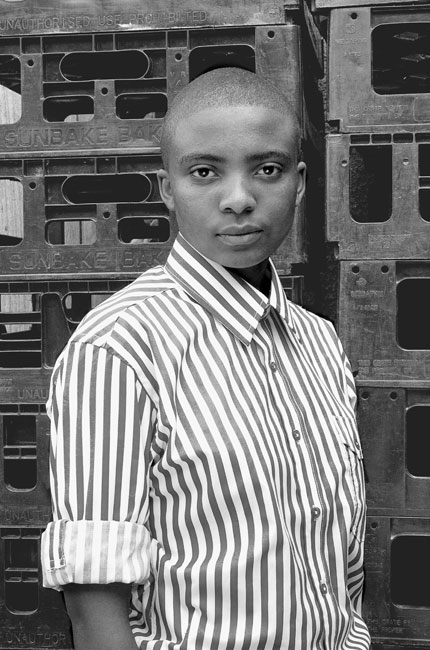
Wewe Ngidi, Observatory, Johannesburg (2009)Photo by Zanele Muholi

Wewe Ngidi, Observatory, Johannesburg (2009)
Photo by Zanele Muholi

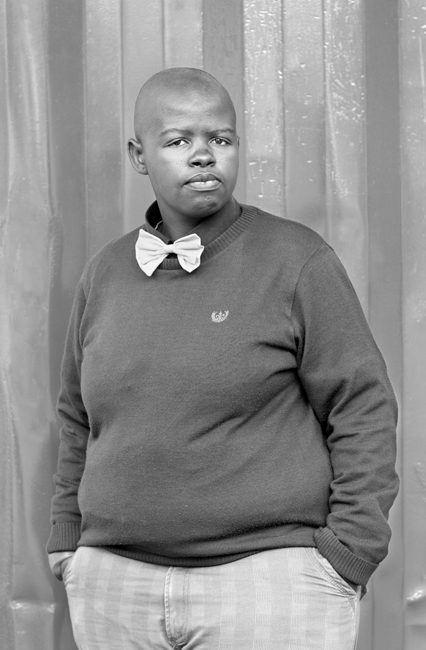
Zanele Muholi, Vredehoek, Cape Town (2011)Photo by Nhlaka Muholi

Zanele Muholi, Vredehoek, Cape Town (2011)
Photo by Nhlaka Muholi

Posted in Abantu, Activism, Archived memories, Art Activism in South Africa, Art Solidarity, Arts, Before You, Black Lesbians, Creating awareness, Documentation; Filming; Photography; Community, Exposure, Life Stories, Organizations, Queer visibility, South Africa, Visual history, Women; Voices; Writings; Education; Traditions; Struggles; Cultures, Zanele Muholi | Tagged | 5 Comments

2013 March 28: Against the rising tide

BORN IN A BODILY PRISON

Hated without reason

Living on a mission

To love with full conviction

This body is my affliction

Hence I make that decision

To enter this transition

And bring my soul to living

As I emerge from my cocoon

Like a bird freed from it caging

I hear the storms surrounding me

Society is raging

Their whispers turn to murmurs

And their murmurs turn to shouting

The pupae is a butterfly

But they surround it, doubting

They call me an imposter

And the waters rise in judgment

Never have I, felt so complete

Though I’ve been left abandoned

Their clenched fists pound my naked skin

They pound me like a drumbeat

Blow after blow, in this downpour

They cannot hear my heart beat

The cruelty and rising tide

So many have been shattered

Their only crime, to be themselves

For which they’re killed and battered

What is the crime in being myself?

That death should be my sentence

I only live to show my love

And long for your acceptance

I am who I am…and against the tide,

Of disapproval in their eyes

Still I rise….

Affirming truth…

I shall not choose,

To live a lie

by Sam G Ndlovu

_____________________________

About the author

Sam A.K.A Sam Poetical is a young LGBTI activist from Bulawayo, Zimbabwe who believes that artistic expression is the key to connecting issues to society and a great way to stimulate dialogue from personalization.

Posted in Abantu, Activism, Art Solidarity, Black Lesbians, Queer Africa, Queer poetics, Relationships, revolution | Tagged | 5 Comments

2013 March 28: Failed justice

by Lerato Dumse

A commemoration was held on Wednesday 27 March 2013 in Thokoza township, east of Johannesburg to remember the life of Nokuthula Radebe.
In 2011 March 28 Nokuthula became one of many hate crime victims reported that year only, followed by Noxolo Nogwaza (24) who was murdered in Tsakane, April 2011.
Its been two years since the young lesbian woman from Thokoza in Ekurhuleni was brutally killed, and there is still no progress in bringing the perpetrators to book.

The 28th of March 2011 was a tragic day for the Radebe family. Their 20 year old daughter’s body was found by children playing in an abandoned building in her township. The last time Nokuthula was seen alive was after walking her girlfriend home late at night and leaving her safe. Nokuthula walked back to her home but never reached her destination. Like most lesbian murders in the township, her death was horrific and will never be forgotten. When her mute tortured body was discovered, she had been strangled with her shoelaces, her face covered with a plastic bag and her pants pulled down.

In hosting the event Forum for Empowerment of Women (FEW) in collaboration with IHAWU said their initial plan for this year’s commemoration was to draw up a petition to be signed by the community.  Requesting the demolition of the abandoned building as Nokuthula’s murder is not the only crime committed there. However that could not be achieved due to the Police’s unwillingness to assist. The small group who attended the event comprised mostly of lesbian women from the respective organizations. Also present were Radebe family, a local Pastor, member of the street committee as well as other locals. All had one voice in expressing their dissatisfaction with the Police conduct towards the case of Nokuthula.

FEW accused the investigating officer (*identity reserved for safety sake) of “not prioritizing the case even when information was given to him to follow up on”.
Project Organizer Dikeledi Sibanda says the last time they went to the Police station to inquire about progress on the case, the officer in charge saw them got in his car and drove away. Mr Radebe believes he will never be able to heal from loosing his daughter, speaking at the commemoration he said “I feel anger, frustration and disappointment with the police on my daughter’s murder, how the justice system has failed me as a parent who is still mourning the loss of my child that I loved”.

Previous articles by Lerato

2013 March 28: Feather Awards (re)viewed

and

2011 May 13:  Kwa-Thema Praying for homophobic victims.

and

2011 May 3:  Black Easters for black lesbian community


Posted in Abantu, Activism, Archived memories, Black Lesbians & Allies Against Hate Crimes, Creating awareness, Forum for the Empowerment of Women (FEW), Rape | Tagged | 10 Comments

2013 March 28: Feather Awards (re)viewed

by Lerato Dumse

19.03.2013

I was preparing to go to bed when I realized that the SABC1 was broadcasting the feather awards. I decided to stay up and watch. It was very exciting to see the Lesbian, Gay, Bisexual, Transgender, Intersex (LGBTI) community present such a great platform to showcase the immense talent available in our community.

When the awards ended an hour later I felt like I had missed an hour’s sleep and to some extent even embarrassed. I admit that I am not familiar with the feather awards and what they are about, but one or more of the presenters mentioned LGBTI and how the awards are for this community. I was surprised when the awards were presented by and to people who are not members of the LGBTI community. Some of the recipients didn’t even bother coming. Not that I blame them or think they are homophobes. They were probably just as confused as I was as to why they were being honored in an event that has nothing to do with them. It is like hosting women awards and presenting them to men.  We might be a minority group but if they searched they would have found sports people like Chosen FEW a team of outspoken black lesbians soccer players who for many occasions have represented our fellow female footballers abroad and won many trophies. We should that Chosen not only represents but also use football as a ‘right’ to human rights – activism. There are many other out queer artists, activists, and professionals who have dared their lives for the benefits of many who are LGBTI individuals.

The awards failed to provide LGBTI people, from presenting to performing with the space, opportunity and voice to demonstrate the wide variety that exists. In this country we always have the debate of how we value and appreciate outsiders especially in entertainment more than our own. How we prefer and request radio stations to play international music as opposed to our local music.  I wonder if the planners and organizers of these awards followed the same trend in choosing to use “celebrities” instead of less known LGBTI people who would have benefited from the exposure.

There were some parts of the awards that were good and made sense, like the award presented to Beverly Ditsie for her tireless work in fighting for our rights and against discrimination.

The award for most embarrassing performance has to be given to Somizi Mhlongo together with a fellow drag queen, who came on stage unruly and that came across as confusing to me as a viewer at home.  I love Somizi and look upon him as an out spoken gay, talented person and member of our community and most of all a public figure but I don’t think that using vulgar language and insulting people would provide some entertainment as he and his friend did there. They came on stage mean and rude to people and that act might confirm the many stereotypes about our LGBTI brothers and sisters in the community.

The awards have come and gone and hopefully they will improve in future as they posses a lot of potential. This should serve as a lesson especially to us young people that we should seize opportunities given and make the most of them.

__________________________________

About the author

Lerato Dumse, KwaThema, Springs, Johannesburg, 2010Photo by Zanele Muholi

Lerato Dumse, KwaThema, Springs, Johannesburg, 2010
Photo by Zanele Muholi

About the author
Lerato is a young journalist, activist who is passionate about documenting LGBTIS lives in KwaThema and surrounding areas.
Lerato studied Journalism at Tshwane University of Technology (TUT).
Also worked as a reporter for Ekurhuleni News; Springs and Brakpan Advertisers.

Who am I?

My name is Lerato meaning love. It was given to me by my mother when and I asked why? She says it’s because she loved me deeply and wanted me to experience love in my life. Its 24years later and I still have a lot of love in my life including intimate love for women, leading to society throwing me in one category and limiting my identity to “Lerato the lesbian”.

I refuse to be defined by people who don’t know where I come from, where I am and where I’m headed. I love helping others, which puts activism top of my love list. Activism which includes but not limited to LGBTI issues, women and children’s issues because my family consists of six women making me a loved daughter, sister and mam’ncane (aunt). I also have an immense love for writing; which motivated me to study journalism as that also provides a good platform for activism. I grew up in very hard socio economic circumstances, but with the Love and blessing of God I have been fortunate enough to be able to study and would like to use this education to help those still faced with those circumstances.

This is me, at 24 years old different from when I was 14 years, and I’m anticipating more change when 34 years, but what will never change is the abundant love in my life, my love for others and wanting to make a positive change.

I am a member of the Soshanguve poetry and book club, love reading and creative writing. I enjoy playing Cricket and Soccer. I also have an interest in filmmaking. I attend LGBTI events and write articles some are published in various websites like black looks, Free Gender, and Gender Dynamix.

Previous articles by Lerato featured in Blacklooks and Freegender sites

2011 May 13:  Kwa-Thema Praying for homophobic victims.

and

2011 May 3:  Black Easters for black lesbian community

Posted in Abantu, Archived memories, Articles, Black Lesbians & Allies Against Hate Crimes, Creating awareness, Entertainment, Family, Love, Performance, Records and histories, South Africa | Tagged | 18 Comments

2013 March 19: Awakening Azania

by Happy Masuku


Heart Beat.

Heart Beat.

Heart Beat.

Afrika my heart beats.

Afrika my heart sings.

Praises to your hilltops and valleys.

Clan names to your Kings,men of legendary wisdom.

Ululations to your Chiefs,people of a just character.

Afrika your Queens,Fountains of education,Big bottoms,small

figures,little fingers,great strength,housing strangers,loving

neighbours and feeding nations.

Once you were a people pure and innocent,
Then your sons were

ceased, chained, maimed, brain washed into submission of a foreign shame

of intolerance, bigotry and slander,Whatever happened to Ubuntu umuntu

engumuntu ngabantu but now you’re engulfed by greed in your covetous

adopted nature.

Heart weeps.

Heart bleeds.

Heart seeks.

Security and tranquility in your fat land.

Prosperity and fidelity in the wealth of your belly.

Azania what have you profited from your crude oil and overall minerals.

Afrika where are your great pillars and gatekeepers?!

Now you are infested with tin houses.

Children in the streets.

Sisters in the fields, abandoned and exploited.

My pen bleeds as my heart beats.

Mo-Afrika remember the legacy of Mangaliso Sobukwe.

Travail and realise the philosophy of Bantu Biko.

Restore the dignity of Azania namathongo ethu.

I summon the Afrikan diaspora scattered across the four corners of the universe.

Sons and daughters of the sun listen to the sound of the horn calling

to restore our Motherland lest we get a rude awakening.

______________________________
About the author

I am Happy Maseko, I was born on the 31st December 1984 at Emalahleni General Hospital, Mpumalanga, Witbank.
I was raised by my aunt.  I started school at Phakama Primary school. Then we moved a lot, as a result I went to many schools in our municipality.  Later matriculated at Kopanang Secondary School.
I grew up believing that I was a boy and then the harsh realities that come with adolescent made me realised  I was born in the wrong body. I came into the realisation of that one cold winter morning at the library of Empucukweni Secondary School. That’s where the constant urge to learn about lgbti related issues were born.

My aunt passed away in 2001 when I was studying construction through the state’s expanded public works program then I had no choice but to move in with my parents, that’s when I was introduced to activism through Love Life. I had to educate the public about what the lgbti acronym means and basically facilitate lgbti related issues.

In 2006 whilst going about my business on social networks I met Malebu Mathabathe who is the co-founder of Emalahleni lgbt. Before 2007 the group was known as Versatile Women Society. It had about 7 TUT students who were in the closet. What they would do is pop out R50 per month and buy some beverages and have a sit in until the visionary came in and joined heads together with Thandi Maluka, Nhlanhla Mnisi, Simphiwe Nkosi, Nomgqibelo Sibanda, Phylis Mahlangu and Thulisile Tonga actually went ahead and made sure that the organization is registered.

I learned the basic information of how to register and run an organization through learnership,
at the Forum For The Empowerment of Women (FEW).

Even when I had responsibility with Emalahleni lgbt I never abandoned my social responsibility, through volunteering for The Treatment Action Campaign, Gert Sibande District. I was introduced to the Nelson Mandela Foundation where I am learning psychoanalysis through their CCE programs which saw me working with NGO’s like Tshepang Trust and now currently a CCE facilitator for The South African Men’s Action Group.

Posted in Activism, Art Activism in South Africa, Forum for the Empowerment of Women (FEW), Networking, Queer poetics | Tagged | 2 Comments

2013 March 21: EPOC event report

by Charmain Carrol & Ntsiki Cassie Dlamini

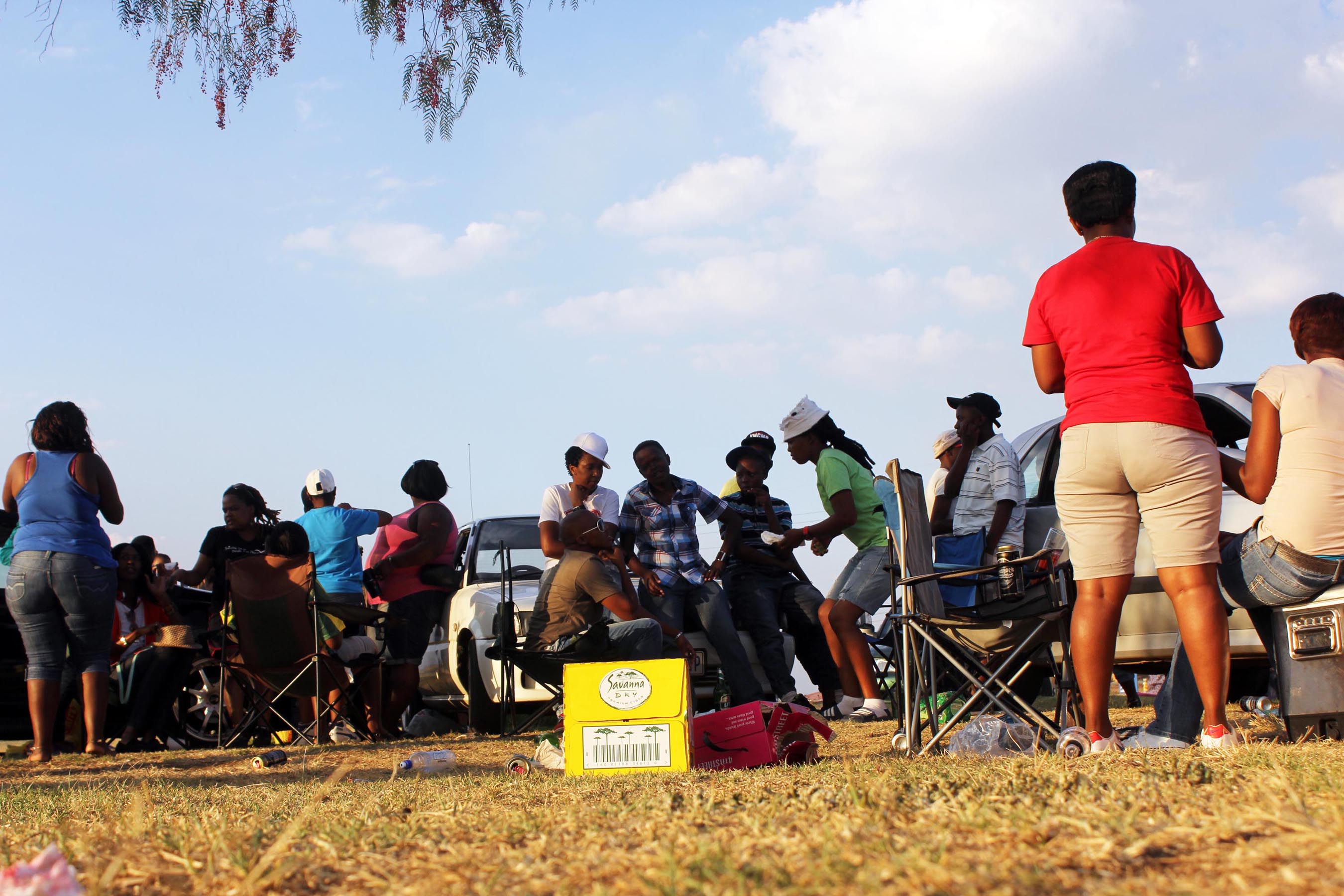
On the 21st March 2013 the Inkanyiso crew attended a picnic event organized by Ekurhuleni Pride Organizing Committee (EPOC) in Tsakane. The event was attended by a diverse group of people both gay and straight.
Ages of the attendees ranged between 18 – 50. There were about people in attendance.

When we got to the picnic spot everyone was happy to see the Inkanyiso crew there, and soon after we arrived a register was sent around to record the people who came and then the discussions proceeded from there which was chaired by Notyatyambo from EPOC.

epoc1_8742

Sex and Relationships

As the discussions proceeded, a couple of questions were asked and answered, and one particular question that got the discussion heated was that of sex.

The question asked was; “when does ones rights get violated when in a relationship? Say for instance your partner does not want to do certain things and you want to do them?”

There were few answers to the question and all of them were stressing the fact that one shouldn’t you force if the other partners are uncomfortable with the idea presented.

One femme lesbian said that, “don’t force what you want, but introduce what you want instead”. However some butch lesbians responded by saying, “if she doesn’t want it then you can get it elsewhere”.

From there one topic led to the other, and we ended up discussion the use of sex toys in lesbian & gay relationships, of which others were against it and others were all for it.

putting_8809

Then one other participant posed a question about butches who don’t want to be touched, which wasn’t discussed at length as the group agreed that we need to respect each other’s choices and not judge because we have no idea what is the reason behind them not wanting to be touched. (I observed that not much butches participated in this particular discussion, however that’s a topic for another day.)

It was then said that communication is key. People should talk about sex before, during and after and that each individual should know their bodies and be comfortable with themselves first before they can let some else in.

Sex topic seemed to be dominating a lot in most discussions as a lot of people came up with different questions related to sex and relationships.

The some of the questions asked were: Does sex play a big role in a relationship? What do you do if your partner does not satisfy you? What’s the use of being or staying in that relationship?

Some even came with the conclusion that the reason why most lesbians cheat is because they are not satisfied sexually, but the chair quickly dismissed the topic as the views were not the same to everybody.

The chair said this topic will be resumed by a ‘sex expert’ at the next meeting so that people can have a clear understanding on the importance of having a relationship where you are emotionally attached to someone without making sex a priority.

epoc2_8807

EPOC members and friends at the picnic.
Photos by Charmain Carrol

All these topics and more will be broadly discussed on the 14-17 June 2013 at the EPOC’s Winter Camp to be held in Mpumalanga.

The picnic was quite an eye opener as I have never been to a one where homosexuality, sex and healthy lifestyles were discussed openly.

About the authors

Charmain and Ntsiki are both activists, writers and lesbians mothers. They are also members of Inkanyiso.
Read their previous articles below:

2013 Feb. 8: “Let your voices be heard”
by Charmain

2013 Mar. 3: 7 Years on… the struggles continues
by Ntsiki

Posted in Activism, Africa, Community Mobilizing, Connections, Contributors, Creating awareness, Documentation; Filming; Photography; Community, Institution | Tagged | 1 Comment

2013 Feb. 25: Isithembiso

Sithandwa sentliziyo ingaba ulahleke phi na?

Kudala ndicinga ndikhangelana nawe dali wam.

Uthe Wakungaphenduli kwincwadi endikubhalele yona

Ndaqala ndaqonda konakele.

Umphefumlo wam wazulazula.

Ndabayindindi ndixakwe u’ba mandithini

Lihambile ixesha ndimana ndibhala ndilinde impendulo.

Kuthe kwakufika ixesha ngqangqa wam.

Ndaqonda u’ba elagqwirha likuzalayo

Likulukuhlile, ndavele ndayindindi.

Uwutyumzile umphefumlo wam.

Ndaqonda andikwazi kukuncama.

Ndakhwela ibhasi ngolwesihlanu ezintsukwini.

Ngentsimbi yesixhenxe ebusuku.

Besendilungise nentetha.

Ndizixelele uba andincami ungekabuyeli kum.

Sithandwa sam uba bendazile, u’ba nje ubundihlebele.

Kutheni lento ungakhange andilumkise nje?

Uhamba njani kulomhlaba ungavalelisanga?

Khange ndazi qunube lam.

Andazanga uba uyandidinga.

Kwaye khange ndiqonde u’ba unyuka umnqantsa

Ndixolele sithandwasam, xolisa intliziyo yam.

Bathi uzibulele,

Mna ndithi ubusel’ufile.

Ekugqibeleni abavumanga ndigalele umhlaba.

Ndathembisa u’ba ndakubalapho ukhoyo.

Ndasophula isithembiso.

Ndayeka abazali bakho bakwenze ibhola.

Ukuba ndandazile!

Ndabangwa ngumsindo ndashiya phantsi.

Zange ndiqonde.

Kowu! umhlaba uyahlaba.

Ndixolele nzwakazi, ndixolele bhelekazi

Ndikunikile uthando!

Wandinika intliziyo yakho!

Kodwa ke khange ndazi.

Kowu! ndiwophule umphefumlo wakho.

hamba kakuhle ke ntombazana.

Hamba uphumle ke nzwakazi

by Siya Mcuta
© 10/03/2012

This poem is about a broken promise, a story about misplaced love and miscommunication.

__________________________________
About the author

Siya Mcuta, Cape Town Station (2011). Photo by Zanele Muholi

Siya Mcuta, Cape Town Station (2011).
Photo by Zanele Muholi

Siya is an activist, feminist, mother, sister, friend and a daughter to my father, aspiring writer and storyteller.

She is an active member of Freegender.
Her previous articles are featuring in Sparkling Woman, published by Cheryl Roberts.

Posted in Archived memories, Art Activism in South Africa, Black Lesbians, Documentation; Filming; Photography; Community, Relationships | Tagged | 8 Comments

2013 February 28: I am not a Victim but a Victor…

by Lungile Dladla

They call February the month of love, I call it the month of change…

In February 2010, I was walking with Mathapelo (one who prays) along Swazi street.
It was around 7pm, a few hours after my aunt’s funeral. My friend was accompanying me to my house and the street was not busy that day.  A guy came walking in the opposite direction, we paid no attention to him because we did not think of anything bad. In a blink of an eye he was right behind us with a gun, he said “futsek nina siya le manje” (voetsek, we going that direction now) shaking & scared we listened to him.

He led us to a field. The strange thing about him was that he knew the place so well that he told us exactly where to walk because that place has dangerous holes we could fall in. When we got to his place of horror he instructed us to lie on the ground face down and hands behind our backs. We did as told because we feared for our lives as he had a gun in his hand and threatening to use it if we did not do as he said. He undressed us and said “today ngizoni khipha ubutabane.”

I said a little prayer because I knew what was coming after.  He then tied both our hands and feet. My friend kept on negotiating with him not to rape us and I was absentminded the whole time. It felt like my body was there but my mind was so far away.
I just remember my friend saying “please if you rape us use a condom”.

Lungile Cleo Dladla, KwaThema Community Hall, Springs, Johannesburg, (2011). Photo by Zanele Muholi for Faces & Phases

Lungile Cleo Dladla, KwaThema Community Hall, Springs, Johannesburg, (2011). Photo by Zanele Muholi for Faces & Phases

He asked why  was I wearing guys clothes, my tongue was tied, I couldn’t say anything, so I  kept quiet. He covered our faces with our clothes then he started raping my friend, when he was done he then untied my feet spread my legs apart and forcefully penetrated me, I was crying and praying. When he was done he got dressed and  said “Am going  now, I will tell you when you should go” Then he started walking, I could hear his movements as he was moving through the grass, from a distance he told us to get dressed and go. We tried to untie each other’s hands then dressed up, in the dark we managed to get out of those fields.
Then I told my friend that am going straight to the police station. It was around 11pm.  She said it was too risky but I told her that I did not care…
We got to the police station; the police officers took us to some room.

We told them what happened and as we talking they stopped and asked me “nawe you were raped? How? That is impossible, you‘re a guy!” what they said hurt me even more.
I then asked them how I could be male namabele (with breasts)!

“If it was not for the girl I used to go to school with, those stupid people would have not taken my statement. “

They told us they did not have a crime kit yet but the police station is next to the clinic. As they were taking our statements one of the officers said that it’s not the first time they heard of a rape case in that area. In my mind I thought “why then didn’t you go patrol the veld”. We left the police station around 12-1am. I could not sleep that night as I could smell that guy on my body.  In the morning we went back to the police for the tests, they took them, gave us some pills then told us to go, they will call us.

Time went and they never called until Kaya FM covered my story and demanded to know what happened, they told them that the case was closed because the suspect is unknown. A year later, the case was reopened; they found the guy and arrested him. In court it was revealed that he had been charged with 17 cases of rape. He got life sentence for all his crime. I cannot say I was happy with that but it was better than nothing.

When I thought that the worst has past, hell broke loose as my life turned upside down.
I was not treated well at home and I got very sick in December 2011 due to stress.

In January 2012 I was admitted in hospital, I was very sick and I thought I was dying.
The doctors did a string of tests to figure out what was wrong with me. The tests came back and I was diagnosed HIV positive. On top of that I had lung infection & PCP Pneumonia, at that point I could not breathe nor walk, I thought it was the end of me.
I stayed in hospital for two months, and when I was discharged my CD4 count was a single digit, everyone thought I was not going make it. However, I started taking ARV’s and I must say I am healthy than ever before, my CD4 count is over 300 and my viral load is low.
One thing I still need to overcome though is the fact that whenever I take my medication, I am reminded of what the bastard did to me!
However, my inner self is strong, am going to beat this.  HIV is not my life, am not going to let it get to me.

I am not a Victim but a Victor…


About the author

Lungile Dladla, is a young South African black butch lesbian gender activist, singer, survivor, lover and daughter.
An active member of EPOC (Vutha), Daveyton. Johannesburg.
___________________________

Related articles featuring Lungile’s story.
Faces and Phases: Portraits from South Africa’s Lesbian Community

http://www.newyorker.com/online/blogs/photobooth/2012/05/muholi-portraits.html#ixzz2OaYdmq8k

______________________

May 28, 2012

LETTER FROM SOUTH AFRICA

VIOLATED HOPES
A nation confronts a tide of sexual violence.

By Charlayne Hunter-Gault
http://www.newyorker.com/reporting/2012/05/28/120528fa_fact_huntergault#ixzz2OabnKWE3

___________________________

Conversation with Lungile Dladla on Corrective Rape in South Africa
on YOUTUBE
https://www.youtube.com/watch?feature=player_embedded&v=z1yy4YVyr0U

Posted in Archived memories, Articles, Black Lesbians, Black Lesbians & Allies Against Hate Crimes, Community Mobilizing, Documentation; Filming; Photography; Community, Expression, Hate Crimes, Health, HiV/AIDS in South Africa, Life Stories, South Africa, Townships, Women; Voices; Writings; Education; Traditions; Struggles; Cultures, Zanele Muholi | Tagged | 31 Comments

2013 March 24: Recognition of LGBTI Activist should be a culture

by Lesego Tlhwale

On the 21st March 2013 Zanele Muholi, visual activist and founder of Inkanyiso production was honoured for her extraordinary work of capturing the lives of black lesbian, Gay, Bisexual, Transgender and Intersex individuals in South Africa.

muholi index award_5734

2013 Index award on - recognition and respect...

2013 Index award on – recognition and respect…

Muholi was the overall winner in the ART category at the Index Freedom of Expression Award ceremony hosted by SAGE Publications and Index on Censorship an international registered charity organization that defines and defends freedom of expression in London.

The first LGBTI Activist to win an award at this event, Muholi was praised by Kirst Hughes, CEO of index on censorship saying that “Zanele has shown such extraordinary courage and determinations, she has faced intense pressures and discriminations but she stood up to those attempts that try to stop her”.

These internationally renowned Awards are a key date in the calendar for United Kingdom’s top journalists, artists, lawyers and human rights activists.

Index on Censorship for those who do not know, is the voice of free expression. Through their countless campaigns, they challenge threats to free expression and give a voice to journalists, writers, artists and activists who have been prevented from speaking out.

The awards that have been hosted annually for the past thirteen years recognized the selfless work of individuals who would sacrifices their life for human rights advancements. People who no matter what the circumstances stand up for what they believe in.

Muholi is no stranger to award ceremonies as she has attended and received quite a few awards for her work as photographer, film maker and LGBTI activist.

Her work as a visual activist has been recognized locally and internationally.
Some of Muholi’s famous productions include; Faces and Phases (Portrait Exhibition of black lesbians) a project that has run since 2006.  Muholi’s award-winning documentary Difficult Love commissioned by SABC in 2010 has shown at various international film festivals including the recent International Film Festival on Human Rights (FIFDH), Geneva on the 8th March 2013.

Difficult Love has since won 9 awards:
– 8th Bilbao, Zinegoak’s Lesbianism and Genre Award granted by the Equality, Cooperation and Citizenship Area of the Council of Bilbao in Spain, January 2011.
– Second award from the “CINHOMO”, the Valladolid LGBT Film Festival Spain, April 2011.
– Best short film (less then 60 min.) at Africa In The Picture Film Festival, Amsterdam, October 2011.
– Best Documentary at the Durban Gay & Lesbian Film Festival.
– Best Audience award at Reeling 30:  The Chicago Lesbian & Gay International Film Festival US (2011).
– Audience award at IFEMA.
– International Female Film Festival Malmö, Sweden. 2012.
Audience award at the London Lesbian & Gay film festival (LLGFF), London (2012).
– Best Jury award at Some Prefer Cake lesbian film festival, Italy (2012).

To date Muholi has three publications:
Zanele Muholi African Women Photographers #1 (2011)
Faces and Phases (2010)
Only half the Picture (2006)

Muholi also won the 2009 Casa Africa award for best female photographer and a Foundation Blachère award at Les Rencontres de Bamako biennial of African photography. She also received a Fanny Ann Eddy accolade from IRN-Africa for her outstanding contributions in the study of sexuality in Africa, at the Genders & Sexualities in Africa Conference held in Syracuse, New York”.

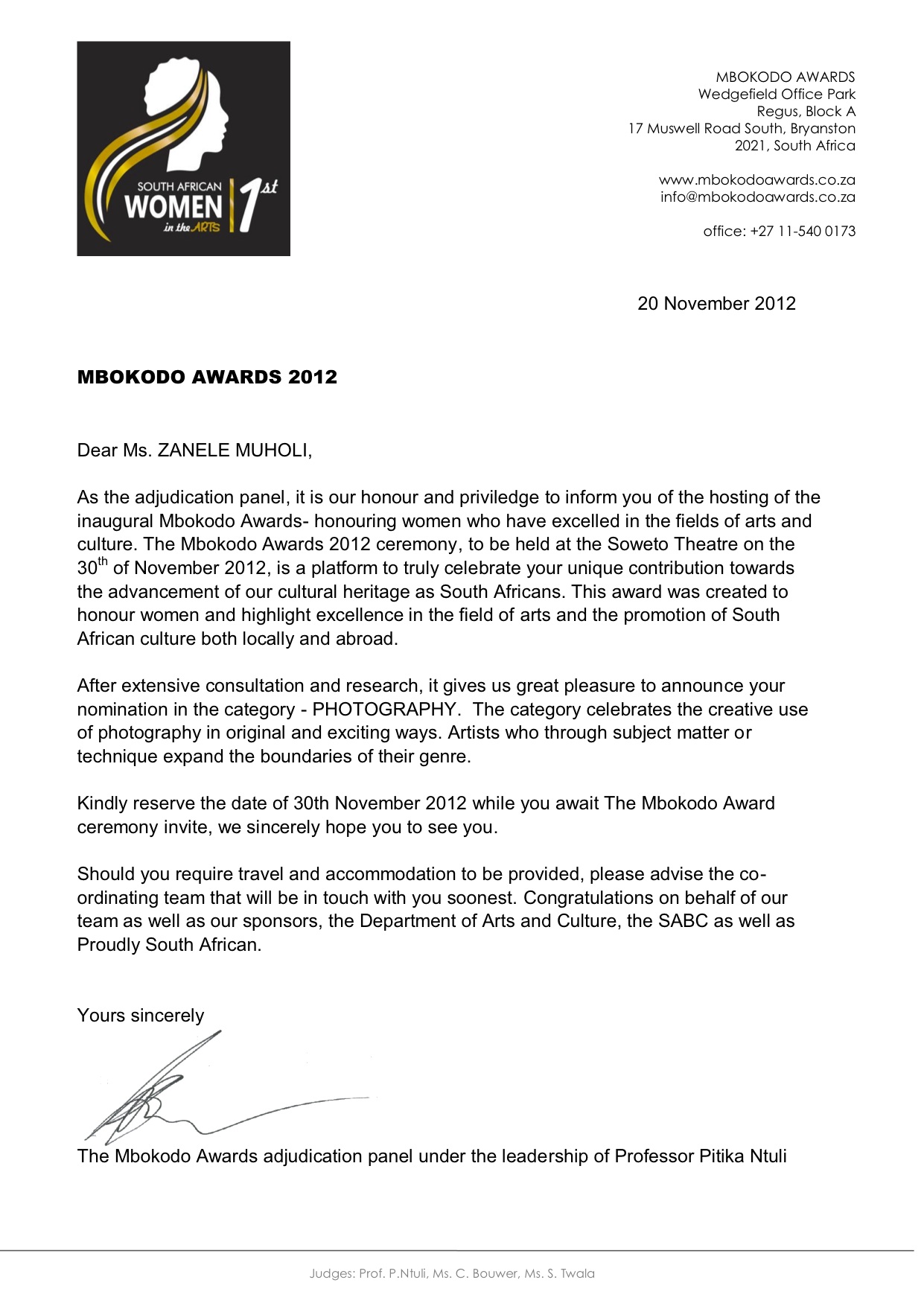
In November 2012, Muholi was nominated for the 1st Mbokodo awards but did not win it.
For more check: http://www.mbokodoawards.co.za/

ZANELE MUHOLI Mbokodo nomination 1

Just last year (21 December 2012), Muholi won Best Photographer of the year award at the LGBTI Recognition Awards 
ceremony held at Soweto Theatre, Johannesburg. The awards ceremony are a local initiative started by an individual known as ‘Nob Ody’, the aim of the awards is to recognise those that have contributed to the South African LGBTI community through activism, community building and some just for being good role models to others in the community.

Such awards I believe are significant for our community in order to create visibility of LGBTI individuals who fought tirelessly to make sure we enjoy each and every right as enshrined in the constitution of our country. Yes, we still have battles to fight for the eradication of homophobia and hate crimes towards LGBTI’s.  However, we also need to stop a bit and recognize those who dedicate their lives to this fight.

It is because of the bravery of individuals who were part of the National Coalition for Gay and Lesbian Equality (NCGLE) in the nineties when they lobbied and challenged the South African government for the inclusion of ‘sexual orientation’ in the Bill of Rights and ultimately in the new Constitution.

As the LGBTI community we need to start the culture of recognizing our own. We need to start appreciating the work done by those who have dedicated their lives to LGBTI organizations. Those  individuals who advocate for our safety and security, and those like Zanele who are on a journey to ensure that there is black South African trans and queer visibility.

Read related article in Guardian, UK…
South African photographer black lesbians portrait award
http://www.guardian.co.uk/world/2013/mar/21/south-african-photographer-black-lesbians-portrait-award

Read more on acceptance speeches from the winners

Winners – Index Awards 2013

Previous articles by Lesego Tlhwale


2013 March 16: Dangerous love

and

2013 Feb. 12: A dildo is not a man; it’s a fantastic toy…

and

2013 Mar.1: Definitely NOT “Gaysbian”


Posted in 2013 Index awards, Abantu, Acceptance speeches, Activism, Archived memories, Art Activism in South Africa, Articles, Black Lesbians, Books, Community, Community Mobilizing, Connections, Contributors, Difficult Love, Documentation; Filming; Photography; Community, guardian.co.uk, London, Organizations, Queer Africa, Queer visibility, South Africa, Zanele Muholi | Tagged | 23 Comments