2016 June 26: All black everything at the Black Queer Social JOZI

Text by Rene Mathibe
Photos by Ndileka Lujabe & Xolile Magubane

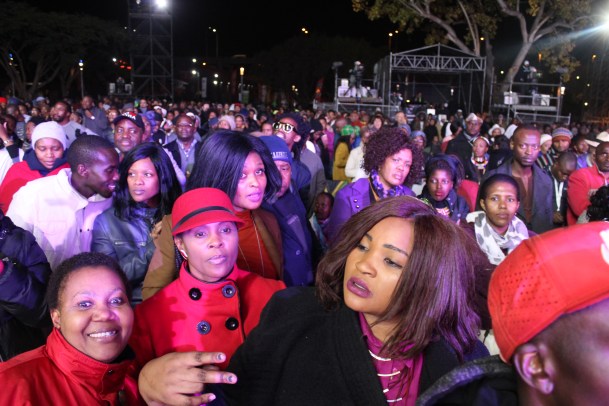
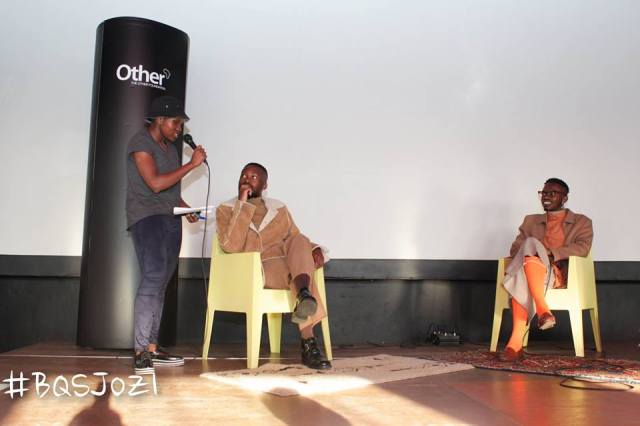
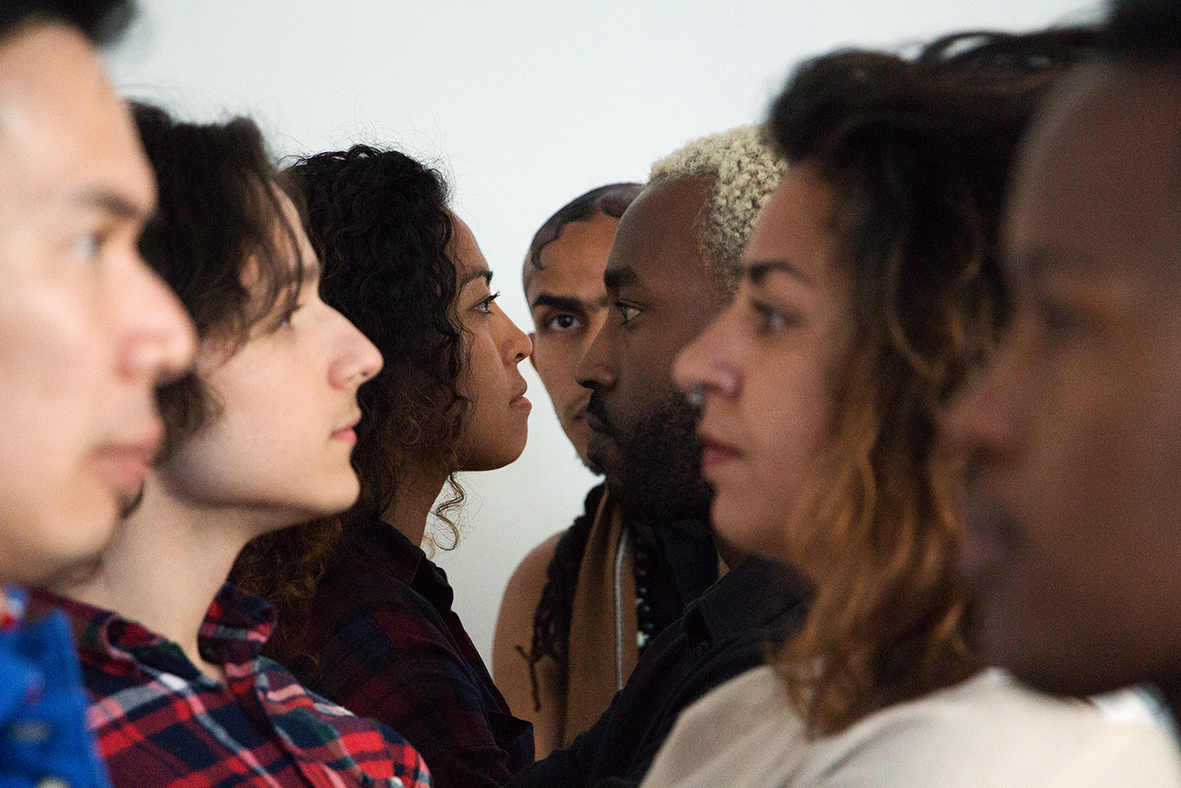
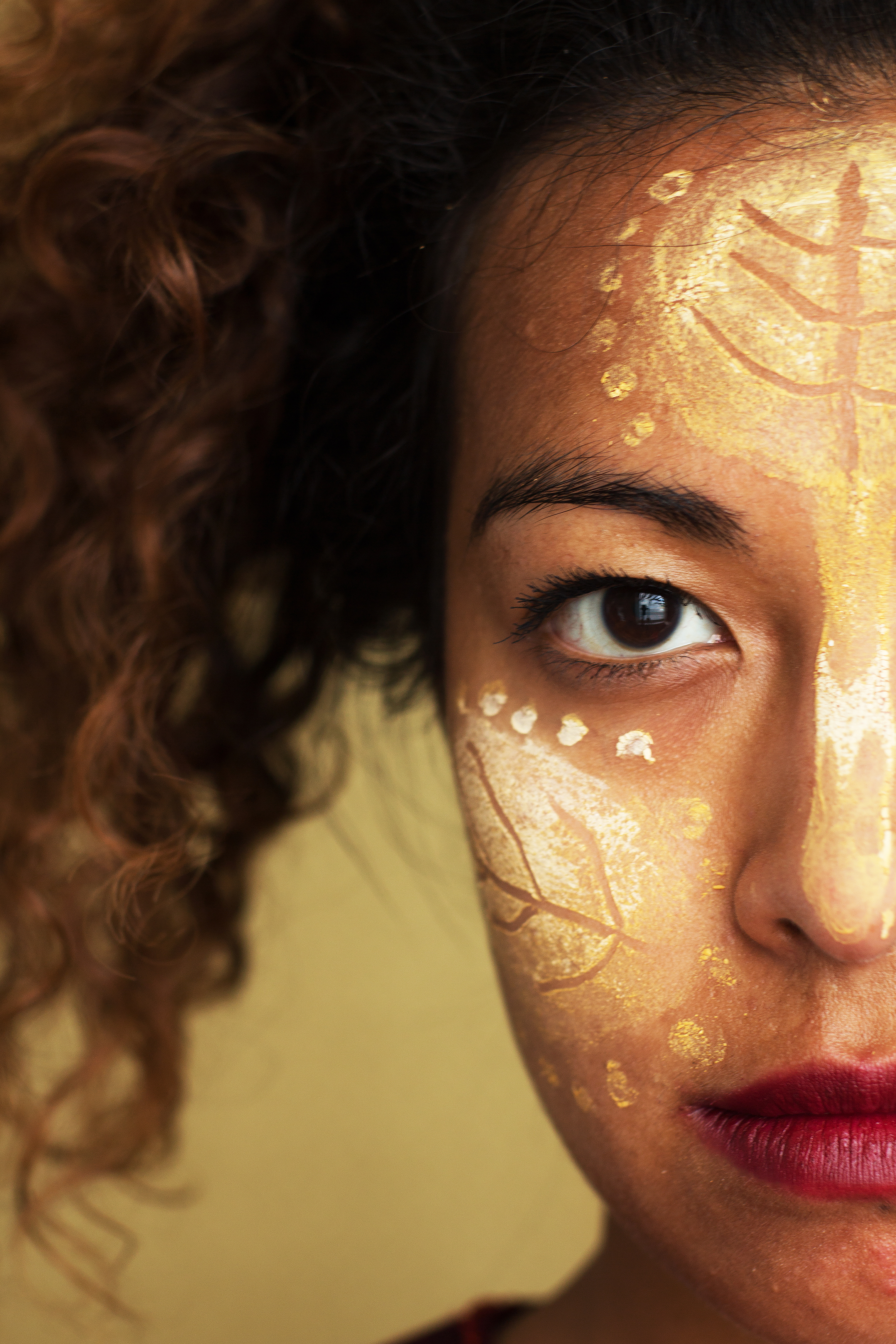
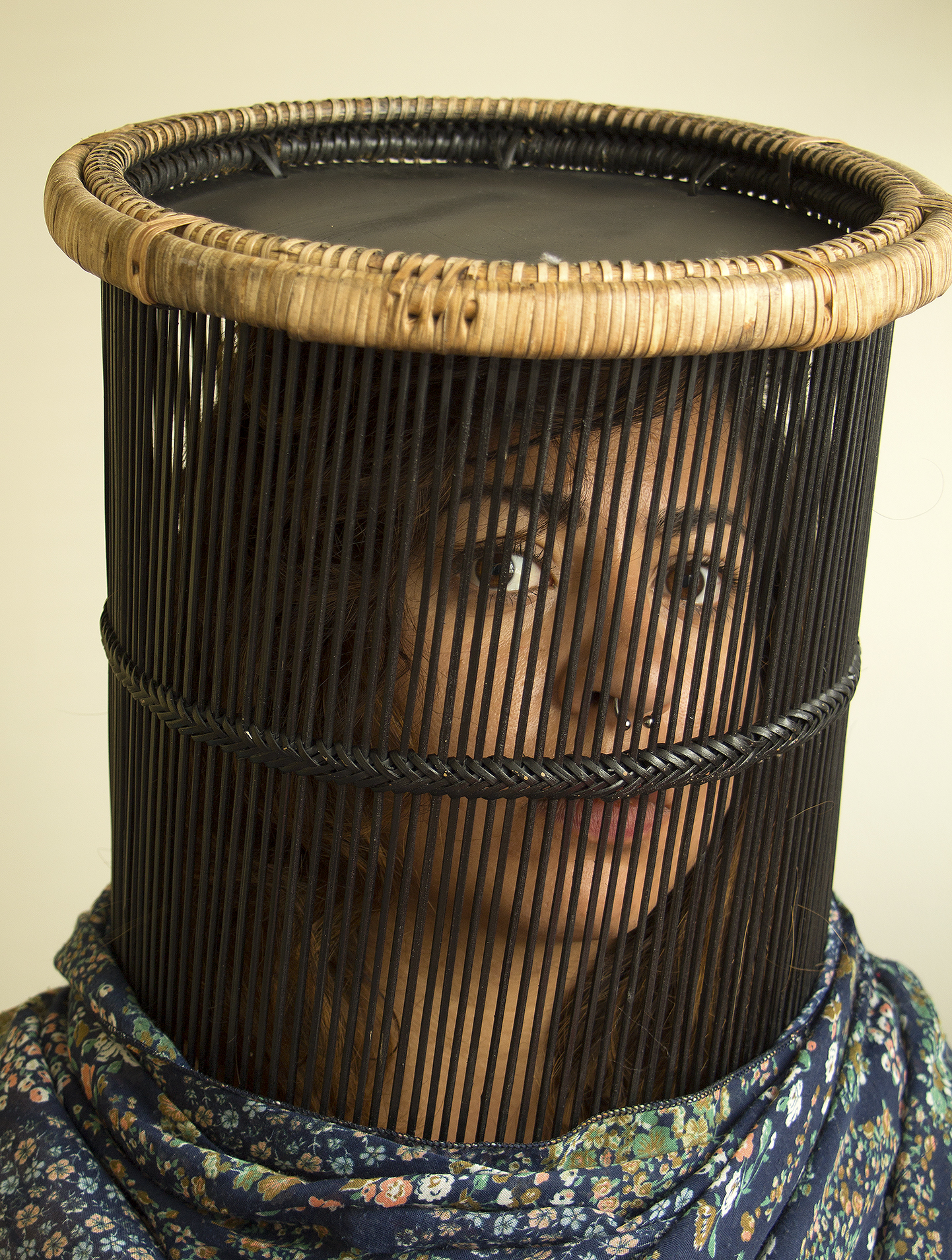
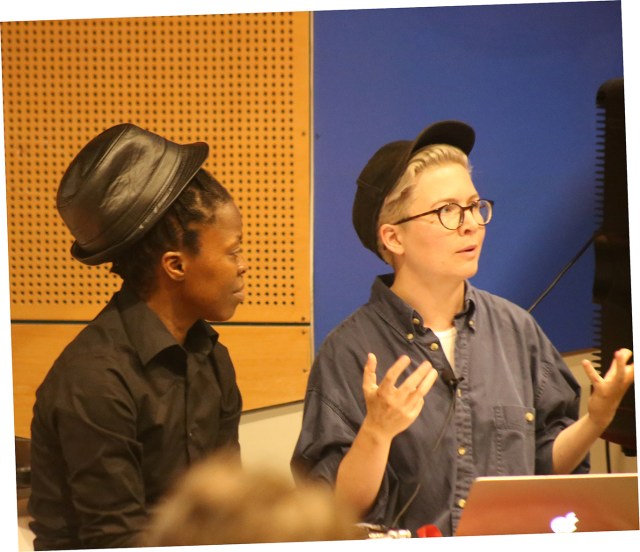
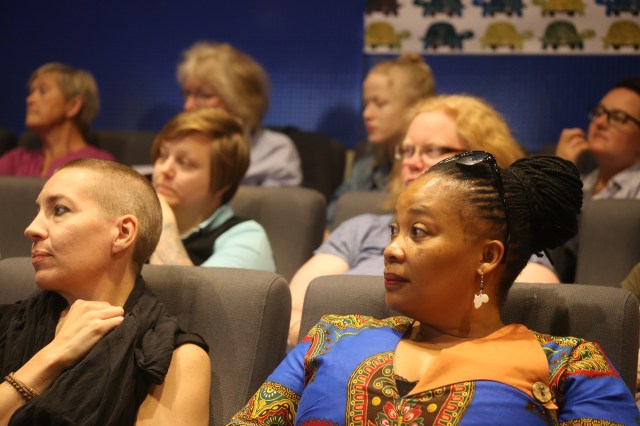
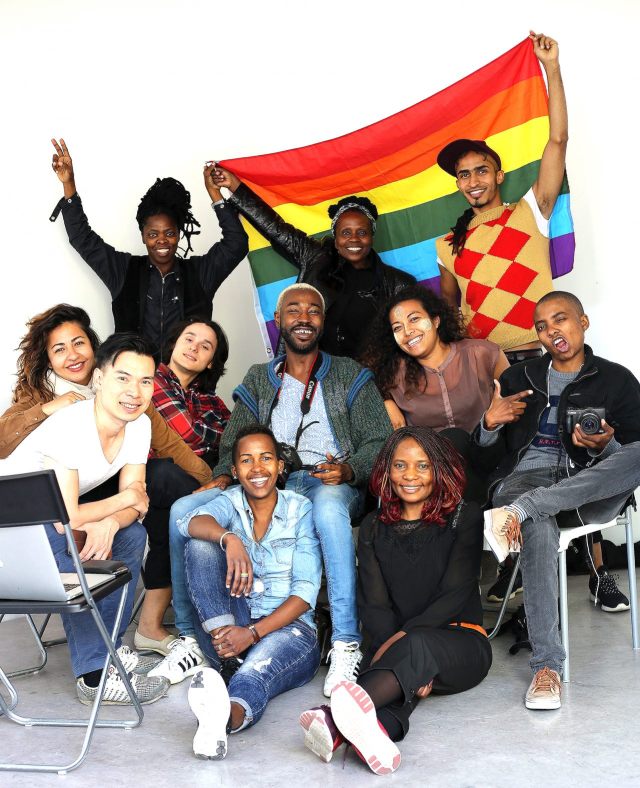
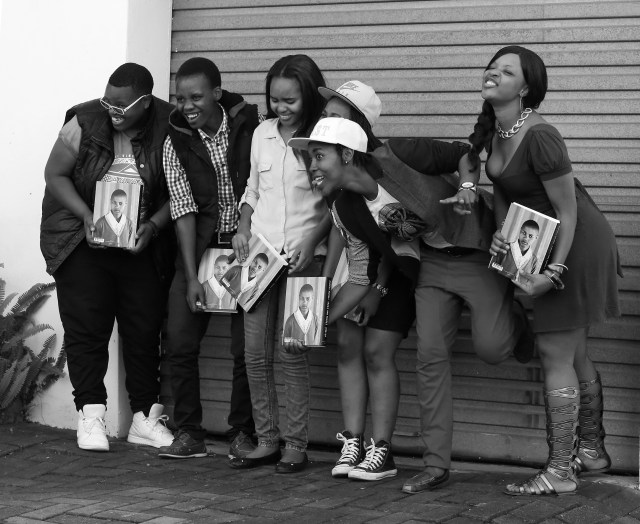
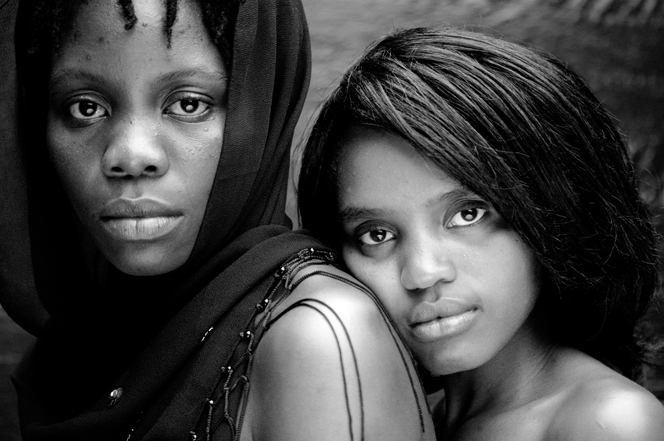
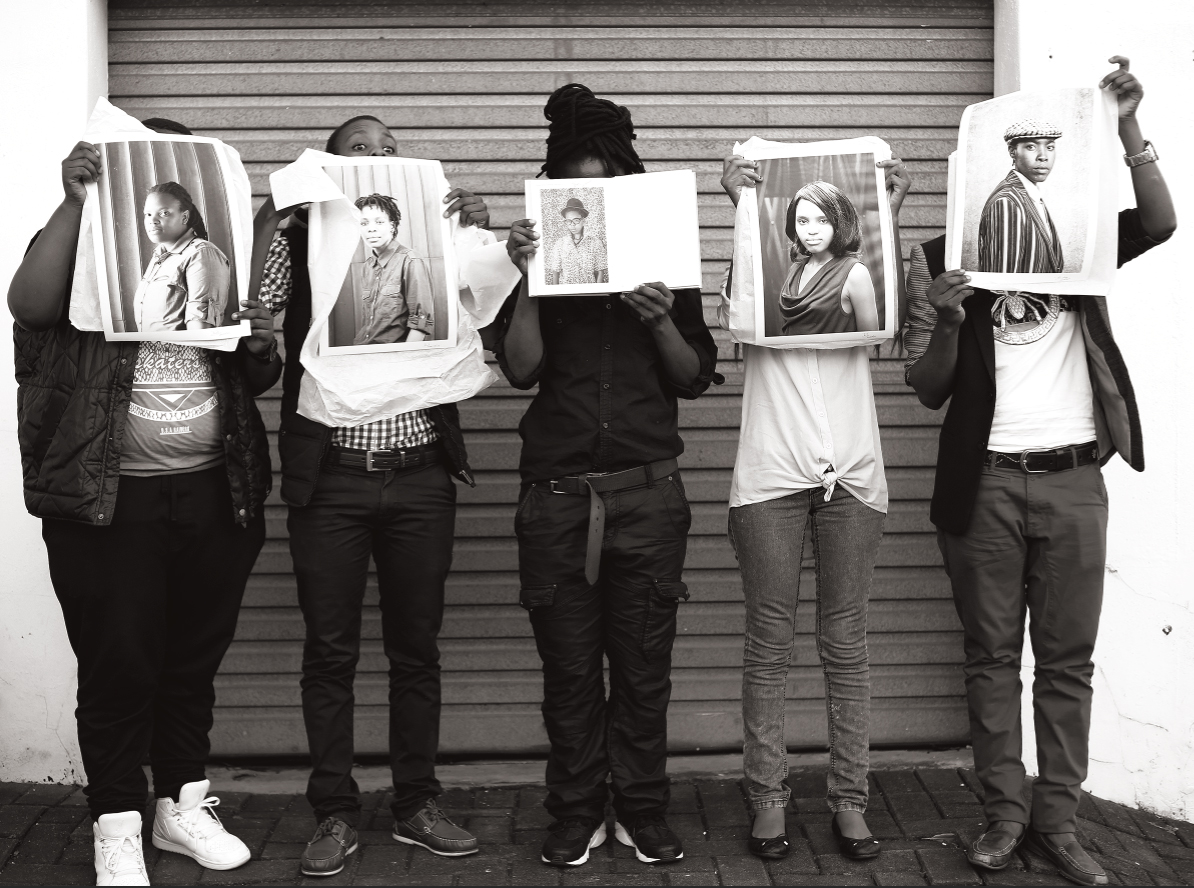
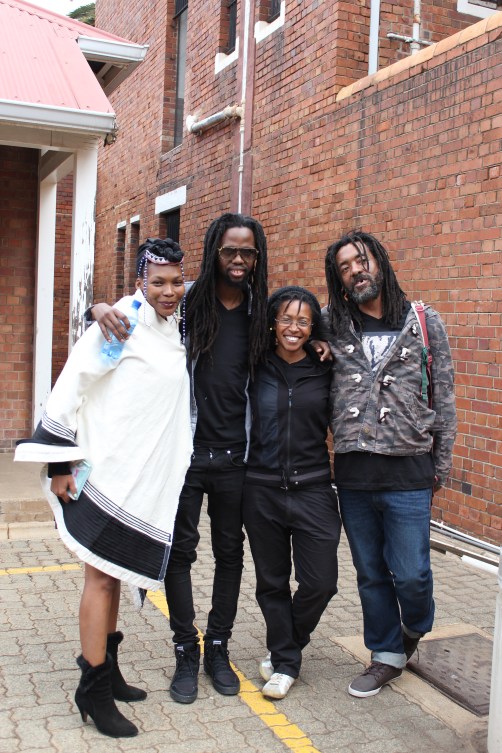
Black Queers in Johannesburg were excited to hear that Queers on Smash was organizing a Black Queer social to be held at King Kong in Troyeville, Johannesburg on June 25th 2016. The first one was held in Cape Town last year and it turned out to be a success.  The build up to the Johannesburg event started off by introducing the guests and sharing their stories, experiences of being queer and black in Johannesburg.


sizakele


The social focused on Black Queer people sharing their stories of being black and queer in the places they live in. Sizakele Phohleli, the author of “Letters to Cinnamon”, was the first speaker of the day. It is self-published book containing her poetry work. She describes her book as “a poetry anthology of love letters from one woman to another”. The book is written in four parts narrating different emotions such love, pain and anger. She recited some of the poetry for the crowd and Q& A followed as the crowd was so fascinated about who “Cinnamon” was.


FAKA presents


Thato Ramaisa and Buyani Duma were the second speakers. The duo go by the name “FAKA” and they explore alternative expressions of the black queer identity through video/performance and photography. Their style is vintage and they reference South African legends such Lebo Mathosa and Bongo Muffin. Their work documents a black queer identity that has not been documented in the history of South Africa.


yoliswa1


The third speaker was Yoliswa Mqoco, a fashionista and a stylist. She shared her story of always being interested in fashion and coming from a family who loved fashion. She shared her experiences of being plus size and the lack of fashionable clothing being limited at most of the shops. “I decided that wanted to document my looks on a platform and about two years ago decided to get Instagram and my life changed forever. People and brands were being respective to me and it totally threw me for a loop because growing up I wasn’t always praised for my love for fashion, so I’m blessed that the country understands me and my art form now” (Yoliswa Mqoco).

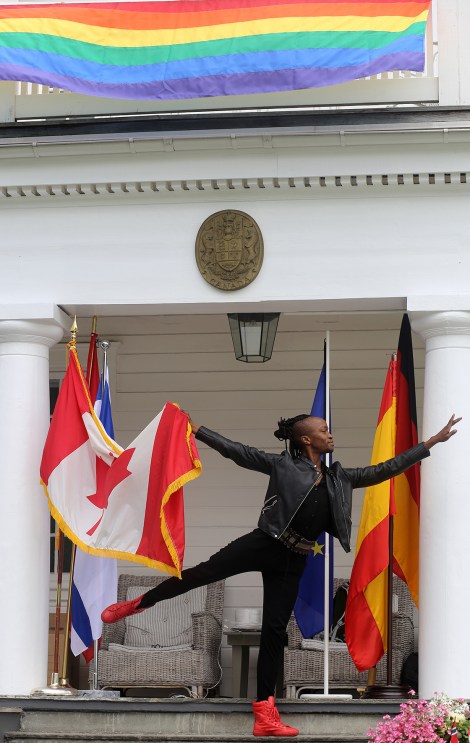
Delta The Leo, a dancer, singer, rapper and Mc performed some of her music as King Kong started to fill up. The crowd was ecstatic as she set the mood for the evening. Her hip hop dance moves showed dedication and passion.  I had the opportunity to exhibit and sell some of my artworks which focused on the constraints and homophobic discrimination most black lesbians endure. Sizakele’s book “Letters to Cinnamon was also on sale.


Art works by Rene


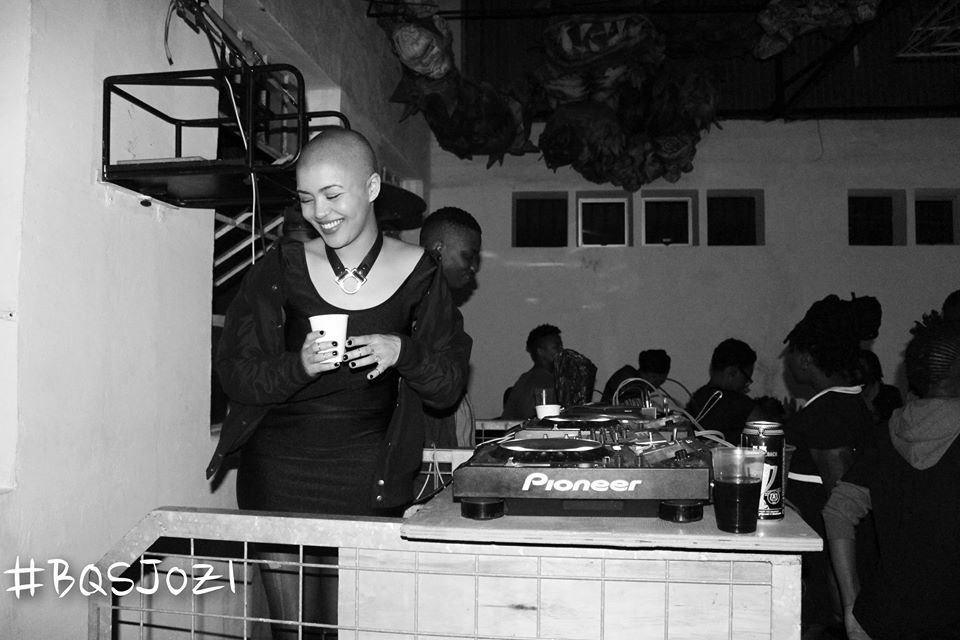
Lady Skollie


As the crowd settled in and filled their tummies with hearty soulful food, beats from Lady Skollie, a Cape Town based DJ started pumping and the party had begun. The ambience was filled with happy queer people with no drama, but overwhelmingly filled with gayness!


artlovers @BQS


Previous link by Rene

2013 Feb. 7:  Art Is Where the HeART is


Posted in Another Approach Is Possible, Archive, Article by Rene Mathibe, Arts, Black, Black Queer Social, Black Queers, Creating awareness, Expression, FAKA, in Jozi, King Kong, Power of the Voice, Sizakele Phohleli, South Africa, Troyeville, We Are You, We Care, We Still Can with/out Resources, Writing is a Right | Tagged , , , , , , , , , , , , , , , , , , , | Leave a comment

2016 June 11: United Queer Nations

by Lerato Dumse

“My name is Lindeka Qampi, I was born in 1969 and I’m a mother of four kids; I will start with my background.” These were the soft-spoken words used by Qampi when she opened the photography-training (PhotoXP) workshop in Oslo, on June 7 2016.

Qampi proceeded to share with the group her journey in photography, which began a decade ago. She explained that she started her photo career documenting the daily life of her community in Khayelitsha, a township in Cape Town, South Africa (SA). “Last year I started to put the camera in front of my face, I use the camera as a tool to share my issues, I use the camera as a key of life and as a way of healing my inside soul.” Qampi used these descriptive words to introduce the Oslo participants of self-representation photography workshop.

The photographer acknowledged that it is not always easy to share a personal story, as it makes one feel like they are reborn. She affirmed the group that the workshop would serve as a healing session, aided by photography.

The first session of the six-day workshop was more theoretical than practical, with presentations by lecturers from the local Photo Art School and the nervous participants bouncing their ideas around while asking questions.


2016 June 15 Ondine

Ondine


Ilia sleeping place

Ilia


Dubbed the United Queer Nations by co-facilitator Zanele Muholi who joined the workshop on the second day. The group consisted of Ondine Umuhire (Rwanda), Ilia (Russia), Nina Bahar (Iran), Lucien Chen (Taiwan), Ruth Nakato (Uganda), Su Thet Mon (Burma), Ahmad Umar (Sudan), Eddie Esmail (Sudan) all participants currently reside in Norway, with some having spent most of their lives living in this country.

2016 June 15 Ruth portrait

Ruth


The training is called Photo XP by the two facilitators as it is based on the objective that participants will experience photography. The pair from South Africa started their photography skills sharing journey in 2009. They have travelled from different SA cities including Eastern Cape, Cape Town, Aurora Girls High School in Soweto, and are currently working with six black lesbian youths in Kwa-Thema. Although they have a strong passion for increasing the number of female photographers, they continue to work with mixed gender groups and had successful trainings in Cotonou and Porto Novo in Benin and another training in Cagliari, Italy in 2015.


2016 June 10 Ahmad Umar _ Group portrait_2484

Group portrait by Ahmad (centred)


SU_ main portrait

Su Mon Thet


“When I was invited to be part of the workshop I was excited because of all the technicalities of photography; then I was a little hesitant when I realised I would be a participant. It is not easy to be in front and expose yourself,” Mon said. Muholi had directed the first question to her. Another participant Ahmad Umar admitted that while he tries to digest everything, he was not sure which aspects to represent between the life changes he is currently going through, his past or his strong personality. Continuing from a follow up question from Muholi, Umar spoke about an urge to represent a part of himself that will inspire others and not portray weakness and clichés.


2016 June 14 Lightened _ Eddie

Eddie

Eddie Esmail said, “I am interested in photography and self-representation.” Adding that the first day’s discussions gave him more understanding. Esmail spoke about his multiple identities, which range from being Sudanese to being an architect and many other layers in-between. While he is not an artist he admitted that he likes art and would like to add his voice in the workshop and exhibition.

Sharing her views about what she calls home, Nina Bahar explained that for her, home is where she feels safe. “It can be in Turkey where I meet my large family and sometimes it can be in Oslo, depending on my feeling of safety, normal and not being attacked,” stressed Nina.


2016 June 14 Nina Bahar portrait_2894

Nina


Micro aggression and everyday questions and comments such as where are you from? You speak Norwegian so well and being invalidated while trying to share personal feelings continues o leave scars on some participants.

The second day of the Oslo workshop was filled with laughter and was a real icebreaker in the group as everyone was tasked with taking a group photo. Creative juices started flowing as each member refused to be outdone by their peers, each coming up with their own photo composition style. The two facilitators stuck to their basic introductory lesson of “framing, focus and shoot.”


Lucien photos

Lucien


When you throw in self-timer and multiple shots options, the exercise turned into a fun filled day with theatrical and motion picture talent popping up in some of the participant’s compositions. Interactions with asylum seekers and refugees during the inaugural Visual Activism Cultural Exchange Project (VACEP) in 2015, pointed to the need for this workshop and exhibition. The exhibition opened from June 18- July 31 2016 at the Museum of Cultural History, in Oslo Norway.

The daily four-hour training sessions held at Kunstplass [10] provided guidance and practical training. The gallery owned by collaborators Vibeke Hermanrud and Henriette Stensdal was used to hold conversations about issues and challenges faced by some of the participants who have left their birth countries to seek some respite in Norway. The participants spoke about their daily struggles and the realisation that the grass is not always greener on the other side.
Although immigration has existed throughout the history of humankind, the reasons for migration have shifted from searching for new pastures for livestock, hunting and chasing fertile lands. The biggest reasons sustaining immigration today are natural and man-made woes. Looking at African and Middle Eastern immigrants, political freedom and escaping government persecution is responsible for many people leaving their home countries and seeking asylum. Their government’s inability or unwillingness to protect people’s human rights forces many people to make the decision to leave their homes, family and communities. Persistent homophobia and homophobic laws upheld in more than 70 countries have resulted in many Lesbian, Gay, Bisexual, Transgender and Intersex (LGBTI) people seeking asylum, in more “liberal societies”. LGBTI asylum seekers are not guaranteed safety during their journey and after arriving in the new country. Harassment, exclusion, sexual violence and other forms of violence remain a reality for this vulnerable group.
While “native” citizens are often not pleased by the arrival of immigrants; this leads to racism, xenophobia and other social problems.


2016 June 10 Oslo PhotoXP group _1526

Related links


2016 May 17:  Launching Kwa-Thema Photo XP

and

2016 July 16:  Through the eyes of young women photographers

and

2014 July 12: From Soweto to Paris for the love of photography

and

2012 May 12: Ikhaya project and exhibition opening


Posted in 2016 Oslo Photo XP, 2016 VACEP, Activists, Another Approach Is Possible, Article by Lerato Dumse, Camera work, Creating awareness, Displacement, Exhibition, Experience, Expression, Friendships, From Cape Town to Oslo, From Johannesburg to Oslo, History Museum of Oslo, Homophobia laws, Human Rights defenders, Immigration, Inkanyiso media, Kunstplass, Life, Lindeka Qampi and Zanele Muholi, Participants, Photography, Photography skills, PhotoXP, Political freedom, Power of the Voice, Relationships, Self presentation, South Africa, United Queer Nations, Visual activism, Visual history, We Are You, We Care, We Still Can with/out Resources, Writing is a Right | 1 Comment

Mina/ Meg – I was there

Text by Levinia Pienaar
Photos by Lindeka Qampi

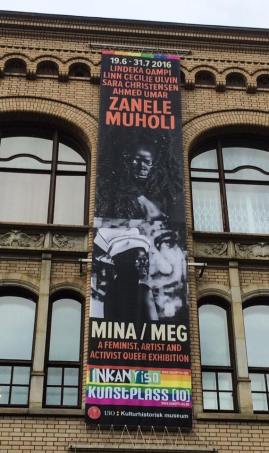
I was fortunate enough to attend the opening of Mina/Meg, a feminist, artist, activist and queer exhibition. This ground breaking event took place at the Kulturhistorisk Museum in Oslo, Norway on Saturday 18 June 2016.

The day started with a talk at Eldorado bookstore, which serves as this year’s Oslo Pride House. The topic was on Lesbian History and Identity in which Zanele Muholi and Sofia Hultin discussed their art projects. Hultin’s I’m Every Lesbian – Oslo, is a walking tour of the city, based on interviews with local LGBTQ residents as part of the off-site curatorial project Munchmuseet on the Move.

2016 June 18 Muholi & Sofia_8940

Photographer and visual activist Muholi presented We Live in Fear (2013) documentary and some photos featuring in exhibition Mina/Meg – A Feminist, Artist and Activist Queer exhibition, which opened at Historical Museum (just after the talk) curated by Kunstplass [10] ‘s Henriette Stensdal and Inkanyiso’s Lerato Dumse (South Africa).


2016 June 18 Levinia & Dorthe_9040

L-R: Dorthe Troften and Levinia Pienaar at the Lesbian History & Identity seminar…

Presentations were an awesome experience. It made me wonder just what South Africans would say about their citizens occupying spaces of this nature and such platforms. What would SA and Africa say about “their own” who speak out for minorities who are being ridiculed, beaten, raped, abused, killed and ignored just for being who they are, without harming anyone around them?

Just because they LOVE differently than the “norm”, whatever society perceives that to be. When it comes to minority and sexuality issues, both the visual and oral must be presented and the agenda must be pushed forward at all levels. Schools including Primary, High and Tertiary institutions must address these topics. At Old Age Homes so the elderly can understand the grandchildren they sometimes have to raise. At hospitals so parents can understand more after giving birth to their children who might be Lesbian, Gay, Bisexual, Transgender or Intersex. As much as I don’t like the term “being different”, when one looks at the bigger picture, society still sees the LGBTIQ and other community as “different”.

If I could tell some people in SA about the spaces that black South Africans occupied in Oslo they would never believe me!!!

Before the talk ended a young woman asked the question, “how long will it take for us not to have to identify ourselves as lesbian, gay, transgender, etc.?” I thought to myself, “how long did it take for us as South Africans before we were able to complete forms without having to endorse our race? Not having to tick a box declaring if you are White, Black, Indian or Coloured. I guess it will take a long time before we don’t need to make our existence and sexuality known.


2016 Oslo PhotoXP

2016 Oslo PhotoXP participants whose photos are exhibited at the History Museum of Oslo. Front row: L-R: Ondine & Ruth. Middle row: Lucien, Nina, Ilya, Eddie, Su and Lerato. Back row: Muholi, Lindeka and Ahmed…

After the talk we made our way to the Kulturhistorisk Museum where eleven (11) artists from eight (8) countries – Oslo, South Africa, Sudan, Burma, Taiwan, Rwanda, Uganda, Russia and three (3) continents – Africa, Asia and Europe displayed their art. While everybody was still trying to set up and get things ready, I had a chat with a man. He told me about his history and how he eventually came out to himself and his family about seven years ago. That same grown up man who is a grand father is still in pain. Since I didn’t judge him, he felt ok to talk to me about it. His story is just one of many others. It reminded me of a funeral I attended in Durban South Africa not so long ago. A very old lesbian couple called me over to them and told me some stories about the 1970’s and 1980’s in their lives. The sad thing was- it was so inspiring yet undocumented.

Muholi said that we have to document.  We must keep what we do today and who we are and what we stand for, for years to come.

If only the stories of that old lesbian couple, or the story of that man in the museum was documented for so many others to reflect on or read in years to come. If only their stories were recorded.

We should not only record and archive stories, these stories should reach those who need to read it, relate to it, understand it, and live it. We cannot remain silent for all that is happening around us. We cannot keep silent for what is happening even within us while we do and say nothing about it. We have to speak up. This time it must be about Who I am. Who you are? What you are and What I am.

2016 June 20 Llewellyn Mnguni for Oslo Pride 1_9856


2016 June 18 Llewellyn_9348


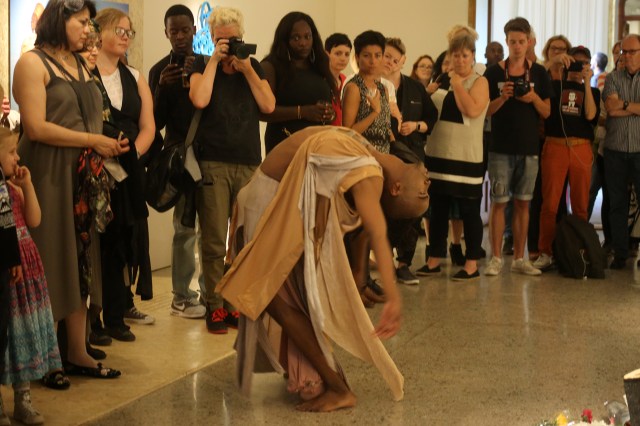
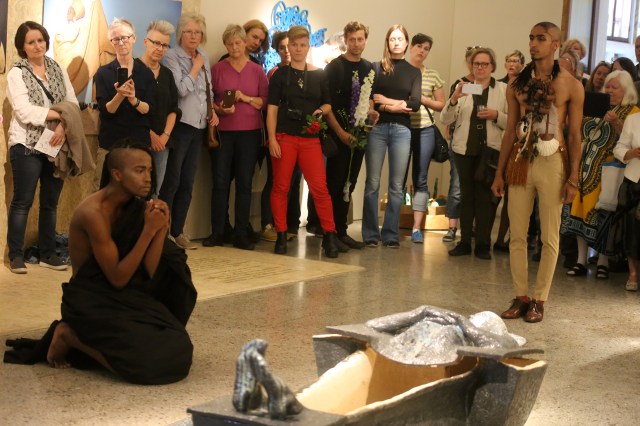
The program at the Museum was very intense, personal and positively so. South African dancer, Llewellyn Mnguni, was invited by Zanele Muholi to “interpret” her work in the form of dance. He took everybody to a place very deep inside all of us. There was no music – yet it was so “LOUD”.


2016 June 18 Llewellyn & Ahmed_9245


Seeing the coffin created by one of the artists Ahmad Umar took me back to some black lesbian funerals I attended in South Africa. Maybe even to one of the few memorial services I attended of black lesbians who got killed for being just that!!!
Black lesbians. Suddenly it became so real for me, so valid, so “close to home”. Women who were raped to “cure” them from being lesbians. The coffin also symbolized to me a sense of dignity, self worth, being, invasion, and not just the loss of life, as we know it. What if I can’t live my life as a lesbian?
I would die also.

10m long banner of Somnyama @Cultural History Museum _ OsloAnother artist whose work is exhibited in the Mina/Meg show is Lindeka Qampi. She presented her poem titled “Inside my heart”, she shares about going to her mother’s grave and telling her stories. What hurts her and what is going on in her life and mind. Some of us still have the chance to tell out stories to our Moms and our Grannies…
Even in the context of discovering yourself, coming out to yourself and your Mom and family. Let’s not wait till it’s too late….

Our stories need to be told by us. All those who need it and those who come after us must read these stories.


Related links

2015 June 27: My best Oslo Pride


and


2015 June 30: South African Visual Activists documenting Oslo


Posted in A new visual history, Another Approach Is Possible, Archived memories, Art Activism, Art is Queer, Art Solidarity, Articulation, Being heard, Creative Writing, Exhibition, Exhibition opening, Loving photographs, Photographs, Uncategorized, We Live In Fear (2013), We love photographs, Writing is a Right | Tagged , , , , , , , , , , , , , , , , , , , , , , , | Leave a comment

2016 May 17: Launching Kwa-Thema Photo XP

by Lerato Dumse

 
The session starts with Zanele Muholi asking how many participants are in the project. People have to start writing, and Khanyisile Mtungwa is asked to borrow fellow participants a book for them to write on top of. “You will not be this squashed tomorrow, we are going to be alright.” Muholi promises.

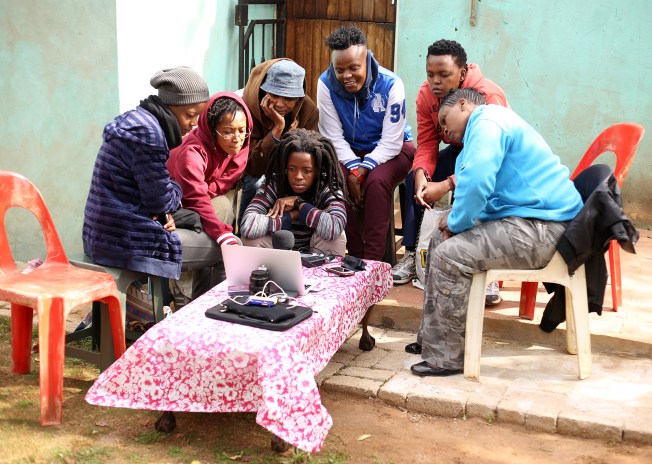
“Wish all your mothers a happy mother’s day,” requests Muholi while writing down the date May 8 2016. The activist then requests that no one be late for the Kwa-Thema Photo Experience (PXP) when it continues the next day. This part of the programme was reached after six of the seven expected participants had arrived for the first day. Boitumelo “Tumi” Nkopane was the first to arrive that is because the workshop was held at her home. Luyanda Mthembu was the first to arrive at Tumi’s place before me and the facilitators Lindeka Qampi and Zanele Muholi arrived. Khanyisile “Khanyi” Mtungwa, Lerato “Maphike” Rafedile and Lebogang “Lebo” Mashifane then arrived, allowing for the workshop to commence.


2016 May 25 BLY KwaThema PhotoXP group_0906

 2016 KwaThema PhotoXP participants with Lindeka Qampi, project co-facilitator.  Photo by Muholi                    


Muholi, who has invested much of her career documenting black LGBTI community members, pleads with the participants, who identify as Black Lesbian Youth (BLY) not to be late the next day, while admitting that she too was late for the first meeting. Muholi then informs the group that their brief is to write the history of Kwa-Thema. During the first engagement, it is established that four of the six members are members of Abanqobi. The group consists of mainly youth members.  While still addressing the group, Muholi asks that the group direct any questions to her if clarity is needed. Muholi then informs the participants that an exhibition will culminate from the workshop. The activist then informs the group how society, including the police service use photographs in their investigations.

Three of the members Tumi, Maphike and Khanyi have recently completed a computer training and Muholi reminds them of how important their work is, how to say it on a computer. Muholi reminds the group that they can continue documenting their township, which has drawn interest from different researchers, photographers and writers from different parts of the world. Muholi informs the group that they cant just limit their voices to speaking about “being killed.”

With no other reference present, the group has no choice but to assume that this training is the first of its kind in their township. The brains behind Faces and Phases believes it is only fair that she share the photography skill, since she has photographed all the participants of the 2016 Kwa-Thema Photo XP. “I get paid to be a photographer, it is not painful to me. I have travelled with Lerato and Lebo, they know how this thing works.” Muholi then encouraged the PXP participants to be the first to document their hate crimes.

2016 May 17 Khanyi & Lindeka by Fane_0481

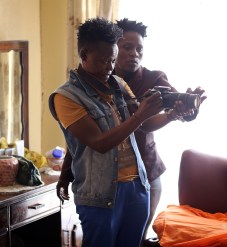
Khanyi practising focus… coached by Lindeka Qampi. Photo by Thandanani Mncwabe. (2016)

Participants were informed that they would shoot everyday and their work would be part of a presentation during a Visual Activism Cultural Exchange Project (VACEP) in Norway, Oslo next month.  The six participants were reminded that there is a lot happening in Kwa-Thema in seven days. Khanyi was informed that her grandmother was a very interesting character, with a rich history, while her home gets some good sunlight shining through. A head count revealed that five out of the six Photo XP participants are unemployed.

“It is one thing to have a talent, but it is something else not to be able to even provide for toilet paper at your home,” said Muholi. “Let us teach ourselves to read daily newspapers.” The award-winning artist informed the group, “each and every best picture captured will be your certificate, each and every project completed will be your diploma, and each and every exhibition will mark something on your CV.” Referring to photography, Muholi said, “Photography is the best thing that I have done, so if I don’t share it, I will be unfair.”

One of the first questions came from Tumi Nkopane, who wanted to know if we would go out as a group. As part of the incentive of the workshop, Muholi proposed field trips. She also informed the group that that the overall theme will be on self-representation. “This is going to be a practical experience,” Muholi proclaimed. She shared her plans of having an exhibition of the produced work in the same township. Amongst the subjects tackled was the budget needed to host such workshops. Half an hour after starting the session, Muholi then opened the floor and invited participants to speak and ask questions. Lebo was the first to speak; she gave a suggestion that people first shoot their foot or face before starting to shoot, as a way of separating pictures when one camera is shared in the group.  “I love photography and in my world I think everyone should take photographs, because it is nice,” Muholi said before adding, “Now we need to know how to make money out of photography.”

One of the first tasks and questions posed to the participants was to explain what the 5 W and H stand for.  A question was then thrown at the participants, they had to say who they are, why they agreed to participate and why do they think it is important to preserve the history of Kwa-Thema. Choosing not to be complicated, Lebogang explained that she only introduces herself as Lebo. “I agreed to participate because there are things that I feel like I could still learn, the are things that I feel like I could still capture, and are things that I feel like I could still give away to other people,” she continued. Adding that she can learn more about Thema, because even the local library doesn’t have much information.

Next to speak was Luyanda, she revealed that the main history that she knows about Thema is the story of Job Maseko, who fought in a World War. Luyanda admitted that she doesn’t know the history of the LGBTI community in Kwa-Thema.  Khanyi Mtungwa confessed that she never liked studying history while still at school, but believes the project will help her to know more about the history of Thema. As one of the participants with knowledge of LGBTI history in Kwa-Thema, Khanyi spoke about a house in Legodi Street belonging to the late Musa Moses Williams, which housed many LGBTI members in the past. “The reason why I agreed to participate in the PXP is because I want to learn more, gain a skill of photography and make a mark,” Tumi told the group. She reiterated from Khanyi’s knowledge of LGBTI history.

The LGBTI history touched on a sore point, when Tumi reflected on the recent history, which is the gruesome killing of Eudy Simelane, Girly Nkosi and Noxolo Nogwaza in alleged, hate crime incidents. Touching on a personal level, Lebo shared the story of her aunt, Pricilla Mashifane who also dated Eudy and was one of the people in Kwa-Thema who came out as HIV positive, when the virus was still taboo. Lebo’s recollection sparked Khanyi’s own memories as a young lesbian who frequented Pricilla’s home and hung out with older gay men, some of them now late. Muntu Masombuka was also remembered, and hailed as one of the activists in the forefront of HIV/Aids awareness.

The brief was then divided into four panels, participants were asked to produce work on Self-Representation, My Home, Landscape as well as Queer and mainstream history in Kwa-Thema.  “I started appreciating my second name last year, I have realized that our names follow us.” These were the opening words of Lindeka Qampi, a co-facilitator. She started her schooling in the Eastern Cape, before moving to Cape Town and completing high school in 1995, I was delayed by many things including riots. The mother of four shared about her dreams of doing careers such as nursing and teaching, but life had other challenges that prevented her reaching her goals. “My mother used to force us to sell sweets, at the time I thought she was hard on us, but as an adult I now realize she helped us.” After her sales business collapsed, she had many pressures as a mother, which led her to gambling and ended up being addicted.

Qampi’s mother who worked with skills development invited her to participate in a sowing project. Through an acquaintance from the sowing group, she heard about a photography group. Being given the wrong address didn’t discourage her, instead she went back to the group member and begged him for the right address. Ten years later and Qampi has made a career out of photography. She encouraged the group to use photography for personal healing. She informed the group about her new venture of writing poetry. Before closing the first session, Muholi and Qampi presented the images produced by learners from Aurora Girls High School in 2014 and exhibited at their school. The participants were reminded that they need to rally together and treat each other like family members, and not allow anything or anyone to come between them.


Related links

2014 July 12:  From Soweto to Paris for the love of photography


Posted in A new visual history, Activists Act, Archive, Art Activism, Cameras, Caring citizens, Commitment, Community based media, Community outreach, Crea(c)tive senses, Creating awareness, Photo session, PhotoXP since 2004 -, Uncategorized | Tagged , , , , , , , , , , , , , , , , , , , , , , , , , , , , , , , , , , | 1 Comment

2016 June 10: Contains Explicit content for good knowledge Aluta Continua

by Tinashe Wakapila

I always imagined the liberation of coming out when I was in the closet. The times I came out I felt a burden lift off my chest and weight off my shoulders. That feeling lasted only for a short while because it was followed by all these questions. This article is mainly focusing on some importance of informative answering regarding our society as Lesbians or women who love other women.

Just some quick advice, “coming out” is a term that was produced by whoever to allow people to meddle in your business. Yes it is a liberal thing to do, for the good of not having to hide but it is a continued journey of a lifetime as long as you meet people.

My family and I are in great company, my mother got to accept and my father agreed along so did my siblings. They love me so dearly but funny enough the coming out pamphlet did not come with the terms and conditions I now face on a daily basis to be a teacher and attain a level of patience. Like for instance, I did not know that coming out has no end date it goes as you meet different people just that now you get to really say it with pride without the fear of thinking, “what if my parents or family hears it from the person I told.” You remember rejection, stigma and hesitation will be in people.

Let me take for instance the incident that personally happened to me with family. I literally nearly passed out, we are in the 21st century some of these sarcastic ignorant questions from ignorant people annoy me. The question “how do you do it? How do you make love God created Adam and Eve.” That question directly came from one of my elder cousins who was in the “dark”. I am talking about a well learned and academically groomed person, who is capable of utilizing the internet. My response was getting ready to shoot her down and say sarcastic things like “come to bed with me I will show you and stuff like google it.“ Then it really hit me hard that once upon a time they would not even raise the topic, they would just seclude me. This was my chance to be able to really explain. No matter how the question was coming to as It was my duty as a lesbian family member to instil knowledge which is what we the LGBT society lack sometimes, knowledge of informing others regardless how they pour the questions to us.

I sat her down and had her define the definition of love making in her own senses. I also went to to make her define pleasure, that way when I start having my own definitions we would remain together on the same page.

With heterosexual people, apparently most of them sexual intercourse is penetration. They do understand how everything goes down, where they miss us is the penetration part. Which is were I had to intervene, without making her feel like she is having wrong sex or I am having wrong sex.

These steps I took because we were at a family gathering not a sex topic of heterosexuals and homosexual this topic ended up taking me about 15-20mins because it is the only end part that stretched a bit in her trying to devalue my sex relations because I did not get penetrated. I did not want to have a whole debate on what is sex and what is not. Our conversation ended up with a unison agreement after I gave her an example in the straight context

Me: Lets say your friend’s husband has got a 13 inch penis and she feels satisfied and yours has 16 inch one does it mean she is having wrong sex

Her: No because we have different types of vaginas.
Me: There you go you got your answer.

Her: How do you mean?
Me: Some women’s vaginas just don’t have an appetite for big, small or any dick at all.

She just shook her head and wax rated the topic to how the cakes were nicely made and since then we in the same rocking boat.

What am I saying the moral of this gave me the courage not to quickly indulge in an agreement and misunderstanding.

So with this way of teaching no one gets in anyone’s case and try to bruise anyone. Always be ready to be attacked in hidden ways from people’s different questions. Sometimes we do know that this is just meant to harm me, rather turn it into an informative scolding. I like the question who is the guy here, instead of coming up with all sort of angered responses how about a simple when you see to chopsticks which one is the fork which one is the knife that way it all ends in a reign of victory to everyone. Being out is like having a wound and no bandage the wound is prune to every type of infections, if carelessly handled. So being out brings more hurt and even more knowledge.

For instance I went shopping with my brother- in-law he literally was eager to also know. We got in a baby shop and I marvelled the baby stuff in passing I mentioned issues like I want to have 4 of mine he looked at me, shook his head and went on to say “but you are lesbian, you hate kids.” I stared at him with bitterness in my eyes but again it was not his fault he was just as ignorant as any homophobic person would be. My first solution was to make him understand that as lesbian women, our mindset is the same like any couple would have. He asked me how, it was really an annoying question coming from a person who had low sperm count and had to IVF to pro create. I did mention to him that IVF was not only an option for straight couples. It was also important for parents in the homosexual community. He tried so hard to explain to me saying oh so why not do it the natural way I just looked at him and our conversation ended because he himself had not procreated naturally.

It may seem like these were ways to attack them but besides that I had learned and knew how to get up and respond. With coming out comes great responsibility boldness and confidence. Knowing your story and understanding yourself and surroundings better. It is often challenging but the minute you decide to curl up and be moody that’s when people take advantage of you and make you feel as if being you is the end of the world.

Although coming out does not erase homophobia do not be worried about those issues because at times it only makes it worse. Coming out is not the end of the story of a journey, it is the beginning and in most times I always wish I stayed in the closet. But hey, I am a girl who is out and there is no turning back…


Previous by Tinashe

2015 Nov. 27:  Relationships don’t create happiness but reflect it


and


2015 Jan. 3:  I dropped out of the closet many times


Posted in Acceptance, Another Approach Is Possible, Archived memories, Article by Tinashe Wakapila, Coming out of the closet, Conversation, Creating awareness, Definition, dialogue, Expression, Family support, heterosexual people, IVF, Knowledge, LGBTI community, Liberation, Lovemaking, Power of the Voice, Questions and Answers, sexual intercourse, Society, South Africa, We Are You, We Care, We Still Can with/out Resources, Writing is a Right | Tagged , , , , , , , , , , , , , , , , , | Leave a comment

2016 May 31:Reflections and interactions

Texts and photos by Lebo Mashifane

It’s the end of May 2016 and I’m reflecting on the month. The 30th of May makes me 27 years and 27 days old. It’s also Zama Phakathi’s birthday. If I get to witness 2017, May 30th will mean I am 28 years and 28 days.

The 3rd of May was my birthday, which I spent in bed sleeping as I was not feeling well. In fact, it was not flu alone, but the day before I had spent the night crying. Reflecting on my years, I felt that I have under achieved in my life. However light, life and love keep me keeping on. I give t’anks for light from within that keeps shining, life of a healthy body and ability to continue producing, love from self and family.

The month starts in MAYhem and tears to gradual celebrations and laughter. On my birthday I got a text from Nompumelelo Rakabe. Then I received a call, a visit, a cake and snacks from Zandile Mabaso and Nhlanhla Snowi Mbonani (who also had sent a text). Mom also joined us and the energy peeled off the burden of heavy-heartedness and melancholy. A few days later I made pizza that I shared with Shamrock, Gift, Nkuli, Tuka and Sika – artists I was shooting a movie with. Positive energy flowed further and more light flooded.

On the 8th I wished mom a happy mother’s day. On the same day I started Kwa-Thema Photo XP with Boitumelo Nkopane, Khanyi Mtungwa, Lerato Dumse, Lerato Rafedile and Luyanda Mthembu – facilitated by Zanele Muholi and Lindeka Qampi. Fane Mncwabe, who is Muholi’s nephew also joined us on some of the shoots. Engagements, excitement, enlightenment and entertainment was an everyday experience. I was connecting the camera, environment and people – taking photographs!

Friday the 13th is when Jozi City Life started calling massively. I attended an art workshop at Constitutional Hill called Not Yet Free. The following day I was “in di front line, in di Bassline” (Jamaican Patwah accent). I experienced a show of a revelation, it was an aesthetic-ecstatic weekend. The magic was unleashed in my life.

TAURUS – GEMINI

The following weekend we celebrated Masello’s birthday at Samson Mnisi’s studio in August House. Masello had a theme that people are to dress up like her – well my tomboy appearance needed no alterations, I was her sweet-16 reflection. It was interesting to have men rock up in dresses and women in overalls and other interesting outfits.

Saturday, May 28th was Zinziswa Voyiya’s birthday, she is in Cape Town – she is like a sister to me. I sent her a text message and she replied “Ndiyabulela Mashifs wam, yours is the first message I received. I love you massively xx.”

On the tip of texts…

Writing about reading

I got a text message from Thabo Sekwaile. He had read an article I wrote on the Not Yet Free Concert at Bassline, and he was impressed.

To me, Thabo is family through art. He is a curator at Springs Art Gallery, we were introduced to each other by Blaque Inq artist, Kamogelo Masemola. Thabo and Kamo are part of and together with Bambo Sibiya.

Suddenly I find out that he reads these things we right. When I wrote the article on the above-mentioned concert, I was still trapped in the realm of what I experienced at that concert. I wasn’t even sure if my article would make sense, even to those who were at Bassline that night. Here was Thabo, sending me a text message on my phone that reads ‘Just read “Not yet free concert” wrap article – very deep. You are really a talented writer. Loved it so much. Keep on….’ Beautiful surprise indeed. After a long late night, waking up to this message made my day. I met up with Thabo later on in the evening at the opening of August House and he was still talking about the article. He said, “as I was reading, it was like watching a movie.”
Those words made me realise that Thabo could really feel what happened at Baseline on the mysterious night.

OPEN-END-IN-CLOSING

The 28th was also the opening at August House studios on End street, Jo’burg CBD. All studios inside August House were opened for public viewing. The artists that own studios in the premises had exhibitions all day. I got to see family, family through art – Thulani Nhlapo, Bambo Sibiya and Sibusiso Masondo who have studio spaces in August
House. I also found Masello Motana, Hazel Thobo, Makgotso Nkosi, Zama Phakathi and Nathi Hadebe – they were in Samson’s studio where Nathi designs shoes. We were there just last Saturday to celebrate Masello’s birthday.
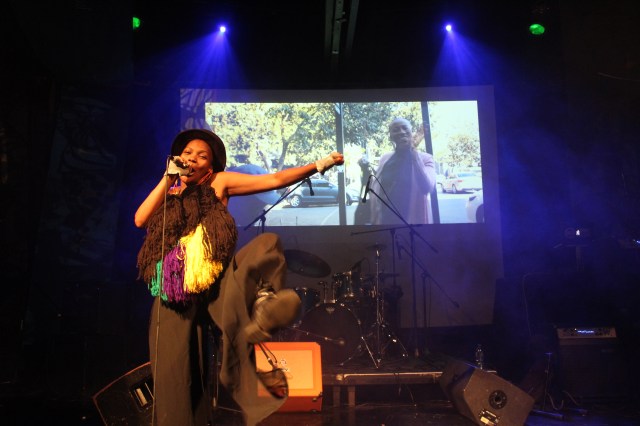
 

Masello Motanapitsi - MC at Not Yet Free Concert in Baseline

Samson Mnisi is the person I just don’t get to see in his studio, funny enough. Perhaps I had missed him, given that I arrived in the evening. The open exhibition, according to the event, was from 10am to 9pm. I arrived around 6pm as I was at The Bioscope from 4pm, watching short films. I got an email with a poster of the Durban Film Festival 2015 that will be showing at Maboneng, in Jozi. So I thought I’d check it out, looking forward to see the crew/cast as the names appear on the poster. I wanted to network and connect with the other artists. It was R120 for a ticket+pizza+1 drink COMBO. Unfortunately, after
getting my ticket and got into the cinema, a guy from The Bioscope (who wouldn’t tell me his name when I asked him) told me that I will be watching the sequence alone and the crew won’t be coming in. I was a bit down but decided to be live in the moment. He told me that my combo can’t be reversed, my pizza was on its way but he was willing to
reschedule the ticket only for the late session. I was attending the 4pm session and there was also going to be a 7:30 session. So I had an entire pizza to myself – I felt like crying. The I thought why cry when I have art to embrace, devour and appreciate!


Africa Day Concert - stage


Africa Day Concert - audience

Being at August House made it all up to me, just to be surrounded by art, artists, happy people, love and joyous memories. To top it off, The Africa Day Concert, in Newtown.. Ghaddam!!! (claps once). I left August House with Thabo and his friend, Kgotso to the concert. Even though we got there late – we had missed most performances. What mattered most was the experience of it all in my month of mystical mystery – MAY. The only month with only 3 letters, as for being born on the 3rd of this year month…

I mean this month.

This month has been a beautiful collection of:
Laughter with friends and family
Tears to cleanse my eyes to see afresh
Color of paints and sunsets,
Music by great musicians from RSA-USA,
Art as our life and our lifestyle
Love as us
Joy in us
Lights on stages and clubs
Sound all around us
Representations of self and selves.
Revelations of African family, food and home and family through art with Kamogelo Masemola, Thabo Sekoaila, Sibusiso Masondo, Jane Khozani, Masello Motanaphitsi, Thulani Nhlapho, Bambo Sibiya, Ayanda Ogqoyi, Hazel Thobo, Makgotso Nkosi, Lindeka
Qampi, Zanele Muholi, and it won’t hurt to count myself too.
 

Lebo with 1 Future artists

PHOTOGRAPHS CAPTURED ON CAMERA MEMORY CARDS AND MENTAL MEMORY PARTS!!!


Previous by Lebo

2016 May 19:  Day 7 PhotoXP visual diaries


Posted in Article by Lebo Mashifane, Uncategorized | Tagged , , , , , , , , , , , , , , , , , , , , , , , , , , , , , , , | 1 Comment

2016 June 4: Muholi honored with Courage and Creativity award

by Lerato Dumse

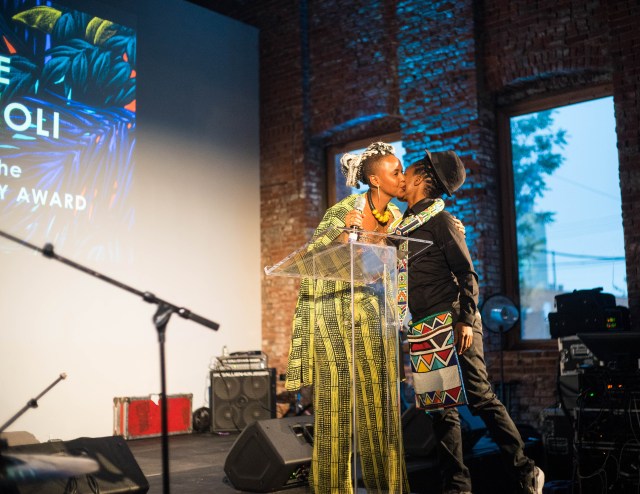
Zanele Muholi is the latest honoree for the 2016 Courage and Creativity awardAfrica’s Out, an initiative by Wangechi Mutu conferred the award to this talented photographer and activist. The exciting ceremony was hosted at Pioneer Works, New York City (NYC) on June 3rd 2016. Mutu who is a renowned artist in her own right, recognized her fellow African for the photography work Muholi has produced tackling issues of race, gender and sexuality.


2016 June 3 Wangechi & Muholi @AO awards DSC01737

Wangechi Mutu and Muholi @Africa’s OUT awards. Photo by Richard G. Burrowes


This courage and creativity honor saw Muholi travel back to NYC to collect her second award in less than two months. In April the talented artist was given the highly respected Infinity award in the category Photojournalism. Muholi is widely known for her hard work in merging art and activism, while documenting black members of the Lesbian, Gay, Bisexual, Transgender and Intersex (LGBTI) community in her country of birth South Africa.


2016.06.03 Muholi before the AO awards

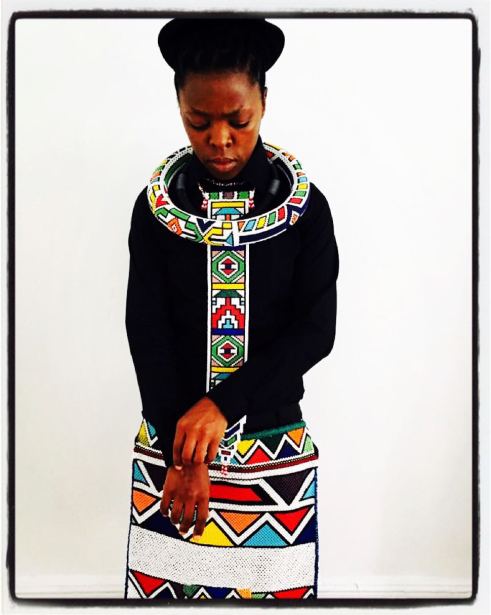
Dressed in a traditional Ndebele outfit… Photo by Msa Muholi


Friday’s award comes just as Muholi is gearing up to celebrate 10 years since she began working on Faces and Phases back in 2006. The series comprises of more than 250 black and white portraits of black lesbians and transgender individuals from South Africa and other African countries.
Now in its second year, this annual celebration is created to benefit Africa’s Out initiatives. The dress code for 2016 was Bougie Jungle and guests were invited to arrive by 6pm for cocktails, artwork preview and a silent auction.
This is not the first time Muholi has been part of this initiative, last year along with other African artists, she donated a print that was auctioned during the inaugural ceremony. Keeping with the same spirit, other African artists have added their work in 2016, and it will be auctioned at the Amref Art Ball taking place in NYC on June 8. Africa’s Out objective in raising these funds is to help strengthen “health systems in local level in countries throughout sub-Saharan Africa.”

Mutu who is the driving force behind this initiative was born in Nairobi, Kenya. She is widely known as an artist and sculptor seen as an “important contemporary African artists of recent years.”
Binyavanga Wainaina was the 2015 recipient of the first Africa’s OUT award.


Related articles


2016 Feb. 12:  Outstanding demonstration of excellence


and


2016 Feb. 7:  Second Infinity award for South Africa


Posted in Uncategorized | Tagged , , , , , , , , , , , , , , , , , , , , , , , , , , , , , , , , , , , , | Leave a comment

2016 May 21: Muholi presents at ICA’s Great Texts/ Big Questions

by Lerato Dumse

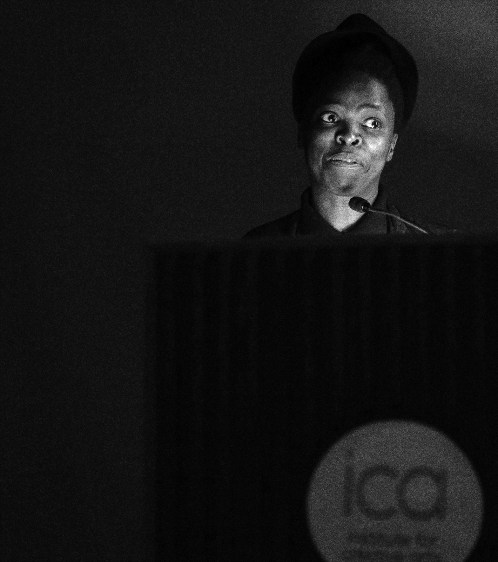
A packed Hiddingh Hall delivered an enthusiastic round of applause to welcome Zanele Muholi on stage after being introduced by Jay Pather. University of Cape Town (UCT) students, lecturers and members of the public started their Friday evening (May 20 2016) by attending Muholi’s lecture. The event was part of the Any Given Sunday; a Project co-curated by Riason Naidoo which happened in the Mother City featuring various artists and Muholi participation project is called Bathini, (What are they saying).
Institute for Creative Art (ICA) formerly known as Gipca hosted the Great Texts/Big Questions lecture series.


2016 May 20 Muholi @ICA _ UCT by Lerato Dumse_0632


“Thank you so much to all of you for coming out tonight,” Muholi said while appreciating the presence of people at the hall. Before declaring as she has done in the past that she “thinks in her first language IsiZulu when she is excited.” The photographer had a solution to the language barrier; she proposed to mix the two languages and requested Dr Zethu Matebeni, a senior researcher at the Institute for Humanities in Africa (HUMA) at UCT to assist her.


2016 May 20 Muholi & Matebeni @ICA _7029

Muholi and Matebeni reminiscing on CT life… Photos by Lindeka Qampi


“I’m shaking because for one, Cape Town reminds me of many situations, losing my content, having to start again and trying to make sense of what was going on.” Muholi then shared a CPT experience when she was told by a strange young white woman to look after her (strange woman’s) bag. Muholi then shared a CPT experience when she was told by a strange young white woman to look after her (strange woman’s) bag. Muholi said the request reminded her of her own mother who worked as a domestic worker.

“My life began more than 10 years ago when I lived in Johannesburg. I was disturbed by not seeing many images of black LGBTI people in Johannesburg and surrounding areas,” Muholi said during her 2016 artist talk in Cape Town.
The then placard holding activist decided to switch from holding the board to holding the camera, while following the advice, “If you don’t see yourself in anything, you have to create or produce, you cannot blame anybody for your absence.” Muholi the photographer then started speaking to friends and friends of friends asking if they could stand in front of her camera and have their images taken. The award-winning photographer then reiterated that at that time she didn’t know her work would end up in big spaces such as the Venice Biennial and Documenta. A glass breaks while Muholi reveals that she was “scared to own the word or term photographer.” This she adds is because it never occurred to her that one day she would be googled as a South African photographer.

The talented artivist admits, to have produced “a number of wrong images” and
flopping along the way. Muholi credited Gender & Visuality conference held at University of Western Cape (UWC) as having “defined her in so many ways” when she exhibited her work there in 2004. Which resulted in Muholi working with Stevenson Gallery.


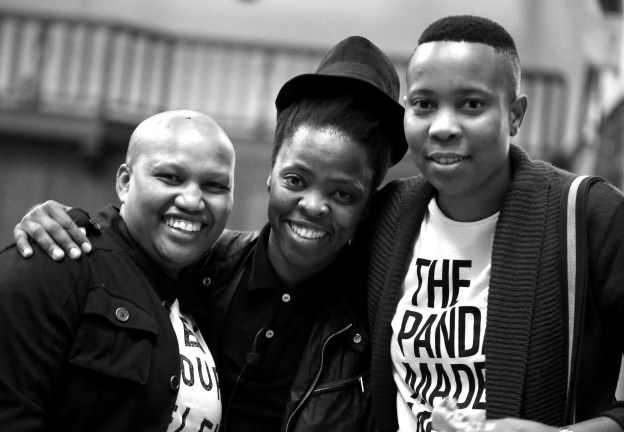
2016 May 20 Lesego Muholi Selaelo @ICA_7148

3 Faces and Phases participants: Lesego Tlhwale, Muholi and Selaelo Mannya

Holding a copy of Faces and Phases 2006-14 publication the photographer explained that she calls her photo book a Bible, because “it is the same size as the Bible.”
Pain and many other documented hate crime scenes convinced Muholi to “backtrack a little bit and deal with Zanele’s personal issues,” and still identifies as visual activist. Declaring that she is not from royalty, even though she calls her latest project Somnyama Ngonyama. Before presenting her latest body of work, Muholi reminded the audience that she was still concerned with visual activism, dealing with politics of self-representation and photographing herself.
“There is a thin line between race, gender and sexuality.” Muholi confessed, “each and every picture relates to a particular case in history.”

Somnyama became a serious project in 2014, even though some images were captured before. Referring to American cases such as that of Sandra Bland’s, and a personal narrative of being a “black sheep of the family because of being homosexual.” A special image responding to the racial insults that Penny Sparrow spat out in January after seeing many African people in a Durban beach, referring to them as monkeys.

Abongile Matyila’s images are some of the visuals shown by Muholi, who shared how it was some of the images that survived the notorious burglary at her flat in Cape Town.
“In 2002 the first gay couple got married in Kwa-Thema Springs, Kgompi and Charles Januarie, and they are some of the few history makers in our country.” Muholi then spoke about documenting Charles’s funeral on the 30th March 2016. She then spoke about the couple’s follow up images captured five years later. That was followed by photos of the late Magesh Zungu who was one of the participants that Muholi opened with while talking about Faces and Phases.

Drawing from utterances by a Shembe pastor in Isolezwe Newspaper stating that the drought in KwaZulu-Natal province was caused by homosexuality, Muholi tackled ignorance that randomly displays itself in the South African community. With twenty minutes remaining, the session was then opened to questions from the audience. An engagement session began while Muholi attempted to answer the questions as best she could.

Old and new friends ended the first evening by sharing a delicious dinner of Indian food in Long Street. Saturday came, even though everyone was exhausted, there was determination to document activities happening in Langa township during the Khumbulani Pride.


Related links

2016 Feb. 18:  Muholi talks self-representation at Gallatin School of Individualized Study


and


2016 Feb. 6:  Cleveland moves


Posted in 250 portraits, A new visual history, Activated queer spaces, Active Black Lesbian Artists in South Africa (ABASA), Activism, Activists, Advocacy, Another Approach Is Possible, Appreciation, Archive, Archived memories, Archiving Queer Her/Histories in SA, Art Activism, Article by Lerato Dumse, Articulation, Artist Talk, As we are, Institute of Creative Arts (ICA), UCT, Muholi presentation, Uncategorized | Tagged , , , , , , , , , , , , , , , , , , , , , , , , , | Leave a comment

2016 May 31: When I make love to you

by Shirley Ndaba

I want to crawl inside your mind and make your imagination run wild, I want to lay you down, connect to your body, listen and understand it’s language. I want to reach to the depth of your heart and mind to find your pleasures, I want to listen your body as it begs for my kisses and touches, allowing it to lead the way while I follow because my aim to please. I want your mindset to remain in one sensual place as I kiss your your velvet skin and inhale your naturally given soft smell. Gently connect my soft lips to it, kissing it softly. I want to softly moan in your ear and tell you how sexy you look, and how soft your skin feels.

I want to your body’s complete trust, feel it loosen up and relax to my erotic compliments from ear to ear allowing it to get comfortable and fully trust my every being, as it feels my body naked body on it while intensely arouse it with my soft kisses and touches and feel it respond to my every touch, my every move and every soft kiss down to your neck, while my hand gently eases up your thighs and kissing you down to your lovely breast and caress your nipple with my wet tongue and gently sucking to it.

I want to kiss you down to your beautiful shaved cunt and slowly shove my tongue inside to taste your wetness and salty liquid as I listen to your sweet moans and stimulate your clit with my hardened tongue and gently sucking on it. I want to hear you say my name so loud, I want you tell me you do feel me. I want to hear your loud moans as I gently caress your beautiful punani with my soft fingers and and gently stimulate your clit with my one finger and listen to your soft moans and how sexy you say my name, gently shove my fingers inside towards the inner wall of your cunt to stimulate your G.

I want to stimulate and softly whisper in your ear how warm and tight your insides feel. I want to hear your software screams and listen to you telling me how much you love me, telling me I am your one in a million. I want to make you roar out my name as you reach a powerful orgasm and always remember how much I love you and then let you have me and my body all to yourself.

That’s how I want to make love to you.


Previous by Shirley

2016 May 10:  I am a strong, queer black woman and a survivor


Posted in Another Approach Is Possible, Archived memories, Creating awareness, Expression, Love, Power of the Voice, South Africa, We Are You, We Still Can with/out Resources, Writing is a Right | Tagged , , , , , , , , , , | Leave a comment

2016 June 2: Reflections galore at Pietermaritzburg F&P book launch

By Lerato Dumse

Between signing books and figuring out the Johannesburg vs Pietermaritzburg (PMB) versions of IsiZulu, Faces and Phases (F&P) participants and attendants caught on like a house on fire during the latest F&P book launch. This is despite the fact that some people were meeting for the first time, while others are old friends who reconnected at the PMB Gay and Lesbian Network Centre on Freedom Day (April 27 2016) for an intimate launch of Zanele Muholi’s Faces and Phases 2006-14 photo book. Freedom Day in 2016 marked 22 years since South Africa (SA) became a democratic country, with black citizens able to cast their ballots for the first time.

Londeka Xulu who works at the centre was instrumental in making the launch happen, as she was the primary contact who organised the event and informed participants of the event. Rotating people’s books between the eight participants made for an interesting exercise, as books kept getting mixed up. It was also interesting to note the dominating presence of feminine identifying lesbians featuring in this award winning series of black and white portraits showcasing black lesbians and transgender individuals from different African countries.

The femmes had a bonding session while going through their books and picking out their favourite eye candies. Muholi opened the reflection session by giving background on the Faces and Phases project and the late Busi Sigasa, who is the first participant and to whom the series is dedicated.  She also reminisced about the period when she documented in PMB mostly in 2010, when SA hosted the soccer world cup. “Sunday Mdlankomo’s image wearing a striped jacket and cap has since become one of the iconic images of our time,” declared Muholi. The photographer acknowledged South African laws when it comes to LGBTI rights, make it possible for artists and activists to produce work such as Faces and Phases.


3026 April 27 Faces Participants joy_9000

Participants showing off their books. Photo by Lerato Dumse (2016)


“This picture shows the beginning of the journey,” are the words of, Londeka Xulu who said her F&P portrait is a reflection of “another part of someone’s life.” Avoiding identifying herself as an activist, Londeka said she is “a passion pusher who likes to see the results of what I do.”
Fiona Young, one of the event’s attendants who conducted the Q&A session asked whether “people feel like they have made history or they gave someone the ability to make history,” Cassandra Dlamini volunteered to answer the question. “Me specifically I have made history, said Cassandra. “I was part of the gay and lesbian network, a drama group which really made history and went to places,” she continued. Dlamini shared about going to Johannesburg and further making history by becoming a feminist after she studied political education on feminism, allowing her to confidently fight for women’s rights.


Thobe & Phila (2012) Photo by Zanele Muholi, to appear as a cover photo in Queer Africa Reader edited by Sokari Ekine & Hakima Abbas

Thobe & Phila (2012)
Photo by Zanele Muholi,
 cover photo in Queer Africa Reader edited by Sokari Ekine & Hakima Abbas


Phila Mbanjwa remembered how excited she was when she paged through the first Faces and Phases publication, just before becoming a participant herself. “After seeing our picture on the Queer African Reader, that is when I realised this is ground-breaking.” Mbanjwa admits that when she reads the book and sees what she wrote and promised herself, it helps her to map her path, personal journey and allows her to stick to the goals she set for herself. Shirley Ndaba said she was still young when she met Muholi through an ex girlfriend. Shirley was asked what she would say about the book, to a black lesbian child in 2022. “This book represents a child who is free to be who they want to be, at times as a young lesbian society breaks you, Christianity breaks you, so you never know what is right and wrong. Eventually you are able to find yourself, despite the struggles,” Shirley expressed herself.

Before the intimate gathering ended, Cassandra proposed for an event with all the participants of the book present. Fellow participants, who are determined not to let the absence of a budget deter them from visualizing that day, welcomed her suggestion. The group challenged themselves to investigate what funding opportunities might be available to make the event possible. With the discussion session complete, it was time to take a group photo, to mark the moment. However what was supposed to be one self-timed group shot, turned into a full photo session, including the countless selfies captured by participants.

Freedom day was ended by a meal accompanied by laughter, tackling the topic of sex in lesbian relationships and reminiscent stories by some of the old friends.


2016 April 27 Faces participants main_9724


Having started the day before sunrise rushing to the airport, Shirley, Muholi and I were exhausted when we arrived back at the Studo B&B, where we were booked for the next three nights. By the second day we were still in awe by what PMB has to offer, namely Ubuntu, safety, hospitality and friendliness, at cheaper prices, compared to major cities such as Johannesburg, Cape Town and Durban.

Follow up Faces and Phases shoots were set up for the remainder of our time in PMB and we invested much of our energy to making sure it happens.


Previous by Lerato


2016 March 25:  VMCI unpacking the crucifixion of Jesus


Posted in Another Approach Is Possible, Archived memories, Creating awareness, Expression, Power of the Voice, South Africa, We Are You, We Care, We Still Can with/out Resources, Writing is a Right | Tagged , , , , , , , , , , , , , , , , , , , | Leave a comment