
by Lerato Dumse
After spending a year identifying, researching, reaching out, approaching, and convincing senior leaders, Linda Mayekiso succeeded in his plan to see Shell South Africa launch an LGBT network. This event was held on Tuesday, July 21 2015 at Shell’s head-office in Bryanston, Johannesburg. It made Shell the first South African company in the oil and energy industry to have such a network available for its employees.

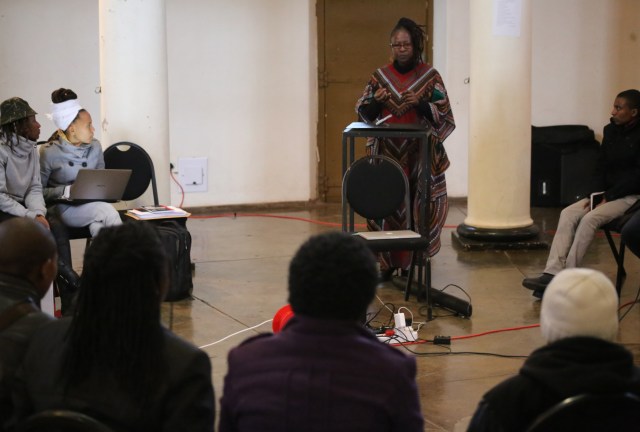
Judge Edwin Cameron speaking during his keynote address at the Shell LGBT network.
A special tribute was paid to Linda by the guest speaker, Judge Edwin Cameron, who applauded him for, “his courage as an employee at Shell.” Linda has been with the company for the past 8 years and currently works as a Payment and Loyalty Manager. His drive for establishing this network stems from his own experience of being discriminated as a member of the LGBT community. His vision is to create a platform to help a graduate coming into Shell to feel comfortable to share their sexual orientation, to make a contribution to a driver of a depot or a staff member in a Shell retail shop.
“The point of having this network is to educate, unite, inform and create an organization that is accepting of LGBT members,” said Linda, adding that as members of the LGBT community, “we need to start taking such initiatives into our own hands, instead of waiting for someone to do it for us.”

Judge Cameron was invited to address the audience on gender orientation and diversity in the workplace. Part of the Judge’s talk gave a brief historical background about the LGBT community, explaining that once the religions and moralists had condemned homosexuality, it became a crime as well.
“The more progressive view was that it is not a crime but a sickness.” Judge Cameron said this belief has persisted until recently, with same-sex oriented people facing gross human rights violations in the name of psychiatric treatment, by being subjected to aversion therapy, shock therapy etc. According to him, visibility is the most important reason why people have changed their mind.
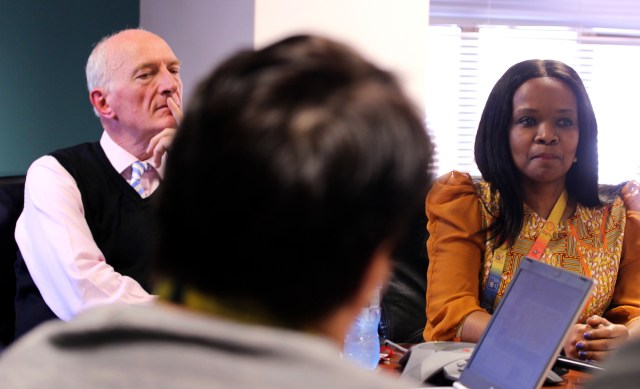
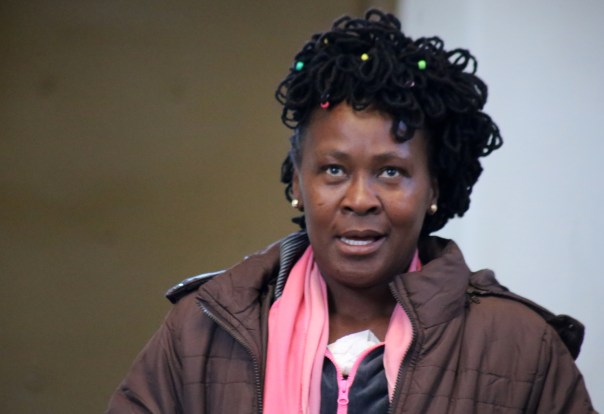
Dr Lerato Mtoba spoke about people who discourage LGBT individuals from living their truths
“Every single one of you has an LGBT relative,” Cameron announced to the office full of people, and those in the Cape Town and Durban branches who had joined the launch online. He said he based it on statistics that 1 in 10 people in the world are homosexual. “So if you have a family with more than 10 members, one of them is LGBT,” said Cameron, before adding that, “we just don’t know them because people don’t self identify as gay or lesbian.”
He shared that he only self-identified as gay at the age of 30, which was 32 years ago, when he worked as a human rights lawyer. Cameron told the group that coming out was a decision taken from deeply personal reasons, including struggling with his gay identity from age 14, and fighting against it for 16 years.
For Cameron, fighting against apartheid and gay and lesbian equality was because he believed, “the issue of visibility is important.” He acknowledged that Shell doing this event marks a significant moment because “Shell is recognizing that between 5 and 10% of their employees whether distributors or head office staff are same sex oriented. Whether they identify as gay or lesbian is a different matter, it is a political choice.
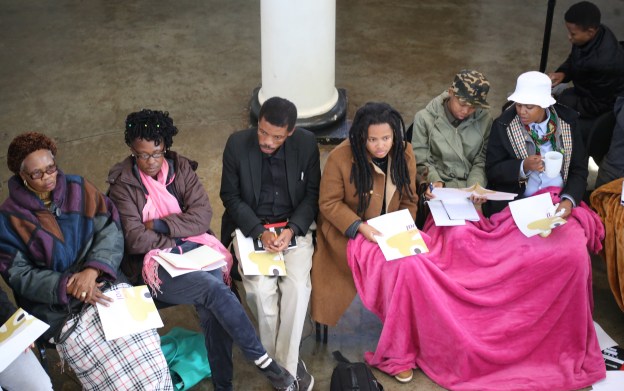
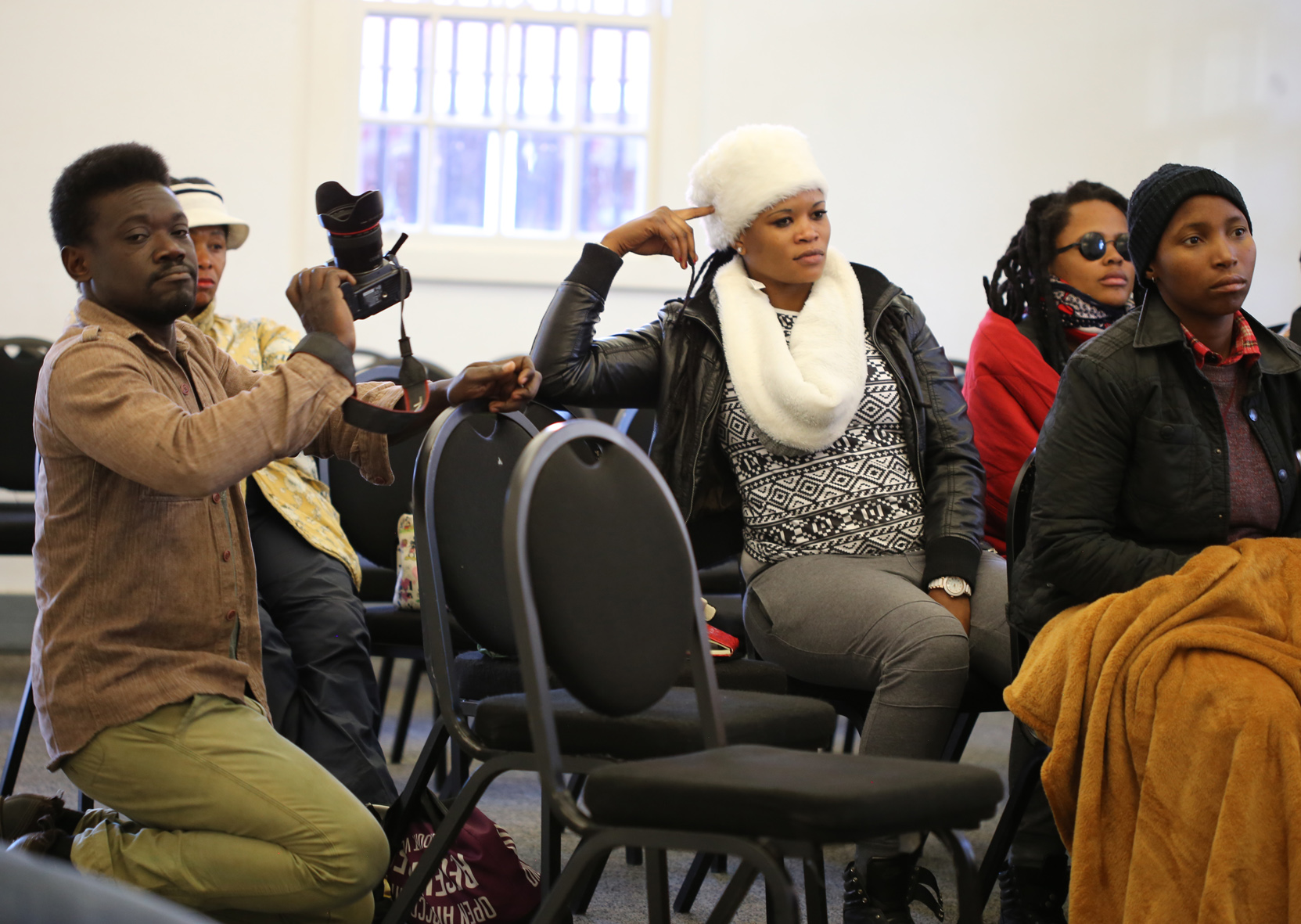
The Health and Wellness department pledged their support to the network.
Dr Lerato Mtoba opened her five-minute talk by telling her personal experience while working with a young group of people at a Cape Town Technikon.
The doctor said she still thinks about a young man who was confused about his sexuality. Bowing to pressures of her societal and religious beliefs, she journeyed with the young man down a path that said, “you know what a macho man you need to be, you know the community will reject you.”
Dr Lerato said the aim of telling her story is to draw attention to the many stories in the “room, country and world were one was party to discouraging someone.” Fast-forward to now, the doc admits she now has her own 1 in 10 in her family that she deeply loves and walks a different journey with them.
She ended by reading a readiness note, which promises to provide a good service to the employees coming through the Shell LGBT network.
“As a clinical call centre we commit to be supportive to Shell employees.
For any referral process we will make sure the therapist fits the preference of the employee. If an employee states that they want to talk to an LGBT therapist, we will look for an appropriate therapist to support the employee.”

Shell LGBT Network Organising Committee. L-R Chernene Johnston, Linda Mayekiso, Judge Edwin Cameron, Nathan Adonis and Bruce Courie.
Prithini Naidoo, who is Shell’s HR Country Manager, said the LGBT platform has opened a way for many individuals who have not been able come out; to do so, realising they are not alone. Prithini mentioned that she is not only referring to individuals who have a different sexual orientation, but also to parents who have children with a different sexual orientation, as they now have a space to speak up. “The South African employment equity and labour law act are clear that discrimination based on sexual orientation is prohibited.” She urged the network to lean on the HR team for support.
Previous by Lerato
2015 June 30: South African Visual Activists Documenting Oslo
































 inkanyiso.org
2015 June 30: South African Visual Activists Documenting Oslo
“We are not just about our sex, or just about what is between our legs, or what is on our chests, we live and eat; and there are so many socio economic factors that affect us.”
– Fikile Vilakazi, South African Feminist Activist
by Lerato Dumse
Excitement and eagerness lifted our spirits as we moved from Oslo Airport, headed to Oslo city on June 19 2015. Everyone was tired, having travelled for more than 15 hours from Africa to Europe. However we were ready to commence with the Visual Activism Cultural Exchange Project (VACEP), the reason for our trip to Norway.
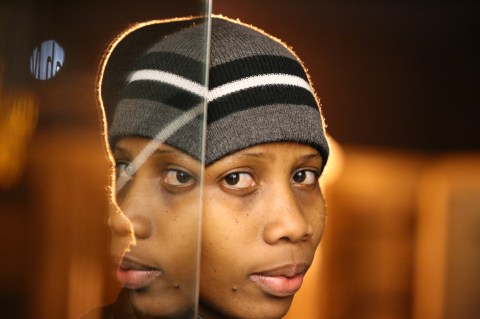
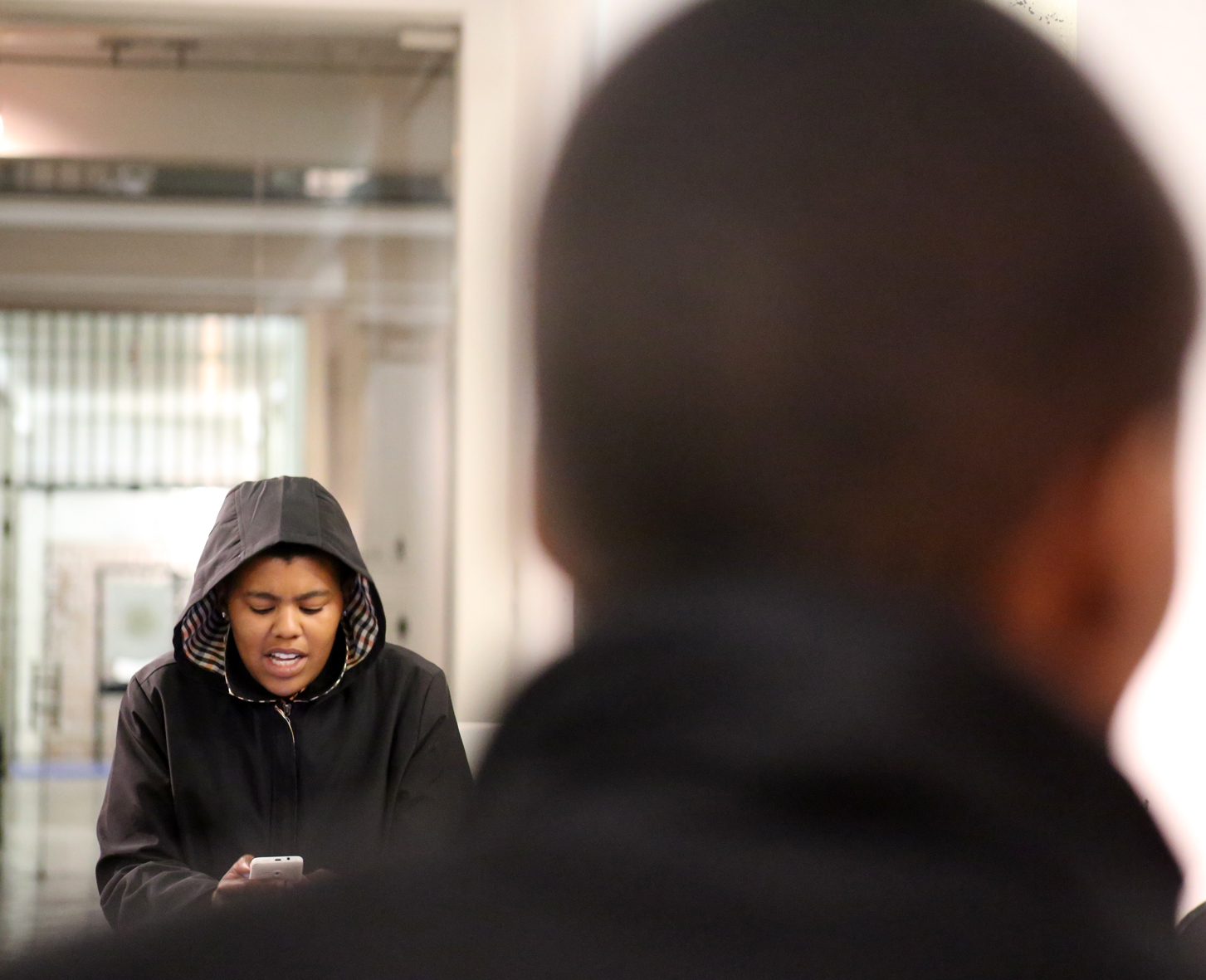
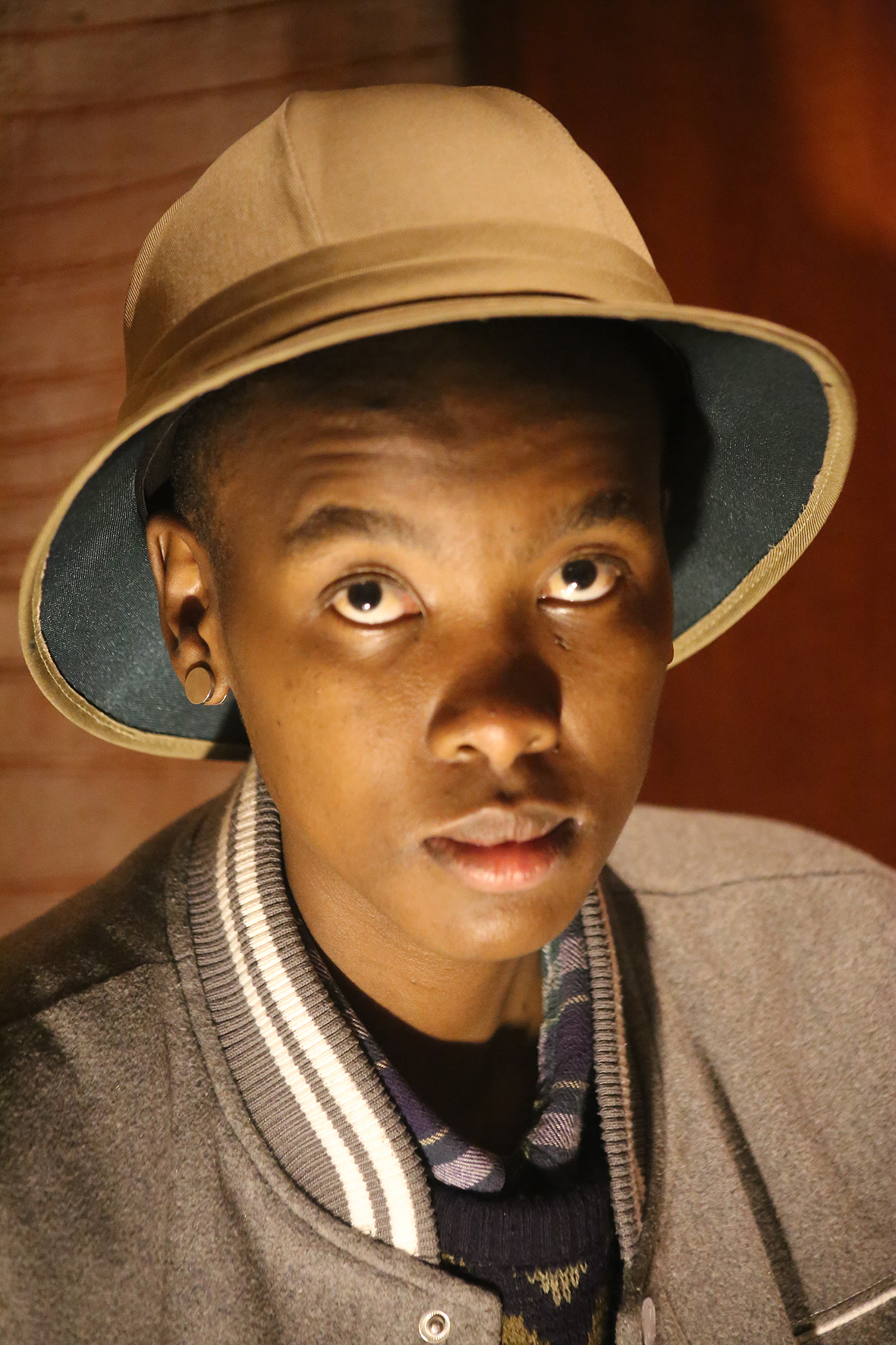
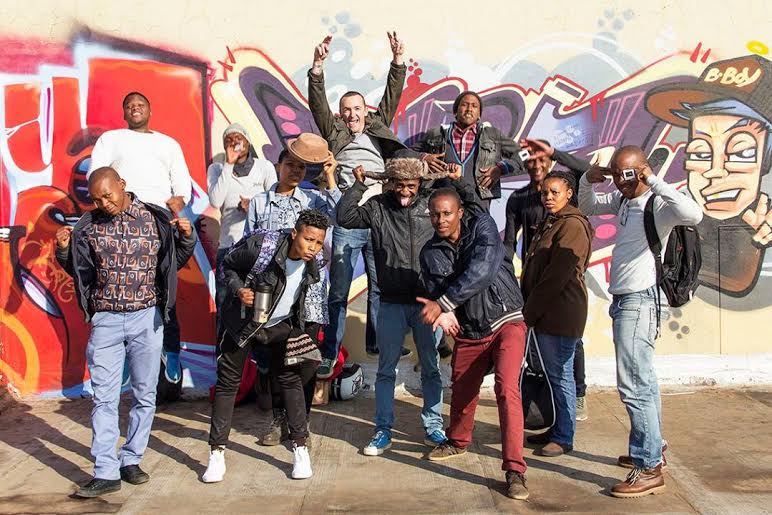
VACEP is a pilot collaboration between a South African queer organisation Inkanyiso media and Kunstplass 10, a gallery in Oslo. Lindeka Qampi, Collen Mfazwe, Zanele Muholi, Christie van Zyl and Lerato Dumse are five South African documenters, photographers and writers who took part in the two-week project. It was brought to life by Vibeke Hermanrud and Henriette Stensdal, founders of Kunstplass 10 and Zanele Muholi, founder of Inkanyiso, visual activist and photographer from South Africa.
We posed for a photo with Fikile Vilakazi. on the (2015/06/23) before her SA departure. Photo by Vibeke Hermanrud.
What I did not expect in Oslo was to have many parts of the city flying the gay flag high. It was really encouraging to see the Oslo community embracing and supporting LGBT pride from government buildings, businesses, and private homes who hung banners and flags.
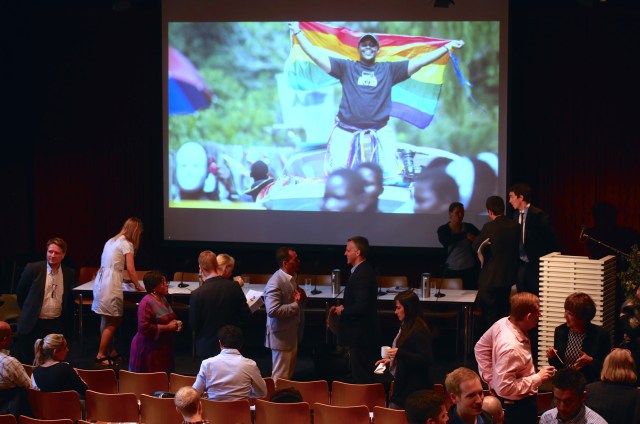
Barely an hour after arriving at Kunstplass 10 on Friday, June 19, we had to rush to the first Oslo pride event. It was the opening of pride house, which was located at Litteraturhuset, where many of more than 150 pride events were hosted, during the 10-day celebration. The mayor of Oslo, Fabian Stang from the Conservative Party gave a speech and informed the house about a new LGBTI action plan that he received a week before.
The stage was then taken over by public figures that identify as LGBT, amongst them pop singer, Tooji (Touraj Keshtkar) who has recently released a music video depicting sexual scenes between him and a priest inside a church. The six-member panel comprised of a national radio station presenter, a sports commentator, labour party politician, former financial minister, as well as a former secretary of children and family affairs. The group discussed issues of coming out in the 80s as well as coming out in rural areas and being born to a religious family.
2015 June 30 VACEP exhibition poster
Going through the pride programme during our first VACEP group meeting helped us to find events that we were interested in attending. One of those events was a talk about LGBTI Sámpi people. Tobias Poggats’ talk about the Sámpi community, an indigenous group of people colonised in Norway and Sweden, became one of our priority events to attend. The Sámpi people are described as a minority, making their LGBTI community a minority amongst a minority group. The story and lived experiences of the Sámpi community resonates with the reality of black South Africans, who suffered colonialism. Tobias spoke about a language and cultural wipe out experienced by his community.
We hopped from one discussion at pride house to another. One of them was a seminar titled, “The United Nations, Sexual Orientation, Gender Identity and LGBT People- Free and Equal?”
The seminar was aimed at finding ways for governments and civil society to work together in promoting the rights of LGBT people in a UN context. After a brief tea break the second session, which was a panel discussion was conducted. It looked at cooperation between officials, multilateral organizations, NGOs, and activists involved in diplomatic missions. South African feminist activist, Fikile Vilakazi, whose focus is on sexuality, gender and socio-economic justice, was one of the six panelists. Drawing from her activism experience spanning over two decades, she highlighted the need to work together globally. As part of her discussion Fikile said, “we are not just about our sex, or just about what is between our legs, or what is on our chests, we live and eat; and there are so many socio economic factors that affect us.”
Our next encounter with Fikile was at the Canadian ambassador Artur Wilczynski’s house. He hosted a garden party to celebrate LGBT pride on June 22. Artur and his husband shared their life and love freely during the Monday night private party and had people dancing to live music.
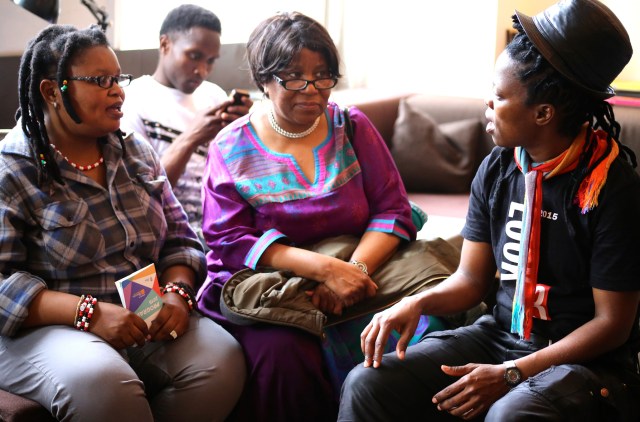
During our stay in Oslo we also met with author and artist, Linn Cecilie Ulvin for a queer writing session. We shared our writings, photographs and shed some tears while dealing with the topic of rape, which we find ourselves forced to deal with as black lesbians from South African townships.
H.E Ambassador Queen Anne Zondo, the South African Ambassador to the Kingdom of Norway opening Muholi’s exhibition at Akershus Art Center (2015/02/21)
One of our most memorable highlights was courtesy of the South African Ambassador to Norway, H.E. Miss. Queen Anne Zondo. The ambassador was visible and attended some of the pride events, interacting with us warmly. Her office responded positively to our request to have an interview with the ambassador. We visited the South African embassy on June 25, for a profile interview with the ambassador. Warm, friendly, approachable and soft-spoken, Queen Anne shared her knowledge and thoughts of South Africa and closed the interview by singing one of the late, Gibson Kente’s songs, which she picked as her favorite song.
On Saturday June 27 we woke up with extra vigor, inspired by the pride parade, which was starting at 1pm. While posing and photographing each other on our way to the parade, an old woman who saw us carrying this strange flag came up and asked, “which country is your flag from?”
Attempts to explain that it is the LGBTI flag seemed to confuse her. Even breaking it down and saying Lesbian, Gay, Bisexual, Transgender and Intersex, left her with a perplexed look.
So we continued with our journey and arrived at Kafé Saba, which was the meeting spot for Skeiv Verden (Queer World), an organisation for people from minority groups who experience love, sexuality and attraction for the same sex. Many of their members are from different African countries; most of them have left their repressive countries due to their sexual orientation. The mood inside Saba was happy and infectious; people were doing last minute touches on their outfits, having their faces painted with rainbow colors, while dancing to the music in the background. It was good to connect with Africans.
During the parade we saw a lot of couples with their children; meaning people are taking full advantage of having same-sex marriage adoption and IVF/assisted insemination available in Oslo. The presence of parents of LGBT people and heterosexual couples was a good sight. While the sun shined bright, thousands of people waited on the sidewalks, shouting excitedly and taking photos as the parade passed by. It was also our first time seeing so many pensioners who are part of the LGBT community.
When we arrived at Pride Park where the parade ended and the party started, there was a line of people waiting to enter. They were very strict, not allowing people to come inside the venue even with their much-needed bottles of water. It really made one think about some of the reasons that caused South African prides to be divided between the haves and have-nots. Speaking to some of the locals who are not white, it was clear that they don’t feel fully included in the pride, especially where the music selection is concerned, yearning for pride to be more politicized about the issues affecting marginalized and disenfranchised people, instead of just a celebration.
Related links
2015 July 8: Reflections of co-organising an exhibition
and
2015 July 6: Oslo Residency Appreciation
and
2015 June 27: My best Oslo Pride
and
2015 June 25: Christe shines @ Café Sor in Oslo
and
2015 June 19: Traveling to another country is not the same as traveling to another province