
Photo by Thobekile Zwane
from 2014 PhotoXP visual project
Live in Ventersdorp


More to be included…
Photo by Thobekile Zwane
from 2014 PhotoXP visual project
Live in Ventersdorp
More to be included…
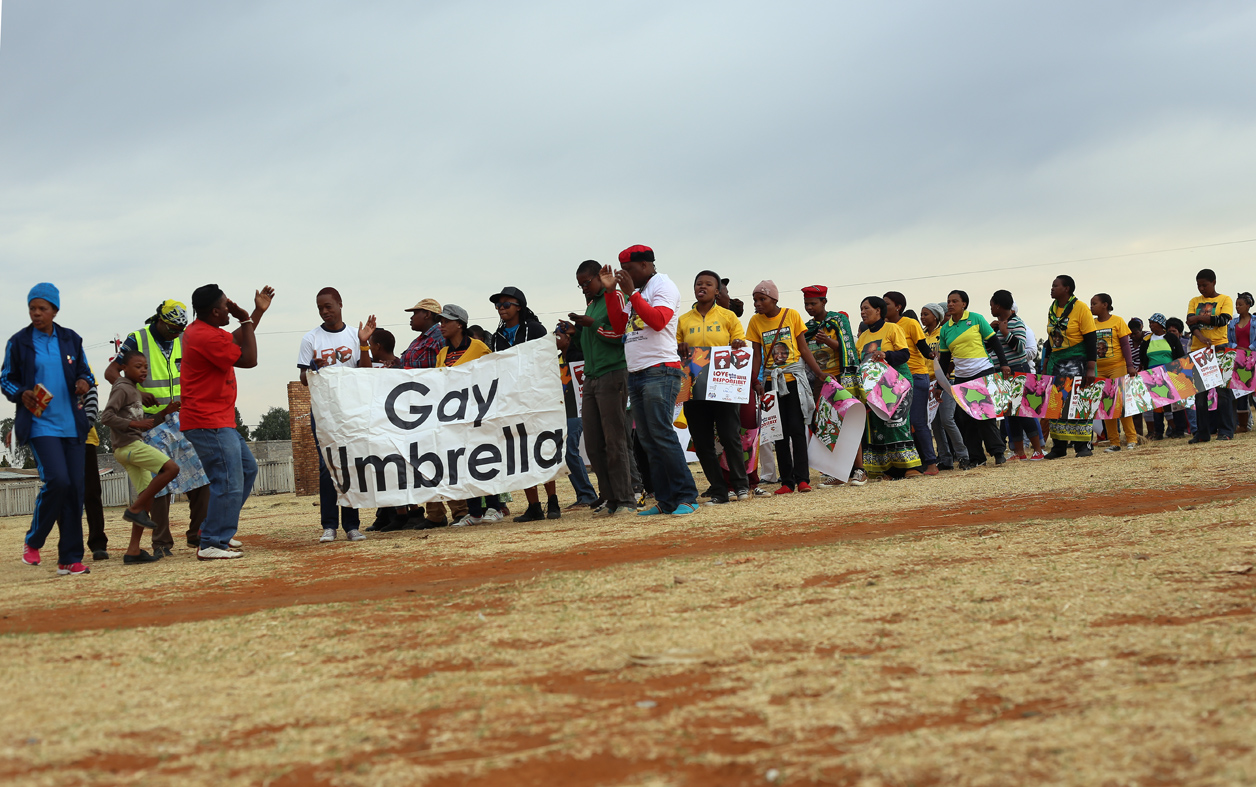
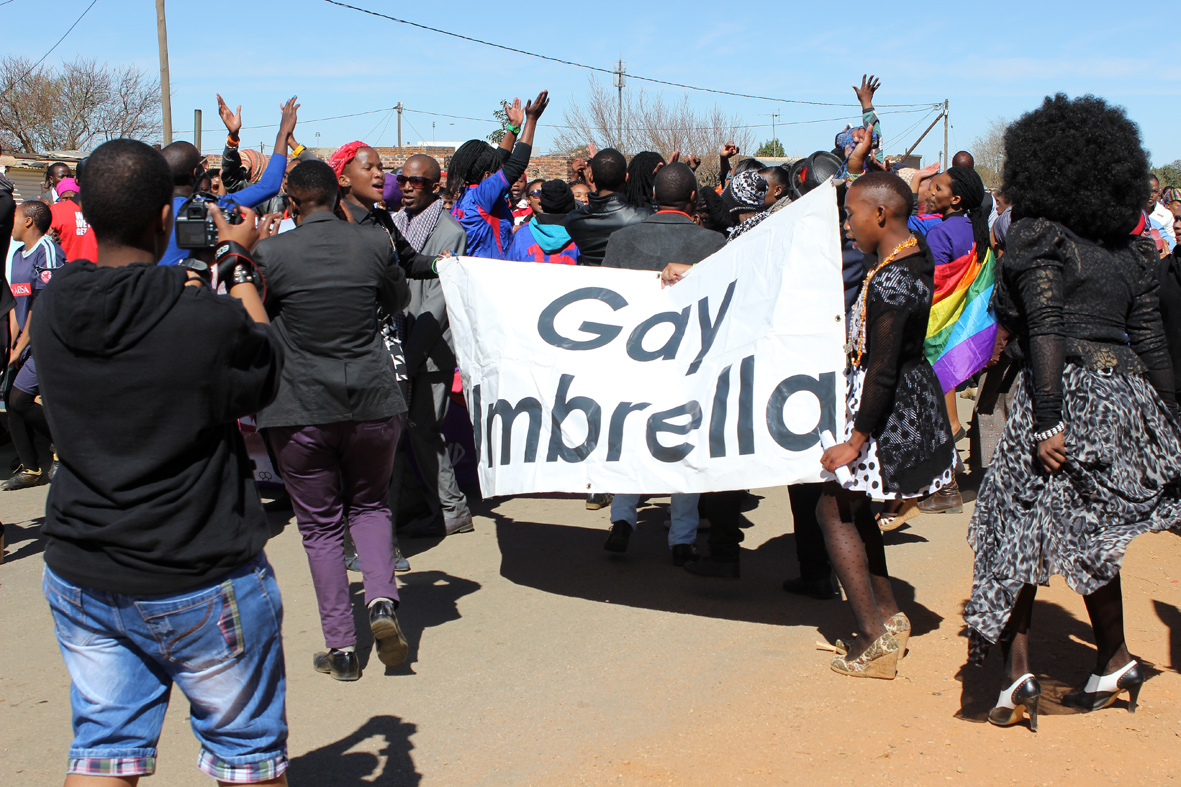
At the forefront of our struggle, at this time of sadness… Activists from Gay Umbrella leading the way to the sport grounds before the Memorial service of Disebo Gift Makau...
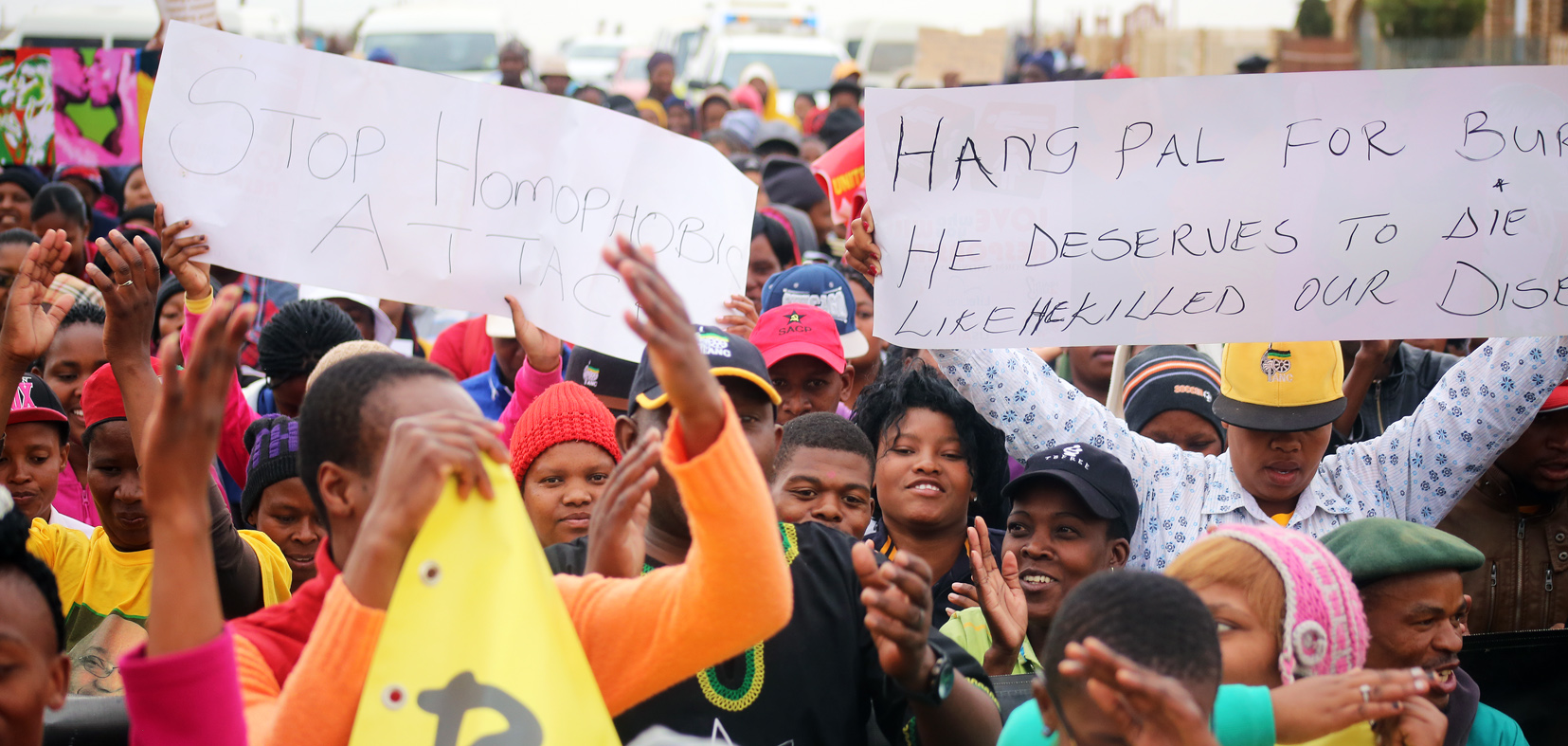
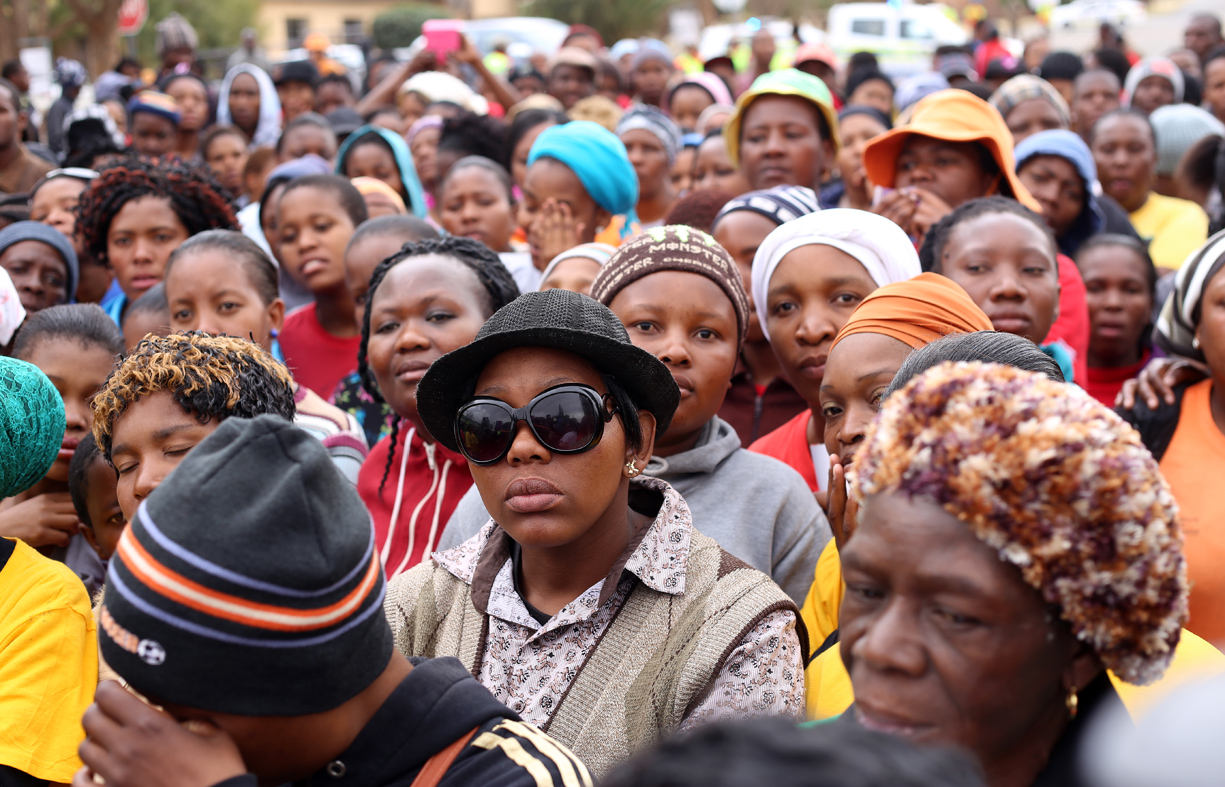
Angry community members demanding justice for Disebo…
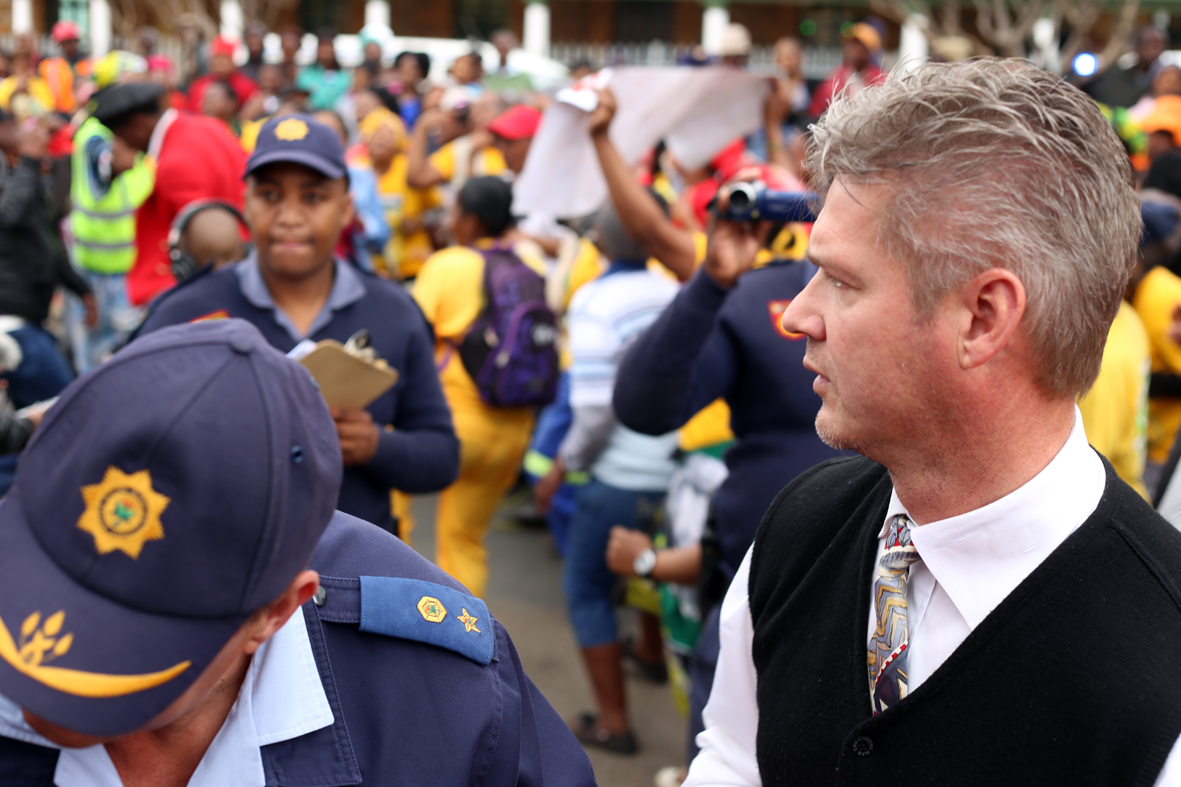
On the right is Mr P.de Wit from the National Prosecuting Authority (NPA) waiting for the memorandum to be signed.
 Jabu Perreira, director of Iranti-Org aiming for the best shot of the marchers.
Salute comrades…
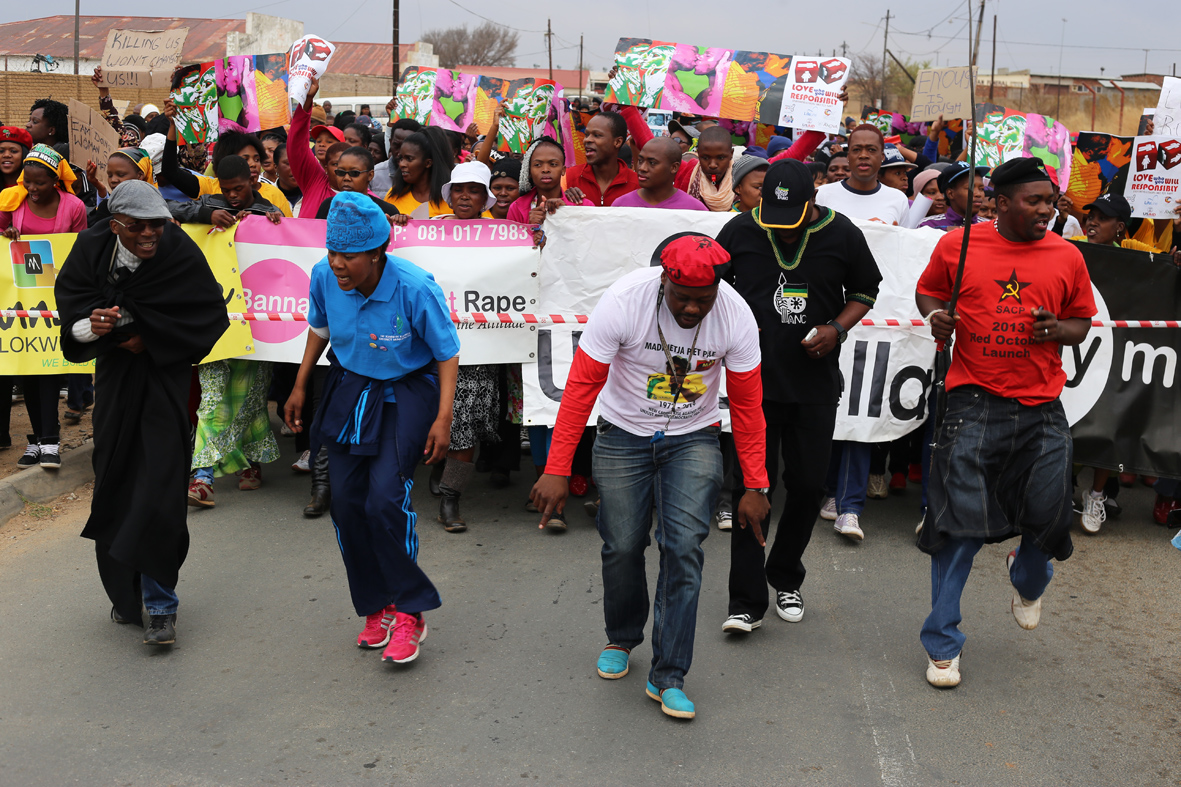
Ayihlale phansi ibambe umthetho
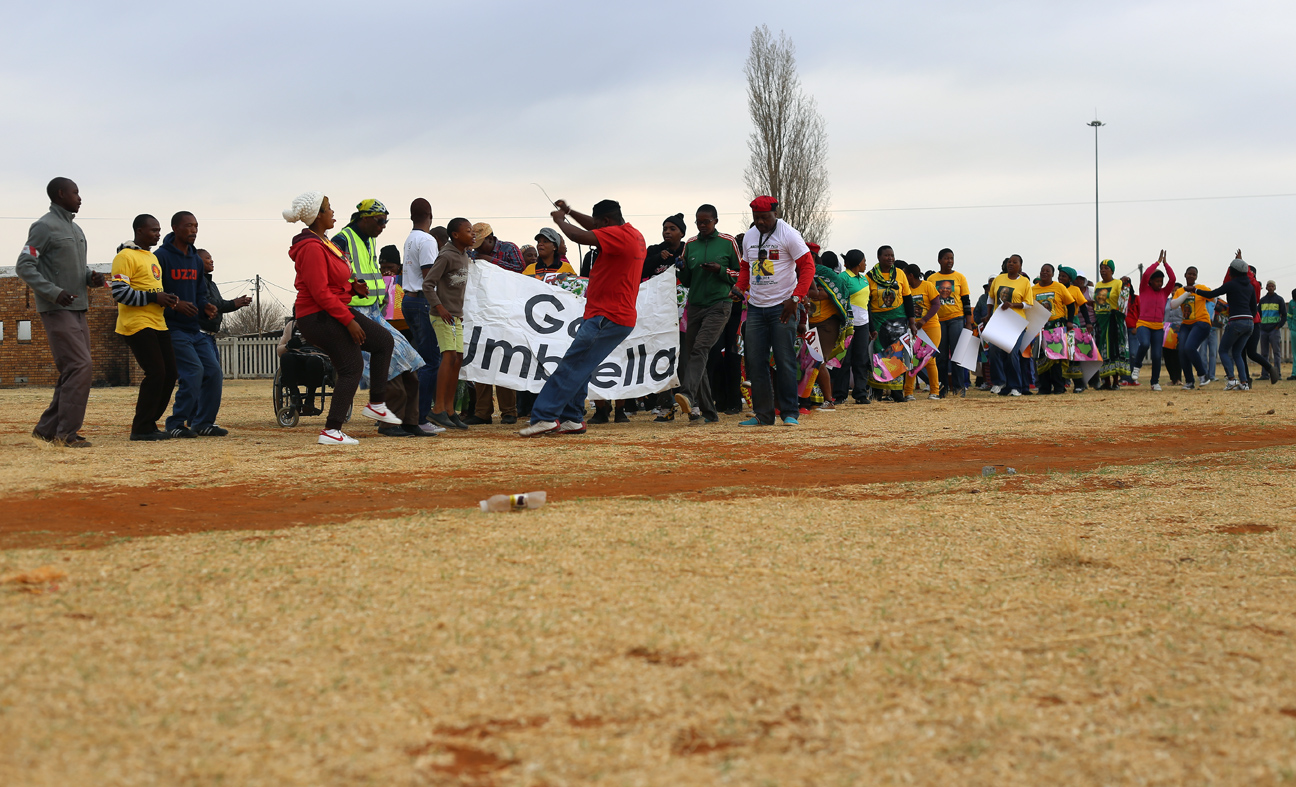
Member of the Gay Umbrella in Mafikeng at the forefront of the march entering the sport grounds.
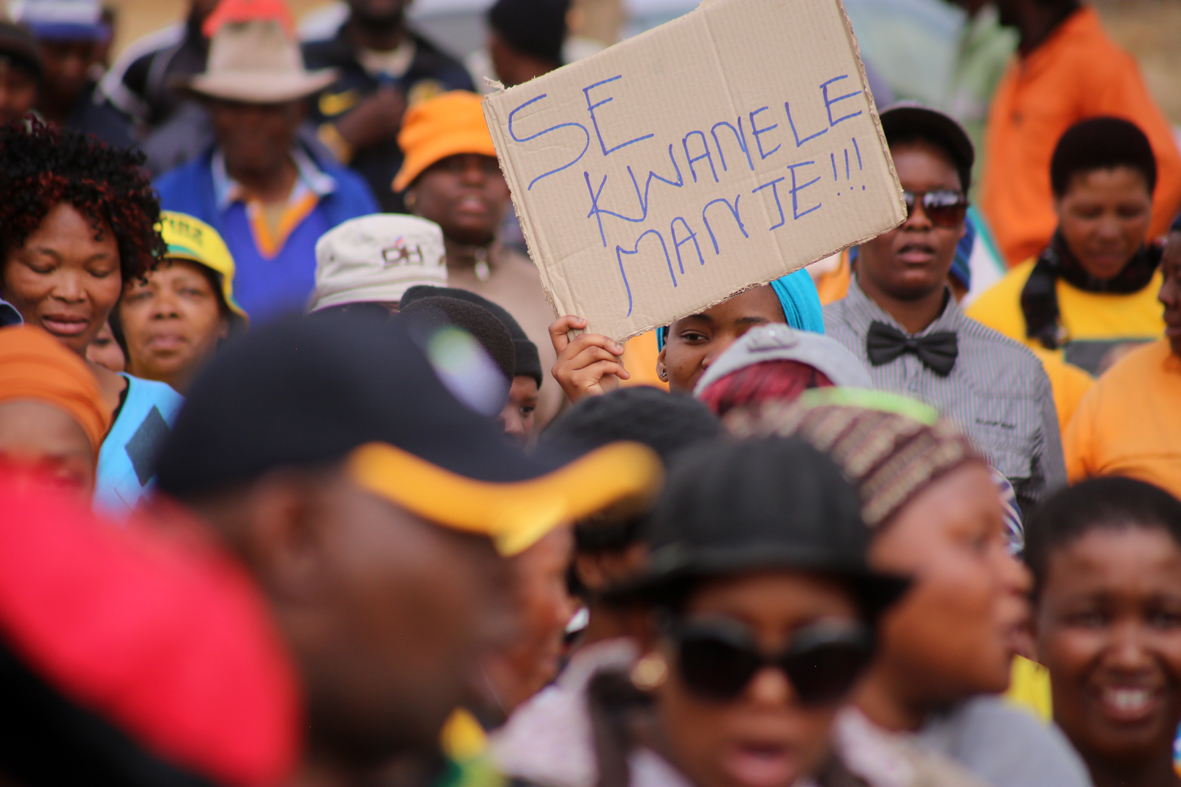
Sekwanele manje is a Zulu expression which means ‘Enough is enough…”

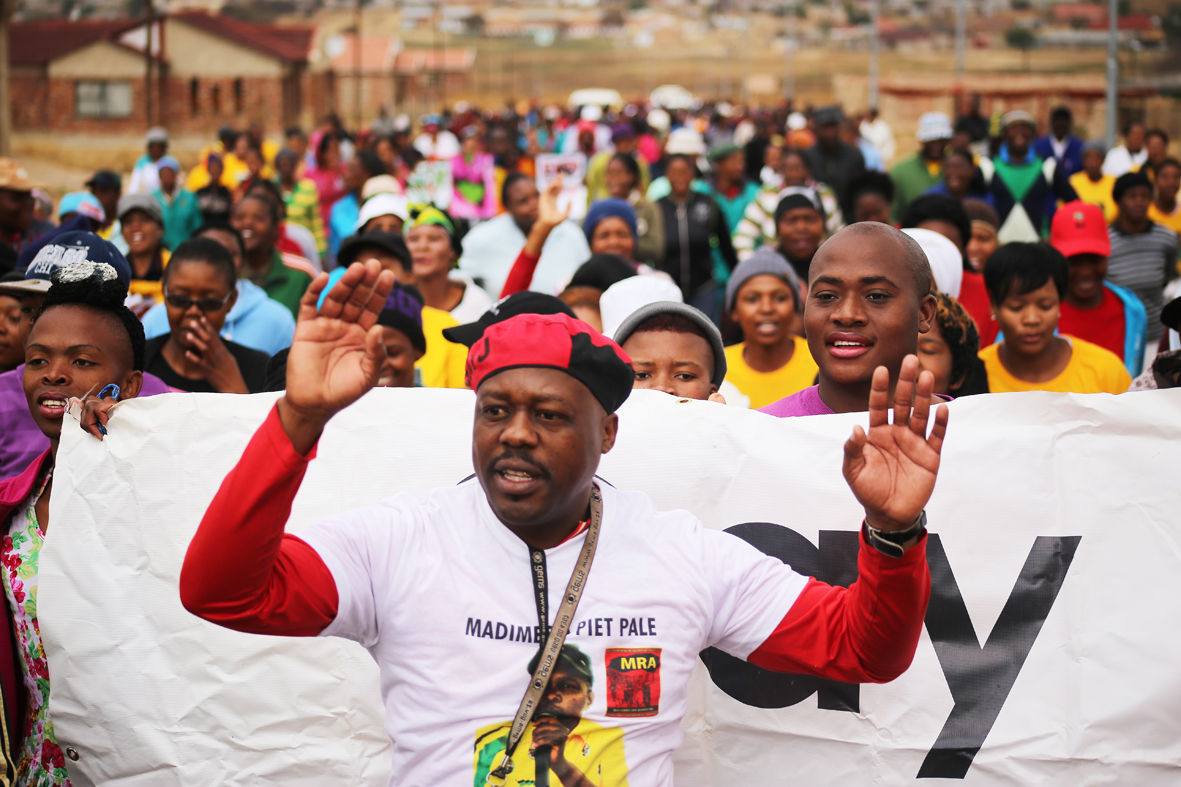
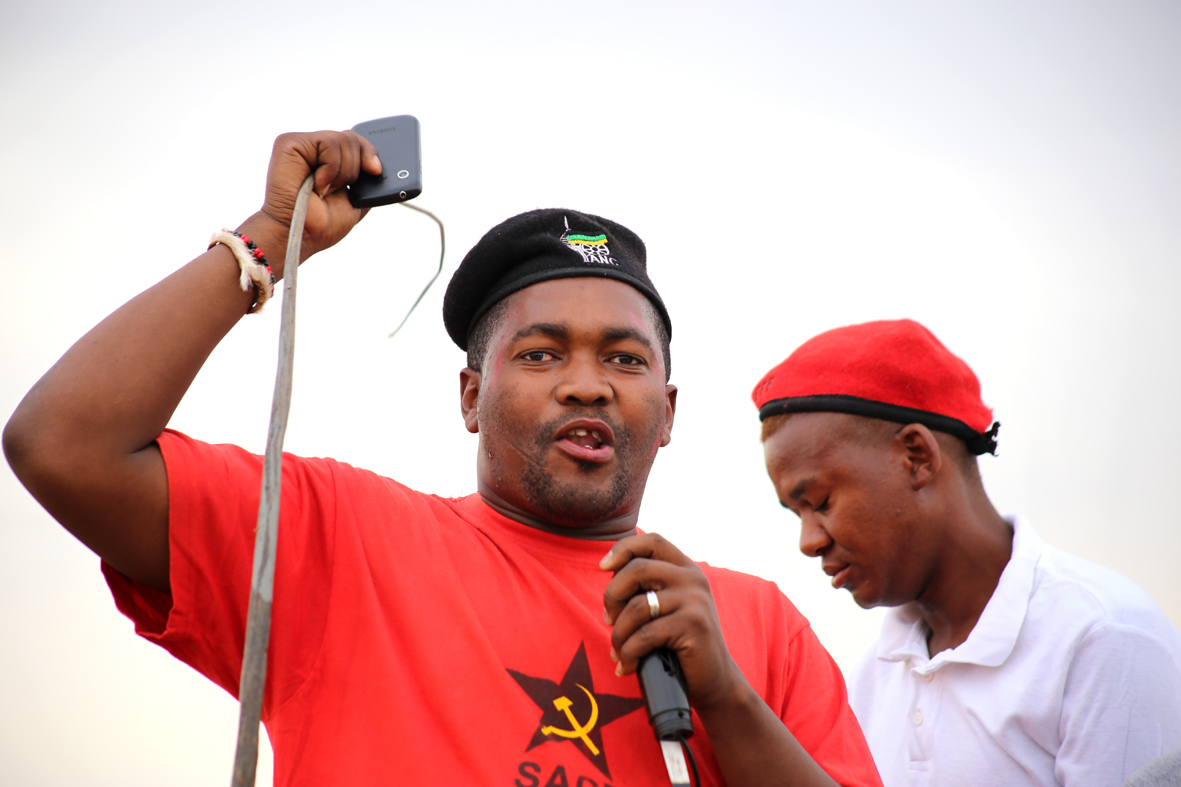
Malusi John Tau in a white t-shirt (centred) by fellow comrades leading the march to the Ventersdorp Police Station


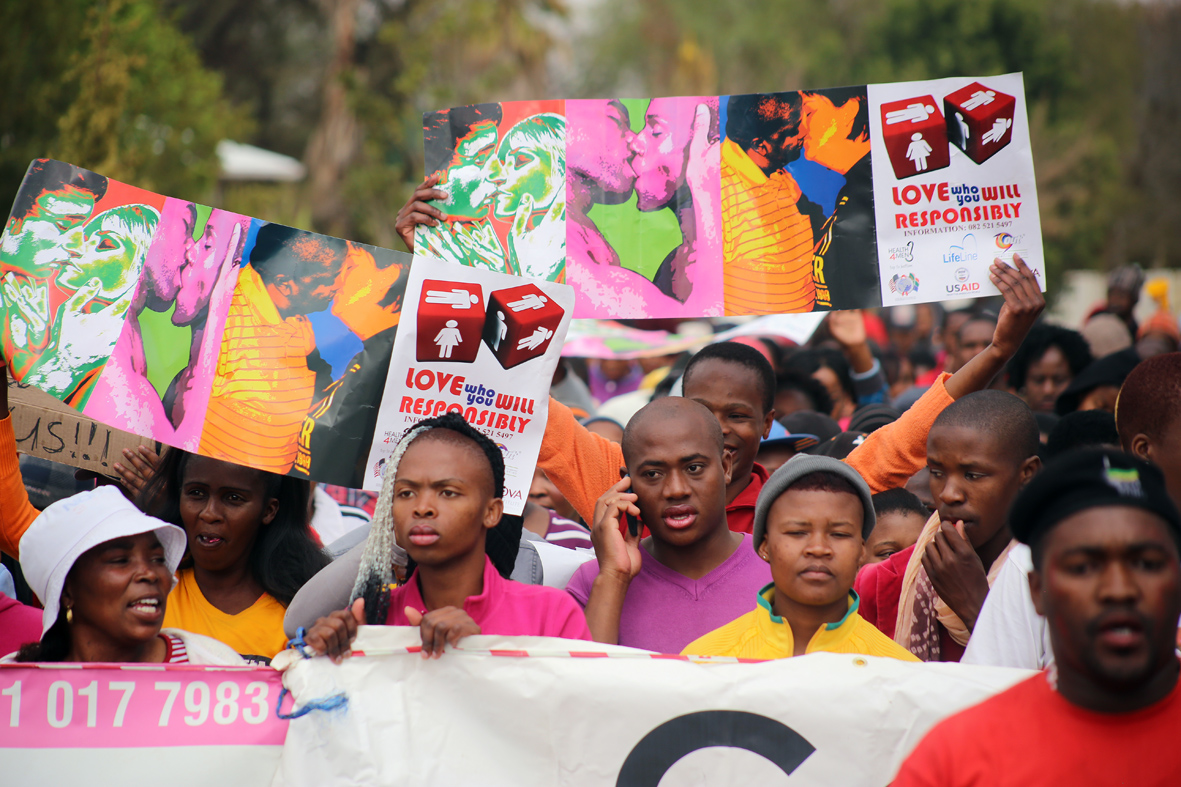
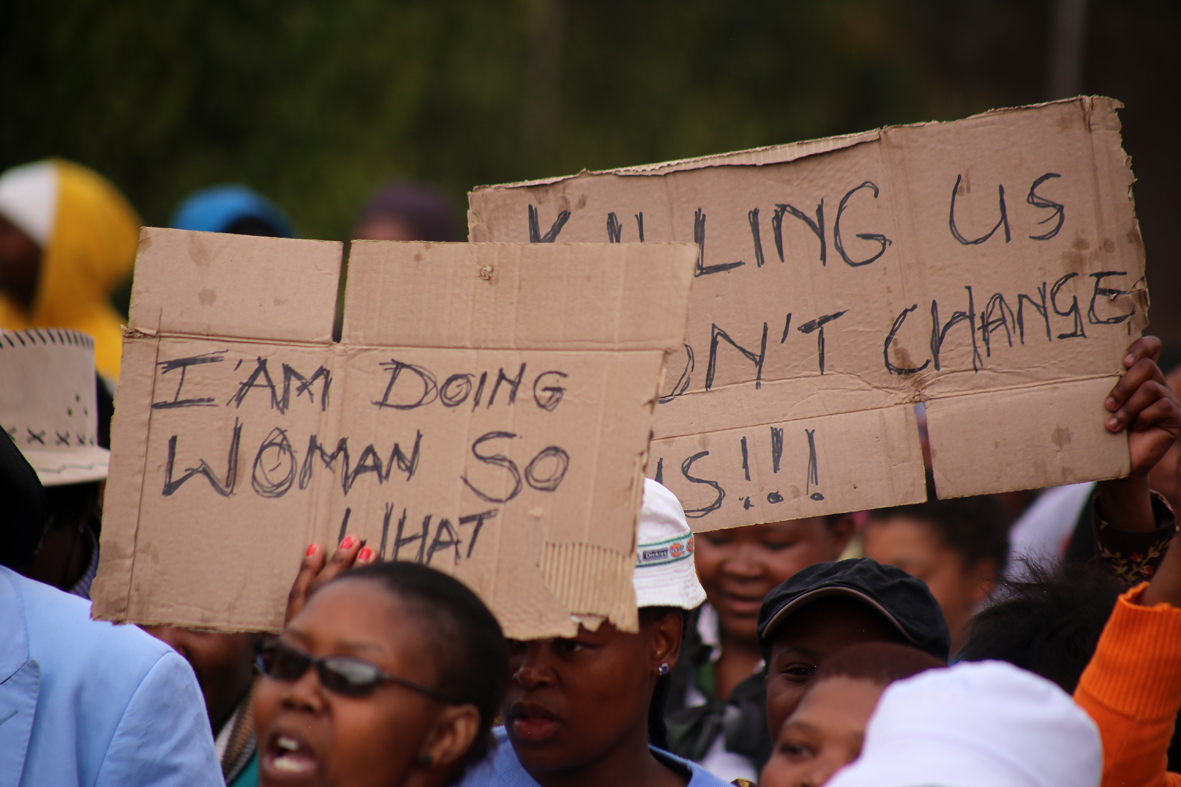
Fed up community members holding placards with strong messages…
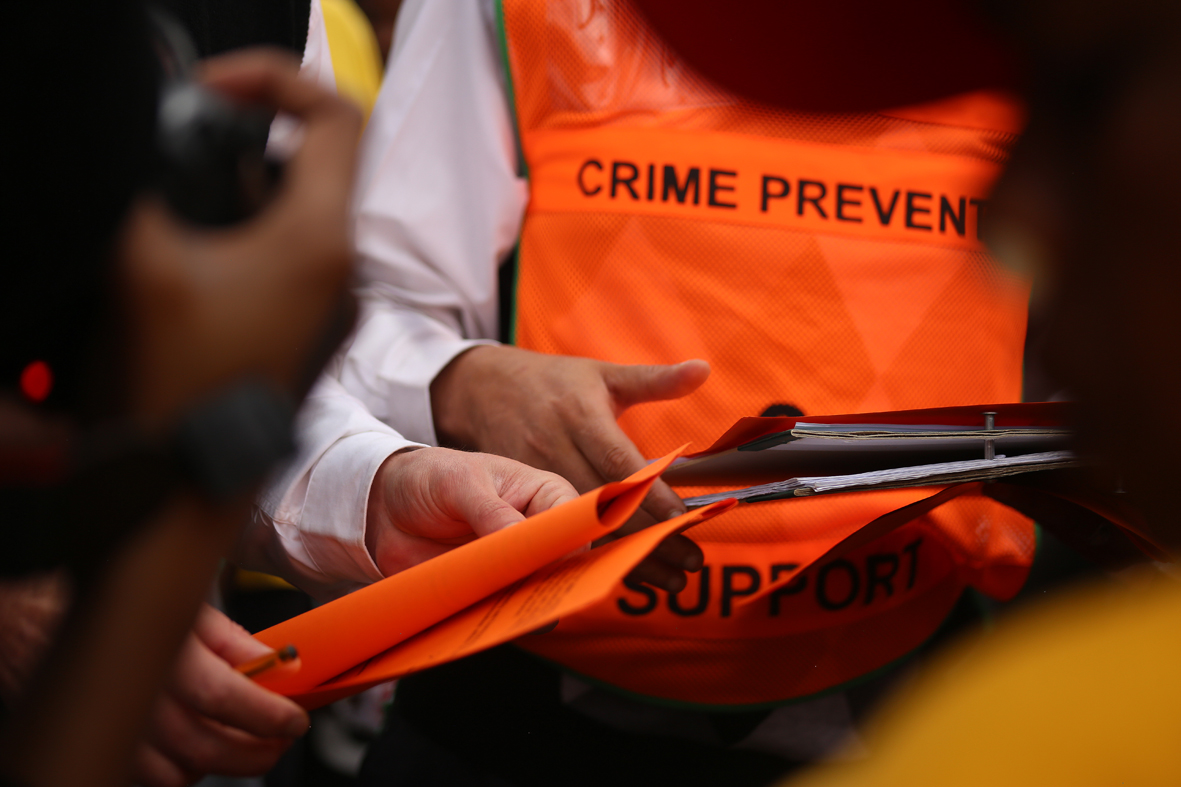

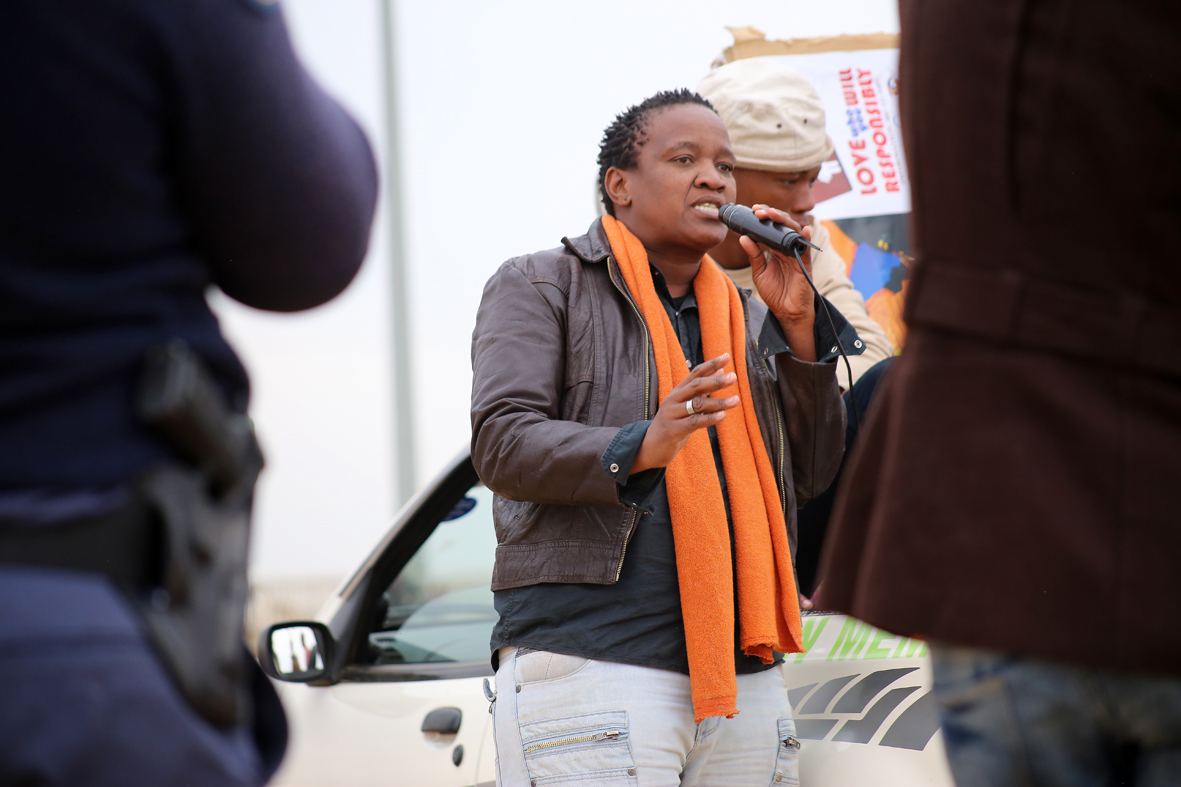
Mildred Maropefele, head of Gay Umbrella organisation in Mafikeng…
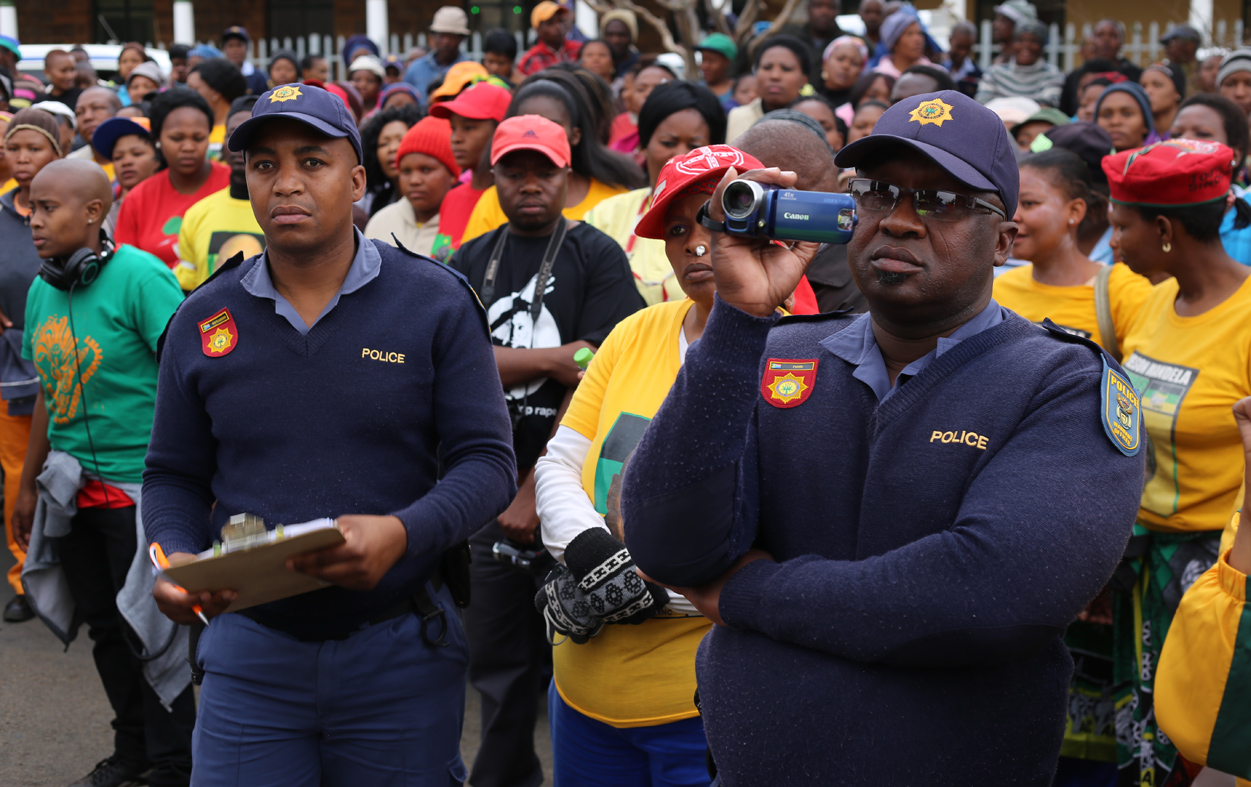
Even policemen can be documenters…
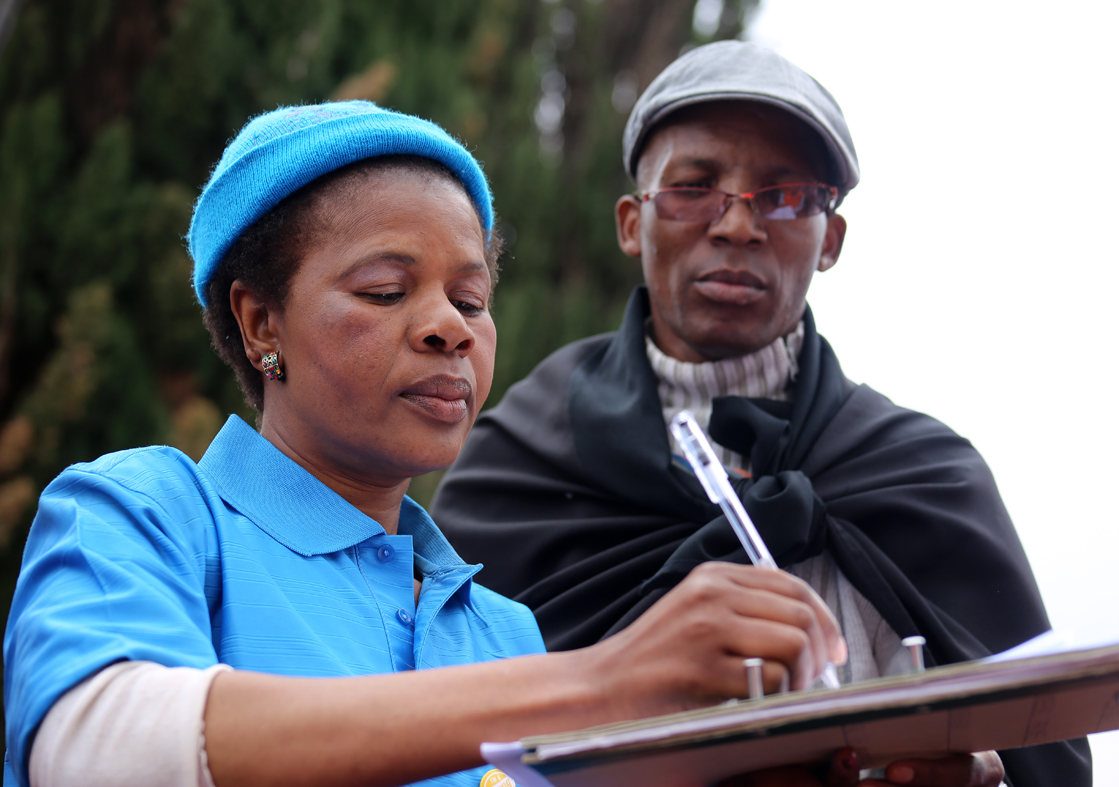
Councillor Mapule Mataboge signing the memorandum before it was handed over to the NPA representative
… with Thabiso from Gay Umbrella.

Col. H. Vermeulen in charge of the march…
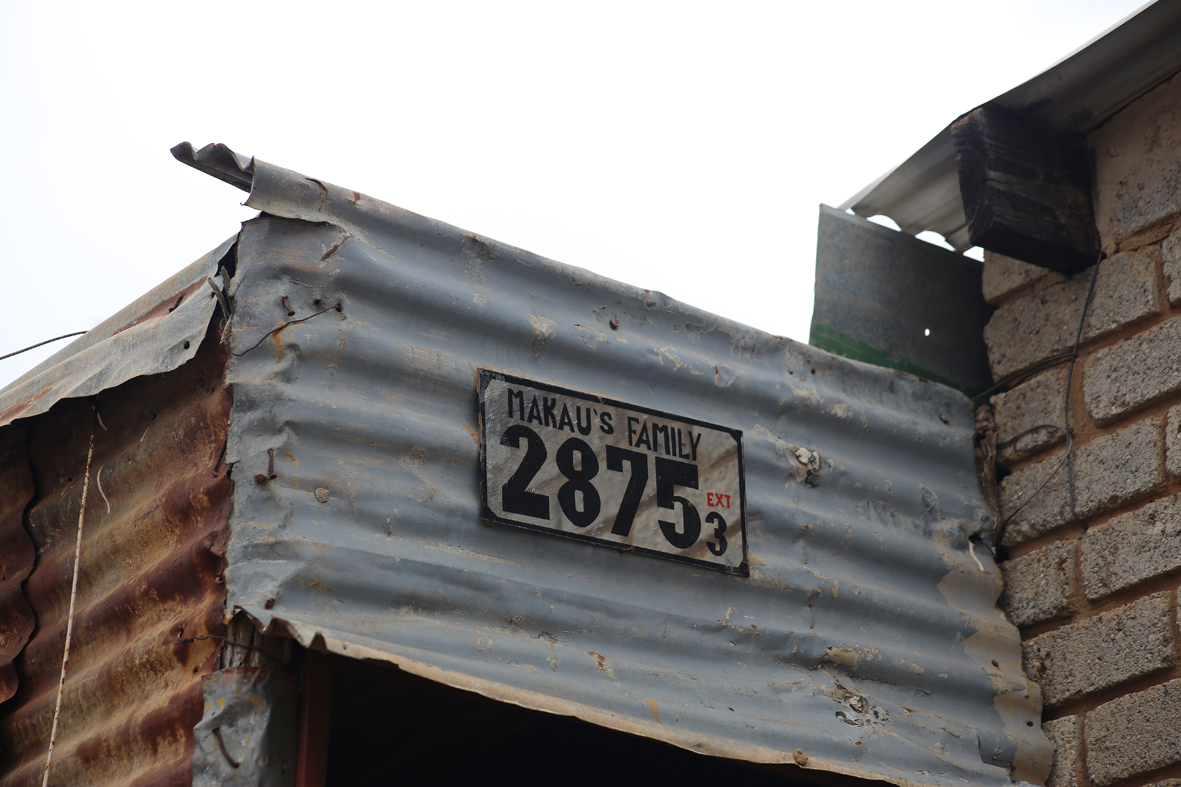
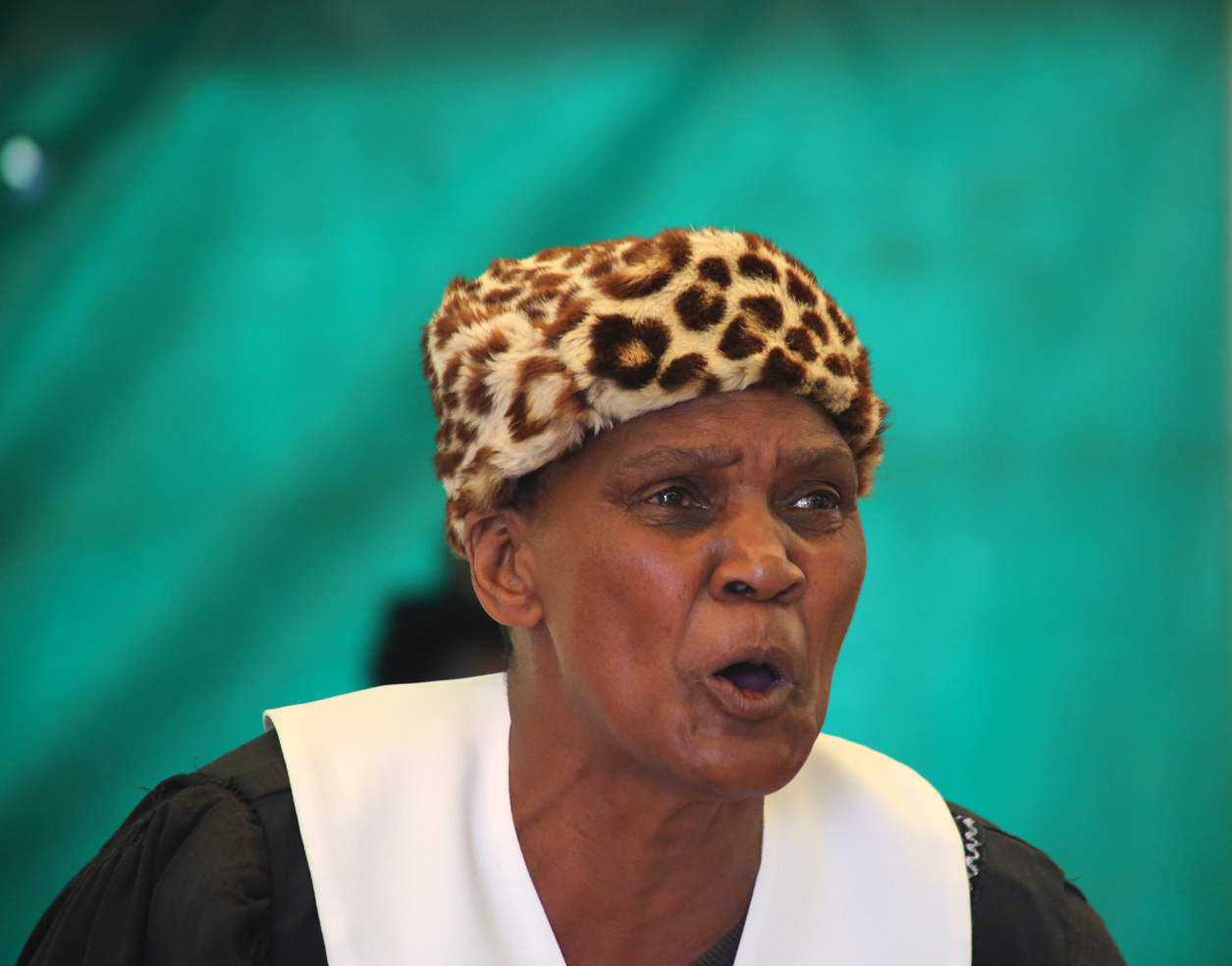
After the march the protesters proceeded to the Makau home where the prayer meeting was held…
Photos by Lindeka Qampi
Text by Odidi Mfenyana
A month before in the same Centre for the Book, almost in the exact same spot as Zanele Muholi sat on Wednesday 20 August 2014 for the Debate on Homosexuality in Africa hosted by Centre for Conflict Resolution (CCR), stood the legendary Angela Davis.
Discussing the evolution of racism Angela Davis asked us to no longer be surprised by incidents of racism. Davis asked us to work steadfastly and comprehensively towards a non-racist society, knowing that racism exists n permeates our everyday existence.
Zanele Muholi a month later stood at the same place drawing attention to South Africa’s most fashionable hate crime of the moment “Corrective Rape”.
Not wanting to be drawn into an academic talk shop about the origins of African homosexuality, Muholi went for the jugular reality.
Zanele named all the high profile hate crimes since 2003 starting with the horrific mass murder at Sizzlers in Sea Point and ending with the recent gruesome rape and murder of Gift Makau in Ventersdorp.
No sooner had the “debate” come to its flaccid end when Muholi had my manager book me on the first flight to Jozi to join her covering the Memorial Service in Ventersdorp. It was time to roll up my sleeves n get stuck in.
Meeting at the boarding gate Thursday morning at 6am we landed n Muholi’s driver took us straight to Ventersdorp.
Ventersdorp already synonymous with racist White Supremacy n blighted by the legend of Eugene Terreblanche, now added the death of Disebo Gift Makau to its gothic accolades.
When we arrived at lunchtime Thursday, to my surprise a full media circus had rolled into town with the ruling party in full force of condemnation n indignation. ANC t-shirts were on almost every citizen. A new civil organisation under the Gay Umbrella was formed. A suspect had been apprehended. A union of Mothers of previously raped and murdered lesbians had come from Gauteng to lend support. Even CNN had come round for interviews.
The memorial service was more than well organised it was typical overreaction. Instead if homophobia, misogyny and poverty had been positively proactively been challenged, if previous cases had been properly investigated and successfully prosecuted we would not have been standing at another Memorial of a raped and murdered young woman in Women’s Month.
Again the LGBT community had to force its way onto the service’s programme after it seemed it was about to turn into an election rally.
“We want action! why must we still fight for rights”
Was the call from fellow women n lesbians
“we are tired of condemnation we want proactive action”
In Tshing, Ext. 2, Ventersdorp, people have grown tired of looking back in anger. People want a change for the better living the rights of our Constitution.
With that said it is time that Black Queer Artists take a stand and denounce the ongoing hate crimes in our townships. We need to produce work that focus mainly on these atrocities. We can’t rely on governmental mandates and foreign sympathy because it is WE (LGBTI community) who are being brutalized and murdered on daily basis.
Related article
and
From Media24
On the 19th Aug. 2014, Inkanyiso members visited the home of the recent victim of hate crime, Gift Disebo Makau in Ventersdorp.
Her dead body was discovered directly opposite her mother’s home, 70 metres away.
She was a young ‘out’ lesbian well known in the community.
A good soccer player and played for Mighty Ladies.
Her mother accepted her sexuality and love Disebo dearly.
Her sister will always missed her beautiful smile…
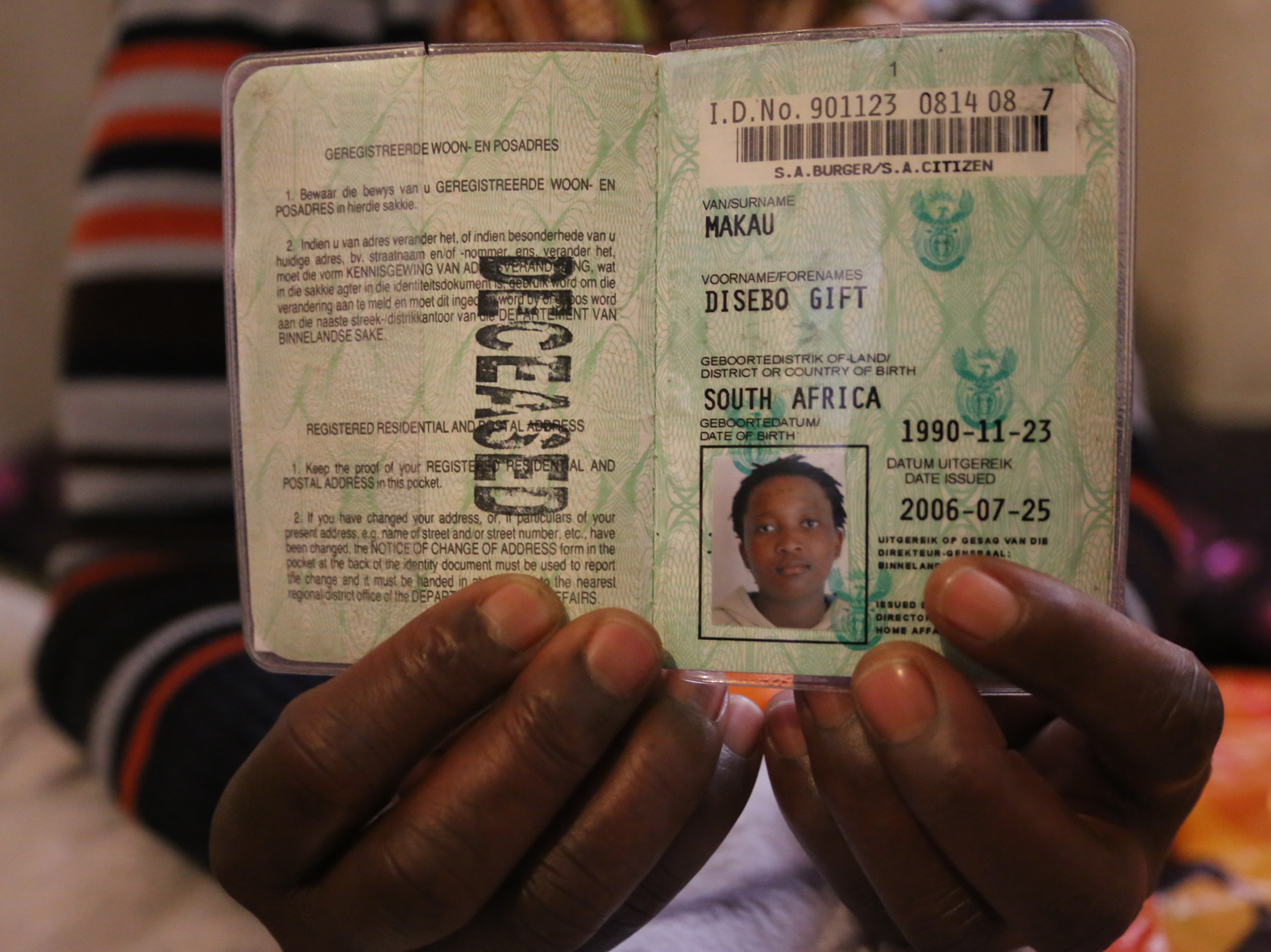 Disebo’s mother, MaMakau shows the ID book of her deceased daughter.

She is survived by her sister Rinah, left, mother and brother Tshepang…

The beautiful portrait of a youngster who had dreams and hope of becoming an accountant… She attended her higher at Vuselela FET College at the time of her death…
She was last seen by her mother on Thurs, 14th Aug. 2014.
 A candle is lit as part of the mourning ritual…
Ventersdorp community is enraged by the brutal killing of Disebo Makau.
 The residents gathered at the stadium to discuss the escalating crime in the areas… A meeting was convened by the local councillor…
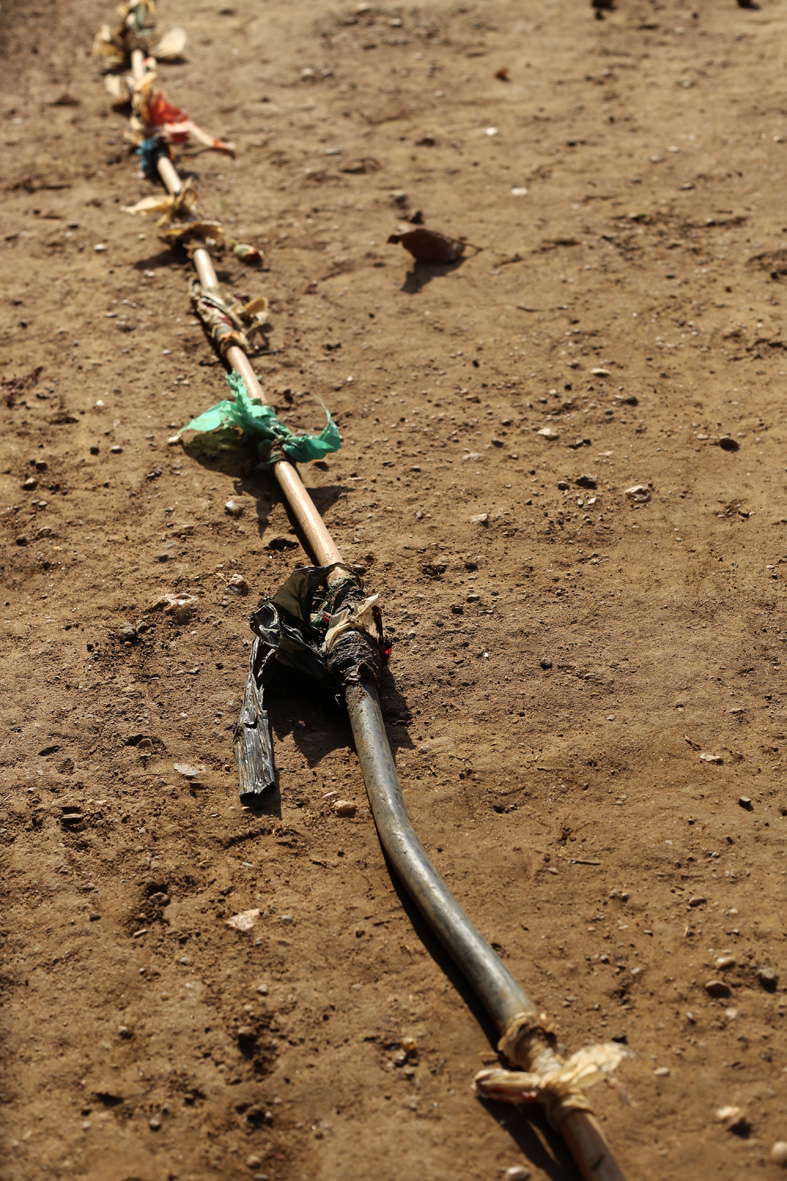
A piece of this hose pipe was rammed into her throat…
Her lower body naked, it is allegedly that she was raped before being killed…

Ward Councillor Mapule Mataboge addresses the residents of Ventersdorp about the incident…
 Rinah Makau, sits on Disebo’s bed… thinking about her.

The crime scene in front of her mother’s home.


Hose pipe which was forced into her mouth with running water. Part of it will be used for evidence in court…

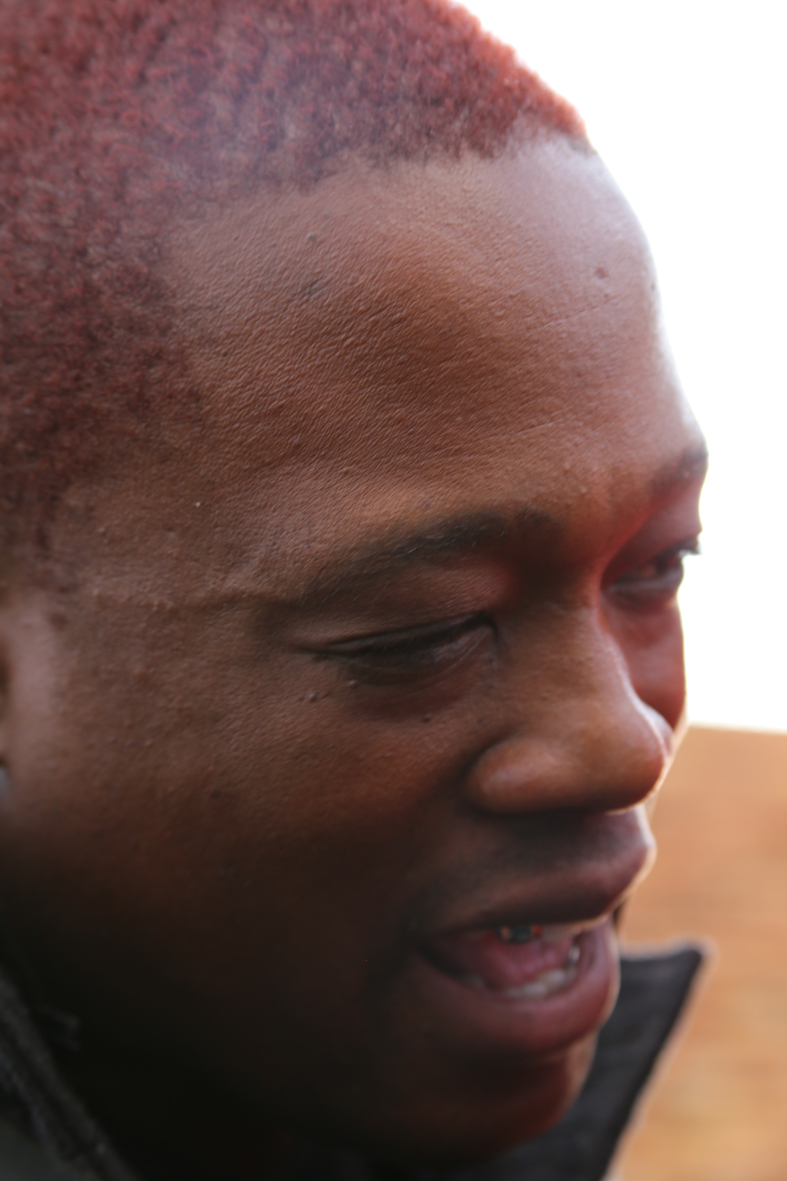


Disebo’s cellphone which was discovered at the alleged suspect’s home.

Photos by Zanele Muholi
My name is Sphiwe Sesana Mbatha. I am a very funny person, I love people and I love happy endings. I am a very dedicated when it comes to work, and I’m a fast learner too.
I am ambitious and always ready to face the challenges that come my way. I was born at Boksburg Hospital on the 14th November 1992.
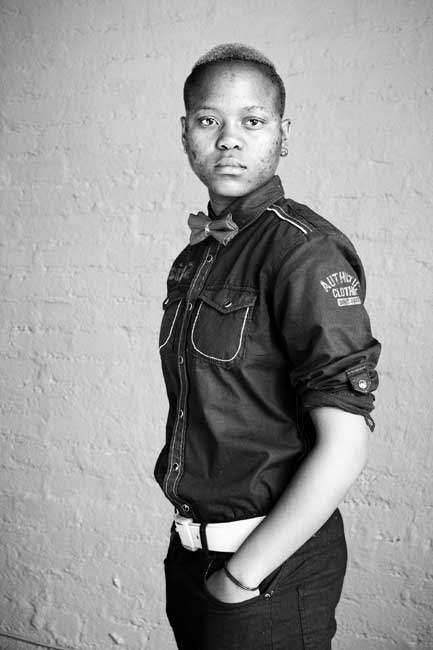
Simphiwe Mbatha, August House, Johannesburg, 2012
At home we speak isiZulu and I can also speak Sotho, English and a bit of Xhosa. I have a mother and a father and I have a little brother.
I live in Daveyton, with my grandmother, four aunts, five siblings, two uncles, and my mother. However my mother is always away because of her work.
I am unemployed, I am still hustling for a job. I went to Intuthuko day care centre, and a year after I started school at Kuzimisela Primary School, from standard one until standard five.
I enjoyed my primary school because I was active in sports especially in soccer and athletics. My grandmother had a small business, selling beers at home in order for us to survive. My father deserted me, he refused to take responsibility.
In 2006 I went to study at H.B Nyathi Secondary School from standard 6 until standard 10. I passed my matric with symbol B and went to further my studies at MSC Business College.
I was studying (IT) Information Technology but I had to drop out because of financial problems at home.
I want to be an IT Specialist, I would love to go back to college and finish up my course. I want to improve technology all over the world. I want to make world a better place, turn negative situations into positives. I like playing soccer and dancing.
I am a proud lesbian woman and I identify myself as a woman who is sexually and physically attracted to same sex gender. In 2012 I entered Mr and Mrs Lesbian Uthingo, Daveyton and I was the 1st prince.
In 2013 I entered Mr Lesbian Daveyton and I took a second prince position. I am a butch and masculine. I am not a lesbian by choice, it is because I am attracted to other women.
Being lesbian means a lot to me, especially being in an open closet, some lesbians who are in the closet wish to be like me.
They wish to have freedom like me, but they cant because of their families. I love the fact that as a lesbian couple, you get to talk about everything in your relationship because, you both females and you understand each other.
I won’t say my family is happy or sad about me being lesbian, they accepted me and they never gave me problems about my sexuality. I grew up mostly with boys, acting boyish since I was young and I never loved girls’ clothes.
I can say I was an open book since I was young. I’m in a relationship with a female, my family is still not aware about our relationship because its still early days and we not staying together, she lives with her family and I live with mine.
We are willing to make things work between us because she makes me happy. We all deserve to be loved and everyone deserves to be happy.
Last year September I dated a girl from Soweto, it was a long distance relationship and then early February I found the girl I loved for a very long time.
We got in a relationship and I decided to end the other relationship with the Soweto girl. After a few days the Soweto girl started stalking us, insulting us on facebook, smsses, whatsapp even calling us ten times a day just to insult us.
When she heard that we broke up, she was the first to celebrate. She’s making my life a living hell because she’s still insulting me, my family and friends especially my mom and grandmom.
I don’t know why she’s involving my family and friends. Everyday I receive 18 massages from her insulting me and my family and she makes sure my relationships don’t last.
This girl is making my life miserable.
We cannot stop hate crimes but we can prevent it. We have to educate people about the lgbti community and make them see that we are also people and we deserve to be treated like human beings.
If I were to be a leader or tv presenter I would focus on talking about traditional norms that we have to break because other lgbti people cannot follow them.
I will also focus on Gender Based Violence (GBV). I would like to go back to school, finish my IT course, graduate, and have a well paying job.
I would use the chance wisely so that I can benefit in future. The true meaning of my identity means being a daughter to my mom and a sister to my brother. I was once attacked by a group of boys.
I was coming from the shops around 8pm, they hit me with a iron on my left knee, searched my pockets and took my new phone, before they left one of the guys said ”stabane ndini uzofa mawungazibhekanga” I was shocked and scared to tell my parents.
From that day I learnt to be very careful because bad luck has its ways to come.
Being part of Faces & Phases is a great experience. I remember my friend took me to Zanele Muholi’s exhibition and I loved her work. I then told my friend that I would also love to be part of the project. Muholi took us for a photo shoot and I enjoyed every minute of it. I felt like a star and I was happy to be given the opportunity because I love being a model.
I enjoy working with Muholi, she’s caring and I respect her so much. I thank her for giving me such a great opportunity to make something for my life as a young female lesbian.
Previous life stories
2014 July 26: “I was born this way and I cannot change the skin that I live in”
and
2014 June 25: I consider myself beautiful not handsome…
and
and
2014 May 7: I don’t like being identified in terms and definitions
and
2014 May 18: Behind the beautiful face you see is a lesbian who is torn into a million pieces
and
2014 May 30: I was a boy who would one day grow up to be a man
and
2013 Oct. 22: I thought university was for the rich
and
2013 Oct. 16: I am a beautiful young dyke, a woman lover
and
2013 Oct. 12: I just feel she deserves much better
and
2013 Oct. 2: I am a normal transgender woman’
and
2013 Aug. 22: Am exactly where I’m supposed to be
and
2013 July 15: The virus has become a silent relative
and
and
2013 March 10: “I love women and they love me”
and
2013 February 28: I am not a Victim but a Victor

L-R: Chad, Pam, Jody and Virginia

PFLAG attendees – with allies, mothers and their queer children…
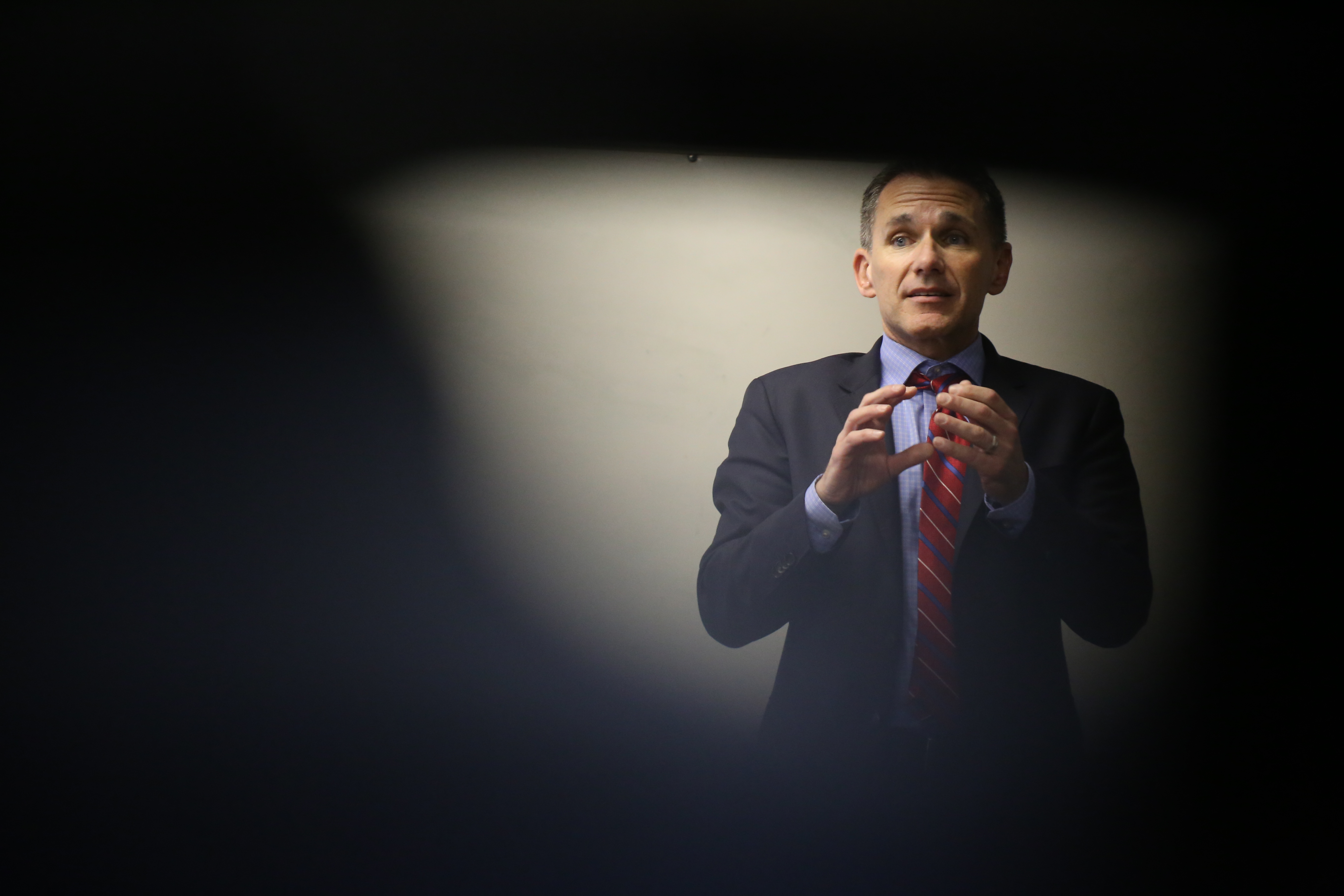
Jody Huckaby in action… presented work of PFLAG to workshop attendees…
A two-day workshop aimed at developing LGBTI-ally support, and advocacy network, is hosted by the US Embassy and GALA at the University of Witwatersrand in Johannesburg.
The event started on August 11 and is facilitated by Jody Huckaby who is the executive director of the US based organisation called Parents, Families, and Friends of Lesbians and Gays (PFLAG).
Senate House at Wits accommodated parents of children identifying under the LGBTI umbrella and some attended with their children.
Other members of the public who wanted to learn more about challenges facing the LGBTI community also participated in the workshop.
Attendees traveled from various Ekurhuleni townships and other parts of Johannesburg including Soweto.
Jody explained to the group that an ally is someone wiling to take a look at the unique challenges of lgbtis. He added that allies also have the task of coming out as allies and must be willing to learn more.
One parent Linda Mankazana said having a lesbian daughter she hoped the workshop would aid her when it comes to communicate with her daughter. She said although she is free and talks freely with her daughter’s friends who are in the lgbti community they have not discussed her daughter’s own sexual orientation.
Linda said as a school teacher, she wants to acquire more information.
While Mally Simelane who lost her daughter Eudy Simelane in a 2008 murder, described by many as a hate crime because she was lesbian.
Mally is still active in the lgbti community and has a support group that educates parents from her church about lgbti issues.
“I am educating fellow mothers to eradicate homophobia in homes and avoid children being disowned by their parents,” said Mally.
Lerato Nthupi, Buyisiwe Mashinini, Thelma Masimini and Nomvula Mkhwanazi said they are part of the South African Council of Churches (SACC) and members of the support group driven by Mally.
They said although all their children identify as heterosexuals, they are supportive of Mally and LGBTI matters and came to the workshop to gain more knowledge.
One supportive mother asked to remain anonymous for fear of a backlash from her family if they found out she is attending LGBTI events with her lesbian daughter.
“The LGBTI community is demonised, and I’m afraid that if I don’t support my child she will end up feeling alone and with no sense of belonging,” added the mother.
Photographer, Zanele Muholi inquired if it was necessary for South African activists and organisations to rely on international support instead of assisting one another.
Muholi pointed to the legislative gains such as marriage and adoption rights made by the LGBTI community in South Africa and urged local stake holders to forge closer ties and collaborations.
The visual activist said holding such workshops at Universities limits the access of many people, adding that more people need to be reached across South Africa.
Chad Wesen a Political Officer for Human Rights said PFLAG’s visit to South Africa is part of a US programme.
He said it stems from a need expressed by SA activists and the intention is to identify how the US experience could benefit SA.
Chad said media and family issues were identified by SA activists as areas that South Africa still lacked when it comes to lgbti issues.
My name is Katiso Kgope, and I was born on September 18, in 1995.
I was born in Glen Wood hospital, Benoni my parents are Mandla Kgope and the late Mpho Kgope – Monyake.
I was given the name of Katiso by my mother, which originates from the Setswana term Goatisa which means Addition, basically an addition to our big family.
I speak English, iSiZulu and Setswana fluently.
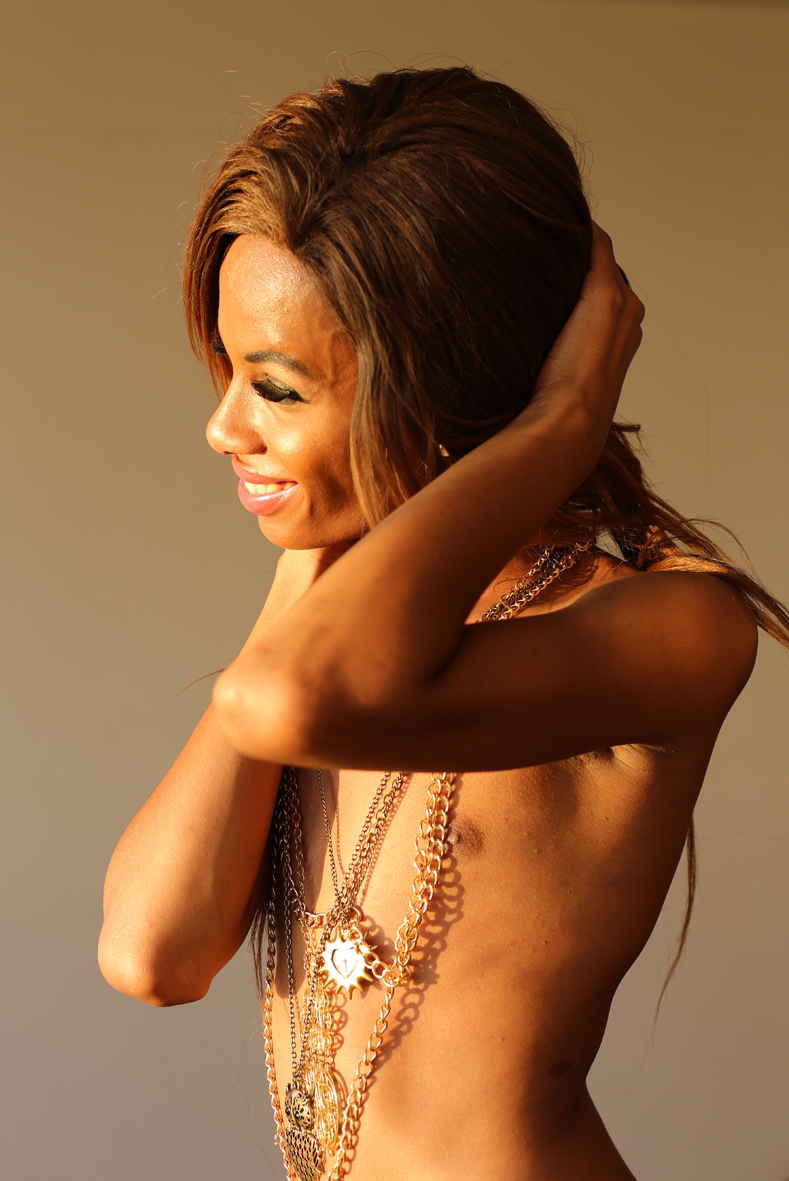
From a very young age, mentally my mind was feminine. I did not know why at the time as I was still very young and did not have a clear understanding of the mental state I was in.
But for some reason I had always been attracted to all the things girls would be attracted to and wanted nothing to do with what boys would be attracted to.
I was told that when I was still a child, every morning when my mother got ready for work, I would always be in her bedroom playing with all her things such as her makeup, her jewellery, especially her shoes, I was in love with her shoes.
My father would take me and lock me up in the car when my mother got ready for work in a sense that they were hoping the longer I stayed away, the better chances of me losing interest in such things and little did they know that, that was just the tip of the ice berg.
I did not know what being trans meant when I was a child, I didn’t understand what I was doing but for some reason it felt normal to me.
I am a beautiful trans woman, and I strongly believe that we all come from God, and that perhaps sometimes He makes mistakes because I feel my original body parts were given to the wrong individual.
I consider myself to be a cordial person, as I have been told. I am a very friendly and a social butterfly and there is nothing I enjoy more than meeting new people, especially those who are just like me, because I find the different types of life stories of other trans women very fascinating.
I feel that just making new friends with other transwomen will be just a beautiful experience.
I also entered 2 pageants, I lost the title of Miss Gay Daveyton and the second pageant I entered I won Miss Valentine’s Second Princess along side Miss T as the third and first Princess and Cuteness as the Queen.
I wish to have a sex change when my financial situation allows me to. There is nothing that would make me happier than to be an actual woman.
To be honest I love how I look, but like anyone else, there are just a few things I would like to change; such as my smile, my narrow hips and my flat chest as well as getting a female organ. That would be the cherry on top.
I would have loved to be able to physically give birth but sadly we all know that will not happen.
My grandmother whom I lived with in a township called Daveyton, passed away on June 21.
My mother died when I was three years old and my father looked after me until I finished high school. My father has not fully accepted the fact that I am trans, and I highly doubt he ever will.
His hatred of my sexual preference has resulted in a huge rift in our relationship in such a way that, we hardly ever speak.
The only time we communicate is when school is involved; otherwise we have nothing to talk about. Basically there is no father-child relationship.
Its even worse that he has a new wife and a new baby girl, which gave my dad room to make excuses to not support me financially where school is not involved, but I love my baby sister anyway.
I attended a primary school called Lee Rand Primary School until grade 5 when I had to change to Pine Grove Primary School where I finished junior school.
I had to move to the different primary schools because the first school didn’t treat me well due to my sexuality. I then went to Springs Technical High school, and matriculated in 2013.
I did not study further than High School.
I have always dreamed of being a model, but everything I have tried to do has failed because my father was not supportive.
My first dream was to become an actor, I was hoping that I was going to attend the National School of the Arts but my dad said it was too expensive, so that failed like my modelling.
I then decided that I want to study fashion at any fashion college, and I heard the same excuse I have been hearing from him for any school I wanted, “that is too expensive, I cant afford”.
I had gotten so sick of that line so much that I decided to resort to my plan C, which was to attend a government college in Benoni called Benoni Ekurhuleni College.
When I applied it was full, so I had to settle for Springs Ekurhuleni College. I decided to study something that would please my father as he was willing to pay for something that was more on the “practical side”.
I am currently studying towards a Diploma in Marketing at Springs Ekurhuleni College. I wish to further my studies after receiving my diploma in marketing and studying what I have always wanted; fashion.
I have always had a dream of becoming a trans super model because I feel that so far the world is yet to see a transsexual woman take the title.
What I fail to understand is why trans women are never in adverts in South African magazines, as well as TV series and in movies.
Since no one had the courage to do so that is all about to change. I plan to be the first transsexual super model to make it big in the world and make a name for myself and most importantly to represent for all trans women that did not get a chance to let the world know who we are and what we stand for.
The world needs to learn that the LGBT community consists of human beings and we also have dreams and its time that all changed.
I wish to travel to New York, Los Angeles, Miami, Paris, London, Belgium and Greece to do things such as photo shoots, fashion shows, exhibitions and any kind of event.
I want to do a photo shoot in the Arc de Triomph, Eiffel Tower and in the neo-classic Haussmannian boulevards plus. Have a shoot in the beautiful Central Park in New York, Brooklyn Botanical Gardens, Times Square and most importantly in Hollywood, and the Hollywood walk of fame, the Myrtos Beach, Mykonos, and Santorini.
I wish to get the chance to meet famous idols such as Bonang Matheba, Somizi Mhlongo, Khanyi Mbau, Dineo Ranaka, and other international fashion designers such as Marc Jacobs, Stella MCcartney.
I would also like to meet Rupaul of Rupaul’s Drag Race, a famous tv series of drag queens and trans women, competing to see who is the best of the best.
by Lerato Dumse
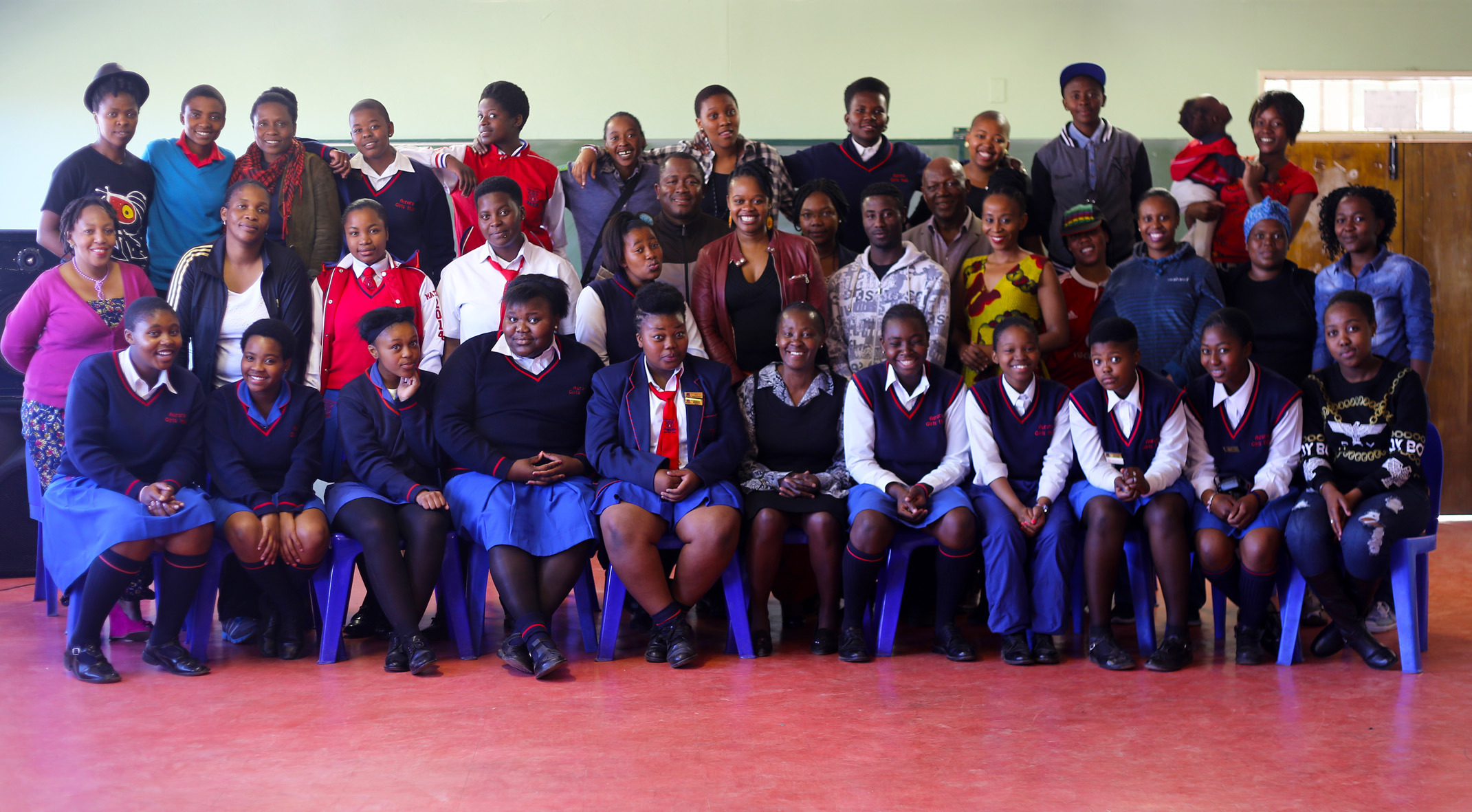
Seizing opportunities was the central message shared with more than 15 teenage girls at Aurora Girls High School, in Soweto on 1st August 2014.
The girls are part of the Siyafundisana Photo XP, a photography training project founded by Zanele Muholi in collaboration with Linda Mankazana, Lindeka Qampi and Valerie Thomas.
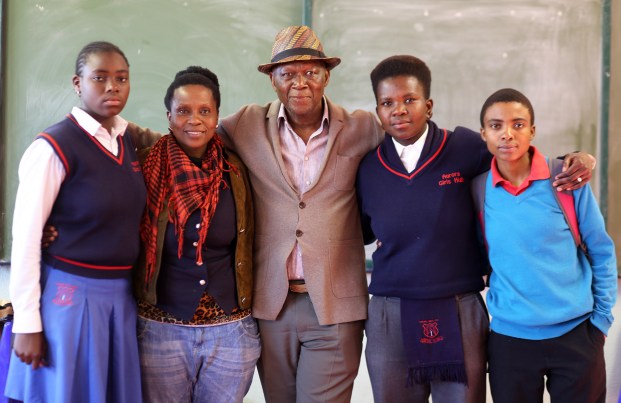
L-R: Elisa Pica, Lindeka Qampi, Mfundi Vundla, Thobza Zwane and Lerato Dumse
Muholi who arrived in South Africa from Paris, France that morning, after being away for three months on art residency at Cite Des Arts, said the event is how she wanted to start her Women’s month.
The award winning photographer reminded the girls that they are doing it for themselves, and they all have their own stories to tell.
Some of the young women’s families, teachers, project facilitators and various guests were present. Guest speakers were Phumla Masuku, former learner and co-founder of Chosen FEW soccer team, Nonkululeko Britton-Masekela, a journalist and poet and Mfundi Vundla, executive producer of South African soapie Generations assembled inside one of the classrooms. Mfundi shared his story of persistence and seizing grabbing an opportunity.
Reminiscing about how he was told to write a South African soapie, he asked his wife to buy soapie books in the United States of America, because he had never written a soapie.
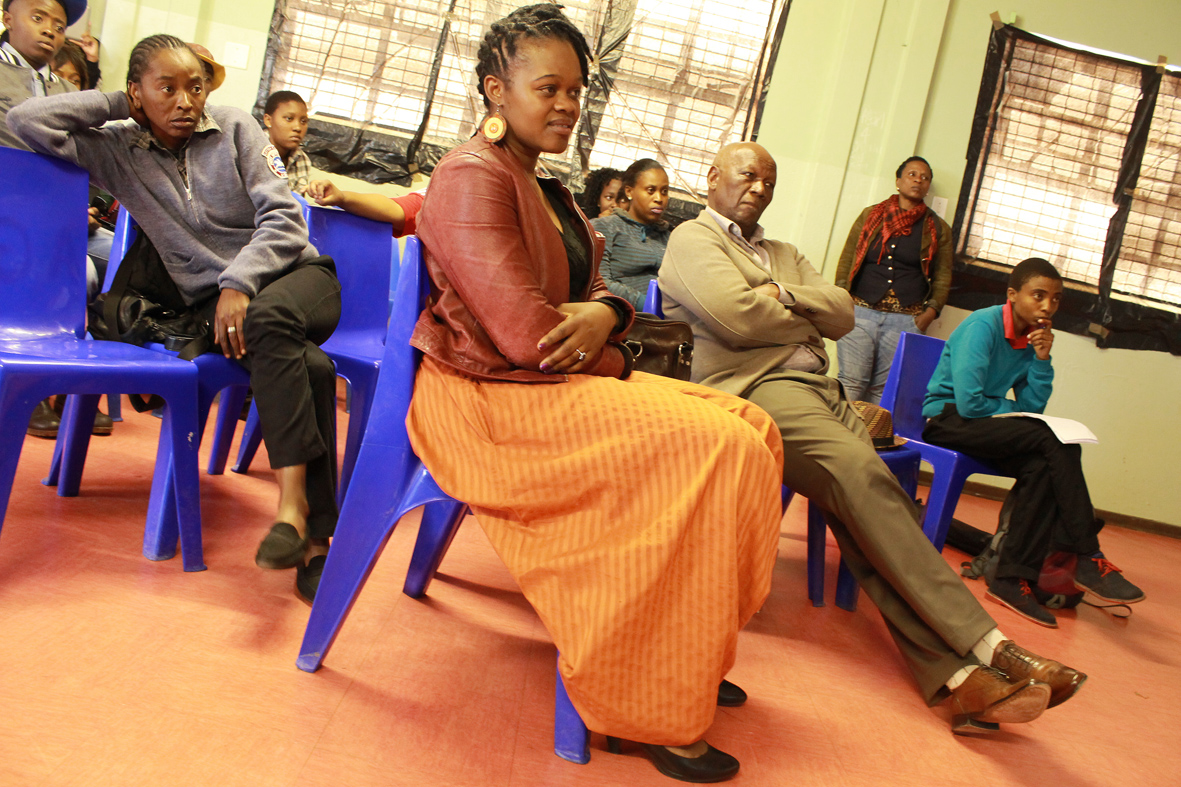
L-R: Phumla, Nonkululeko, Mfundi, Lerato and far right Lindeka listening to one of the student presenters attentively…


Despite his lack of experience, Mfundi said he spent the next weeks reading up on, and watching soapies, before giving birth to Generations, which became an instant hit.
Nonkululeko started her day with the girls by doing an exercise where the girls had to imagine the future them, where they are in life, and how they are making a living.
Nonkululeko wrote her first poem in Grade 11, told the young photographers that grabbing opportunities allowed her to be a paid journalist by the time she started her first year in journalism at the University of Johannesburg.
Each learner shared their vision of the future them. While some saw themselves in three years, others saw five years from now.
One of the learners Nomthandazo Sibanyoni (19) saw herself in ten years time.
At 29 Nomthandazo sees herself with an Honors degree in the Arts. Her biggest motivation at the moment is the fact that she is the first person in her family to reach matric.
Mbali Vilakazi and Nonkululeko Britton-Masekela shared their moving poetry in closing.

Related links
2014 July 16: Through the eyes of young women photographers
and
2014 July 13: “Give children cameras not candies”
and
2014 July 12: From Soweto to Paris for the love of photography
 | lindiwedhlamini on Let’s go back to the drawing b… |
 | inkanyiso2009 on 6th January 2013: Victory Mini… |
 | Nondlela mjomle on 6th January 2013: Victory Mini… |
 | Elton on 2013 Aug. 27: Because I a… |
 | Nomthandazo Ngwenya on LGBTI Destiny First Gathe… |
 inkanyiso.org
2014 Aug. 11: My experiences of Paris, Mpumalanga and Durban Gay Pride
by Luh Cele
My perseverance and the love of the game once upon a time resulted in a progressive life of meeting interesting people and travel abroad. In this note I’d like to share share my lifetime experiences, of pride marches with hopes that other LGBTI people will one day have a chance to explore such events.
I have extended my experience based on the same calibre events from globally, provincial and locally. In 2012 we went to Paris-France march known as Marche des Fiertes LGBT and recently we were in Mpumalanga on August 9, 2014 after attending the Durban Pride in June 2014.
Activists and LGBTI members came out in numbers to participate in the first Mpumalanga Pride, Nelspruit
In Paris-France we as “Thokozani Football Club” blended well with the event. We were so excited, highly active and performing our local songs and dancing. The team spirit was highly noted and appreciated, remembering the energy of soccer players and marching for our fellow activists who have lost their lives for simply being who they are and for “coming out”.
We were singing with the purpose of sending the message throughout the world begging people to stop killing LGBTI individuals. Paris is a country which is very free from violation of rights of the LGBTI than African countries. The pride march was well organised, and always starts at Tour Montparnasse and ends at Place de la Bastille,while the route is closed for the whole day, to accommodate the event.
We were marching together with lots of banners and LGBTI flags. The one written by Thokozani Football Club read as: “We are the South African Rainbow Nation marching for those who cannot and are unable to be here today, stop hate crime, corrective rape and killing LGBTI”. The setting was extremely excellent, the attendance consisted of thousands of people who were not only homosexuals.
Moreover, the awareness has been totally created in overseas countries we are also praying for the same in South African countries, where the is high stigmatization of LGBTI people.
The Lowveld, Emalahleni and Glom LGBTI, launched their first Mpumalanga March Pride. It coincided with the very acknowledged, National Women’s Day, on August 9. The day commemorates the march held in 1956, at the Union Buildings in Pretoria. The event challenged the legislation which was stipulated during apartheid era that Black South Africans should carry their pass books in all their movements.
We were fortunate to attend Mpumalanga Pride which was reasonably attended by the LGBTI community from different provinces and local townships around SA. The nature of the setting was similar to other events.
It started from SABC offices to the Nelspruit Plaza and ended up at Mpumalanga show grounds. However the was interrupts when it went to the Plaza and not in a place where it was going to be ended at.
After a few hours standing at the plaza, residents were surprised not knowing what was happening exactly. I quote a woman who was walking in the plaza asking another woman “what is happening now with the gays” the other woman answered “I don’t know”. People realised that there was some kind of an event for LGBTI but the elderly couldn’t understand the type of event that was taking place in Nelspruit Plaza. Furthermore there were no big banners that were displayed by LGBTIs in order to pass the message clearly to the community.
There were stickers pasted on their bodies. The directions were given by the director of the march pity the crowed couldn’t hear her, as she was using her voice to cascade the information. She had to move up and down to make sure that everybody was moving to the same direction. The Mbombela traffic police were available to control the members of the march.
After standing for hours, we were transported by buses to the show grounds where the event was sceduld to end, after treating the crowed with speeches’ from different representatives and organisations, music, performers and the after party.
I’ve been to three prides, in Mpumalanga I witnessed a very drunk Lesbian who couldn’t do anything because she was too drunk. She was lying down and no one was helping her there was no first aid provided for her, until I decided to help her together with my colleagues and left her with friends that could look after her. I wish the Pride March could invite all the departments especially the Department of Health (DoH) who can take care of the emergencies around the event. The security should be available on the field to resolve any conflict happening in the events.
The nature of the pride uses the same culture usually from international, provincial and local, while the settings depend on the organiser of the event. Durban March was one of a kind. The march was from one point straight to the end point where the whole event was going to be wrapped up. The attendance was also reasonable but I still believe it can be more than that referring to the growing population around Durban.
There are many townships under KwaZulu Natal for an example Umlazi, is the second biggest township in South Africa following Soweto in Johannesburg. And the LGBTI population is really growing fast day by day. Pity we haven’t been able to exercise the Umlazi Pride.
However the purpose of Pride is to increase visibility and public awareness of LGBTI issues, encouraging the individual cultural norms for an example female and male behaviour need to be emphasized. LGBTI need to be well educated about gender and sexual orientation. I personally believe being any kind of LGBTI doesn’t change the fact of the birth gender unless the person has gone through the process of gender change surgery. A female will remain as a female, she is at risk of being a victim of rape, and its even more if she is a lesbian due to hate crime. Alcohol abuse is putting LGBTI lives at risk. Moreover health education concerning safer sex practices is more important and the routine check-ups needs to be emphasized more and more. We need to close all the gaps together as LGBTI for the better.
I thank you for the experience we gained, the knowledge we have explored, the acceptance we have received from all the representatives. Nothing can ever replace the time we have spent together with Mpumalanga LGBTI members. Hope we meet again.
Related link
2014 Aug. 9: A video of the first Mpumalanga Pride