by Mandisa Giqika
On October 25. 2014, South Africa celebrated the 25th anniversary of the Johannesburg Pride March and 20 Years of Democracy. The LGBTIQ community looked forward to this enormous event that reunites fellow sisters and brothers.
This year Mushroom Park in Sandton sheltered all humankind from babies to grandparents, after a long parade around the streets of Sandton chanting, “I am Human” regardless of sexuality.
Simone Heradien, Human Rights Activist gave a great speech after the march and said:
Johannesburg pride is not only for Lesbian, Gays, Bisexuals, Transsexuals, Intersexual and Questioning; Johannesburg pride is for everyone.
South Africa became the first nation in the world to explicitly prohibit discrimination based on sexual orientation.
This brings us to an issue of corrective rape around townships. Lesbians get raped and brutally murdered, but then a Congress of Traditional Leaders of South Africa has guts to file a draft document calling for the removal of LGBT rights from the Constitution of South Africa.
South Africa does not have any statutory law requiring increased penalties for hate crimes, however; hate motivated by homophobia has been treated by courts as an aggravating factor in sentencing.
In April 2014, then Minister of Justice Jeff Radebe launched a National Intervention Strategy for the LGBTI Sector developed by the National Task Team (NTT) to address sex-based violence and gender-based violence against members of the community.
The NTT has established a rapid response team to attend to unsolved criminal cases as a matter of urgency and produced an information pamphlet with frequently asked questions about LGBTI persons.
The first South African pride parade was held towards the end of the apartheid era in Johannesburg on 13 October 1990, the first such event on the African continent.
Now we on the 25 years later, we are still fighting for political advocacy against LGBTIQ hate crimes, such as the so-called corrective rape of lesbians in townships, and to remember victims thereof.
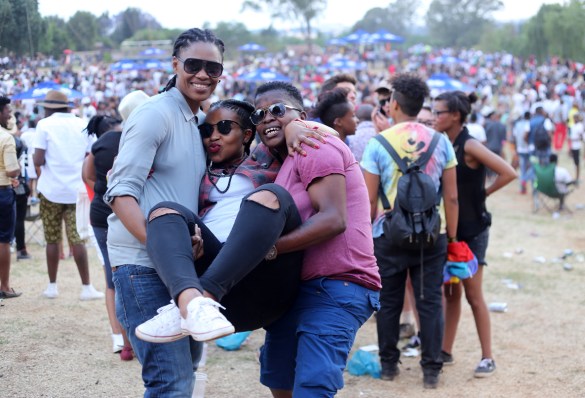 Zuki Khuse and friends was present too…
In his speech during the first pride Simon Nkoli, a gay and anti-Apartheid Activist said, “I’m fighting for the abolition of apartheid. And I fight for the right of freedom of sexual orientation. These are inextricably linked with each other. I cannot be free as a black man if I am not free as a gay man.”
Away from the crowed and pumping music were many danced for hours, someone was heard saying, “I am a Lawyer, you can’t tell me anything.” it came from a feminine lesbian when securities tried to escort females out of the male toilets.
“We don’t mind, we don’t mind, they can share toilets with us, these are our brothers and sisters you can’t discriminate” an angry Gay man proclaimed, forcing security guards to surrender to the situation.
The event was well organized with maximum security, while bottles and cooler boxes were not allowed. Marques with different choice meals were available in numbers.
Paramedics were on standby at the event the whole day and monitored the situation, giving first aid to those who required it.
“We have reserved parking at Gautrain, Sandton City and Radisson Blu. You only pay R10 to keep your car safe and enjoy the festival for free,” said Steven Khan, head of Strategy and Sponsorship Organizing team spokesperson.
Reactions from some who attended the event:
“Johannesburg pride is better. Music is awesome and the vibe is good we enjoying every moment” -Melissa and Nicole
“Turnout is half the Zoo lake and my friends could not come too because of the venue.” -David
“I think I will stick to Soweto pride; can’t stand this music” -Luyanda
“Black entertainers were unhappy for not being slotted in on the program including my fans when they heard that I won’t perform. This is the first pride that I wasn’t considered” –Sicka Star-ban (Mr Lesbian Daveyton and hip hop artist)
Amongst the public figures that attended the festival were Toya Delazy, Samkelo Ndlovu and Sade Giliberti.
We are hoping that all aspects will be considered in the planning phase of future pride marches. As Simone Heradien mentioned that pride is for everyone, let it apply to the entertainment.
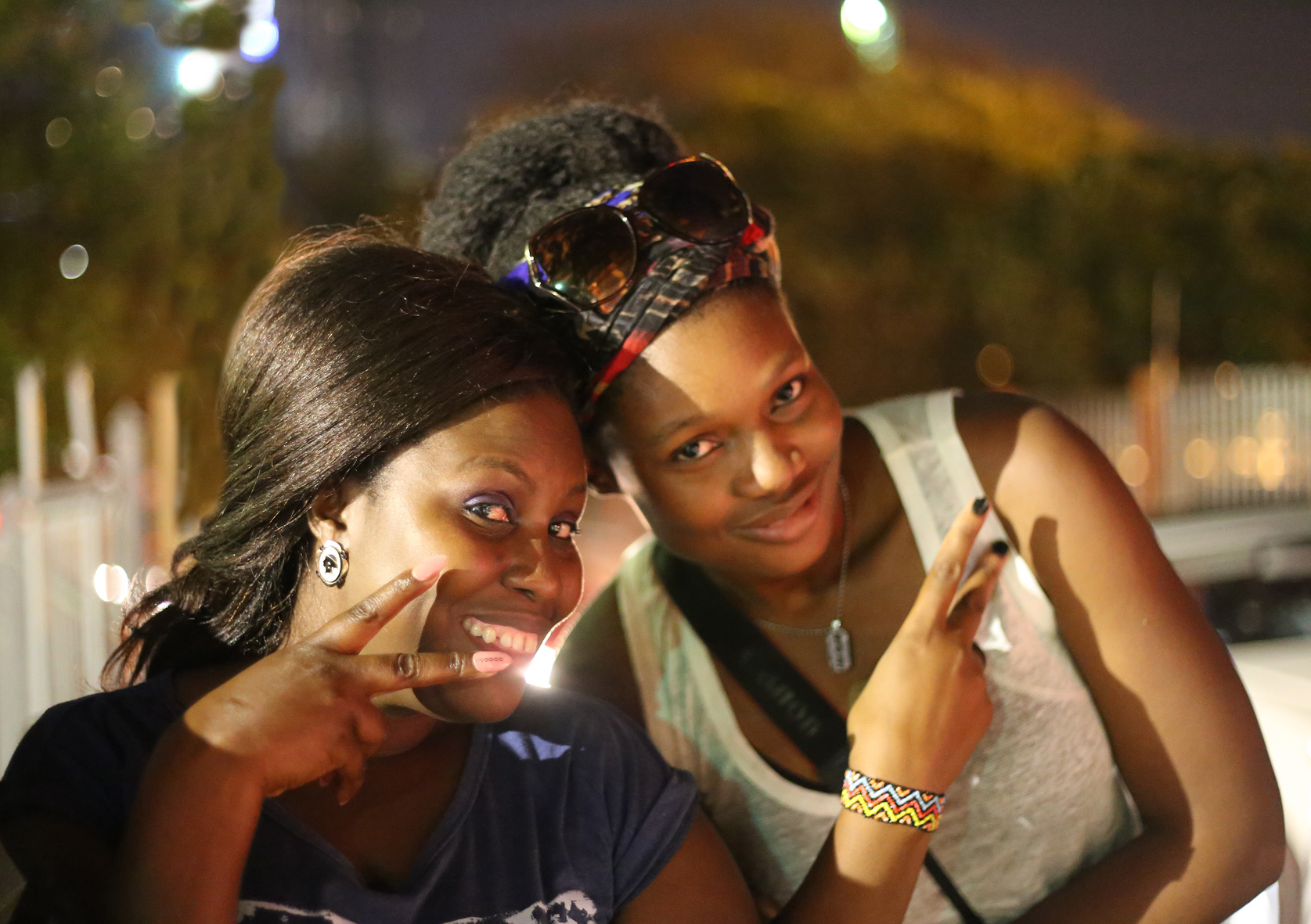
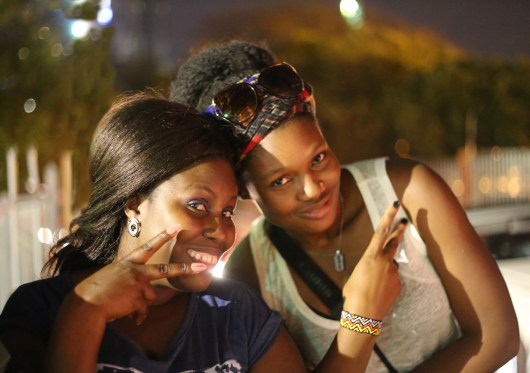 With Thobeka and Londeka…
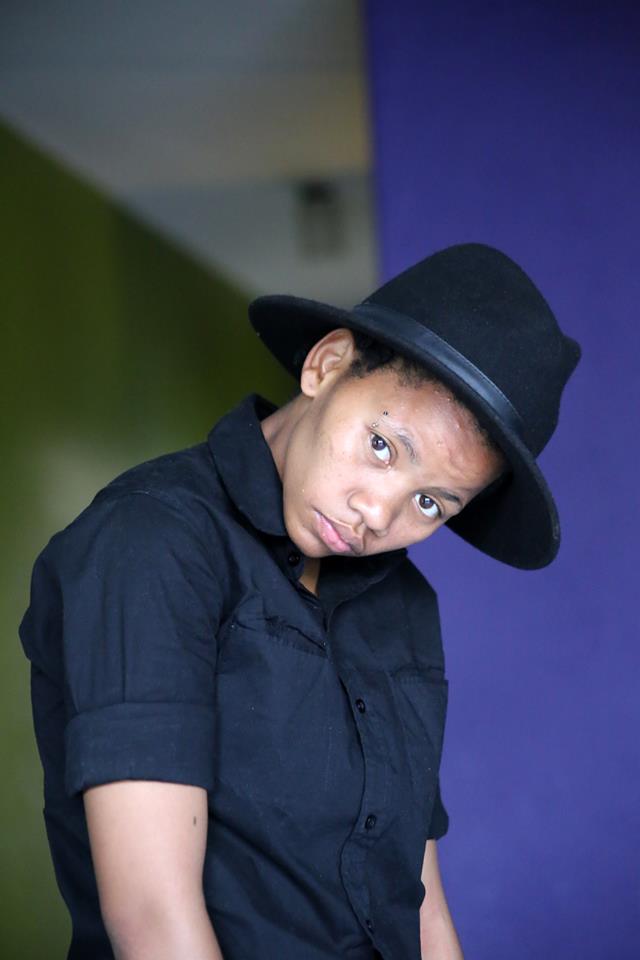
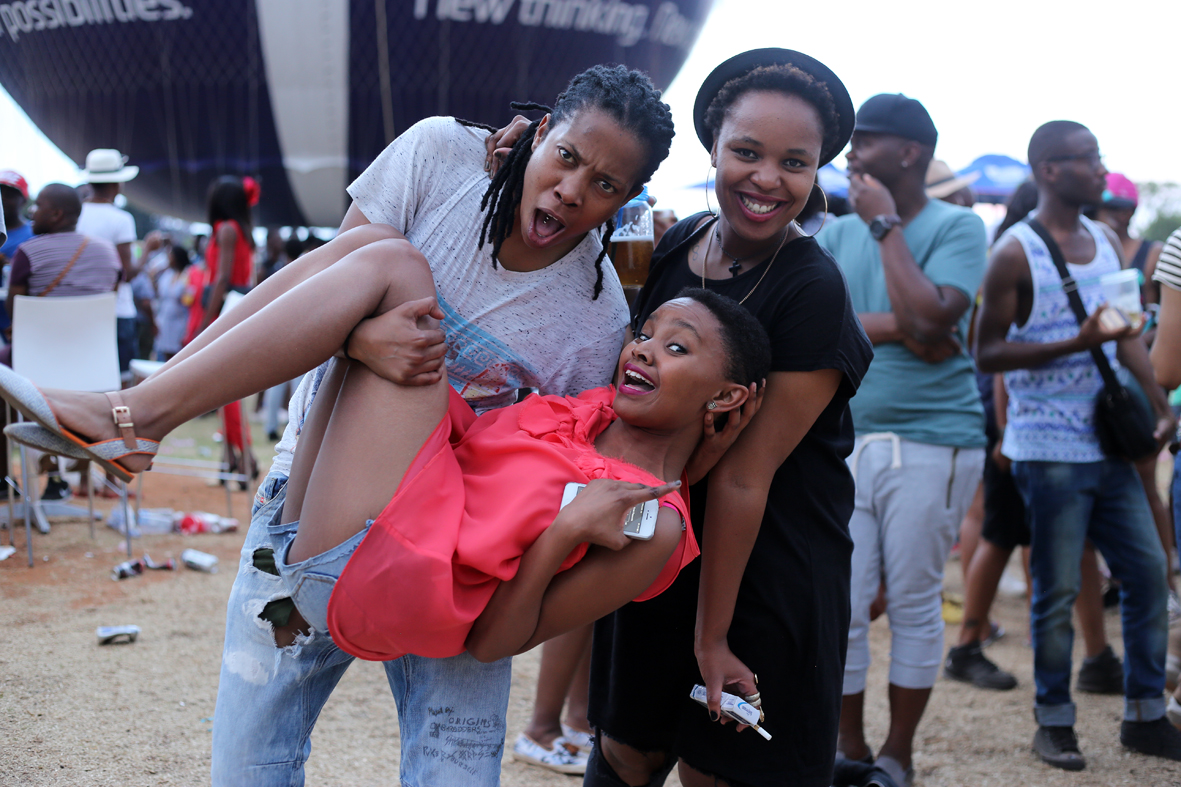
 SlyPod with friends at Sandton Pride…








 inkanyiso.org
2014 Oct. 22: Paris meets Aurora Young Female Photographers
by Thobe Gumede
It is Tuesday, 21st Oct. 2014 in the afternoon at Aurora GHS where guest speakers come and share expertise with young photographers.
The interaction started with a traditional icebreaker, a good meal, brought by the visitor for the photography learners at Aurora Girls High School. The learners had been waiting in anticipation to meet the guest speaker of the day, Veronica Noseda, a member of Equipe Les Dégommeuses, Paris, France.
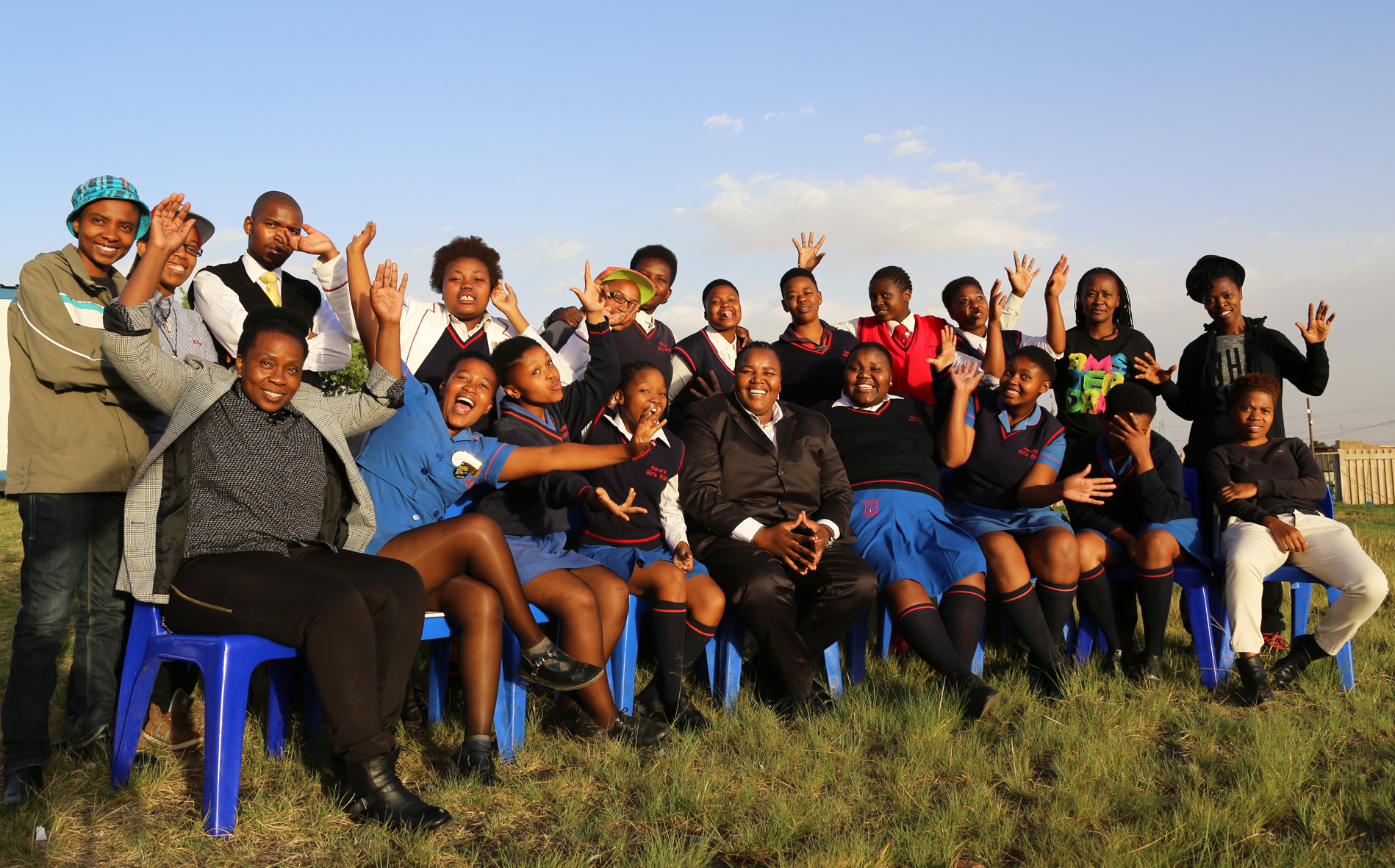
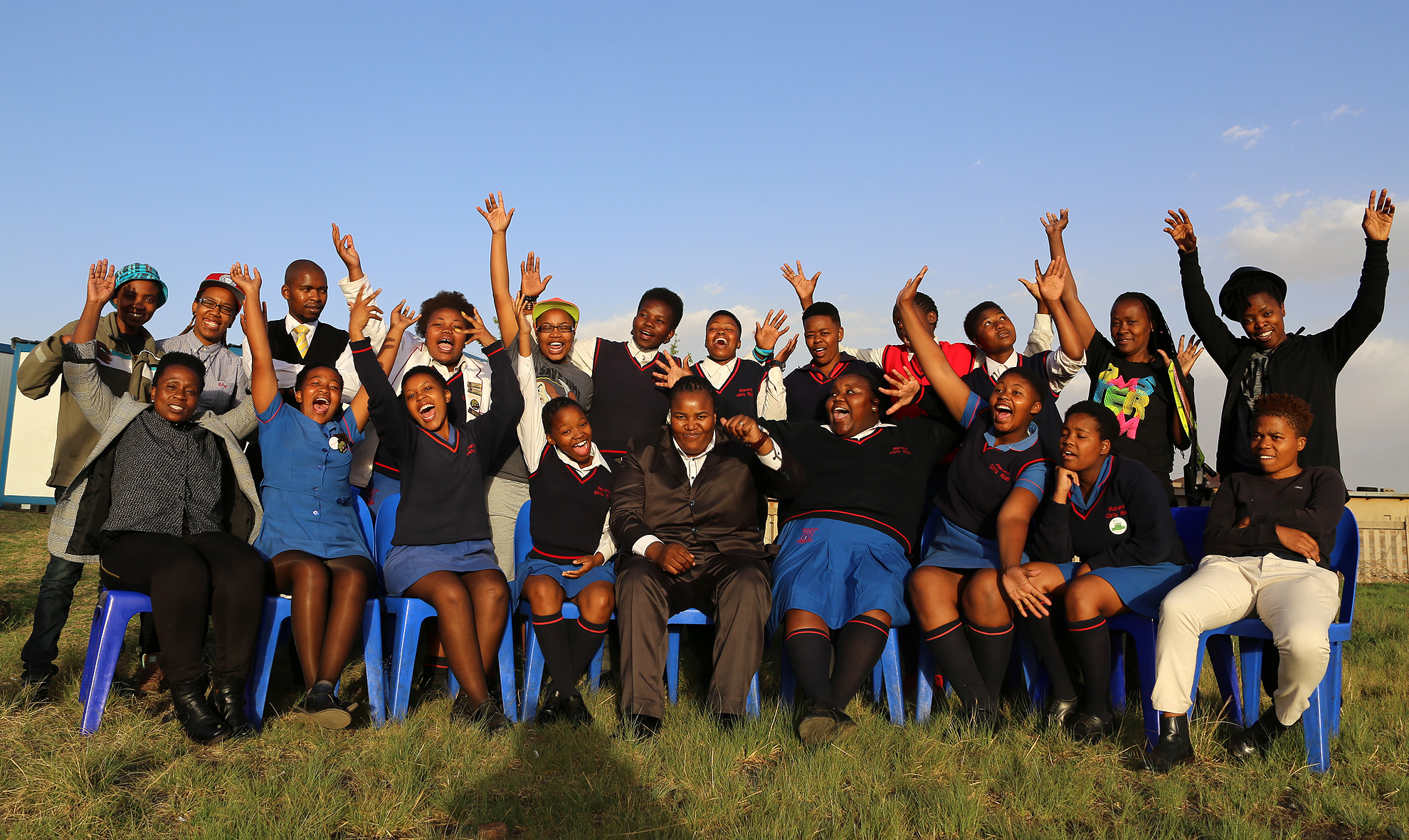
The AGHS PhotoXP learners after guest speaking session.
© Lerato Dumse (2014)
Introductions were in order and the learners were happy to hear that Veronica was impressed with their work. She liked the fact that the learners have their personal perspectives and own realities’ which is priceless and is a great start to being good photographers, writers or filmmakers.
They were both excited and shy to introduce themselves until the journalist, soccer player and activist introduced herself to the students, and later emphasized that, that’s how the learners should also introduce themselves wherever they are, clear, loud and proud.
Veronica shared with them that she spent the past 15 years living in France and it is during these years that she met Zanele Muholi, a South African activist and a photographer who initiated the meeting, and worked with her on a number of projects including the documentary which was screened minutes later.
The documentary titled “Foot for Love” by Equipe Les Dégommeuses was screened at Aurora Girls High School for the 2014 PhotoXP learners was produced during the 2012 Paris Pride week in France.
It tells the story of trip that Thokozani Football Club (TFC) took and how they spent their time in Paris.
The team is named after Thokozani Qwabe, a young lesbian victim of hate crime who was murdered in 2007.
The documentary played on the small screen laptop and the learners gathered closely. Veronica translated when people in the documentary spoke in French to ensure that the viewers understood what was going on.
Discussions followed after the screening, and then there were questions and answers.
Q1. How did the French audience react when they saw black South African lesbians parading on their streets?
VN Answer: The French were both welcoming and curious and some of them joined in after they find out what the parade was about.
Q2. Did you get support from the community?
Answer: Yes, the community showed great support and they were extremely happy to march and sing with the Thokozani Football Team.
Q3. What challenges did you face when you edited the documentary?
VN Answer: There weren’t that many challenges other than technical problems of which were overcome easily since it was a collective project, the documentary cost nothing and some of the people volunteered with their skills and some provided their video footage.
Sometimes we would post on facebook to ask for assistance with fixing technical challenges that were beyond us.
Q4. What is your organization doing for the Thokozani Football Club?
VN: Our organization worked with Thokozani Football Club to show solidarity and visibility of black South African lesbians at the height of hate crimes in South Africa. This was to show the realities of what is currently going on in SA which is not seen on mainstream television in France.
Q#5. How different or similar is the lesbian scene in France compared to the South African lesbians?
VN: We don’t know about hate crimes but some of us are also discriminated against and face a lot of homophobia as well.
Veronica went on to explain that the visual part of the documentary was to start conversations about human rights issues such as women’s rights to equality, homosexuality and so forth.
She also stressed to the learners that everything is interesting, explaining to them how important it is to observe things that happen around them, and encouraging them to take more photos and videos.
A follow up documentary titled Team Spirit was produced and directed by Thembela ‘Terra’ Dick which focuses on the lives of some TFC soccer players back in Umlazi township, Durban.
It was premiered at IFAS, Johannesburg during the International Day Against Homophobia (IDAHO).
Related articles
2014 Oct. 16: The lawyer in the classroom
and
Previous links
2014 Oct.: Long trip to Cape Town from Johannesburg
and
2014 Oct. 7: Robbed while shooting
and
2014 Sept. 30: “I truly love Cape Town”
and
2014 Aug. 30: Insightful analysis from the guest speaker
and
2014 Aug. 30: Young aspiring photographers experimenting lithography
and
2014 Aug. 28: Fine Artists on importance of being creative
and
2014 Aug.1: InterGenerational conversation with current and future stars
and
2014 July 16: Through the eyes of young women photographers
and
2014 July 12: From Soweto to Paris for the love of photography
and
2014 July 13: “Give children cameras not candies”