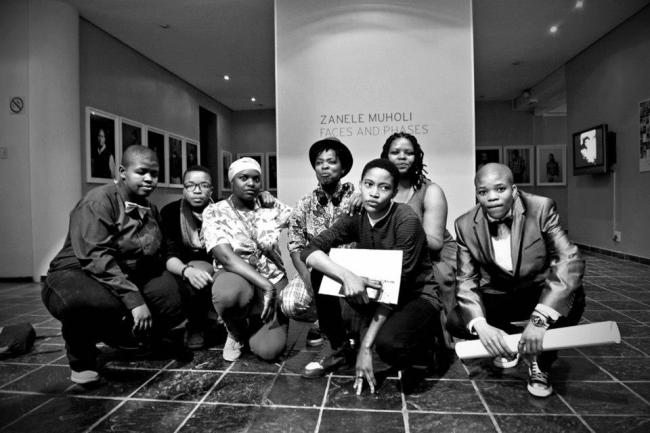
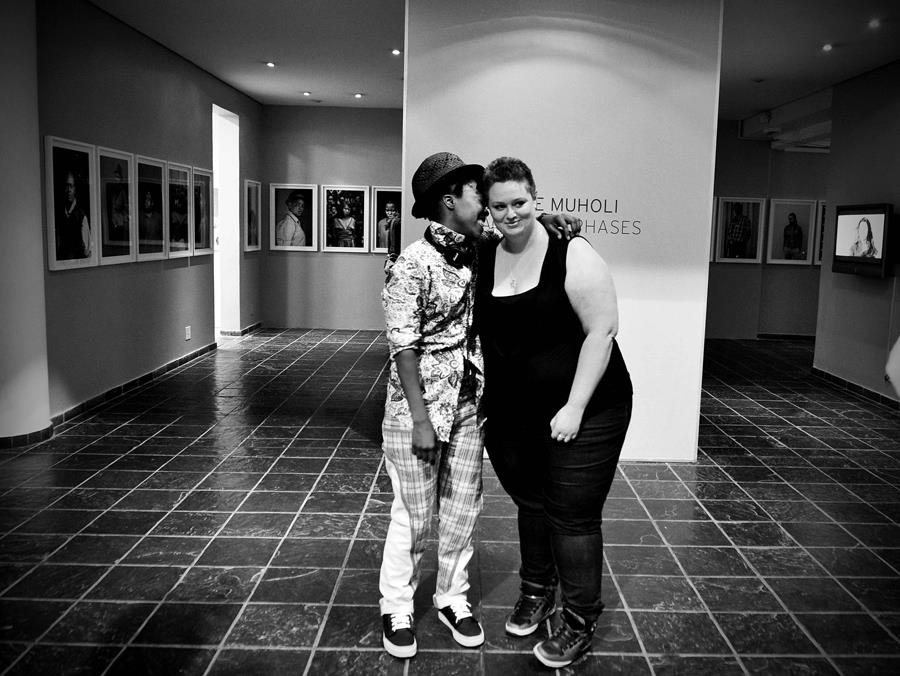
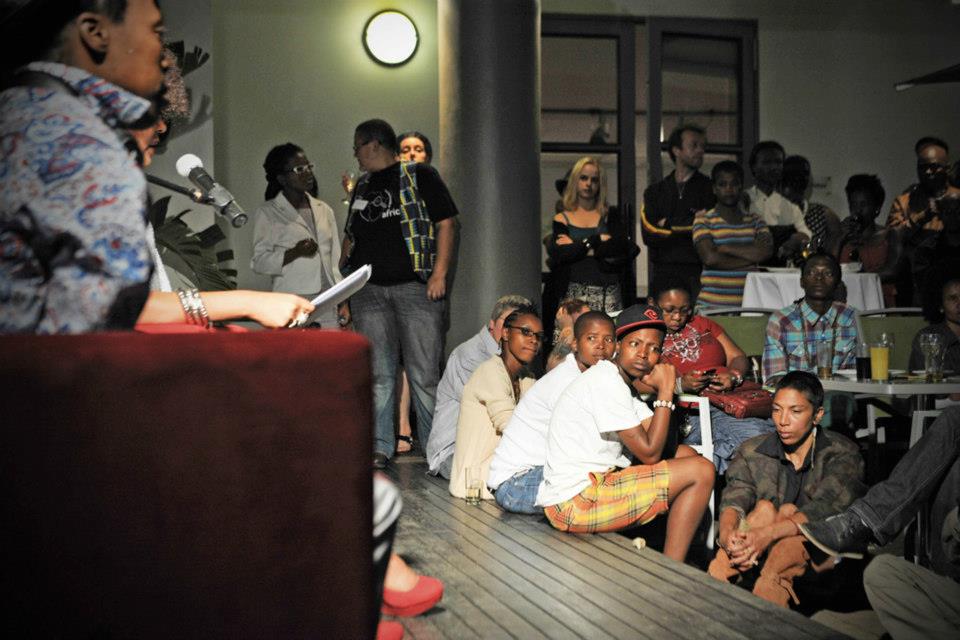
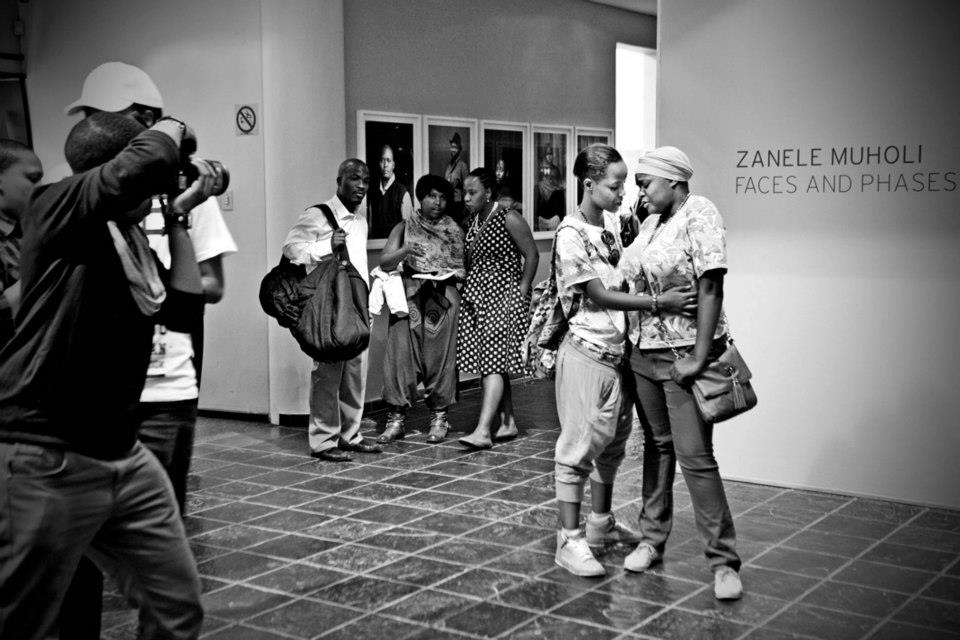
2014 July 12: From Soweto to Paris for the love of photography


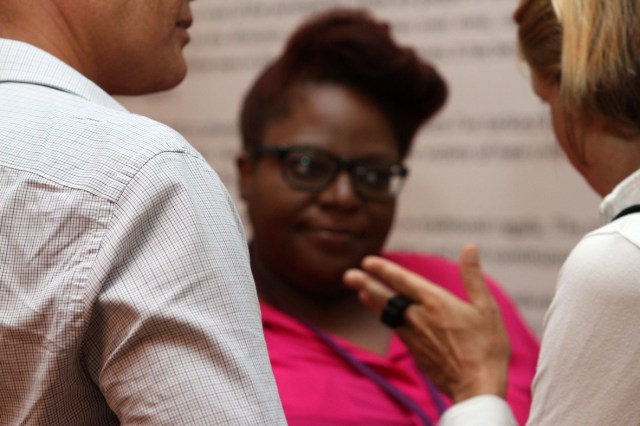
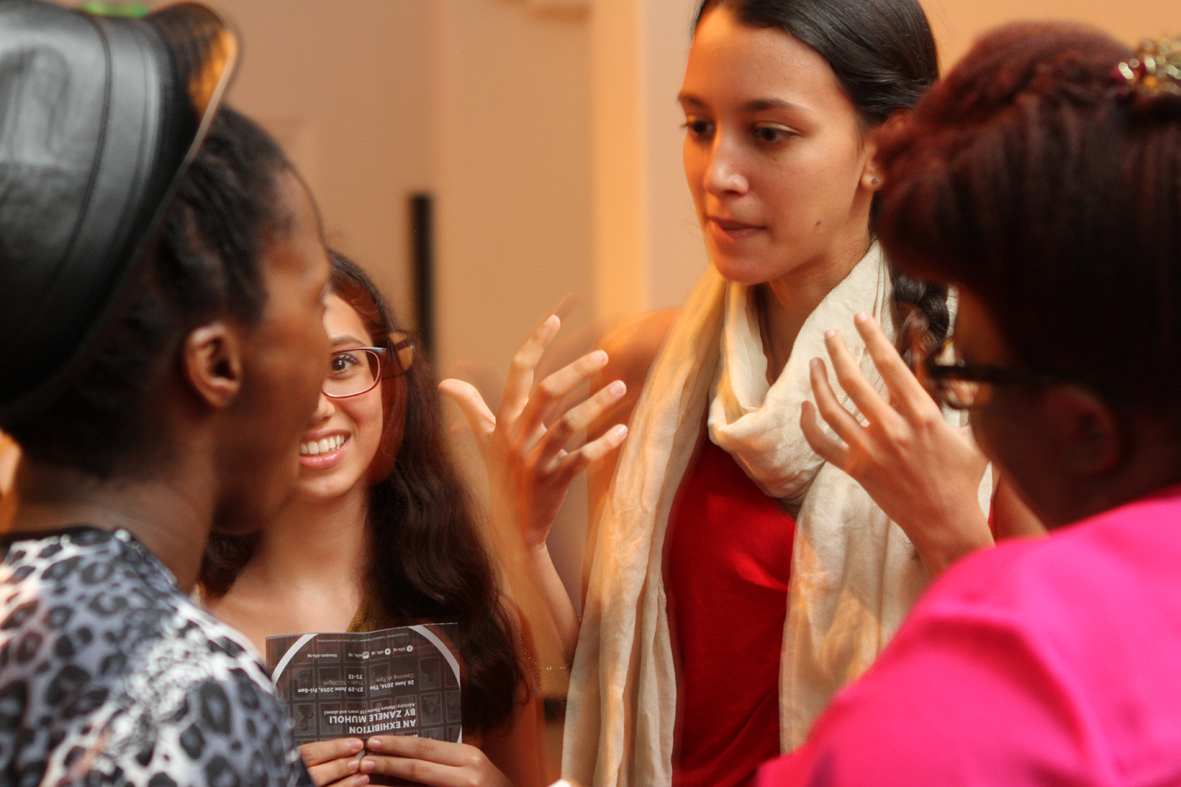
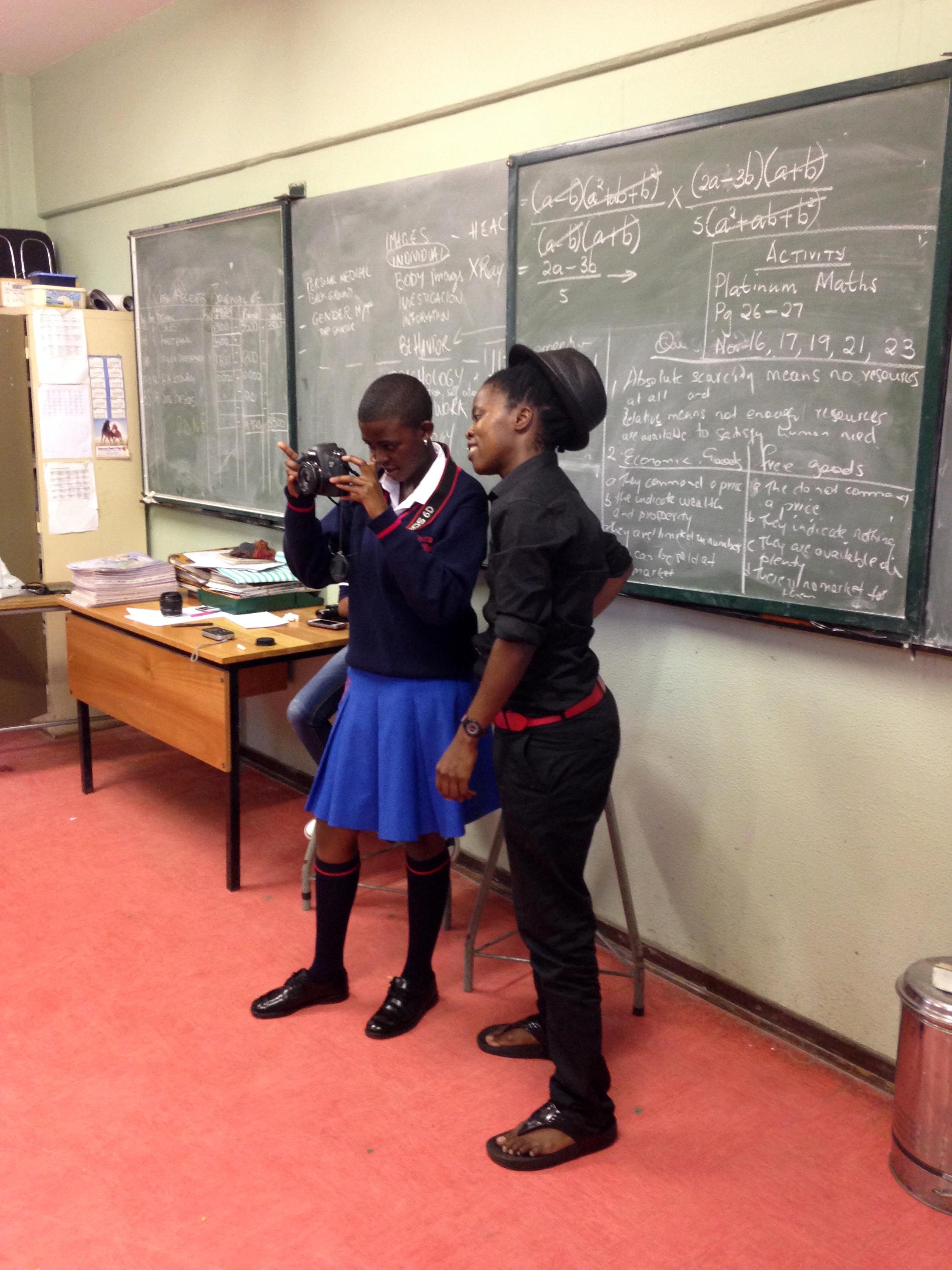
Teaching photography to young women at Aurora Girls High school
with my 3 collaborators/ facilitators: Lindeka Qampi (SA photographer and activist), Linda Mankazana (SA educator and activist) and Valerie Thomas (French physician and activist).
We started the visual project in February 2014 at Aurora Girls High School.
The participating learners’ age group (13 – 20).

Our major goal is to have photography introduced as a course at township schools in South Africa. AGHS is our pilot project. We will host a conference on Young Women and Visual Activism where an exhibition featuring mainly the students photographs will be on show. We wish to have a publication to mark this project.

So far the project is not funded by any donor, Muholi pays for equipment, field trips and compensates the main facilitator for her time. She regards this visual project as part of her social responsibility.

Photo Experience (PhotoXP) was founded by Muholi in 2004 and more than 50 black women have been trained in Basic Photography skills.
 

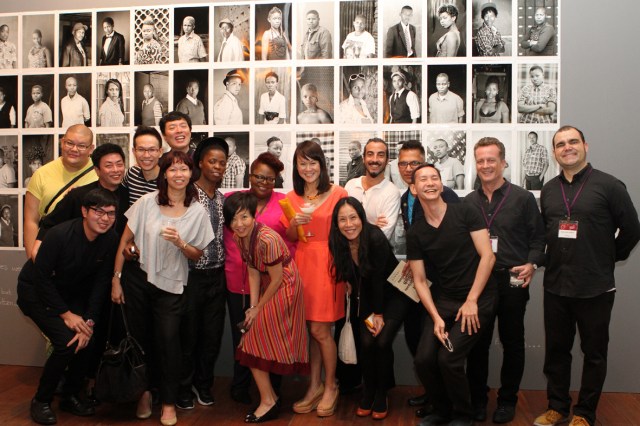
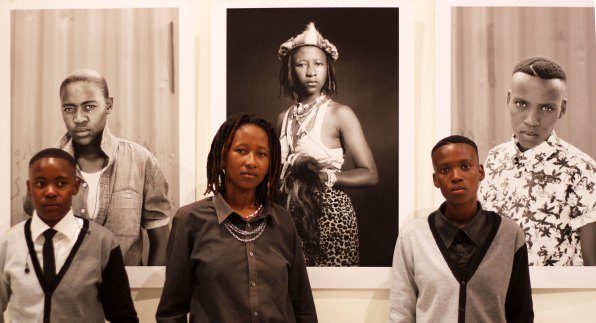
2014 PhotoXP group photo_0557


2014 April 16:  Our photography facilitator Lindeka Qampi at the centre with our photography learners at Aurora Girls High school, Soweto.


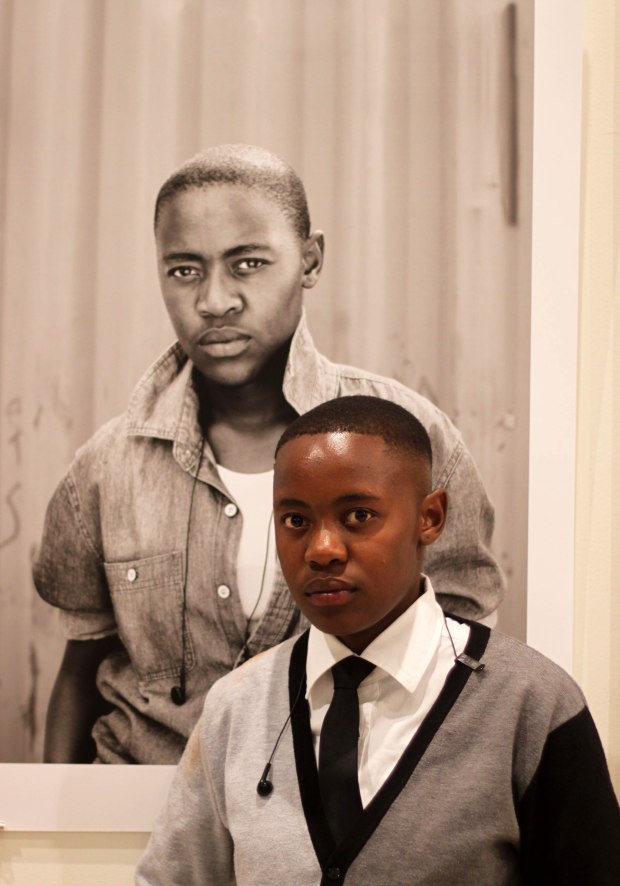
2014-02-21 14.23.11

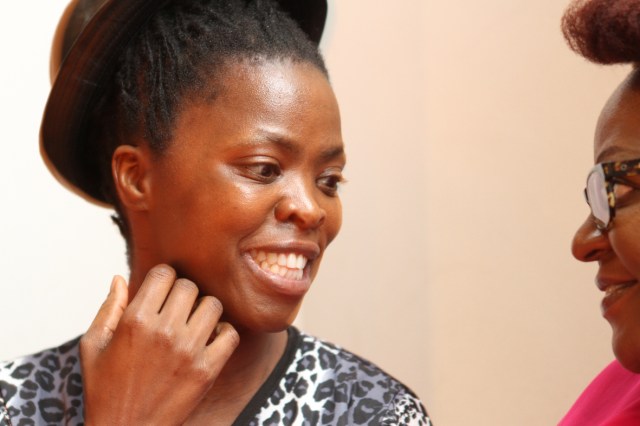
2014 Feb. 17: Photo XP facilitator and founder, Zanele Muholi with one of the young learners at AGHS


linda lindeka valerie_2933


2014 July 2: Our beautiful and brilliant facilitators outside French Institute, Paris.L-R:  Lindeka Qampi, Linda Mankazana and Valerie Thomas.
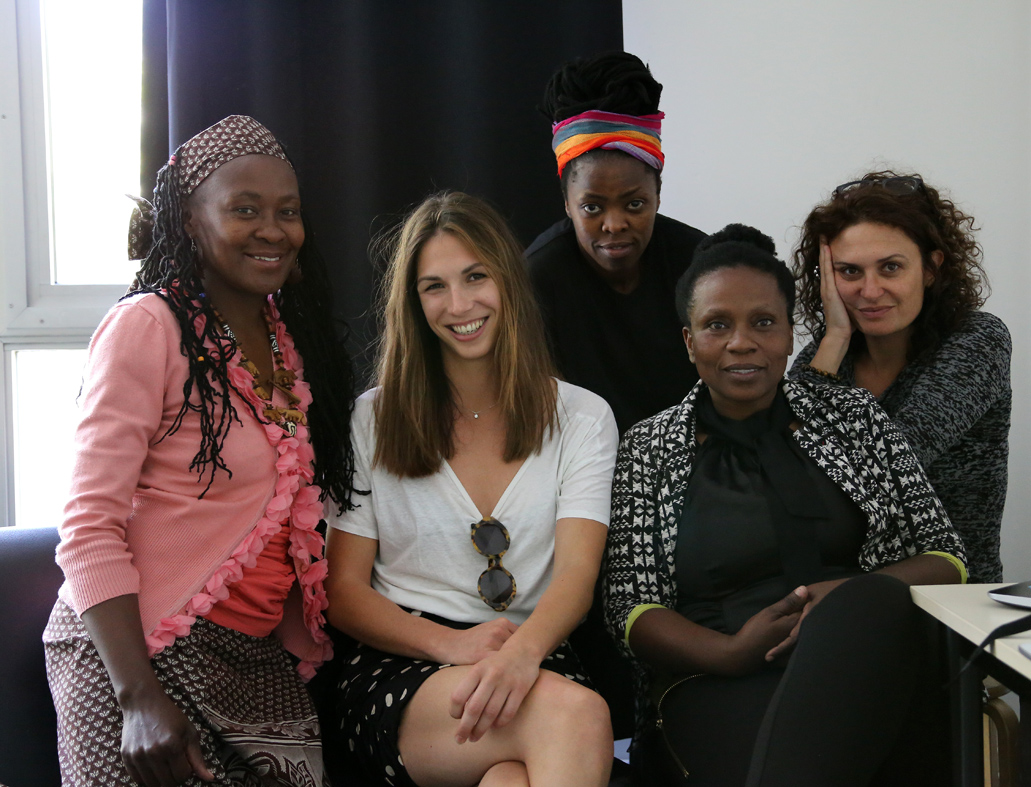
 

2014 PhotoXP Linda Lorraine Muholi Lindeka Valerie _2912

2014 July 2:
…with Lorraine Gobin of RubisMecenat at Zanele Muholi’s studio – Cite Des Arts in Paris.


2014 July 4 PxP Crew with Sandra & Camilla in PARIS_3362


2014 July 3: At the back Linda & Valerie (at the back) with Sandra & Camilla (front) looking at Lindeka Qampi’s presenting Aurora visual project.


2014 July 5 Valerie Linda Camilla Lindeka Sandra_3379

2014 July 5: … at Muholi’s art residency studio, Cite Des Arts in Paris, France.
with Sandra Terdjman and Camilla of Council (an agency for artistic researches) 
L-R: … with Valerie,  Linda,  Camilla,  Lindeka,  Sandra and Muholi in front.
Self timed photo captured by Zanele Muholi with Canon 6D.


Linda Nathalie Muholi Lindeka Valerie-1


2014 July 5:  After our meeting and presentation
 at Muholi’s art residency studio, Cite Des Arts in Paris, France.
… with filmmakers from Chromatic Existences – Valerie Urrea and Nathalie Masduraud, who recently launched a documentary on South African photographers.

L-R:  Linda,  Nathalie, Muholi, Lindeka and Valerie Urrea.
Self timed photo captured by Zanele Muholi with Canon 6D.


2014 July 5 Muholi LINDEKA Manu Piet LINDA Valerie in Bondy PARIS_9781-1

2014 July 5:  After dinner in Bondy, Paris. France
Our last meeting was with the physician Emmanuelle Piet, director or the Collectif feministe contre le viol and in charge of the PMI organization in Seine-Saint-Denis for the conseil general. She has just launched a campaign against incest in France.
We discussed with her the possibilities of extending the PhotoXP in Seine-Saint-Denis.

The 2014 Cite Des Art Residency in Paris, has given me more than a chance to create but to network with many creative/brilliant minds and also to further my collaborative strategies.

_______________


Origins of the concept

In June 2004, Zanele Muholi started teaching photography skills to black youth and women under the Photo XP banner while she was a photo-journalist and webmaster at Behind the Mask.
WomensNet provided a space for the resulting exhibition during their Gender Stats launch at Museum Africa for Women’s Month that year.

In July 2004, Zanele trained women in Ngotshe, in the Eastern part of KwaZulu Natal, with the support of the Market Photography Workshop. The third Photo XP took place in 2006 under the auspices of Forum for the Empowerment of Women (FEW), of which Zanele is a co-founder.
FEW’s 2007 calendar was the primary output.
The next was in 2008, with Lulekisizwe black lesbian youth from Gugulethu and Nyanga townships in Cape Town.

In 2009 was commissioned by Triangle Project to train young black lesbians photography for research, themed Ndim’Lo. The participants came from various township of Cape Town. A book for research was realized from that experience.
In 2011 – 2012 worked with FreeGender, a black lesbian organisation based in Khayelitsha and the experience was themed Ikhaya.
I co-facilitated the project with Lindeka Qampi who is currently working with us in 2014 PhotoXP.
We partnered with  with Greatmore studios and  exhibition took place at their premises, Woodstock, Cape Town in May 2012.
The Photo XPs are thematized like Indawo Yami – My Place, since the central idea was for participants to capture everyday images from their immediate environment.
The previous projects included field trips where participants were exposed to gendered mainstream sites, corporate boardrooms, museums, galleries and archives.
The overall objective of the Photo Experience Project is to continuously promote and support the self-production of photographs that will trace, document, and preserve black, female, lesbian and queer existences within the South Africa social and cultural landscapes.

So with this visual literacy initiative, the idea is to increase women’s participation in Photography so that they learn about South African history and rewrite their own as a way of celebrating 20 years of Democracy in South Africa.
Siyafundisana (meaning we are teaching/ learning from each other) aims to embrace the question of women’s empowerment, by giving participants a platform to talk about their lives – how they are being raised and educated in Soweto and beyond – through the production of their own images of their daily lived realities.


3.         PROJECT DESCRIPTION

This pilot project was started in February 2014. Ten students who showed interest in visual media and journalism were identified. Capturing images of their daily life became a long journey of storytelling. They have explored many aspects of their reality, documenting, among other things: the challenges of the environment including poverty, sexual abuse and rape, teenage pregnancies, and living and aging with HIV; local history reported by the oldest witnesses of the community; sexual orientation; and tradition,

The project borrows from the conceptual and strategic approaches of previous Photo XPs,  and involves the following:


Activities:

  • Provision of cameras and other production equipment
  • Training in photography, film-making and related skills
  • Train the learners interviewing skills before the photograph is taken
  • Assignment of areas and/or events for trainees to document, with a focus on their own communities
  • Field trips
  • Guest workshops and discussions facilitated by subject matter experts
  • Coaching and mentoring
  • Paid assignments
  • Dissemination of trainees’ works through online portals, live events and self-produced publications

The subjects being covered in the pilot include school activities, social landscapes, daily experiences in the communities where they live, and the activities and portraits of family members and friends.


Objectives:

  • To train ten learners in photography, creative writing and basic entrepreneurial skills
  • To enhance the number of black women photographers in South Africa
  • To encourage them to document their daily realities, produce visual materials that speak the truths, have the final production exhibited and published in various publications: book, journals, magazines, etc.
  • To empower the learners regarding their needs, career choices and personal expectations in life
  • To open a visual space for them to address their education, safety, freedom of expression, sexuality and health-related concerns
  • To conscientize the participants on gender-based violence and health related issues
  • To use visual media as a priceless way of understanding adolescents’ knowledge and perceptions
  • To provide participants with the opportunity to question mainstream media representations of them
  • To increase young women’s participation in photography
  • To introduce a different approach to life skills training

Expected outcomes:

The project facilitators play the role, not only of trainers, coaches and mentors supporting the learners to document themselves, but of archivers and documenters themselves, helping to produce a photo-history for the school and community. The following outcomes are expected:

  • Participants are equipped with skills and knowledge to make an independent living from photography
  • An exhibition of the images produced
  • Visual Activism conference with female participants
  • A publication and other photographic products

Participation

The pilot involves the following ten learners from Aurora Girls High School in Soweto:


Name & Surname Age Grade
     
Elisa Pica  (17) 10
Kamo Petlele (16) 10
Nonhlanhla Maluleka (17) 11
Mthabiseni Mbhele (16) 11
Ntombifuthi Shabalala (16) 10
Sihle Shezi (18) 11
Sindisiwe Ncube (18) 12
Thando Methane (17) 12
Thobekile Zwane (20) 11
Tsiiseleretso Machuisa (18) 11


Photographs taken by Aurora Girls High learners will follow…


Posted in About PhotoXP, Aurora Girls High School, Commitment, Committed, Communication strategies, Community Mobilizing, Community outreach, Community work, Conference, Connected souls, Connections, Cultural activists, Emotional support, Empowerment, Exhibition, Freedom of being, French is a language, Guest speakers, I-N-K-A-N-Y-I-S-O, Invisibility, Know Your SA Queer History, Knowledge, Lack of Resources, Lack of sponsorship, Language, Lessons learnt, Life Stories, Lindeka Qampi, Love, Love is a human right, Mainstream media, Media works, Memory, Open relationships, Participants, Penetrating mainstream spaces, Photo Expressions, photographers, Photographs, Photography as a therapy, Political Art, Politics of existence, Politics of representation, Power of the Arts, Power of the Voice, Presentations, Professional black lesbians in South Africa, Professionals, Proud lesbian, Publication, Queer & Straights, Queer Power, Questioning, Questions & Answers, Readers, Readings, ReClaim Your Activism, Recognition, Records and histories, Response, Social responsibility, South African struggle, South African townships, South African Visual Activism, Soweto, Speaking for ourselves, Students, Subject of Art, Support, Supported by French Institut - Johannesburg/ Paris, Supporting each other, Uncategorized, Valerie Thomas on 2014 Photo XP, Visual Language, Visual narratives, Visual Power, Visual Voices, Visualizing public spaces, We Are You, We Care, We Love Photography, Writing is a Right, Young Black Women and Photography, young women, Young Women and Visual Activism, Youth voices, Zulu is a South African language | 18 Comments

2014 July 4: Craddock Chronicles

by Christie van Zyl

 
It never takes long to see, feel or believe; but it always takes forever to act towards trying to heal our nation.
I am in the middle of the Karoo desert, in a small town called Craddock, in the Eastern Cape province of South Africa. I am currently experiencing the epitome of a failing democracy, 20 years in but here I stand in the darkest pits of social and mental poverty. A society with no sense of value or self-worth, only a deadly fighting instinct to bring another down, so as to stay at the top – survival of the fittest they say; a lucky few get to choose the flight instinct and have a chance at a better life.

 
A ritualistic norm here in this small, still white dominated town, for the clenches of evil to be their only escape from stagnancy. I have seen and heard it all – rape, drugs, gangsterism, bewitching, fraud and regular accounts of violent outbursts and murder for petty squabbles over alcohol and territorialism; all in the attempt to attain power and maintain survival. The malice is as regular as human breathe, it is heavy, hot, and dense. I find myself restless as it breathes itself down my neck and finds refuge on my shoulders. Home of the Craddock Four – Matthew Goniwe, Fort Calata, Sparrow Mkhonto, Sicelo Mhlauli; our very own struggle heroes, yet it is crystal clear that their struggles for freedom have still not touched their own home grounds.

 
I can speak tirelessly of the tragic living circumstances of Craddock, but am most fazed by the hate crime pandemic – corrective rape, that is only recently trending here. It feels as though there is a deep, dark and dominant spirit inhabiting the beings of young men in their late teens and early twenties, which are hell-bent on marking their territory upon the cultural order of gender roles. They’re so brainwashed into believing women are objects of their pleasure and comfort, to the point that they no longer even see value in building relationships but prey on vulnerable, drunk and the abuse of lesbian women for sexual pleasure and then ‘wam-bam thank you mam’, the cycle continues with this man feeling like a conqueror of owning you.


Herein lies the saddest custom that has been adopted by the men of this town – the befriending of lesbians, buying them alcohol on a ‘boys night out’’. At the end of the night/wee hours of the morning forcing the women to sleep with them as a ‘reward ’for all the alcohol they bought them through the night. I quote ‘Awucingi usele ubtywala bam ubsuku bonke, ndingakuwini’, meaning that ‘you dare not think you can drink my alcohol all night and I not win you over’- winning a woman over in this context referring to having sex with them. They would take it one step further and make snide remarks about how much you are not a man, questioning how you think you can drink and hang out with men and expect to not sexually arouse them ‘ekugqibeleni ungumfazi, ndzakubonisa ukuba ungumfazi’ (in the end you are a woman, I will show you that you are a woman) – as that is what is biologically intended between a man and woman with no discourse; comments about how much you are not a man and how much they wonder what makes you think you are a man; taking it further saying that they will show you exactly what a man can do that you as a lesbian cannot do and then proceed to rape you and boast to the community that you are, there-after, their woman.

 
It makes me shudder to my soul to think that there are lesbians out here that have resorted to closet lesbianism; either being born again – which comes with the expectation of one automatically turning to heterosexual ways; or apparent bisexuality – where a lesbian would have a boyfriend/baby daddy or male sex-buddy just to be able to protect their lives and not be attacked or disowned by their families/communities, for their love of a woman. I reflect to myself about how ungrateful I have been, living in a first world city like Cape Town and complaining about being a minority in the gay capital of South Africa. Then also I realized that I am only safe in our hate crime ridden townships because my physical appearance does not make my sexual orientation obvious, I fear heavily for the butch and tom-boy lesbians, their lives – to sick patriarchal men are like blood to vampires – for pure consumption. It is a life threatening choice to stand steady in your orientation out in these parts, equal to being a gazelle amongst starved lions in the wild.

 
In the recent meeting of a young, black lesbian by the nickname X; she told me about the horrific ordeal she went through when a local male resident came up to her, held a gun to her head and told her to get into his car and if she screams, he will kill her. He then drove his vehicle out into a destitute area where he proceeded brutally beating her, saying ‘ziyandi chaphukisa itypes zenu’ – your types annoy me (referring to lesbians); she told me that he raped her and recorded the rape with his camera phone; he also proceeded to rape her in her anus and was recording that too. X says that the only way she was able to escape was by lying and saying that she is from out of town, is here just to find herself a man and is unaware of what he is talking about. She had to beg for her life by mentioning that she has two kids (one of which by the way is a product of a corrective rape as well) and he spared her life. X is currently fighting her trial with the challenge of concealed evidence of photos and videos, which her violator took whilst raping her. Her rapist is out on bail and is said to be lurking the streets showing local lesbians signs of sliding his finger across his throat – communicating that he plans to kill them.
In another household a young 19 year old black lesbian is fighting for her sanity, after surviving four counts of rape; two of which she has no recollection of because she was beaten to a pulp and left for dead. She has resorted to alcoholism to escape her thoughts and emotions, she is struggling to complete high school – stuck at grade 11 and is constantly feeling rejected at home because she is made to feel that it is her fault that she was raped, because of being lesbian. Her most recent rape was three weeks ago, she landed up in hospital unable to walk because of the severe damage she acquired to her pelvic area due to the rape. Her life is most at risk in my perspective, because she is now unable to live without being drunk all the time and is therefore vulnerable to being raped all the time, as she is constantly at taverns needing to get drunk until the wee hours of the morning – as was the case in her most recent account of rape. She is said to have episodes of blackouts in her daily living and sober state, where she experiences temporary bouts of insanity and has no recollection of her surroundings. I am unaware of her HIV status, but last heard her mention meningitis about two months ago – God be with her.


The most recent murder took place two months ago, just five minutes across the road from the house that I stay at; a middle aged, black gay man was brutally beaten, anally raped, killed and left with his bum exposed and a toilet brush shoved up his anus, which is the object that he was raped with to the point of his death. He was found the morning after and I remember trembling at hearing the community say that the field that he was found in is a location where people are regularly found beaten and raped – left for dead; or even intentionally murdered.
I keep reading through this article searching for a conclusion but I can honestly say that I am numb and frustrated by having the same questions over and over again, where is the support of the laws that are in place to protect us. I recently spoke to a friend on Facebook who had been updating statuses about her countless bouts of abuse, she said to me that she had gone to report one of her violators and the police told her that they would not process her case because it was her fault that she was raped. Now we have already come to a conclusion that cultural clauses will inevitably make an individual practice their own bias, regardless of the physical law; so we came up with a task force and now have organizations that are in place to specifically target the problem that we are facing. My question is now how come we have not reached these parts of South Africa?

 
I am certain that we all know a person of queer status in a small town out here, that definitely fears for their lives every time that they come home; so how come we are not rallying for information dissemination in order to put structures in order that can also protect those areas.
My prayer while I am here in Craddock is to bring the National Task Force and a few organizations to the attention of the state of fear that our fellow queer beings are living in, so as to provide them a support that protects their rights when they are in the predicaments of facing abuse and violation. A recent meeting was held in the light of this situation, X – the woman that is currently facing a court case about her rape gathered a group of young lesbians in the township and spoke to us about the desire to start an organization here in Craddock that provides support to lesbians whose lives are in danger. The meeting was attended by a middle aged gentleman that apparently has influence in the community; he is supposed to guide us through the process of speaking to structures of influence in the community such as the police and parents of the community. In that meeting we had established a follow up date where he would bring the heads of our influential community structures to hear our plea, so as to go further and start involving the rest of the community in the awareness of the problem we are faced with. We had that meeting two months ago; he had promised us a follow up meeting the week after the initial meeting, up until today there still has been no response from him – X has tried to be in contact with him to no avail as well.
So where do we go and what do we do to gain this assistance and support in these faraway and remote places of South Africa where gender roles are still steadfastly practised. Where are our voices?

Furthermore what are these voices do to with a lack of platform in plight of gaining assistance. We want to feel safe, protected and spoken for.
I speak of all that is negative that I see, feel and experience; so that a solution can be found towards eliminating it, and carry on speaking of them to ensure solutions that afford no compromise.

 
Let’s talk about Cradock and create some support hype around small towns with no access.
Twitter: @goddesschrissy
Facebook: Christie van Zyl


Previous by Christie


2014 Feb. 4: Newly ordained pastors of VMCI church


and


2014 Jan. 20: “Walking Corpse”


and


2013 April 11: Your kiss. Our touch. My muse

Posted in "We'll Show You You're a Woman”, bewitching, Black lesbians in remote areas in South Africa, Black Queer Professionals, Blackness, Body, Body Politics, Brainwashing, Community, Corrective rape, Craddock Four, Crea(c)tive senses, Creating awareness, Creativity, Crimes, Cultural activists, Culture, Curative rapes, discourse, Facing abuse and violation, Fraud, Gay, Heroes of our struggle, HIV status, Lesbianism, Life, National Task Force, Perception, Rapist, Relationships, Ritualistic, Sexual orientation, Society, Territorialism, tom-boy lesbians, Townships, Woman | 2 Comments

2014 July 11: Another expert in black lesbian community dies

Reflection by Tshidi Olive Legobye

I still remember when the Forum for the Empowerment of Women (FEW) started and  wanted to run LGBTi workshops in Vaal. We didn’t know where to start, but I came up with a plan and the first person came to my mind was Ausi Ouma.
I phoned her and explain the tasks we have at FEW and those tasks should be done as soon as possible. She didn’t deny the thought. She just said please do so especially for this kids who are coming up and those other lesbians who are living with hatred. It was one of the most memorable days of my life.

I phoned Donna Smith and Zanele Muholi and they were happy with those ideas and everything was possible. Arrangements were done. And Ausi Ouma offered us the space “Her House” to hold the ceremonies.
She never said NO to anything that builds LGBTi community.
Those are the kind of things that she will be remembered for – making people smile and bringing laughter in their lives.
Most of the Vaal Lesbians came out of closet for the first time at her place…her house in our presence. She was still supportive to the coming up lesbians and gays, she was so open and was also a teacher to most of the Sebokeng lesbians.
And while it’s going to be very difficult to think of this world without her, it is a happy thought knowing that wherever she is, she is only spreading happiness.

Ausi Ouma Baba Mahlabezulu

the late Ausi Ouma Baba Mahlabezulu


Baba Mahlabezulu’s house was warm and you’ll always feel at home.
There was peace and love in that house.
She taught her biological kids and Mathwasana /Sangomas to respect young and adults. And they have smiles on their face all the time.
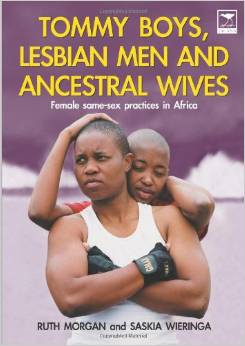
Sebokeng/Vaal/Evaton was our territory Me and Zanele Muholi. We visited many places in those areas almost every weekend and even attended sangoma ceremonies “Mokete” Zanele even contributed some of the photographs for the researched stories in Tommy Boys, Lesbian Men and Ancenstral Wives a book edited by Ruth Morgan (former GALA director) and Saskia Wieringa.


Tommy Boys book


What moves through us is a silence, a quiet sadness, a longing for one more day, one more word, one more touch, we may not understand why you left this earth so soon,
or why you left before we were ready to say good-bye, but little by little, we begin to remember not just that you died, but that you lived. And that your life gave us memories too beautiful to forget.

May her soul rest in peace.

The funeral service of Baba Mahlabezulu “Ausi Ouma” will be held at No: 13971, Ext 7, Evaton West-Graceland.
Service starts at: 8:00 – 10:00
Proceeding to cemetery at: 10:30

Posted in Ausi Ouma, “Mokete”, Baba Mahlabezulu, Black Lesbian sangomas, Came out of the closet, LGBTI community, May her soul rest in peace, Reflection, Ruth Morgan (former GALA director), Sangoma ceremony, Ubungoma, We Still Can with/out Resources, We were (t)here, When Love is a Human Right, Womanhood, Women who have sex with Women, Women's power, Women's Work, Women; Voices; Writings; Education; Traditions; Struggles; Cultures, Words, Writing is a Right, Youth voices, Zulu is a South African language | 2 Comments

2014 July 7: Inkanyiso revived the culture of reading and writing


What started as a hobby and mission to be read and recognized lead to a therapeutic process. Inkanyiso has grown from just a simple blog to a major information hub. I was thinking of how I could start an informal platform of information sharing having gained knowledge working as a reporter/photographer for the defunct Behind the Mask (www.mask.org.za).  End of January 2013, at the height of winter day in Paris at Michel Bizot, my partner’s former apartment when I created Inkanyiso blog. One of those days when I bled and suffering from period pains unable to deal with personal issues and deadlines that never ends. I juggled between wiping blood on the wooden floors and emails. In between all that commotion I bought a url for a space of visual activism and queer arts because there wasn’t any relevant site of queer media that spoke to me at that time.

Knowing me being a careless creative when driven by ideas, for logo I took an A4 sheet of white typing paper and made cut outs to spell I-N-K-A-N-Y-I-S-O. I then placed the cut outs on a green, purple, yellow and black checked scarf that I was used daily to save myself from the wintry Paris and then I took a photograph which still stand as our logo on this day on our blog.

I never anticipated the kind of support that I was about to get from contributors ranging from writers, photographers and readers. In my mind, the contributors to the blog were going to be the participants in my projects who would be writing about their lives and also allow youths to get cameras, photography their communities and write about them. There was a lot of interest and buzz around the blog as many people wanted to be part of an organization that I started but soon became a collective.


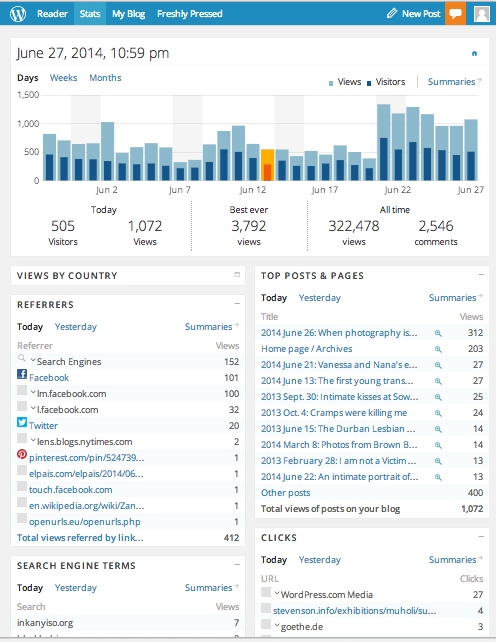
Inkanyiso stats on the 27th June 2014 @10h59

Inkanyiso stats on the 27th June 2014 @10h59


In February 2014, Inkanyiso celebrated its first anniversary of hectic blogging. By end of June 2014 we had 319 568 views. The most hits the blog received in 2013 was on sexual pleasures “A dildo is not a man, it’s a fantastic toy”
Followed by the March 2013 intimate article “I love women and they love me”.
In June 2013, we documented “The Durban Lesbian Wedding of the Year” which was most viewed and still celebrated up until this day.
Also in  2013 we covered fully the memorial service and funeral of Duduzile Zozo.
End of June 2014 mark one year since she was brutally murdered in Thokoza township.
In 2014 were on the 10th of January  with 1576 hits. We had posted Brenda Mvula’s memorial service. This indicates that Inkanyiso has become a queer contending news source. My next post will be on the most read articles since our first day of blogging.

Inkanyiso became a place where facts were not sensationalized and individuals could read and comment in a safe and like minded atmosphere without being judged on how they writes out their feelings and truths.

Our coverage has spanned five continents: Africa, Asia, Europe, North America and South America.  We have covered the following; lectures, exhibitions, weddings, funerals, pride marches and community based projects, to name a few. Most of the articles posted are in English since it is our readers’ common language. We intend to expand and have posts translated in various languages as well.
Any ordinary person is welcome to submit their work, regardless of literacy level.

It is my wish to ensure that we increase women’s part I participation in photography. It is my duty as a professional photographer and a visual activist, to share my vast knowledge and resources.  Some of the members of Inkanyiso collective have accessed spaces that they would otherwise not have been able to. Every member has camera equipment and they are encouraged to pursue their own endeavours helping them to generate their own income.  Some are studying photography at Market Photo Workshop and I am impressed by what they have produced so far. This means that the visibility of female photographers in South Africa is on the rise.

As we continue to celebrate our first anniversary of hectic blogging, I would like to give a heartfelt thank you to all who have made Inkanyiso possible, from our dedicated Inkanyiso team members, the writers, editors, photographers, videographers, poets and most importantly the readers. Without you there would be no Inkanyiso. Makwande!


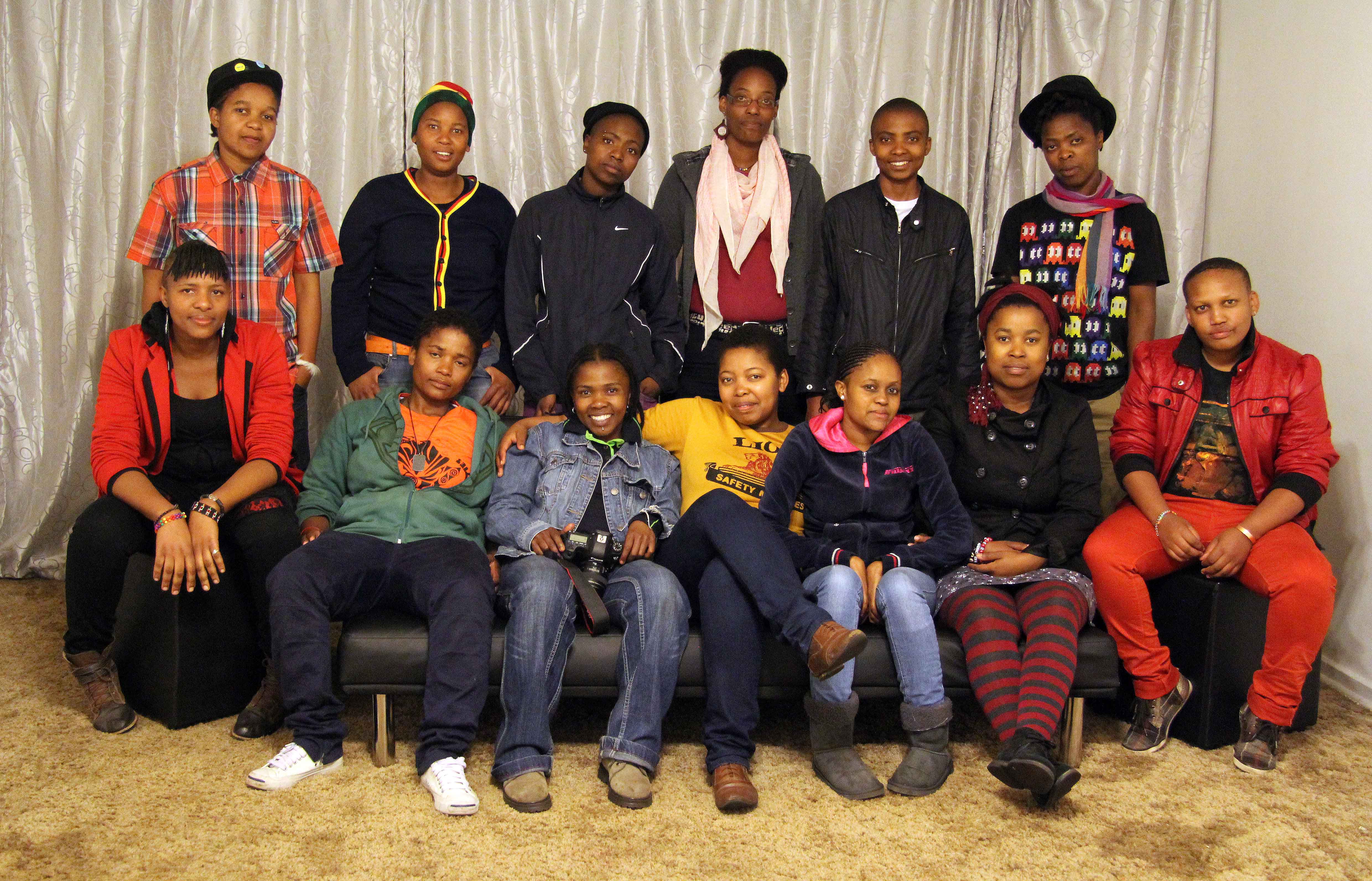
2013 May 18 Inkanyiso crew & friends_0864 2013 January, some of Inkanyiso team members and friends…
Back row:  Nqobile Zungu, Lerato, Collen, Jade, Lerato, Muholi.
Front row:  Mimi, Nqo’s friend, Penny, Nomthandazo, Kopano, Nqobile and Lesego.


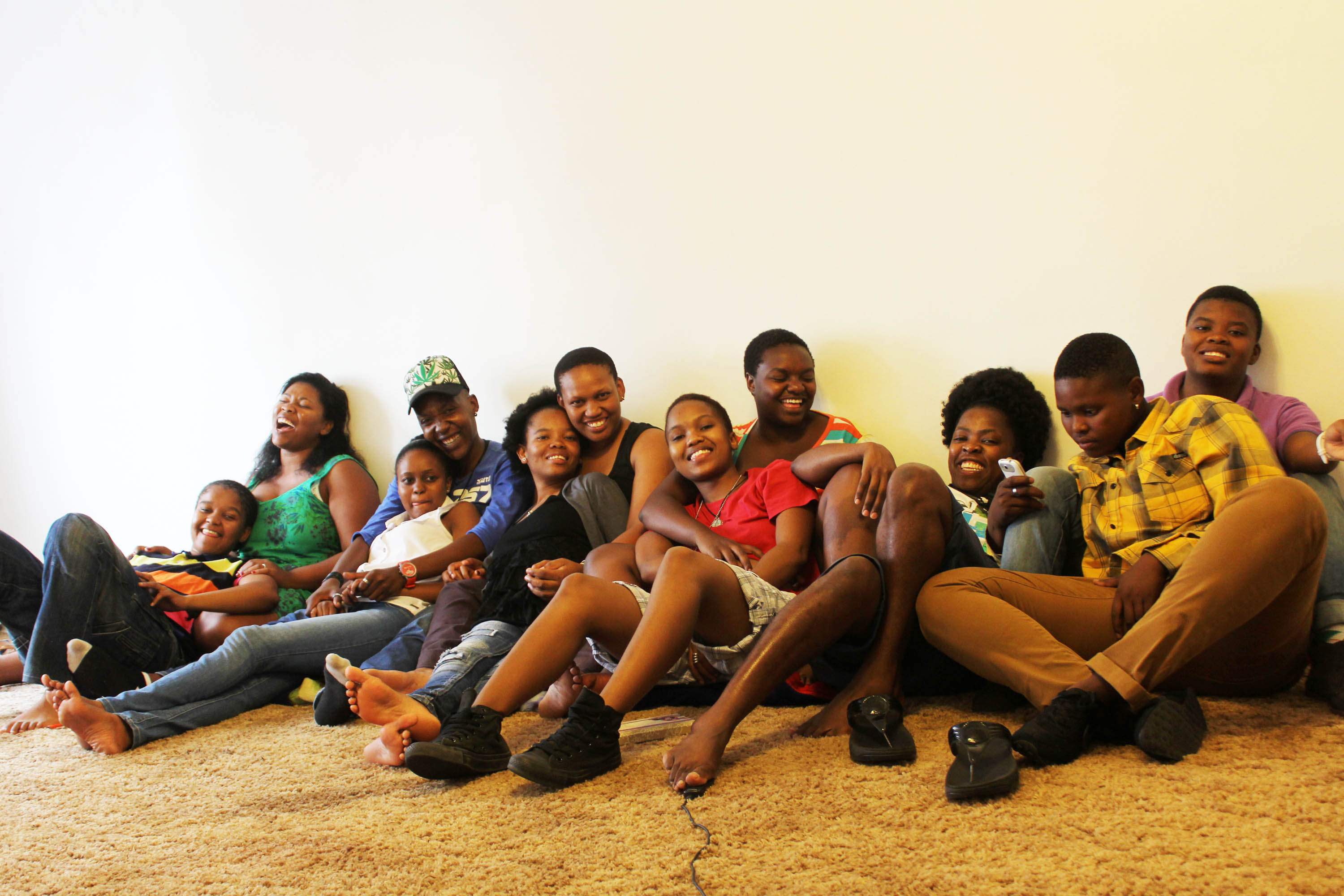
2013-02-10 14.02.43 2013 Jan. Featuring beautiful souls we met along the way… 

L-R:  Charmain & Nqobile, Zet & Kopano, Lesego & Baitiri,  Maureen & Renee, Muholi and Andiswa & Noluntu.


Posted in African Queer Beauty, Another Approach Is Possible, Archived memories, Archiving Queer Her/Histories in SA, Art Is A Human Right, Art is Queer, Articles, I-N-K-A-N-Y-I-S-O, Inkanyiso URL, Inkanyiso's first anniversary of blogging (2013 - 2014), poets, pride marches and community based projects, Publications, Queer texts, Queer visibility, Queercide, Questioning, Readers, Readings, Reflection, Relationships, revolution, Sexual minorities, Sexual orientation, Sexual Politics education in South Africa, Sexuality in South Africa, Sharing knowledge, Supporting each other, Townships, Video archiving, Videography, Visual activism, Visual history, Visual history is a Right not a luxury, Visual Language, Visual Power, Visual Voices, Visualizing public spaces, We Are You, We Care, We Love Photography, We Still Can with/out Resources, We were (t)here, Women; Voices; Writings; Education; Traditions; Struggles; Cultures, Words, Writing is a Right, Youth voices, Zulu, Zulu is a South African language | Leave a comment

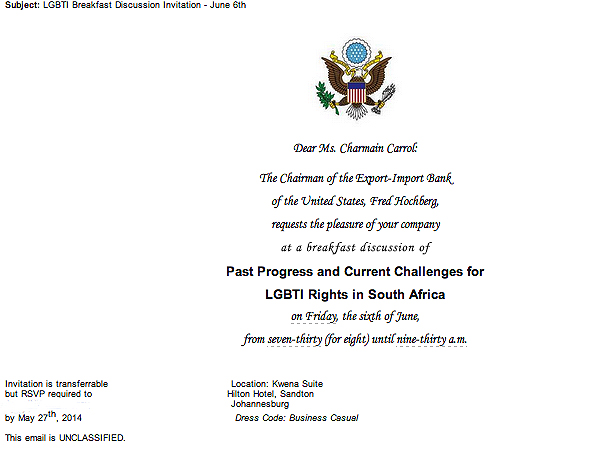
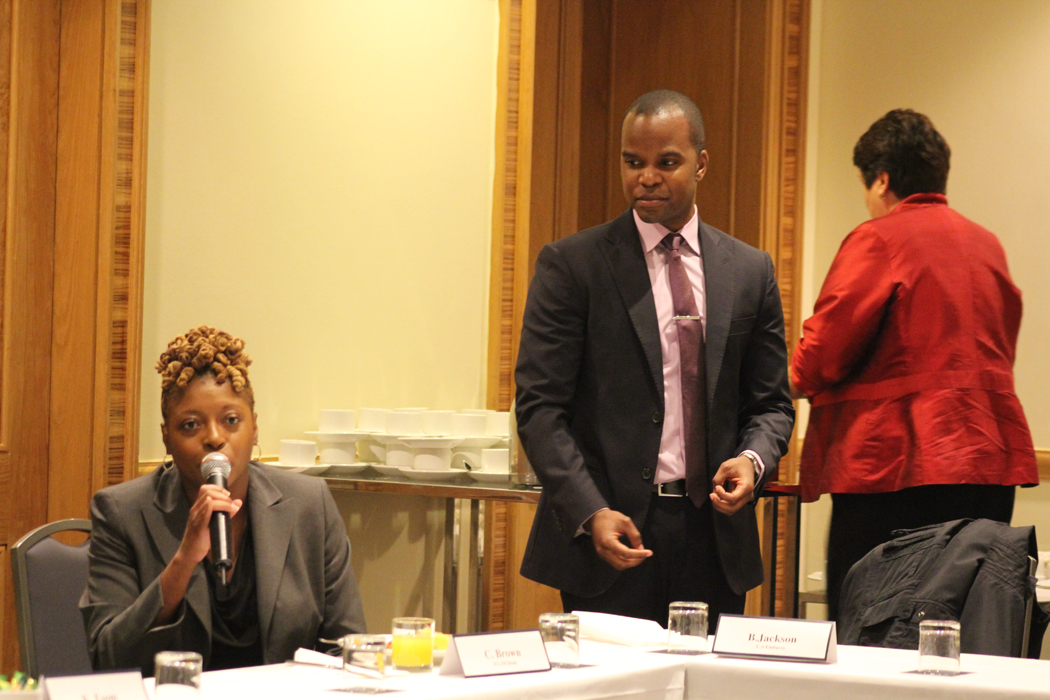
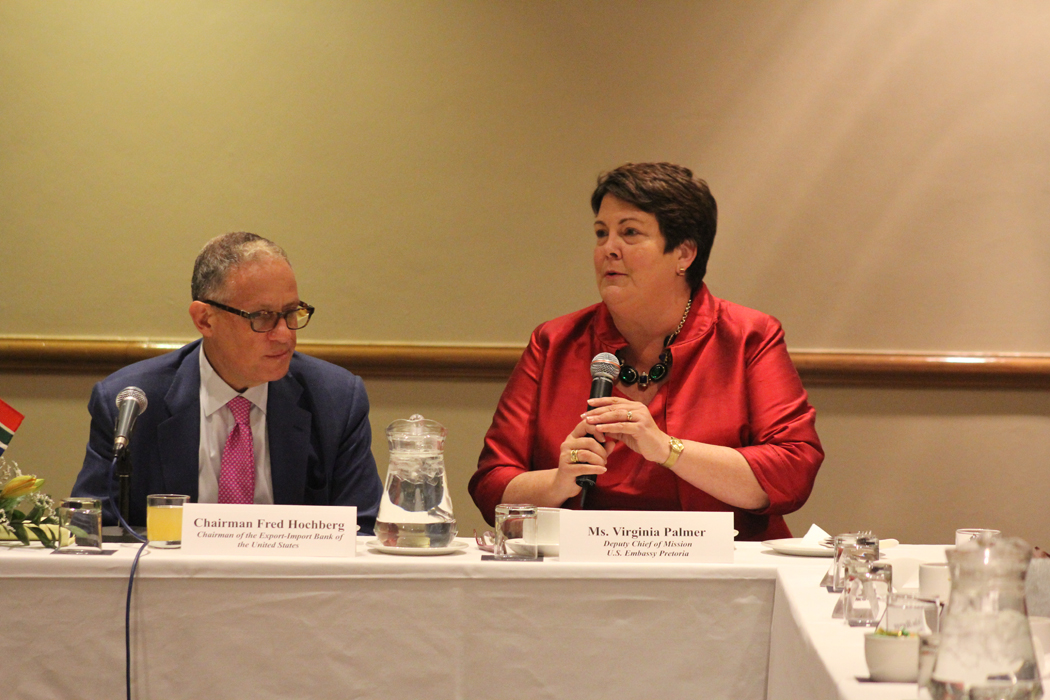
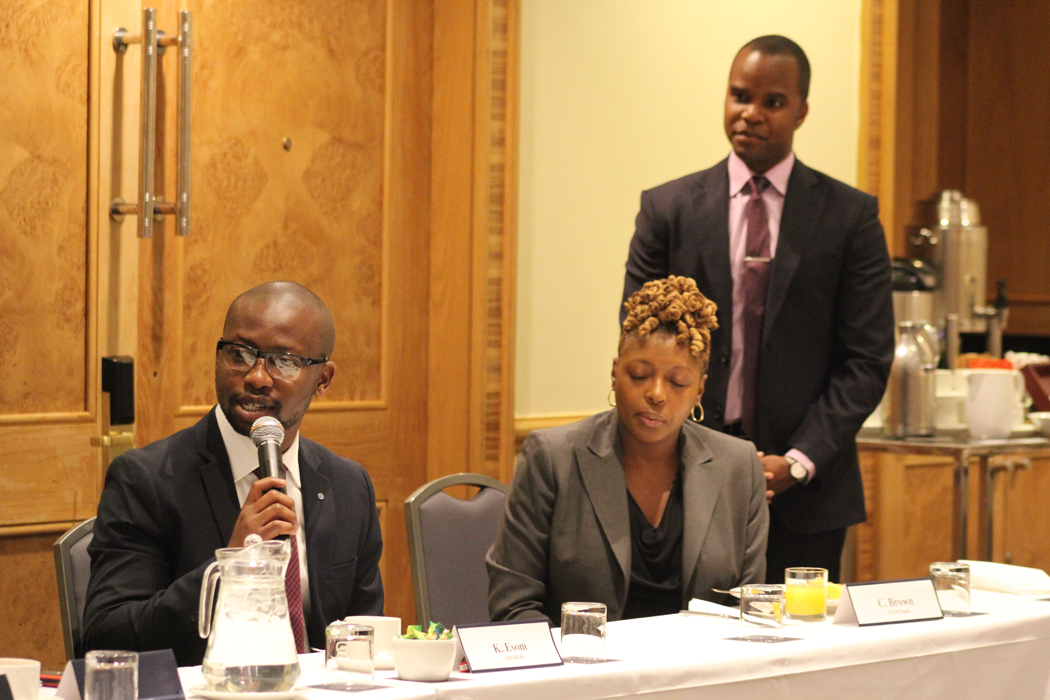
2014 June 29: Photos from LGBTI Breakfast Discussion

Image

 
When:  6th June 2014
Where:  Hilton Hotel, Sandton, Johannesburg.

Image


Image


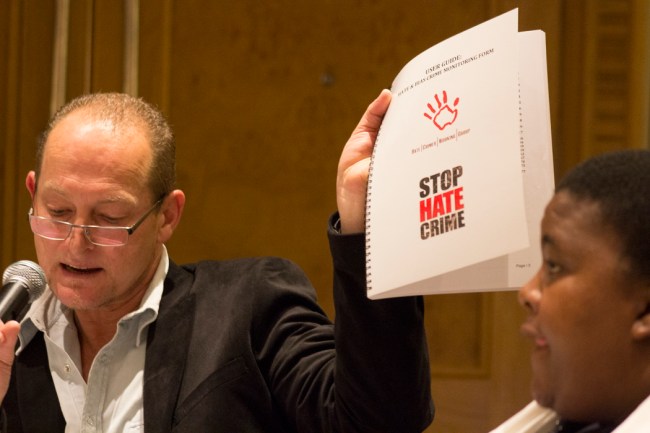
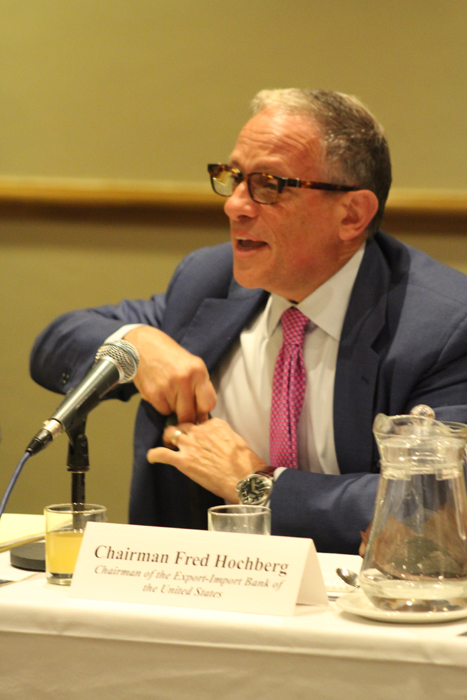
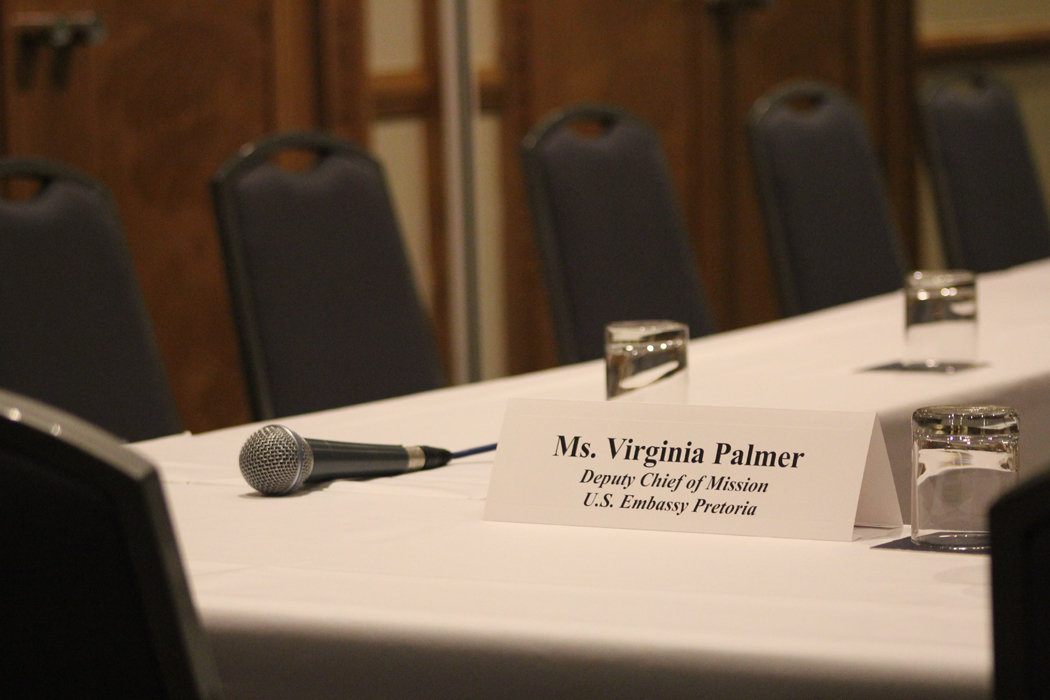
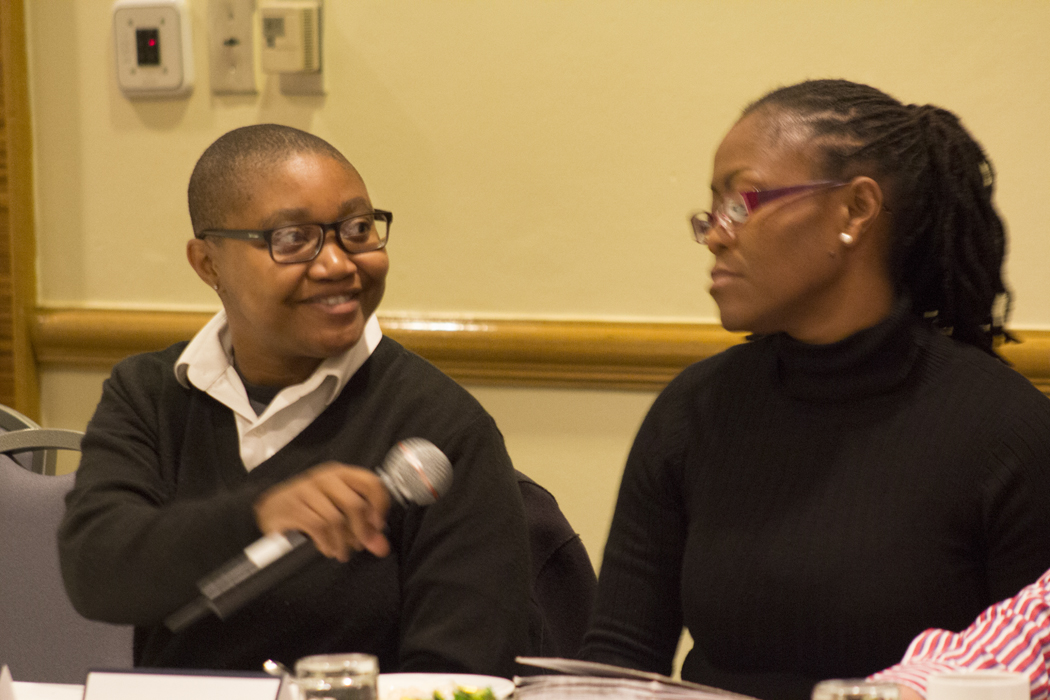
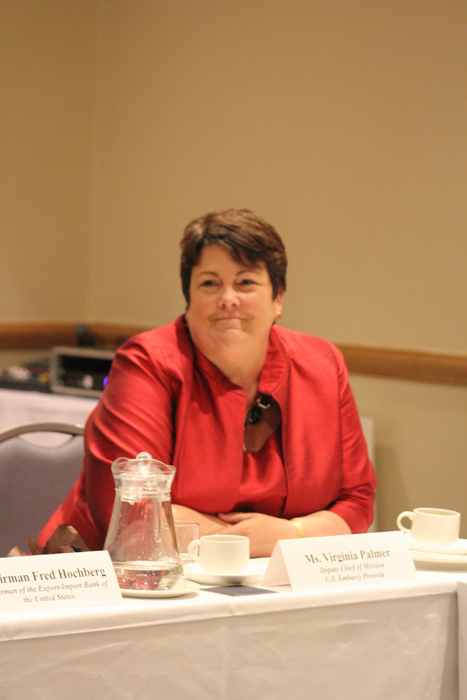
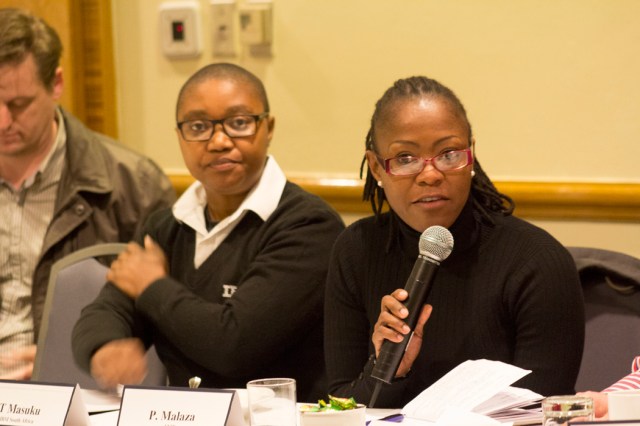
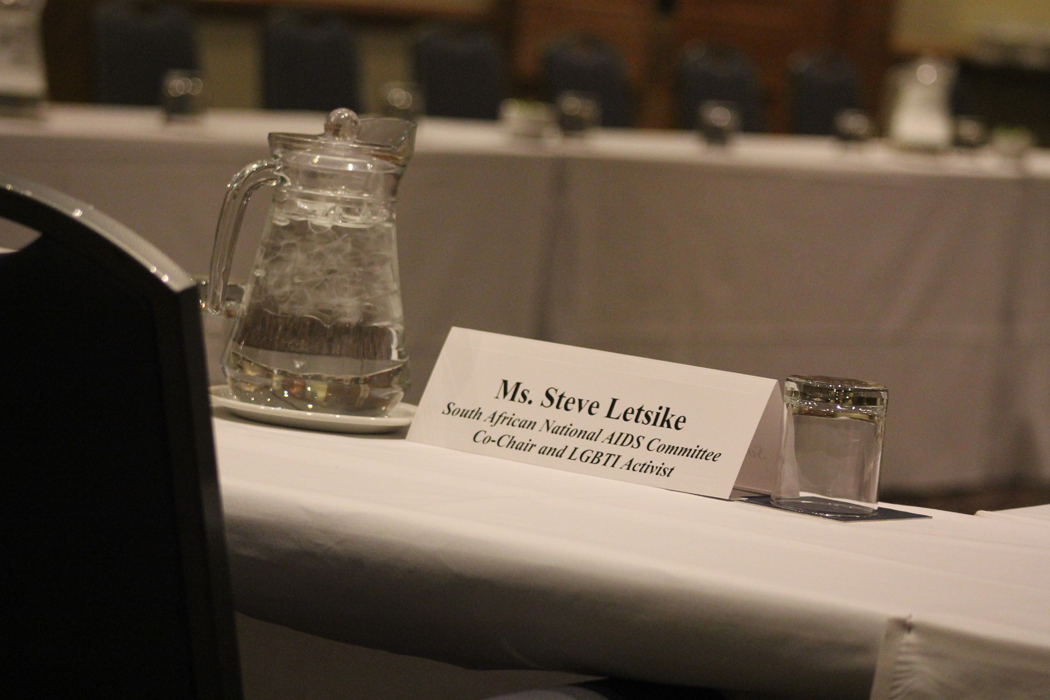
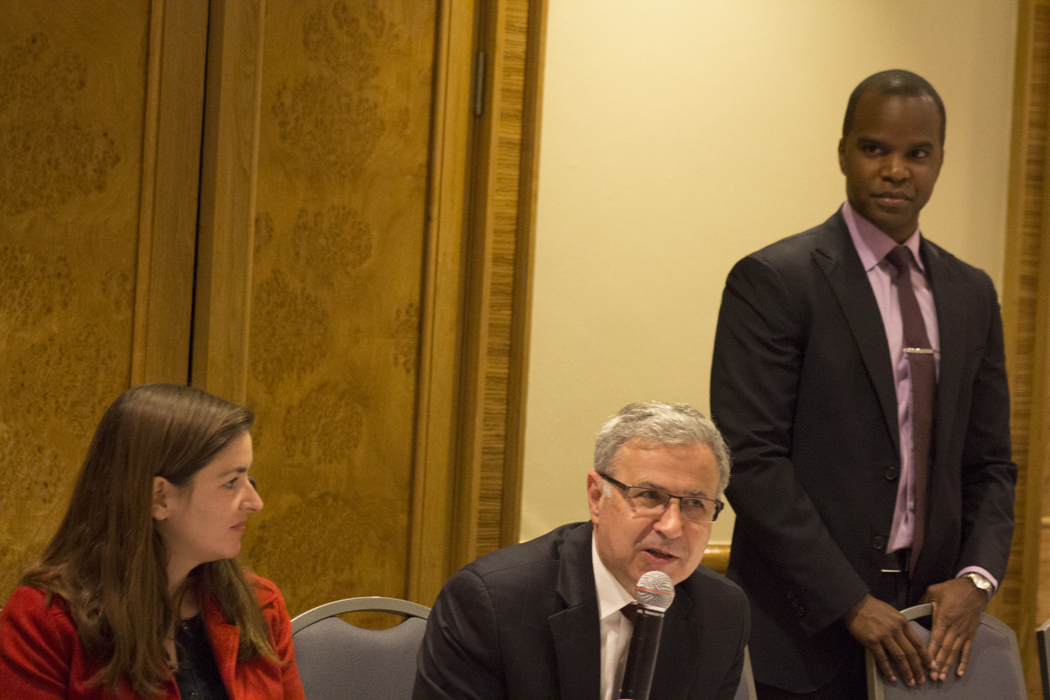
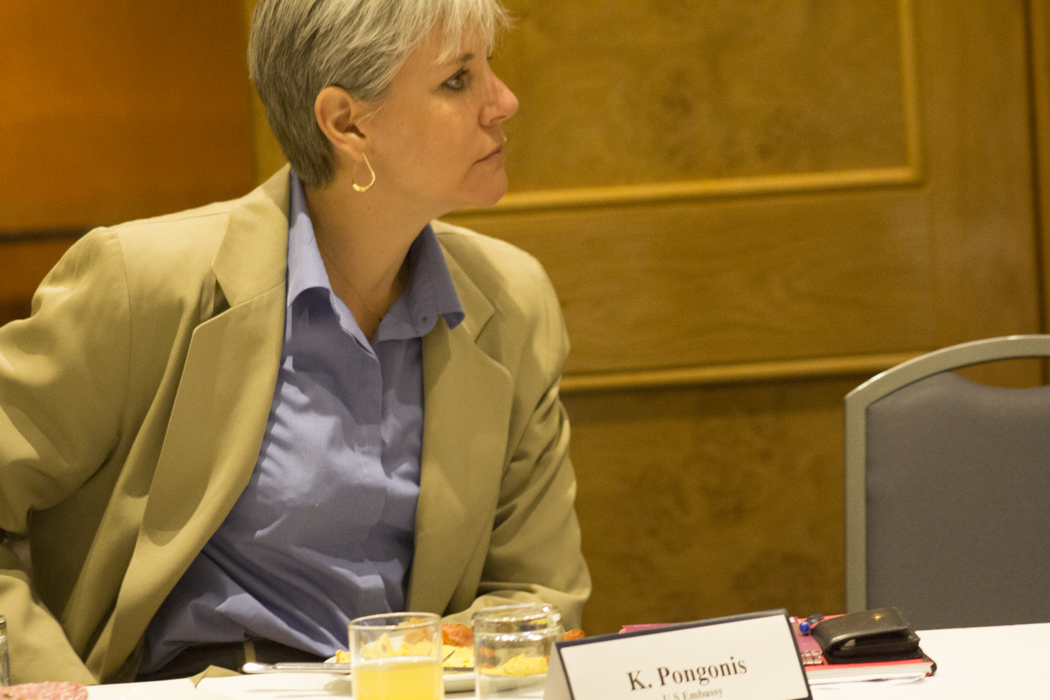
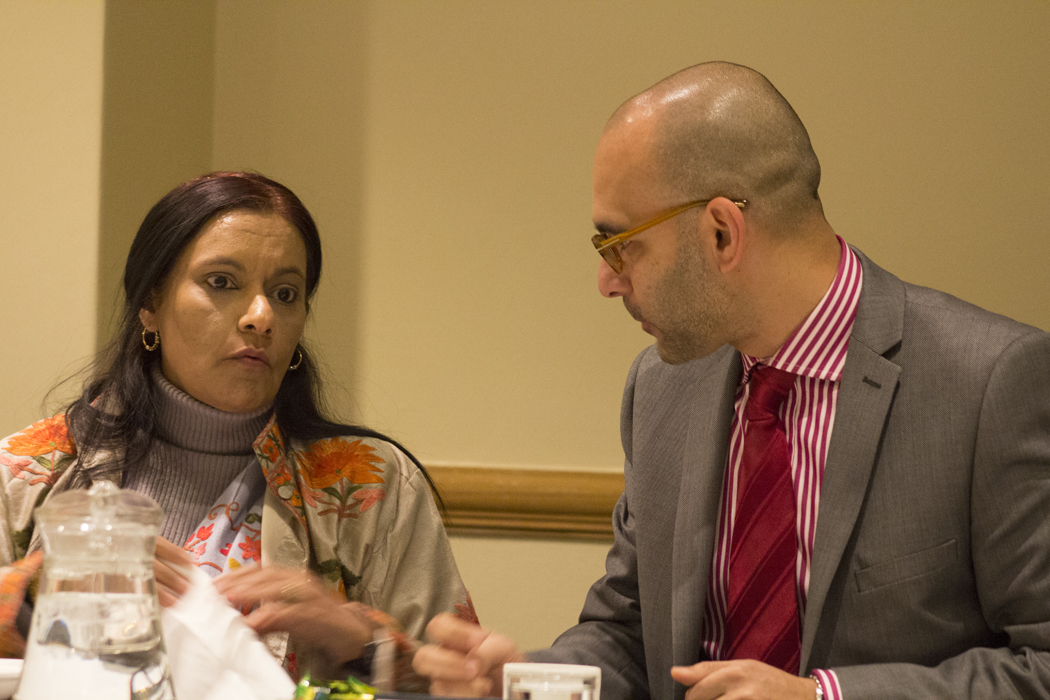
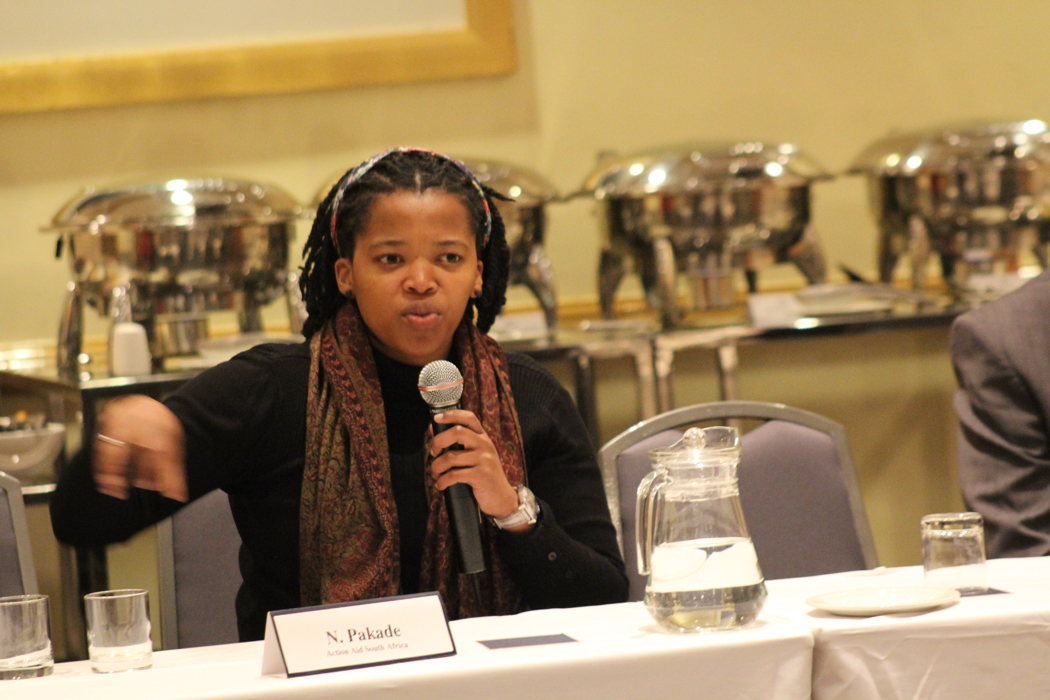
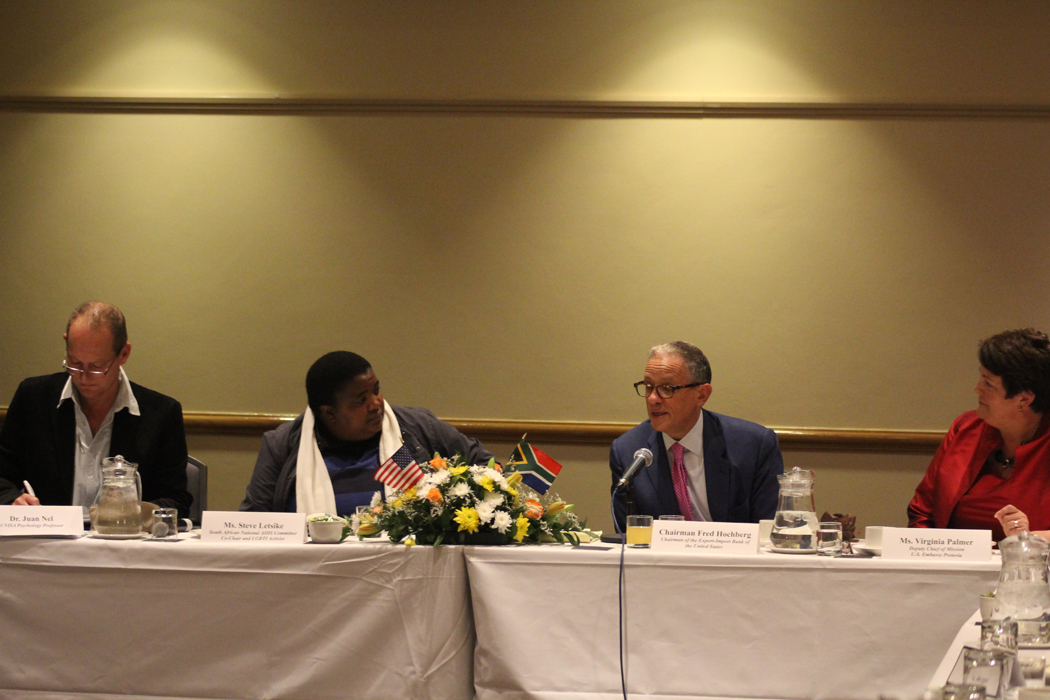
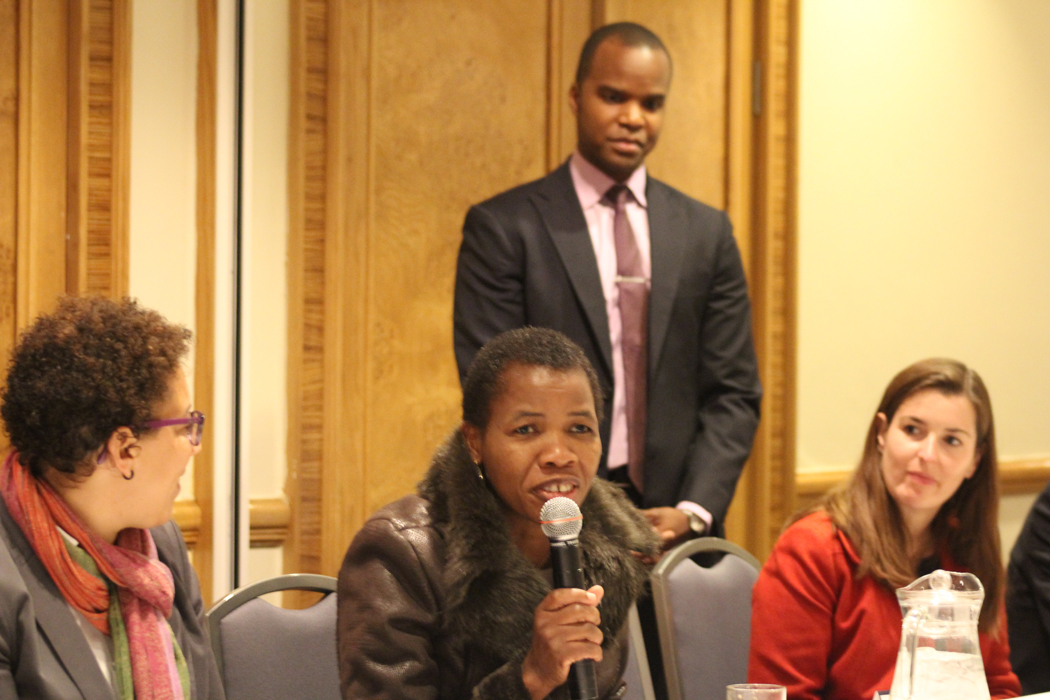
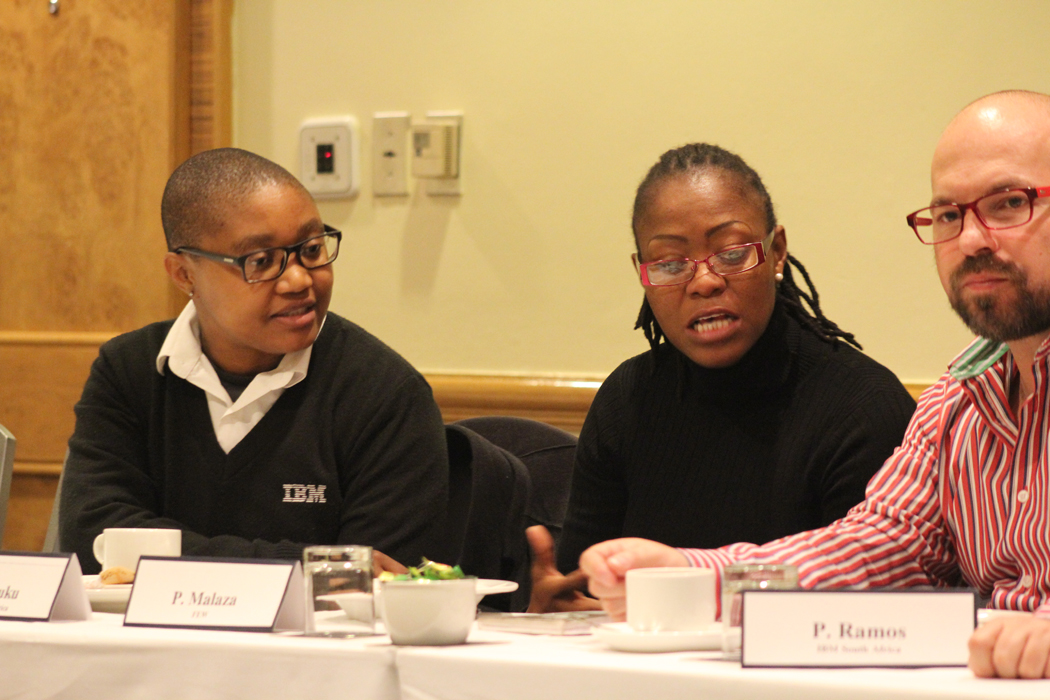
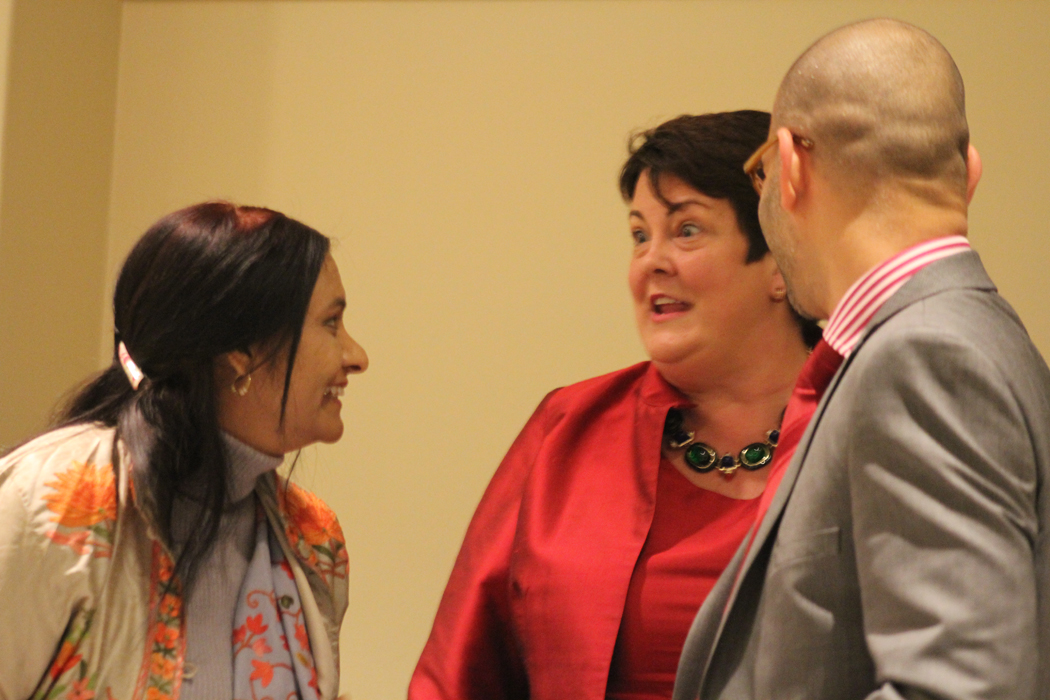
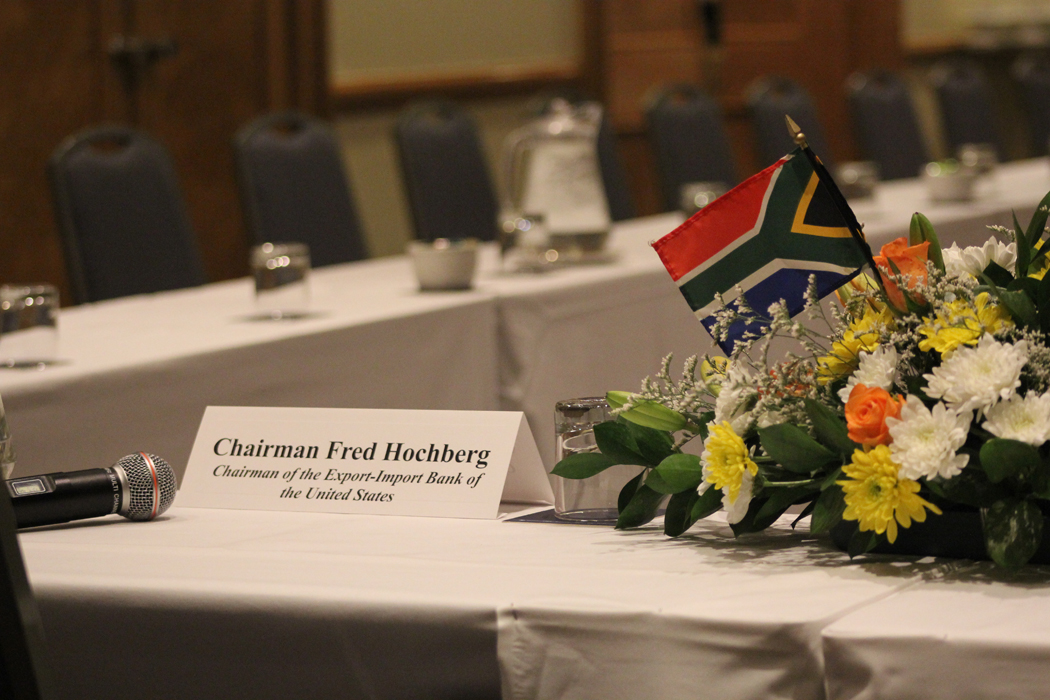
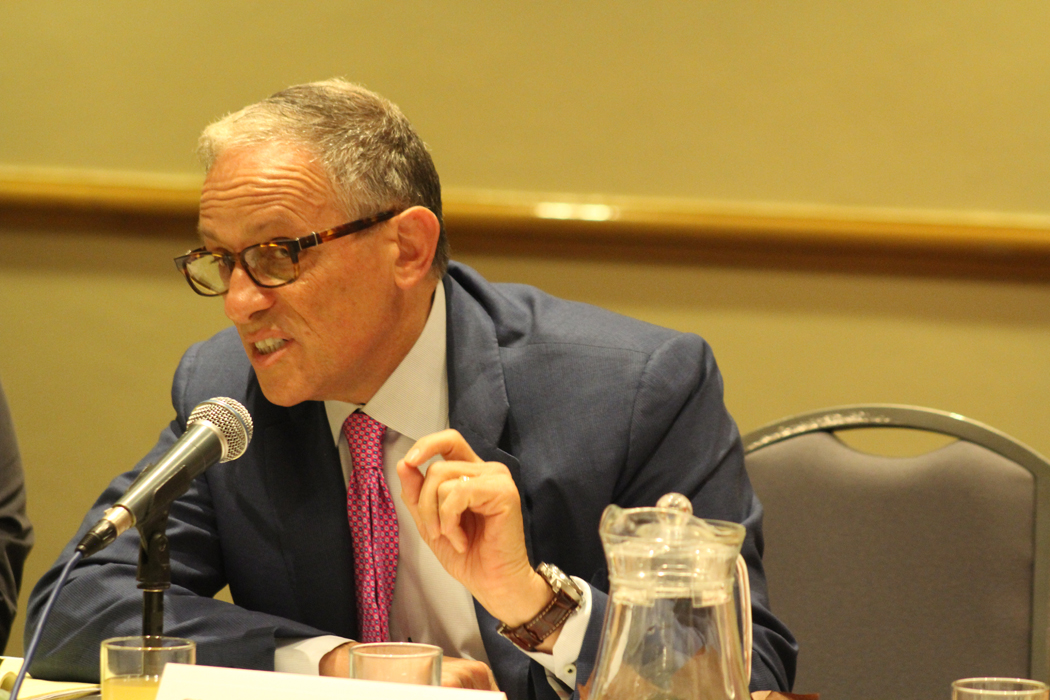
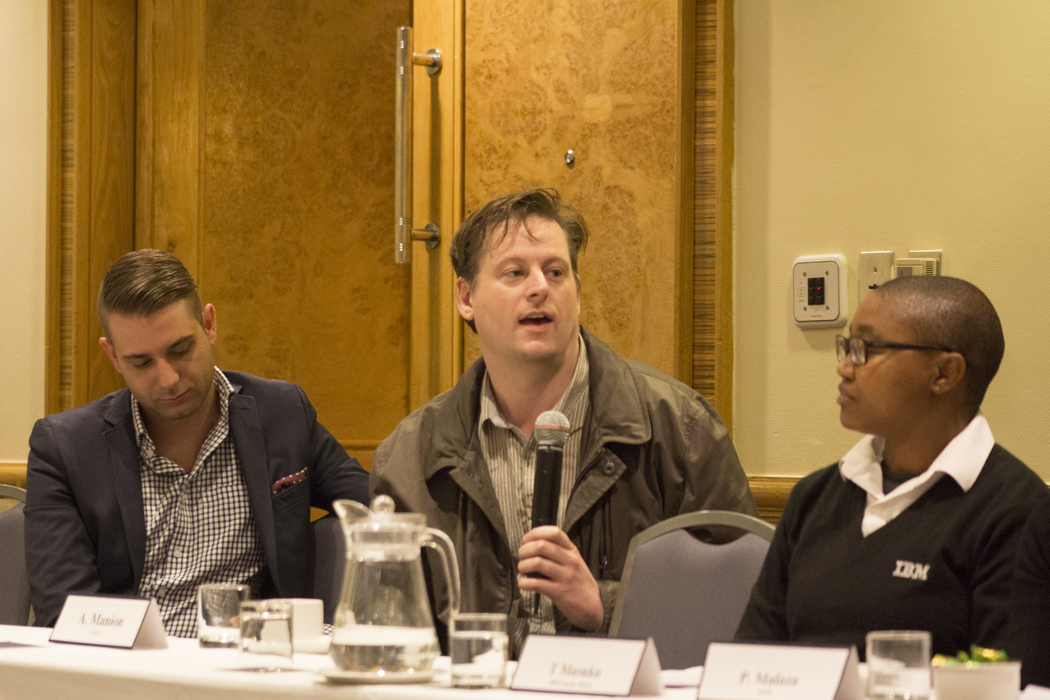
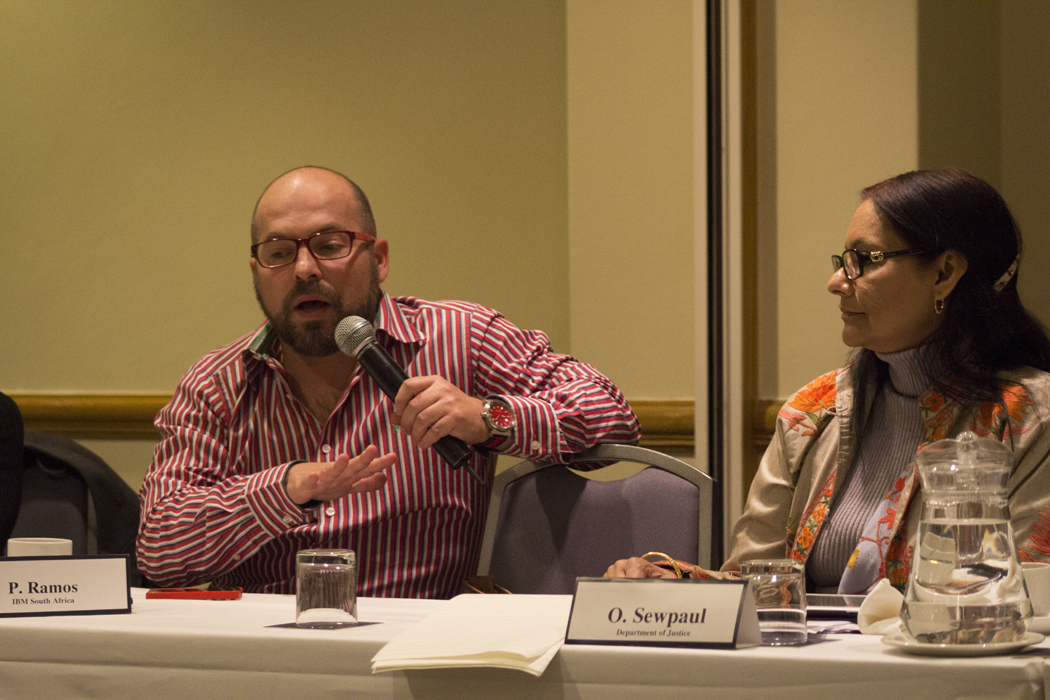
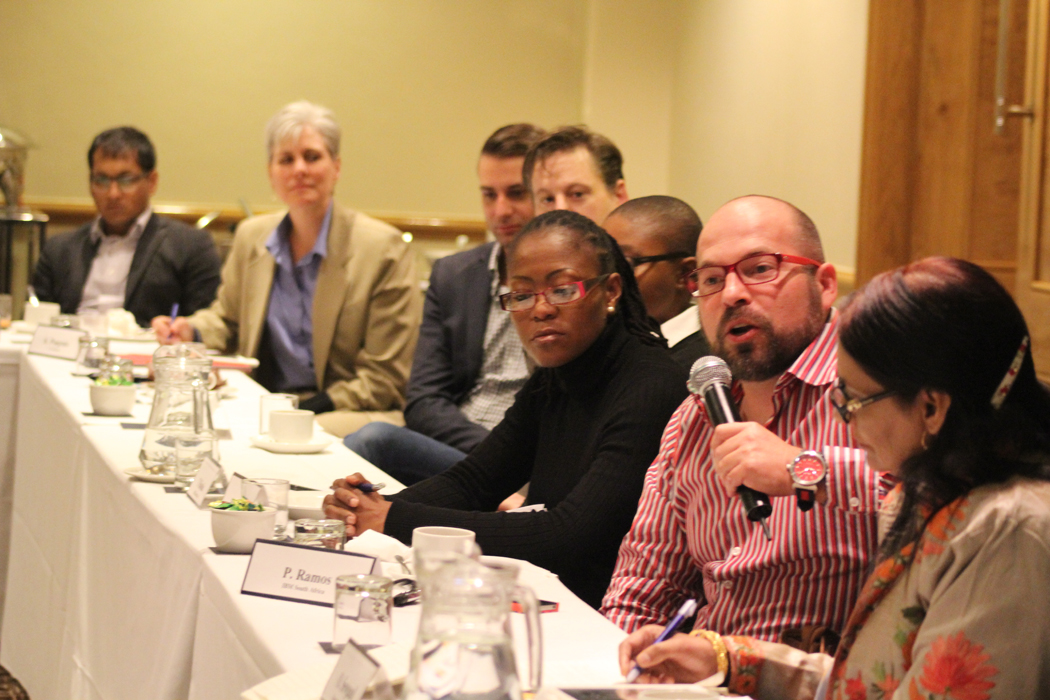
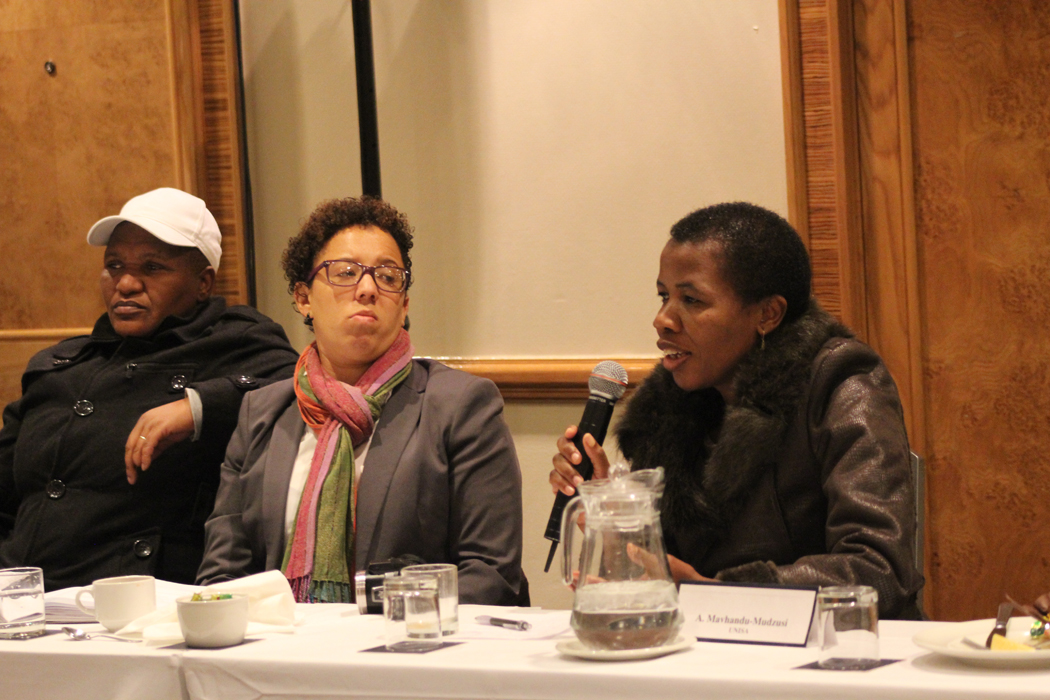
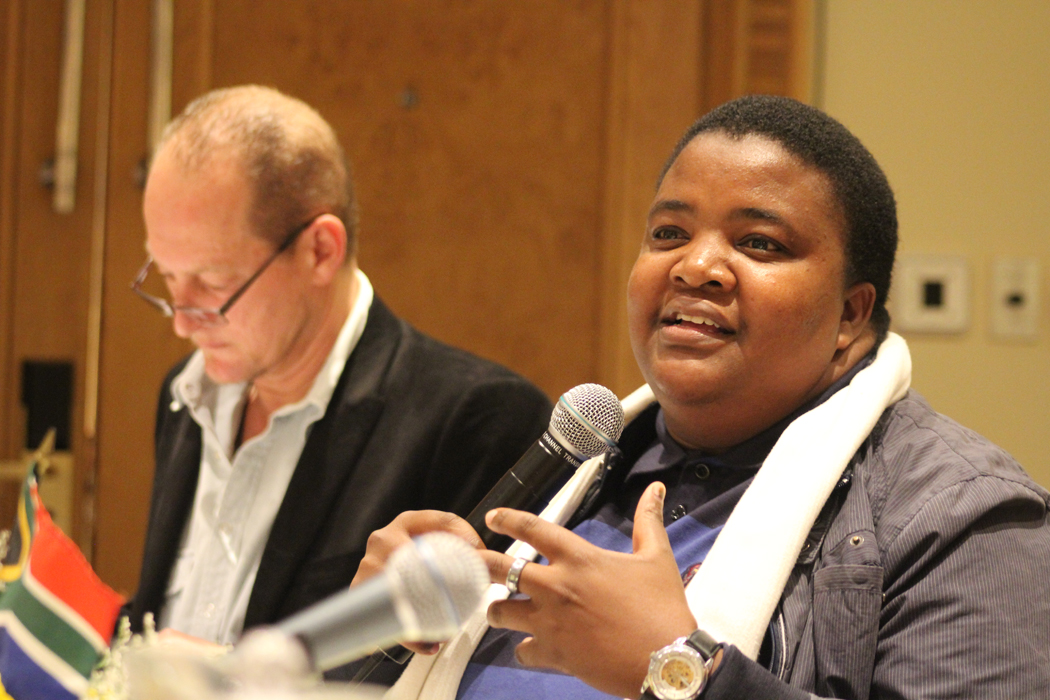
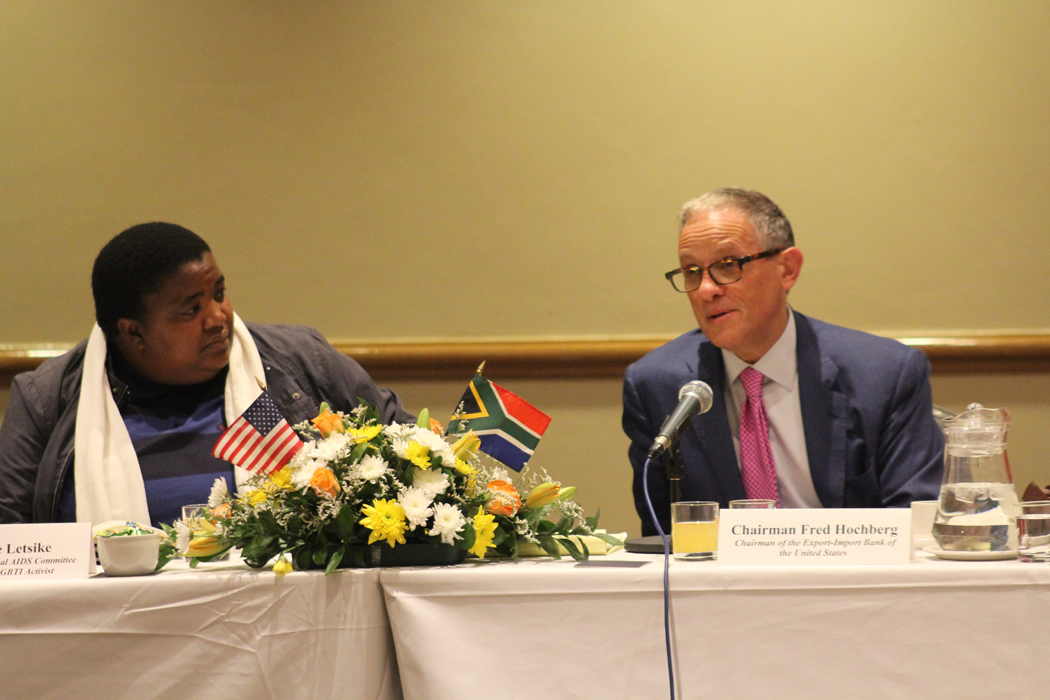
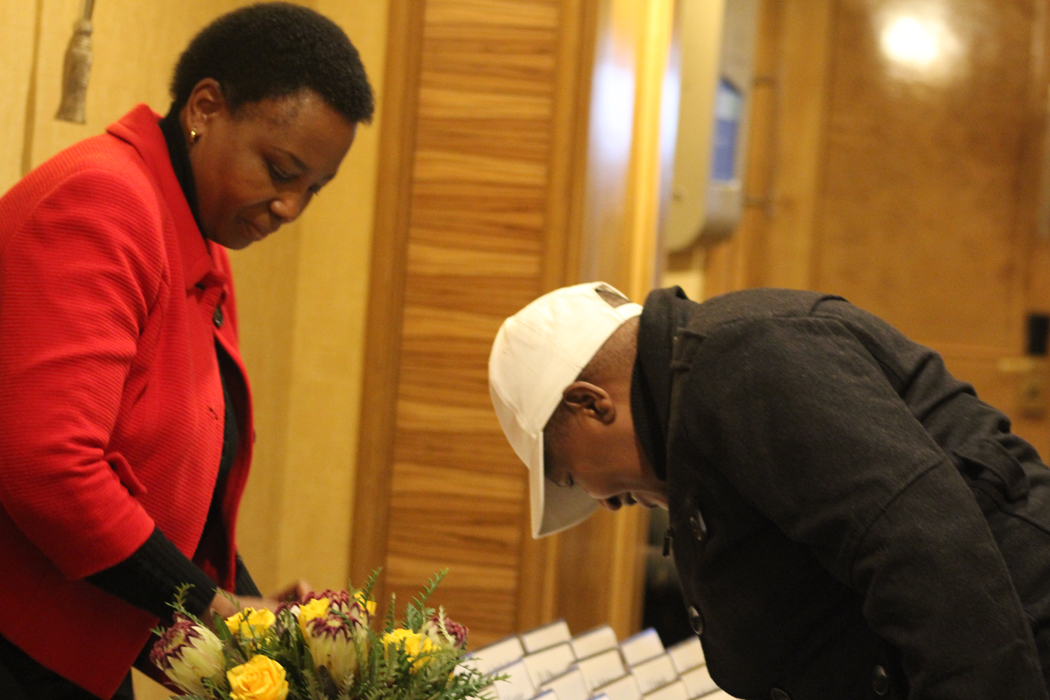
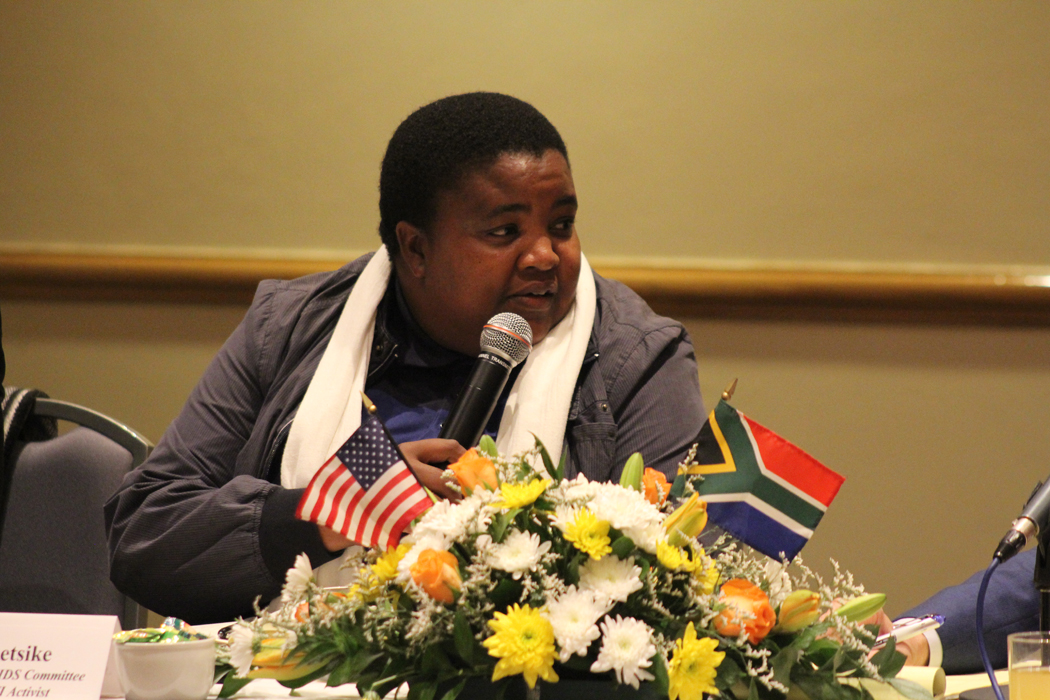
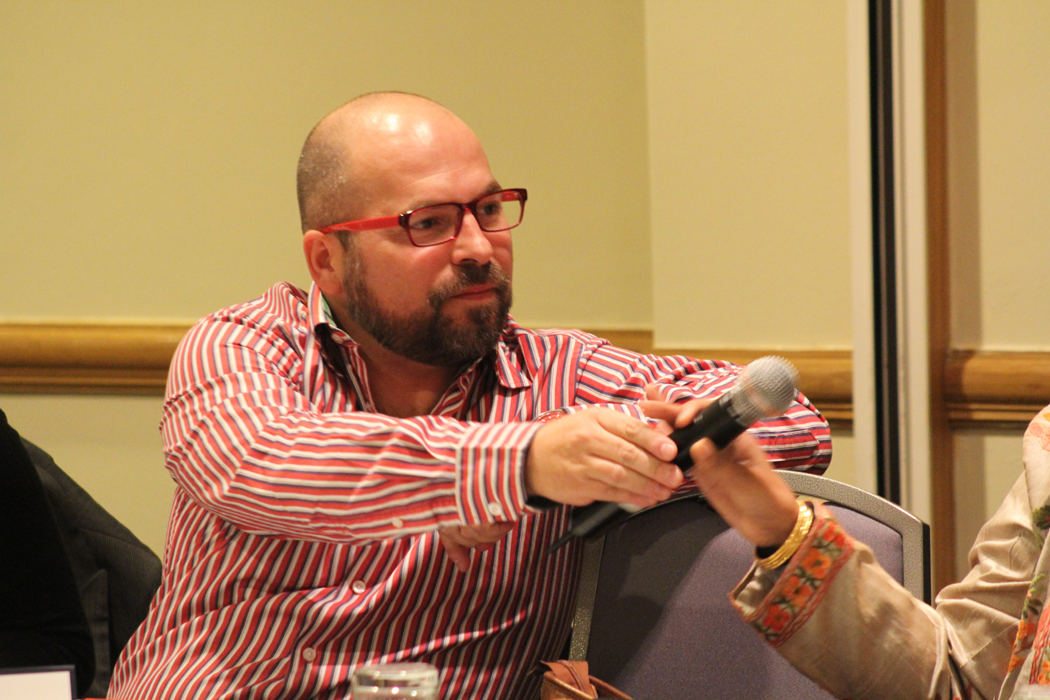
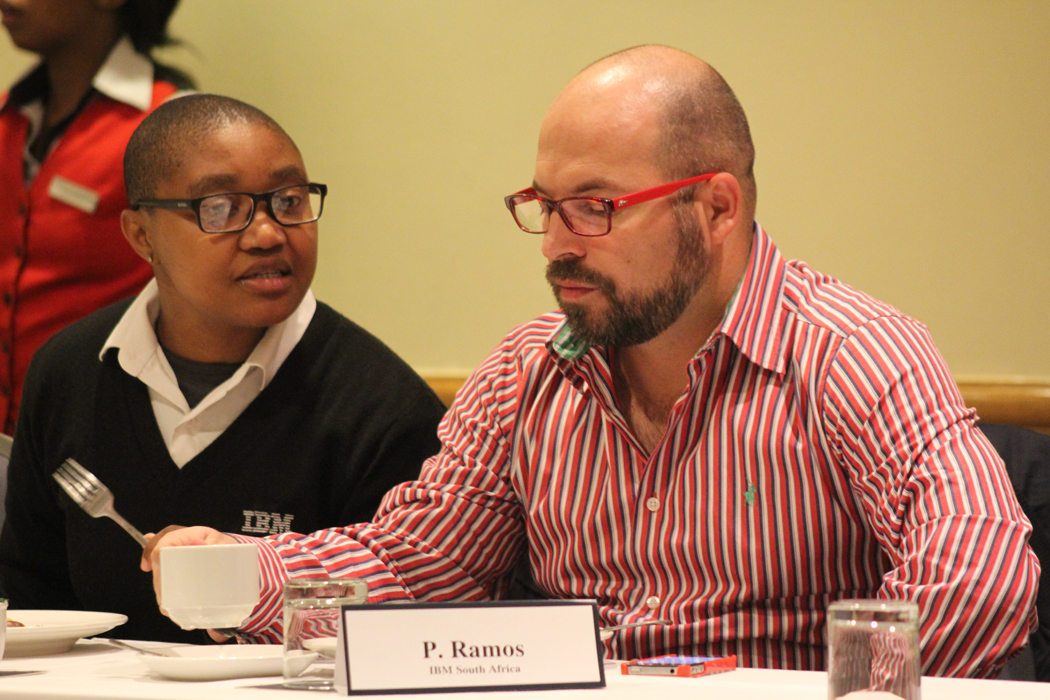
The US Embassy held a breakfast session with SA LGBTI experts and stakeholders. The session was to engage the U.S Export-Import Bank chairperson, Mr Fred Hochberg, and the dialogue was facilitated by the Deputy Chief of Mission Mrs Virginia Palmer. The discussion saw the opening remarks by Ms Mmapaseka Steve Letsike on Health issues and the fight for equal access and Prof Juan Nel on Sexual and Gender Based Violence against LGBTI community. It was clear after deliberations with Fred Hochberg and stakeholders who attended that South Africa and the African Region have a long way to go. That Rights are not a lived reality for the LGBTI community, and that much needed efforts and investment still is required to support the work done by LGBTI organisations.


IMG_3016


IMG_3098


IMG_3181


IMG_3217


IMG_3012


IMG_3084


IMG_3076


IMG_3050


IMG_3203


IMG_3121


IMG_3080


IMG_3060


IMG_3058


IMG_3014


IMG_3237


IMG_3236


IMG_3220


IMG_3199


IMG_3198


IMG_3191


IMG_3158


IMG_3124


IMG_3091


IMG_3066


IMG_3019


IMG_3087


IMG_3114


IMG_3101


IMG_3049


IMG_3042


IMG_3104


Posted in Chief of Mission Mrs Virginia Palmer, Delegation, Memory, Mmapaseka Steve Letsike, SA LGBTI experts, Sexual and Gender Based Violence against LGBTI, Sexuality, Sexuality in South Africa, Sharing knowledge, U.S Export-Import Bank, US Embassy, We Are You, We Care, We Love Photography | Tagged , , , , , , , , , , , , , , , , | Leave a comment

 by Sebenzile Langa (previously known as Nkosi)

As hard as it is, it is so worth it. My marimba band performed at this year’s Sasol Bird Fair 2014 and they have been performing at the festival since 2011. Every year they get better. The hardest part is starting a new band every year as pupils leave to go to high school. Teaching music comes with its joys but it is also hard because students grow so fast and so do parents, and as much as things change, they also stay the same.

It is proven that music makes one smarter. One then wonders why when the pass rate of our country is 30%, a small number of children are picking up instruments and many of them in the sports field?

Our education department has grown a lot, adding arts and culture in its curriculum. However many of these children are being taught by people who have no training in the field. It is criminal really.  The grade 7 textbooks is really the best book in arts so far, however I wonder how those teachers are coping in teaching activities that require marimbas.  In the suburb I teach in, in the south of Johannesburg, we are the only school with marimbas. Most schools have recorders. There are not many teachers trained or that can even play instruments, while many trained musicians go without jobs hoping for get employment from the army or police bands.

Playing in orchestras is not cheap, you have to pay a fee, just for the experience.

Two of my students made it into the National School of Arts (NAC). As happy an occasion as it is, this means I now have 6 pupils that have made it through. I pray for their future.

25 June is instrument demonstration at Mondeor Primary School. I hope more children pick up an instrument and stay off the streets.


Previous by Sebenzile

2014 April 30:  Good spirit dampened by my grandfather’s death


Posted on by inkanyiso2009 | Leave a comment

2014 June 27: A classy night at the Singapore O.P.E.N

by Fikile Mazambani

“I feel like I am receiving an award from Singapore”

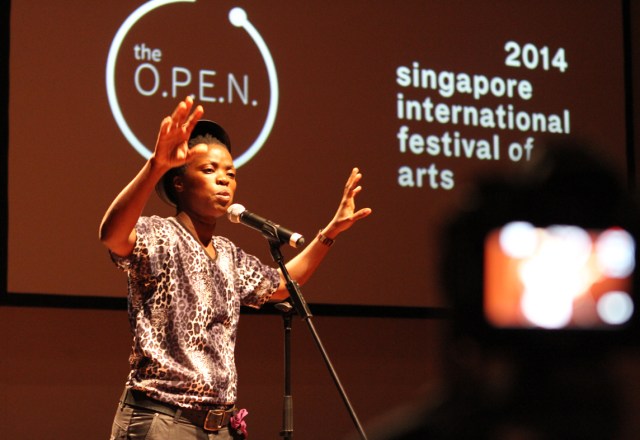
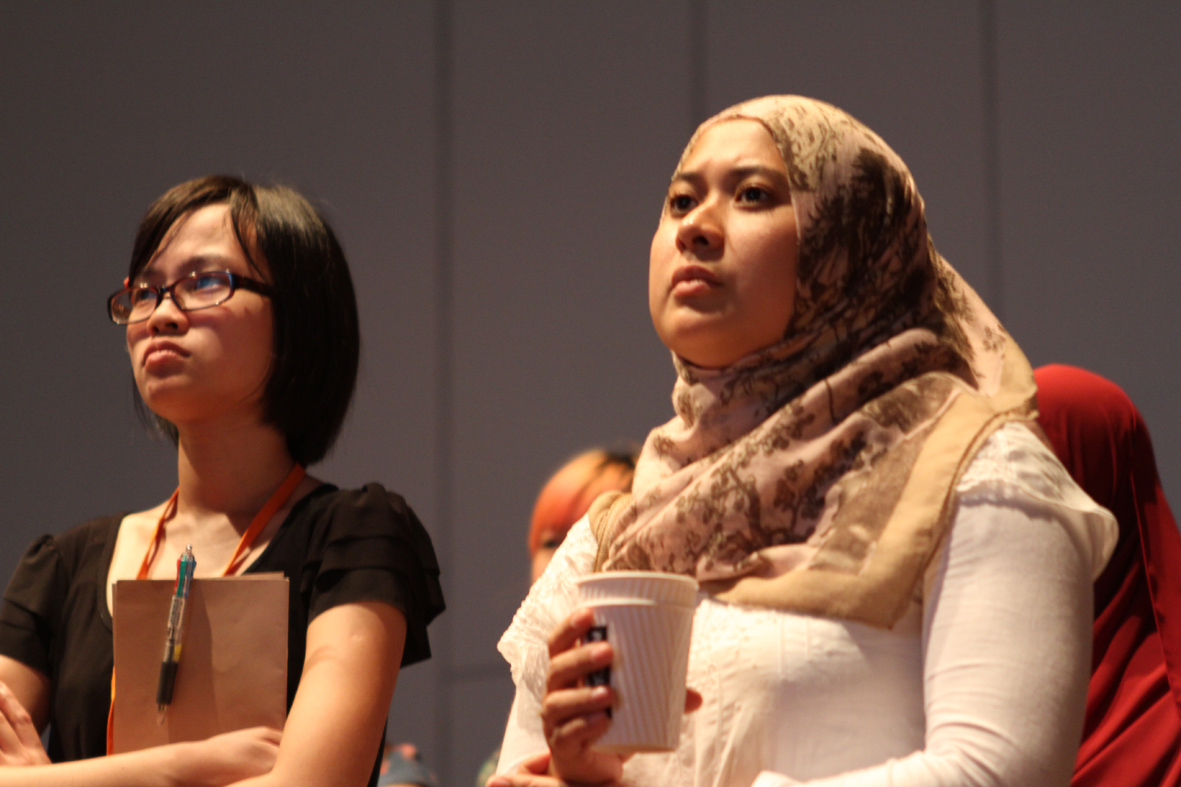
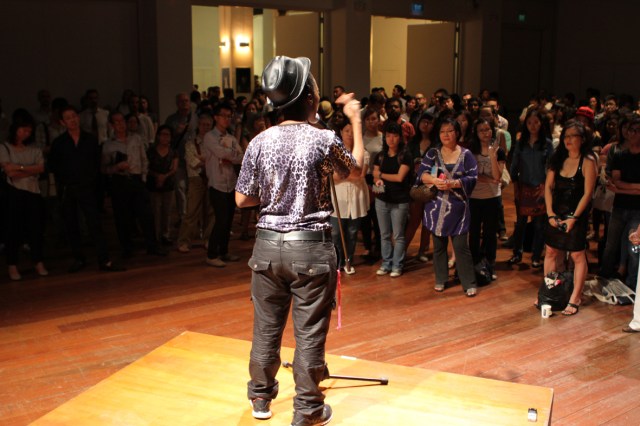
At the invitation of Ong Keng Sen, the director of the Singapore International Festival of Arts (SIFA), Zanele Muholi arrived in Singapore on Friday, 20 June to be part of the O.P.E.N., an initiative that aims to ‘transform the cultural landscape of Singapore by encouraging audience ownership of ideas, issues and themes’.

At the official opening of the exhibition on June 26, Sen introduced Muholi to the hip crowd that had gathered for the opening night.  He spoke of how as much as art was loved for its beauty; art also spoke to social, political and cultural issues, problems that could not be ignored.  He explained that the invitation had been extended so as to give context to this year’s theme – Legacies of violence.

OPEN_9178

Speaking to the audience…

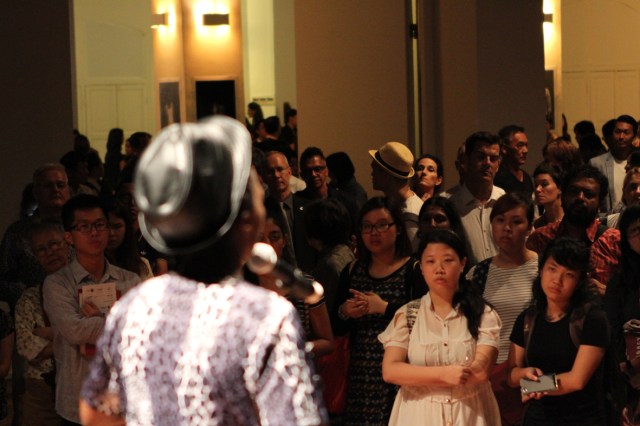
A nervous Muholi took the stage, jokingly requesting gum, which is banned in Singapore, to ease her nerves.  After acknowledging Sen, the entire O.P.E.N staff and the audience, for making the exhibition a successful possibility, she then delved into her subject and spoke about the legacy of violence hinged on gender and sexuality in South Africa, despite the existence of a Constitution that claims to protect everyone’s human rights.

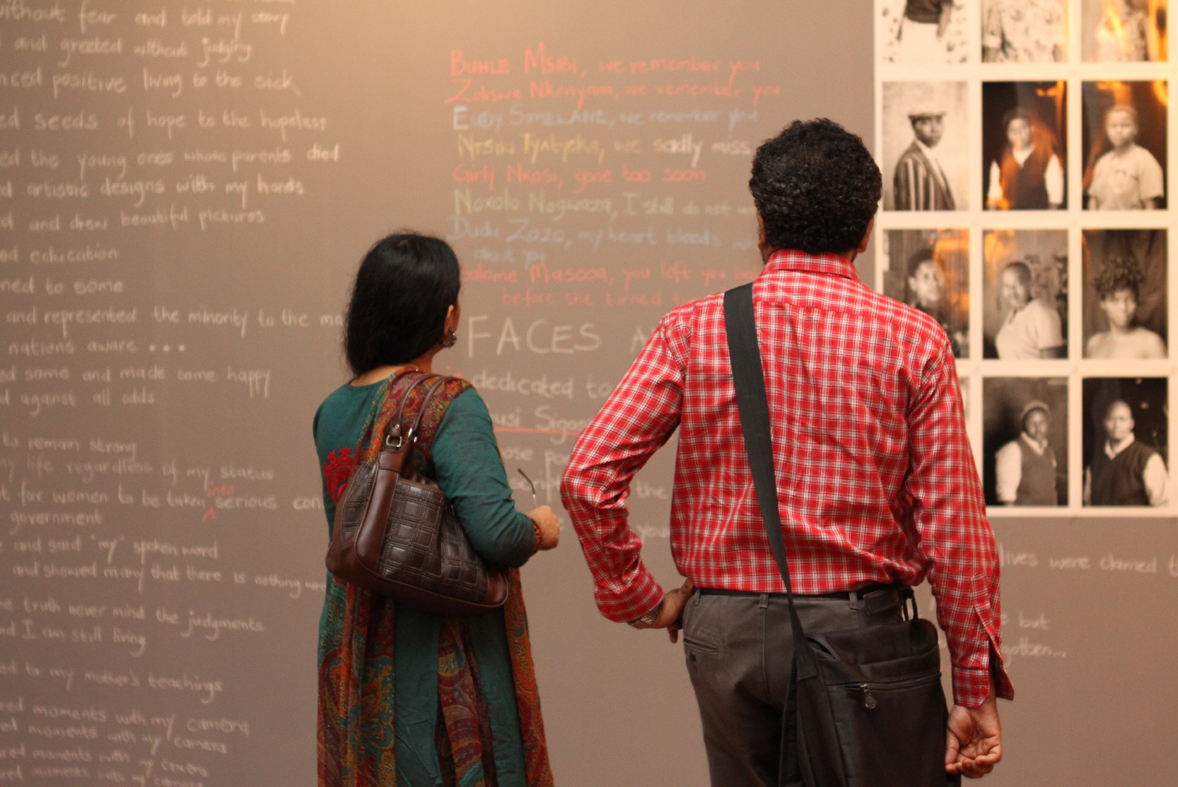
During the talk, a black and white slideshow beamed on a white wall, silently and softly showcased the participants in the Faces and Phases project.  In the adjoining space were the black and white portraits challenged the viewers gaze, were empty spaces to signify those that had been lost to brutal hate crimes or otherwise.  This particular exhibition was dedicated to Duduzile Zozo, a lesbian who was killed in Thokoza township in June 2013.

Before the official opening, there was a showing of a documentary We Live In Fear (2013) as a precursor to the talk.In an adjoining space, black and white portraits from Faces and Phases formed the exhibition.  On the stairs to the next level where the other series of photographs were shown was the screening of Team Spirit featuring members of the Thokozani Football Club, a black lesbian soccer team from Umlazi, Durban. Thembela ‘Terra’ Dick, who is a participant in Faces and Phases, directed the documentary. On the upper floor, there was a screening of the documentary, Difficult Love and portraits from the Crime Scene and Beulahs series.

William_9190

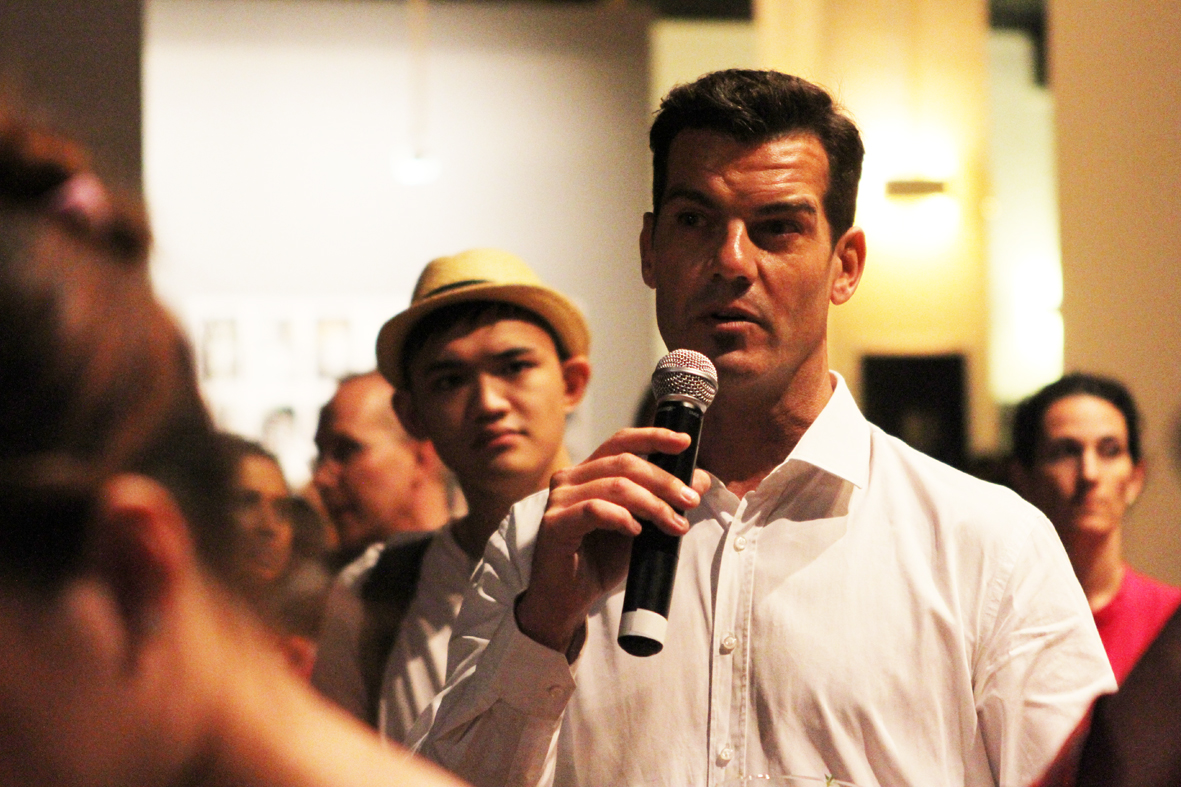
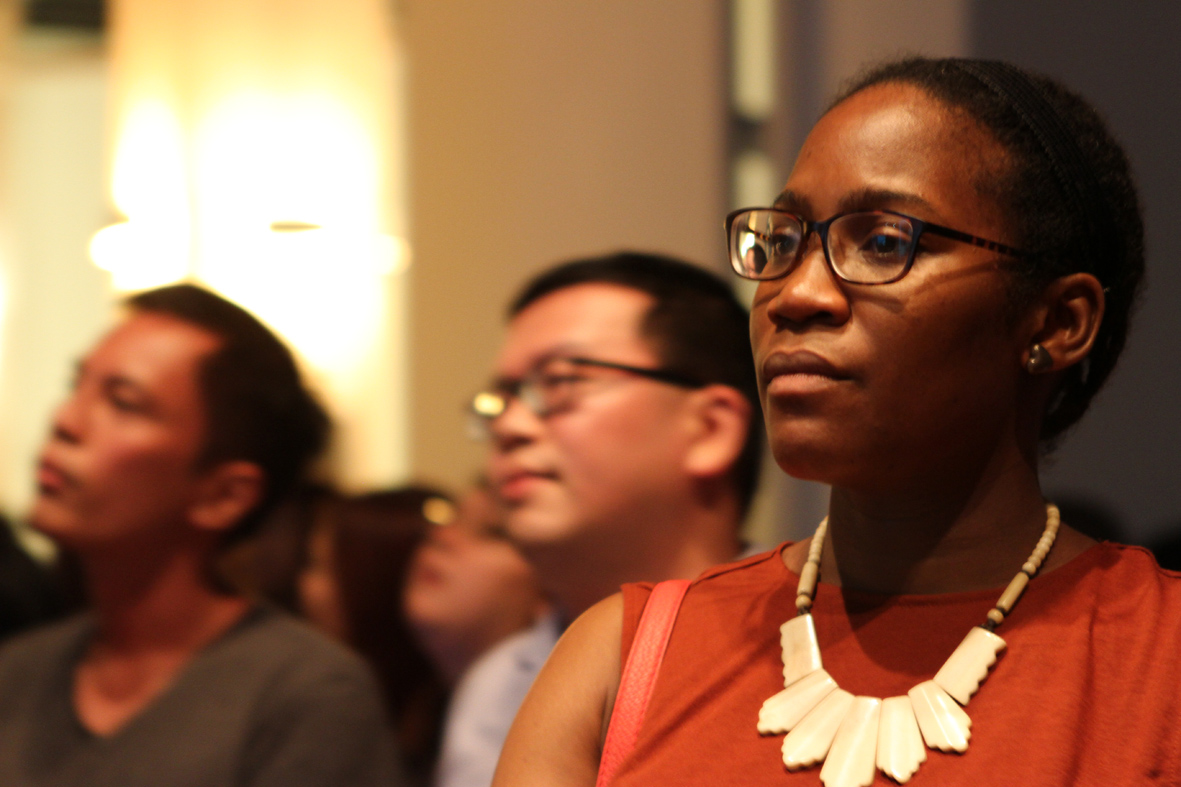
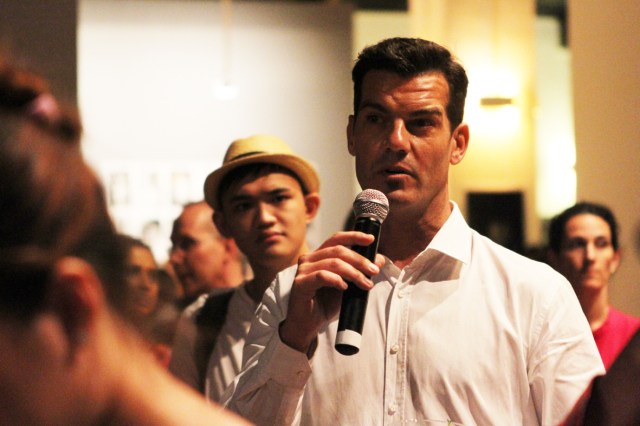
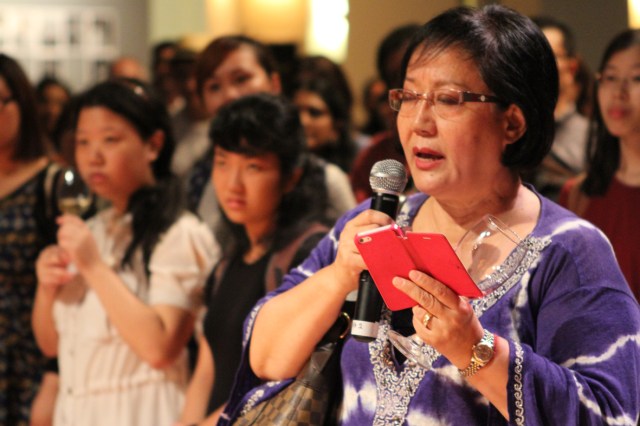
Thereafter, the floor was opened for questions because there was a lot of interest around the photographer, her thought process when she works and the exhibition itself; whether she found the reception in Singapore different from her earlier visit to Seoul Korea – given the Asian context, why she photographed the participants using a stark rough background and why she chose to showcase the ‘suffering’ of black lesbians.  Those who still had questions freely mingled and asked questions during her walkabout.

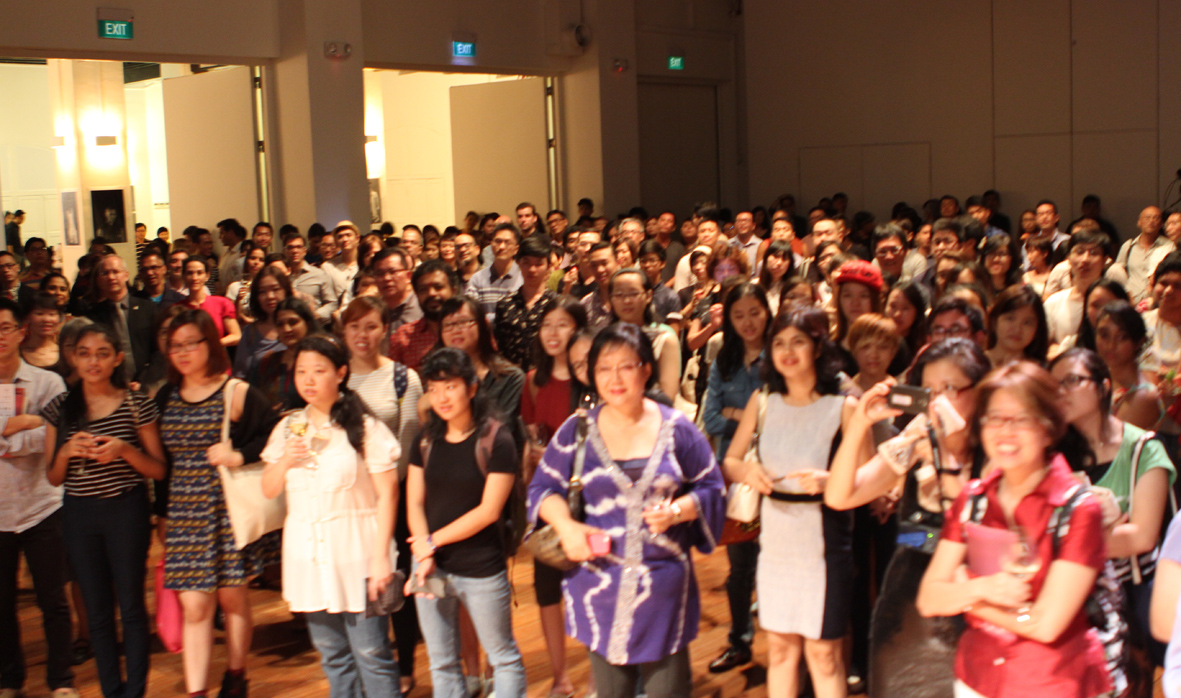
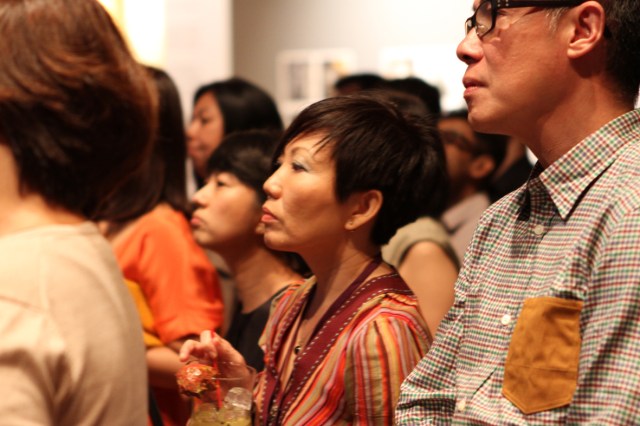
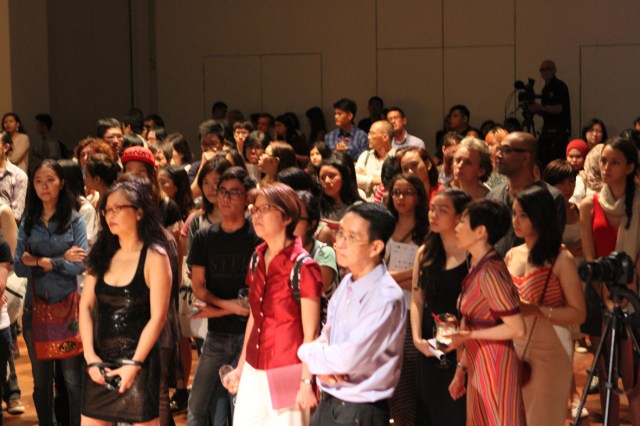
The exhibition was a resounding success with so many people’s curiosities being piqued so much that they came out in numbers.  About 200 people were expected to be attending the opening of the exhibition that runs until Sunday, 29 June 2014.

Big audience_9123


Previous by Fikile


2014 June 17:  Muholi’s Ryerson University (RIC) Talk


Posted in Acceptance, Activists Act, Art Is A Human Right, Art is Queer, Art Solidarity, Gender, Hate Crimes, Questions and Answers, Sexual Politics education in South Africa, Sexuality in South Africa, South African Visual Activism, Space, We Are You, We Care, We Love Photography | Tagged , , , , , , , , , , , , , , , , , , , , , , , , , , , , , , , , , , , | 2 Comments

2014 June 26: Successful Faces and Phases O.P.E.N in Singapore


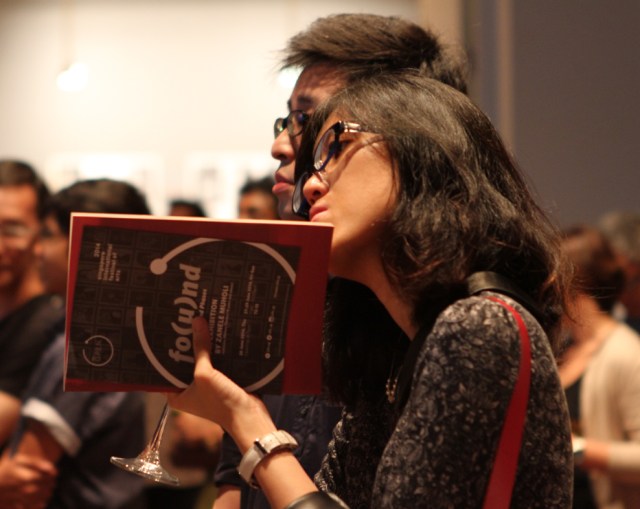
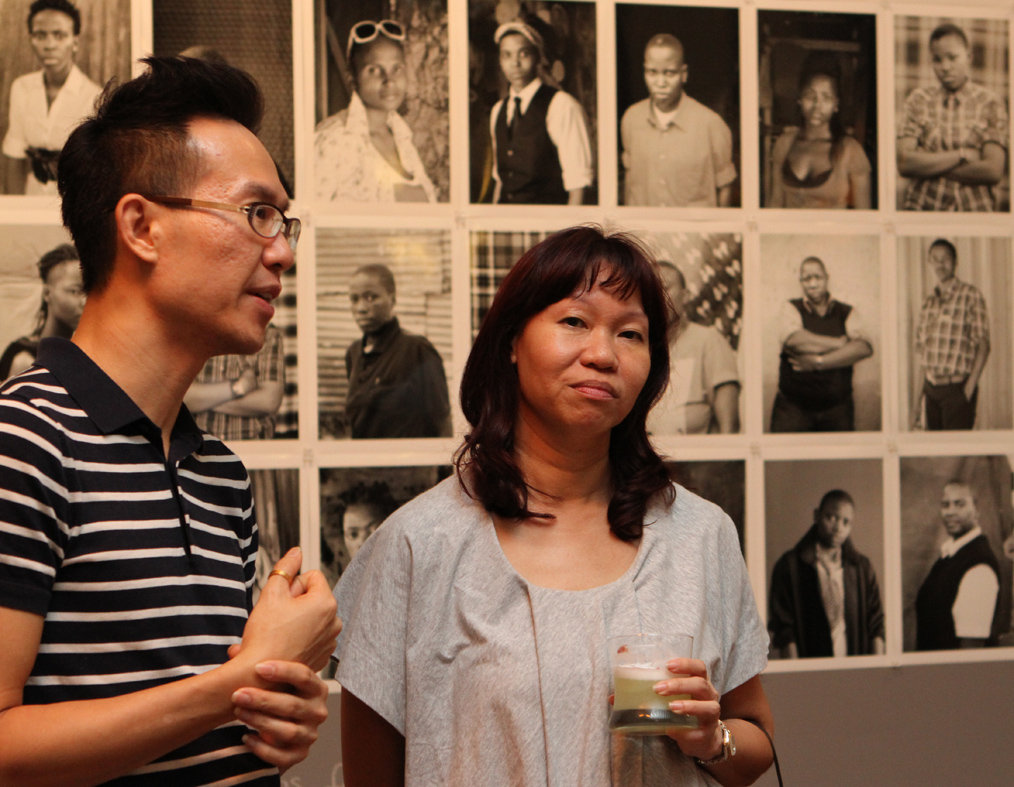
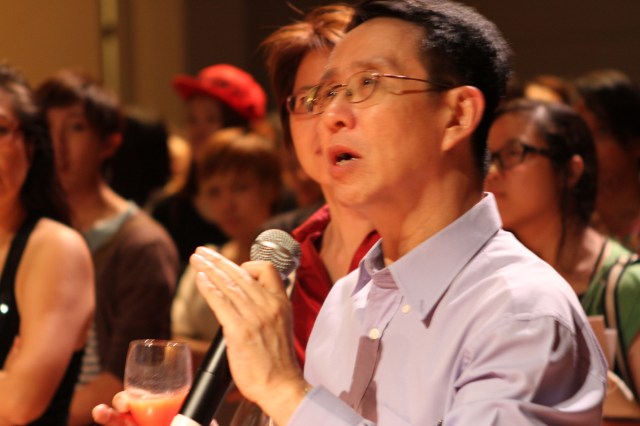
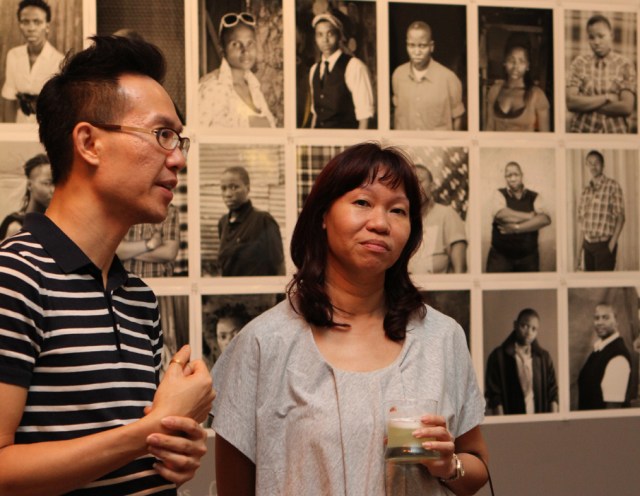
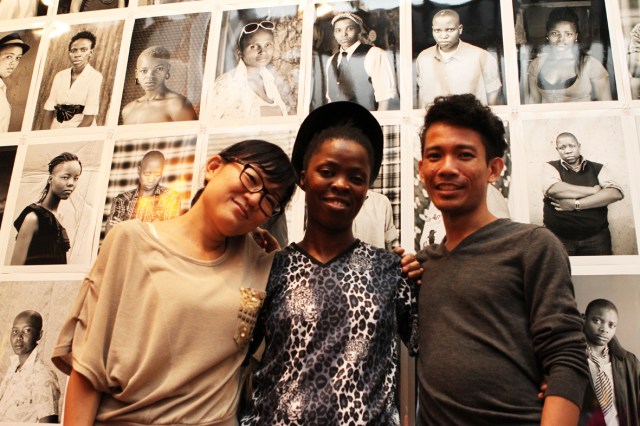
OPEN_9178Zanele Muholi speaking at the opening of her exhibition “fo(u)nd”


Big audience_9123


Viewers_9139

2014 June 26 OPEN entrance_2329


Viewers_9162


William_9190


A friend_9172


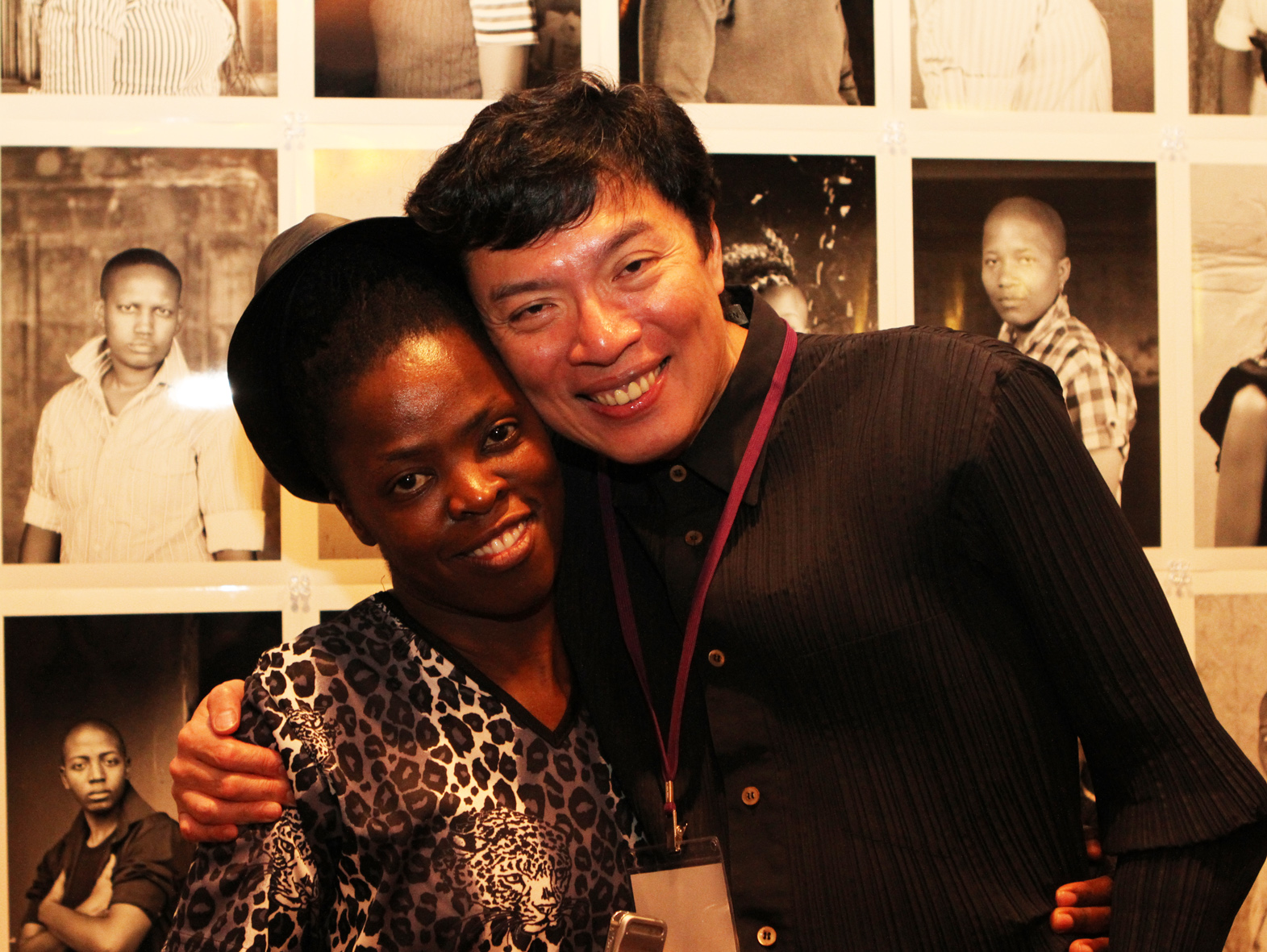
Muholi Z_9184


noorlinah_9140 Noorlinah Mohamed, Director, The O.P.E.N.
 

Muholi speaks_9181


question_9170Shobha Bhalla, CEO & Editor-in-Chief, India Se 
 

audience_9185


found_9166


Audience_9159Zizi Azah, Artistic Director of Teater Ekamatra 


Photographers_9127


Audience_9122


A friend_9173


Jay & Friend_9273


Audience_9117


with eugene_9303Eugene Tan interacting with Muholi


muholi & eugene_9300


Muholi and supporters_9213


fiks the socialite_9272


Muholi chatting with members of the audience_9265

beautiful youth_9299The O.P.E.N. Fellows


Dr Fiks_9271Fikile Mazambani, a Toronto based human rights activist and writer with fans…


William Fiks & Laura_9270


The PR manager & Client_9205


Nat & Fred_9290


responses_9208


Exhibition text_9280

Randy_9289William Phuan, Director of The Arts House
Kathy Lai, CEO of National Arts Council 

Open programme_9287

2014 June 26 OPEN banners_2326


Zanele Muholi with Keng Sen the O.P.E.N SIFA Director...

Zanele Muholi with Keng Sen the O.P.E.N SIFA Director…


Muholi with Zahian & Eve_9311


OPEN exhibit ft Jay Pather_9318


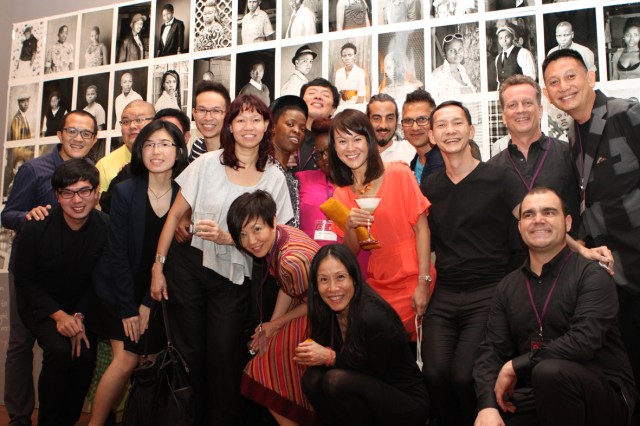
OPEN team and friends_9317


All photos were commissioned by Zanele Muholi.
Singapore (2014).

Muholi presented at the Legacies of Violence session.

See the link below
http://theopen.sifa.sg/legacies-of-violence.html

All The O.P.E.N. events are at:
72-13, Mohamed Sultan Road, Singapore 239007


 Related article to be posted later.


About the photographer

Joey Chua is a 19 year old 2nd Year undergrad student at Singapore Nanyang Technological University –Wee Kim Wee School of Communications and Information.
She documents people through photography and videography and hope to deliver sincere and truthful messages.


Posted in Allies, Alternative family, Apartheid, Archived memories, Artist Talk, Legacies of Violence, Queer Africa, Queer Education in SA, SA Constitution, South African politics | Tagged , , , , , , , , , , , , | 1 Comment

2014 June 25: I consider myself beautiful not handsome…


Meme Motaung_2648BW sm

Featuring in Faces and Phases series, Mamello ‘Meme’ Motaung, Daveyton, Johannesburg, 2014.   


My name is Mamello but am also known as Meme Motaung. Mamello is a South Sotho name meaning perseverance. I was named Mamello by my grandmother and I do not know the reasons behind my name.

I am a young proud black lesbian and I was born on 27 November 1994, at Boksburg Hospital, now known as O.R. Tambo hospital.  My mother tongue is Sesotho but I also speak Zulu, Sepedi, English, Setswana and a bit of Xhosa. I was raised by my grandparents, as I lost my mom on the 14th of February 2003 and I have never known my father. I am the first born and I have a pretty sister named Bohlale.

I live in Daveyton with my aunt, sister and my two cousins – my aunt’s daughters. I am currently unemployed, am working on uplifting my organisation named Team Dress Fresh it is all about clothing and fashion because I am really passionate about clothes. I passed my matric with a symbol ‘B’. I love reading books, watching movies and socializing with people. I want to study film and television next year.

I am a lesbian I do not like people to classify me. I am masculine, I consider myself beautiful not handsome because I am a woman. My family accepted me for being me and not living a lie around people and they support me in everything I do. I do have a female lover and both our families are very aware of our relationship. Love is beautiful, Love has no definition but love is a verb ‘doing word’ love is unconditional, loving one another is not a sin even Jesus himself said love one another as my father loved you.

Meme_1510

Meme’s photo featured with Black Queer Born Frees in an exhibition held at the Wits Art Museum (WAM) in Jan. 2014.
______________________


In 2013 February I entered the Mr & Miss Valentine Gay and Lesbian held in Daveyton. It was my first time entering a beauty pageant and I really felt nervous but happy at the same time.  I did not get any title but it was so much fun that I would not mind entering a beauty pageant again because now I have a better knowledge about the pageants. I really love clothes because I think they define me as well as make me feel good about myself. I really am into vintage clothing.

I think lesbians should enter beauty pageants and they should be seen for the potential and skills that they possess.  I would love to study Film and Television because I really love it and I am also passionate about it.  I fell in love with it while I was in high school where I took Dramatic Arts.  I did not like the practical side of it but I was best at theory. I would love to study Film at AFDA but due to financial problems with my family I must consider a government university such as Tshwane University of Technology  (TUT) or Wits University because those are the universities I know that have Film designations.

I attended a drama conference where we were given an opportunity to be on set and do a short film.
I really enjoyed it.  I would like to start a clothing line but my team and I, have not approached anyone yet because we just started the organization and we are still lacking in finance, but one step at the time we are going to reach our goal.

I am turning 21 but have not thought about my 21st birthday celebration but all I know is that I would love to have a party attended by friends, haters and family.


meme-shaz-fifi_1506

L-R: Meme Motaung, Shaz Mthunzi and Refiloe Pitso, all the three participants featuring in Faces and Phases series (2014) and the photos were exhibited at WAM in Jan. 2014


I agreed to participate in Faces and Phases because I knew people would love to know about me and I love being recognized even if it is for small things. I was really honoured to work with Zanele Muholi because she is well known photographer abroad. I agreed because I wanted be known for my sexuality, out and proud to be a young black lesbian.


Previous life stories


2014 May 24:  The special boy


and


2014 May 7:  I don’t like being identified in terms and definitions


and


2014 May 18:  Behind the beautiful face you see is a lesbian who is torn into a million pieces


and


2014 May 30:  I was a boy who would one day grow up to be a man


and


2013 Oct. 22:  I thought university was for the rich


and


2013 Oct. 16:  I am a beautiful young dyke, a woman lover


and


2013 Oct. 12:  I just feel she deserves much better


and


2013 Oct. 2:  I am a normal transgender woman’


and


2013 Aug. 22:  Am exactly where I’m supposed to be


and


2013 July 15:  The virus has become a silent relative


and


2013 June 27:  Who I Am


and


2013 February 28:  I am not a Victim but a Victor


Posted in Our lives in the picture, Participants, Participation, Photo Expressions, Photographs, Visual Language, Visual Power, Visual Voices, Visualizing public spaces, We Are You, We Care, We Still Can with/out Resources, We were (t)here, Words, Writing is a Right, Youth voices | Tagged , , , , , , , , , , , , , , , , , , , , , , , , , , , , , , , , , , , , , , , , , , , , , , , | 6 Comments

2014 June 26: When photography is our religion

Image


All Photos by Lerato Maduna
© 27/11/2012

What:  Faces and Phases exhibition opening

When:  2 Years ago (27th November 2012)

Where:  Goethe-Institut Südafrika, 119 Jan Smuts Ave, Parkwood. Johannesburg.


 Where are they now?


ImageAyanda Moremi got married to Nhlanhla Moremi on the 9th November 2014 in Thokoza and Vosloorus townships, Johannesburg.


68012_10200116108245141_1837068002_nNtobza work and live in Durban.  Yaya Mavundla writes for Inkanyiso


75938_10200116436213340_741044673_nAlia has since moved to Georgia…
526859_10200116244808555_1505028229_n Sly Pod travelled with me to San Francisco and presented her story as a participant in Faces and Phases and on the state of being a young black lesbian professional in South Africa.
See: Photos from Brown Bois Retreat in Oakland, California.


481699_10200116301489972_991020500_n


270135_10200116402172489_1602348724_nCollen Mfazwe is finishing Photography –  Intermediate Course at Market Photo Workshop.
Collen’s best article The special boy”


381670_10200116470254191_966936096_n

Neo Ntsoma had her documentary produced by AlJazeera 
https://buni.tv/video/artscape-new-african-photography-neo-ntsoma/

Neo is the first black woman recipient of the CNN African Journalist Award for photography...


406850_10200116052443746_667204275_nThe number of friends, participants in Faces and Phases series who attended the exhibition… More than 300 individuals were there.


480385_10200116178966909_207751373_nLesego Tlhwale volunteered for Inkanyiso as a writer and currently work for SWEAT in Cape Town. Lesego’s partner is featured here with her partner, Baitiri.
Best read article by Lesego is “A dildo is not a man, it’s a fantastic toy…”


21711_10200116067284117_1802924691_n


382027_10200116088084637_2128665059_nAyanda Msiza photographed Tumi Nkopane and Maureen Majola.
Majola performed “Sifela I Ayikho” at Studio 44, Berlin in Germany.
302850_10200116358531398_859628770_nLerato Maduna, one of the best Black Female Photographers in South Africa, she took the photos featuring in this photo album. Lerato is franked by Siphiwe Mbatha and Collen Mfazwe both from Daveyton township.


486221_10200116011762729_376254117_nTeekay Khumalo, Pinky Mbangula and Sne Lunga are some of the participants in Faces and Phases…


319657_10200116124045536_169420601_nThe handsome Teekay contemplating…
He came all the way from Durban to Johannesburg to attend the special event.


16110_10200116276369344_1532062291_n


64664_10200116036763354_448368099_nL-R:  Visual Artists Humbu Nsenga and Renee Mathibe came to support…


3499_10200116234168289_1205081178_n


481643_10200116252008735_813794571_n

Xana Nyilenda is one of the best young filmmakers and writer.
Read her travel-log:
“Cramps were killing me.”


374458_10200116076444346_855659614_nMembers of my bio family who attended my exhibition for the first time in Johannesburg. So wish my late mother was physical there.


558799_10200116222808005_1464632810_nResponding to journalist question why I think Visual Activism is so important in South Africa….
Read article:  Poise, Pride and Prejudice


63108_10200116100644951_990344237_n

Lungile Dladla is a dedicated young activist. She wrote her first story for Inkanyiso which touched so many readers’ hearts. Titled “I am not a victim but a Victor”


178903_10200116193127263_1790037161_nCandice Nkosi won the second princess on Miss Gay Jozi (2013).
She is featuring in the Beauties and Beach series.


NB:  To read related articles CLICK on underlined links provided on this post.


To be continued…


Posted in Acceptance, Adoring, African Queer Beauty, AlJazeera, Allies, Another Approach Is Possible, Archived memories, Archiving Queer Her/Histories in SA, Art Activism in South Africa, As we are, Beauty queens, Before You, Black & White, Black Butches and Femmes, Black lesbian activism, Black Lesbian Artists, Black Lesbian Congregants, Black Lesbian Dancers in South Africa, Black Lesbian Men, Black Queer & Gifted, Black Queer Born Frees in SA townships, Body, Butch identifying lesbian, Celebrating Youth Month in SA, Characters, Church is not the closet, Commemorating the queer youth we lost along the way, Communication strategies, Community, Community Mobilizing, Community outreach, Crea(c)tive senses, Creating awareness, Creativity, Details, Different positions, Documentation; Filming; Photography; Community, Dyke, Education, Empowerment, Evidence, Exchanging Queer thoughts, Exhibition opening, Experience, Exposure, Faces & Phases portraits, Freedom of being, Gender activist, Gender distinction, Gender expression, Gender naming, Gratitude, Joy, katharina.von-ruckteschell-katte, Laughter, Lien Heidenreich-Seleme, Life Stories, Living by example, Love, Love is a human right, Matters of the He(Art), Moments in herstory, Networking, Open relationships, Opening remarks, Photo album, Photo Expressions, Photography, Politics of existence, Politics of representation, Power of the Arts, Power of the Voice, Presentations, Privilege, Professional black lesbians in South Africa, Proud lesbian, Queer Africans speaking for themselves., Queer community, Queer Education in SA, Queer Edutainment, Queer texts, Queer visibility, Questions & Answers, Sharing knowledge, Speaking for ourselves, Special event, Writing is a Right, Young talent, Youth voices, Zanele Muholi is the winner, Zulu is a South African language | Tagged , , , , , , , , , , , , , , , , , , , , , , , , , , , , | Leave a comment