
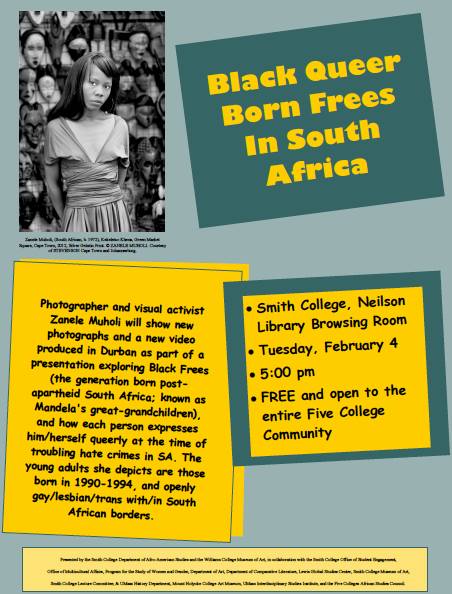
Announcement
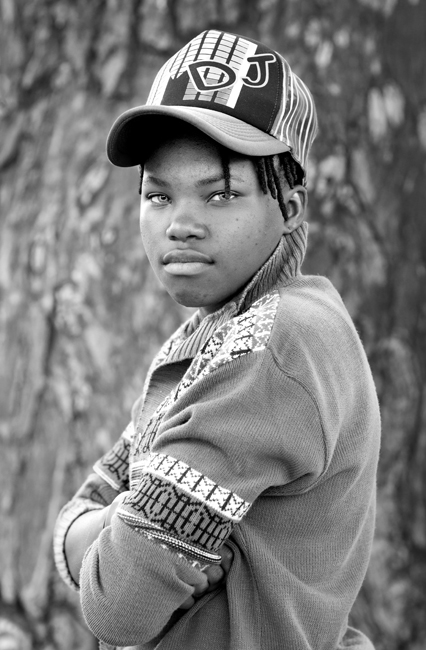
Featuring Kekeletso Khena in Faces & Phases (2006 – present)
What: Academic talk
Where: Williamstown College, Mass. US
Announcement
Featuring Kekeletso Khena in Faces & Phases (2006 – present)
What: Academic talk
Where: Williamstown College, Mass. US
Umbhalo nezithombe
by Londeka Dlamini
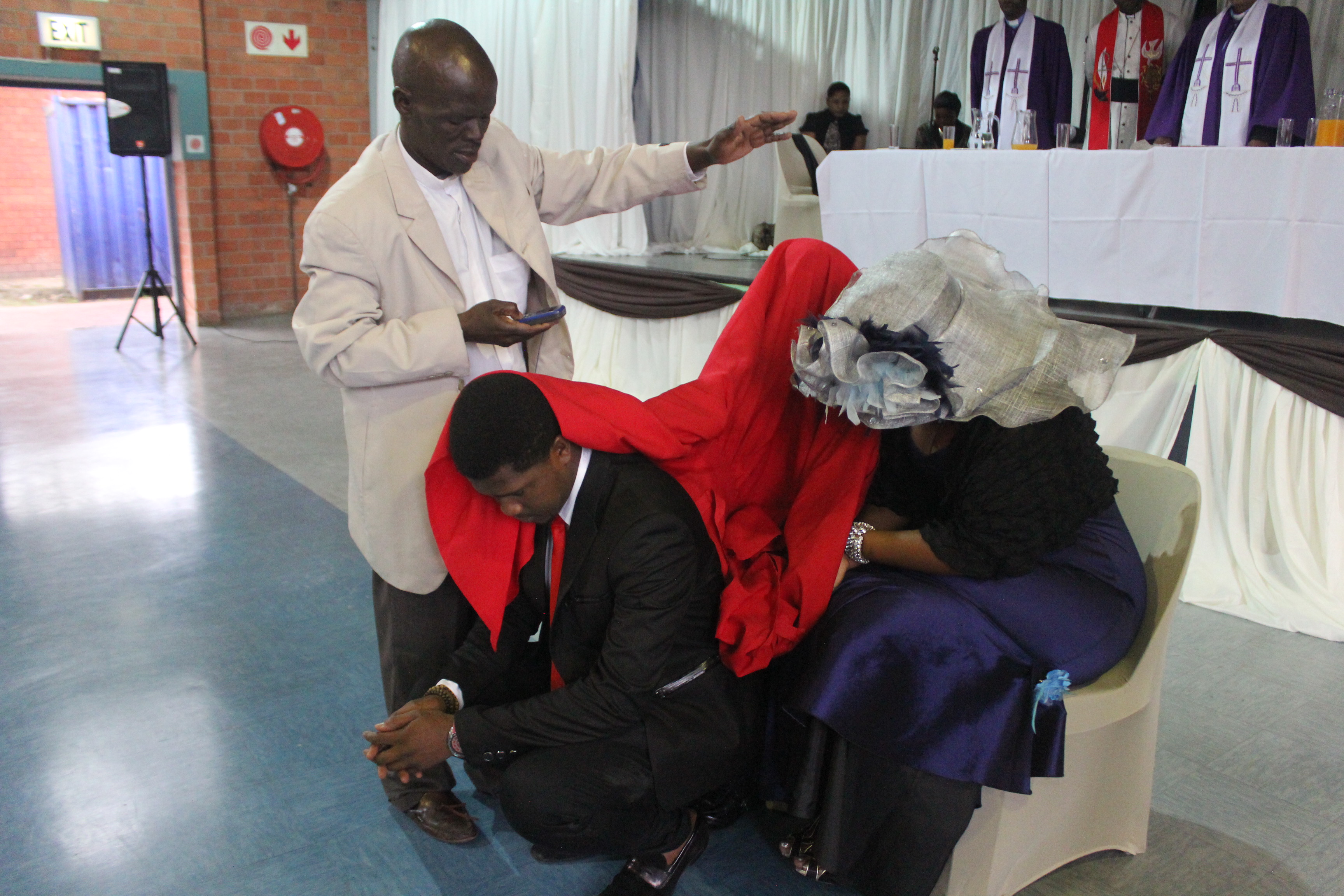
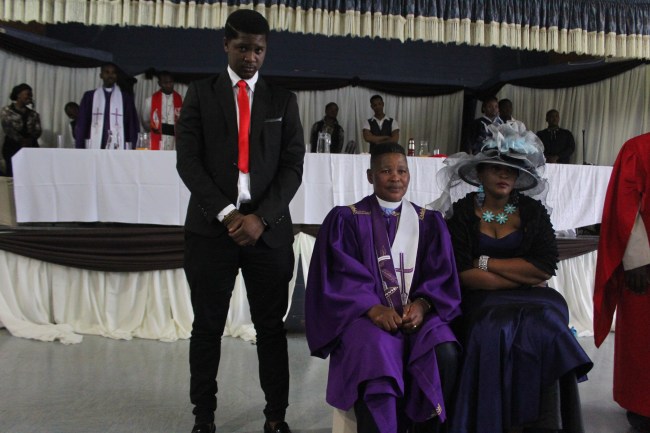
Ibiseqophelweni eliphezulu inkonzo yokugcotshwa kwabefundisi bebandla iVictory Ministries Church International (VMCI) eThekwini ebibanjelwe ehholo lomphakathi eWiggins endaweni yase Mayville, ngoMgqibelo zingumhlaka 1 February 2014.
UBonisile Magwaza kanye no Skhumbuzo Sbisi sebegcotshwe ngokusemthethweni ukuba ngabefundisi, kwazise ibilindelwe ngabovu lenkonzo ebandleni laseVMCI. Ububona nendlela obekuhlelwe kahle ngayo. Ngenyanga edlule umama umfundisi uZungu ekhuluma nebandla, wanxusa abazalwane ukuba baxhase kubanjiswane ukuze into yebandla ibe yinhle esho nokuthi kukhomba ukukhula kabandla uma kwanda abefundisi.
”Kugcotshwa umyeni wami lalingakandi kangaka ibandla ngakho ngifisa lenkonzo ibe sezingeni ukuze nezwe libone ukuthi nebandla eliwuloluhlobo liyakwazi ukwenza into enhle” kubeka umama umfundisi.
Ibihanjelwe abefundisi abaningi lenkonzo phakathi kwabo kukhona nomfundisi uNokuthula Dhladhla wasesifundazweni sase Free State naye oshade nowobulili obufana nobakhe. Kubekhona isikhathi lapho omunye wabefundisi ecele khona ukubeka umfundisi uZungu nomndeni wakhe izandla ngenjongo yokumqinisa emsebenzini awenzayo wokusebenzela uNkulunkulu.
Izolo kuyiSonto siphinde sahambela lona lelibandla iVMCI inkonzo ibemnandi kakhulu. Kusabungazwa ukugcotshwa kwabefundisi, ikomidi eliphezulu ebandleni lidlulisa ukubonga kubazalwane ngokusebenzisana kahle inkonzo yomgcobo yaba impumelelo.
Inkonzo ibiphethwe umfundisi uDhladhla obekade ekhona nasenkonzweni yomgcobo.
Eqala intshumayelo yakhe usilandise kafushane ngaye ukuthi akayena ubaba umfundisi kodwa uyakuthokozela ukubizwa ngomfundisi uDhladhla nje noma uNokuthula, wasukumisa nesthandwa sakhe athe usithanda kakhulu, enxusa nabazalwane bonke ukuba uma uphila impilo yobutabane kubalulekile ukuba uzazi.
Kanti-ke uma ungathanda nawe ukuhlanganyela ne VMCI ungabavakashela eThekwini eDiakonia Centre.
Hhiya-ke, kuze kubengokuzayo!!!
WOZ’ E-DURBAN!!
Previous by Londeka and related articles
2014 Jan.5: Ishaya ngolunye unyawo I-VMCI kulonyaka
2013 Dec. 22: ”Indlela enilingwa ngayo ukuba nibizwe ngezitabane”
and
2013 Dec. 16: “Sibonga uMadiba ngokulwela inkululeko yethu”
and
2013 Sept. 19: Ikhiphe Icwecwe layo lokuqala i Victory Ministries (VMCI)
and
2013 September 1: Bafake umfaniswano omama nobab’ umfundisi
and
2013 June 18: New Brand For House Music Lovers
and
2013 June 16: Zishade libalele izitabane
and
2013 June 15: The Durban Lesbian Wedding of the Year
Marred & dictated to,
by none that created I.
Jailed into faculties that were insisted upon,
way before my existence.
Pathways of Myself,
pre-determined by structures
that had lesser understandings
of the complexities of human.
Born and raised into the basic savagery of pro-creation based sexuality,
eliminating all of the emotional & spiritual intelligence of companionship.
“The man and the wom(b)man must carry on the lineage of humanity”
A questionable sentiment when overpopulation is said to exist,
symbiotically paired with the highest rates of selfishness and greed existent to this day.
Power they say…
What is all powerful about oppression?
I don’t see the oppressor being raped & beaten to death
for compromising humanity.
The notion is that all shall feed into a social classing;
texted into us through race, gender, academics, power & economic politics.
We tread on to further understand the makings of human
& find eurekas of innerstanding to allow us the freedom of being.
Yet we refuse the responsibility of applying this in overstanding to another soul.
As self-defined as we are.
A blatant contradiction,
to which we can do away with not finding alignment for,
because culture says
‘that’s the just the way it is’
We urge our evolution to an understanding that
even though we are still trying to even out the playing fields,
raced does not define who we are,
money does not define the wealth of our lives,
politics does not determine the laws of our existence
& neither does gender determine our sexuality.
Not looking to destroy the cultural aspects that pulverize us daily,
is in fact encouraging the art of questioning the ‘lesser evils’.
When the query should actually be how it is that…
a human being’s decision that affects no aspects of another’s life negatively
can gain so much intolerance;
yet the one that dictates to another’s life & deprives them of their rights to life,
is so highly feared to the point of proven loyalty to evil.
My rapist, chauvinist, womanizing brother,
is still considered to be my brother
— this actually defining his manhood.
My prostituting, forced to lay on her back to feed a child – sister,
due to the unjustified failure of a government to educate her
& the baby daddy who walked out last night…
is said to be a disgrace to womanity
even though her motherhood is picture perfect.
The failure to nurture a collective consciousness,
that is aware of the limping psyche of its existent sectors,
is the reason why we have to ask…
Sister, where is your voice?
Certainly not in the fists of his patriarchal association to you.
Certainly not in the dick of his lacking sexual discipline.
Brothers, where are your voices?
Your consciousness says Sankara’s stand
is that the woman is the heart of the nation…
GIVE HER A CHANCE!
At present, his heart bleeds at his teachings abolished,
his nation drowning in a mental and social poverty;
& as we stand Africa…
The words of Interrupt magazine say that
‘a body of a black ,queer woman is considered as a walking corpse’
Steve Biko wrote what he liked,
it is time we evolved
to do what we like.
Christie FossilSoul
© 2013
Previous by Christie
2013 April 11: Your kiss. Our touch. My Muse.
and
2013 April 10: Another black lesbian activist has fallen
and
This gallery contains 28 photos.
Portfolio #1/2014 A photo album by Nqobile Zungu A BIG THANK YOU! Wednesday the 29th of January 2014 history was made at Wits Arts Museum (WAM) when the queer & trans Art-iculations collaborative art for social change exhibition opened. What … Continue reading
by Bridget Ngcobo
What does it mean to be living in post apartheid South Africa?
Does it mean, as the name of the generation alludes that we are (re)born free?
Are our eyes open to the colors and sounds of this new dawn?
What does our mo(u)rning look like?
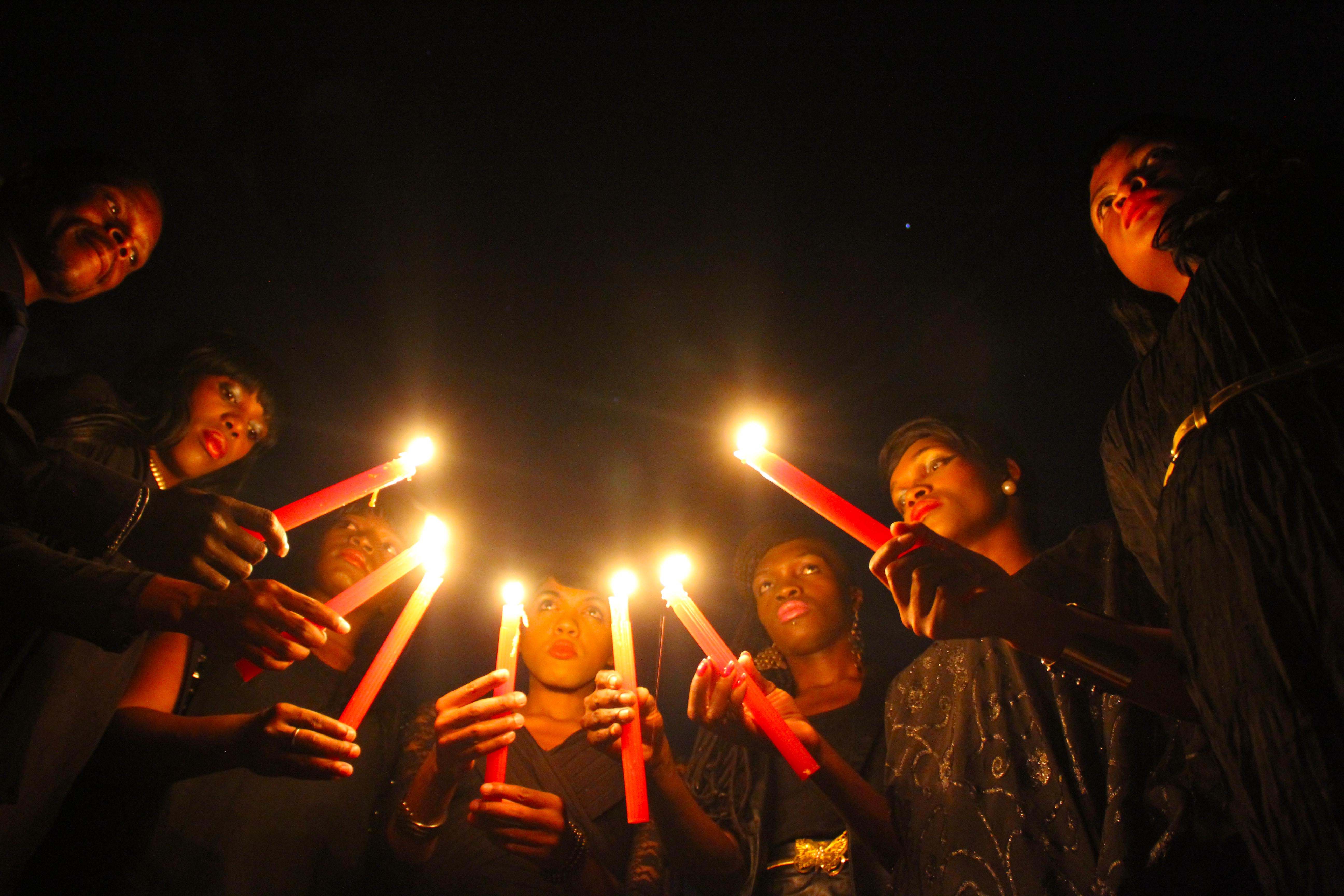
Mo(u)rning photos by Zanele Muholi (2014/01/10)
Knocking on the door of twenty years of democracy we are all gathered today in the name of art and activism. I implore you as you go through this exhibition to not forget why or how you got here.
If we were in Uganda, those of us who are homosexuals would be considered abnormal and in the words of Ugandan president the question would be, “do we kill him/her?
Do we imprison him/her?
Or we do contain him/her?”[i]
Us occupying this space, in this way, baring witness and sharing testament, to violent homophobia might be seen as coercing children towards a homosexual lifestyle. As such, if we were in Nigeria we would be subject to life imprisonment.
Instead we are in South Africa at the dawn of celebrating a constitution that includes every person regardless of sexual orientation, so here we stand in this gallery, in this part of the city knowing that a barrage of policemen cannot knock down the doors and arrest us all but do not be illusioned – we are not all safe and we are not all free.
Today, Duduzile Zozo’s family convened in a courtroom facing the neighbor who murdered and left her half naked body few meters away from her house. Duduzile was 26 years old. She saw the scenes of Mandela’s freedom, our transition to democracy, she heard as the world applauded for the progressive laws of her country including her inalienable right live freely in this country as Black lesbian women.
Yet in June of last year her neighbor decided her sexual orientation meant she should be raped and killed.
Her murderer left her mother asking, “What is it that my daughter did to you, because I don’t understand why an outsider can be affected by her being a lesbian. Was she not good enough to walk in the streets?” [ii]
There is no doubt in my mind that LGBTQ organizations and friends and family united with placards outside the courts for these are now sites of activism. Where South Africans question the state of country and fate of the very generation that we say is born is free.


Some Faces & Phases portraits exhibited
What you see on these walls of Zanele Muholi’s Mo(u)rning exhibition is an activist holding up a mirror reflecting the lived meaning of ‘freedom’ for Black queer South Africans living on the margins.
She brings to the center the aesthetic of the cracks of this 20-year-old democracy that purports to keep swallowing it’s children whole for loving how they whom they want to love and defying gender conformity.
Do not be mistaken however, this exhibit in as much as it commemorates the senseless loss and violent victimization of Black queer South Africans and trans community celebrates the beauty of Black queer aesthetic and the sheer will to live each day from it’s morning to evenings regardless of threat. Muholi paints a vivid image through every story of every piece of South Africans banging at the door of democracy and shouting we are who are and we will be who we will be.
Through her sharp focus on the lives and stories of the art she produces forces us to question the perimeters of space and who occupies it. She brings to the forefront queer South Africans on the margins, reverberating Black voices on white museum walls. This disruption of our notions of space asserts that the lives of Black lesbians cannot be relegated to violence, courts, placards and academia.
Instead Muholi asserts the complexity and visibility of Black queer lives while simultaneously not obscuring the reality of pain and loss. This exhibit thoroughly disrupts our sense of space merging the politics of geography and the politics of existence.
Muholi lives her activism. She knows the names and narratives of individuals featuring in her photography.
She attended some of the funerals you will consume.
She pressed record on the testimonies of survivors that you will hear. She went to the reconstructed scenes of hate crimes and as a Black lesbian woman captured the scenes where woman just like her were tortured and killed. She has said each prayer on the rosaries that hang on the walls, she has been to the courts and seen how hate crimes are devolving into games being played in the courts of this land. She has prayed for the healing of homophobic priests who believe queer South Africans are the ones in need of prayer.
Zanele Muholi is firmly straddling the cracks that threaten to swallow the children of this country whole calling for you to open their eyes to the mo(u)rning, calling to you to imagine a South Africa where freedom does not only exist in theory but in practice.
Who of you can be here today?
How did we get here?
Are we in danger of being killed when get home because of how we are dressed or because of who we kiss good night?
If this answer is no, then remember that you are here for yourself as much as you are here for those who, for the women in the photographs, for the spaces between them representing those who are no longer with us, for their future of those who will be born free in South Africa and also for yours.
Your liberation who ever you may be is tied to the liberation of the queer South Africans you will see today.
In the words of the words of Arudhathi Roy, “once you see it, you can’t unsee it. And once you’ve seen it, keeping quiet, saying nothing, becomes as political an act as speaking out. There’s no innocence. Either way, you’re accountable.”

Edited by Fikile Mazambani
Anele ‘Anza’ Khaba, KwaThema Community Hall, Springs, Johannesburg, 2011
AneIe Khaba is a young black woman, born in Heidelburg on the 30th of May 1992 and was raised in Springs, Kwa-Thema.
She lived with her parents and would spend time at her grandmothers’ as well until 2012 when she moved to be on her own.
She moved to Midrand and then to Bramley where she currently lives alone.
Khaba who has two siblings, a brother and a sister who still reside with her parents, is very close to her family.
She visits her parents and siblings on most weekends.
She says “I capture people’s hearts, eyes and smiles. I’m a very kind, friendly and understanding person.”
She says she is proud of who she is but her sexuality does not define who she is as a person.
Her family knows about her sexual orientation she says. ”I first came out to myself when I was 12 years although it was kind of confusing. My family was understanding and supportive.” Her family has met her girlfriend whom she says she is committed to.
They have been in a committed relationship for close to a year now.
A Desktop Support Engineer at ABSA capital in Sandton, Khaba has a serious side to her when it comes to issues of social justice around lesbians.
“One thing I don’t like is the “corrective rape” term, like how can you rape someone – a crime and violation – and think you are correcting something?”
Homophobic attacks sadden her because she says “we don’t do anything wrong, we are not harming anyone.
We are just living our lives!”
She says she is “enforcing my existence!”
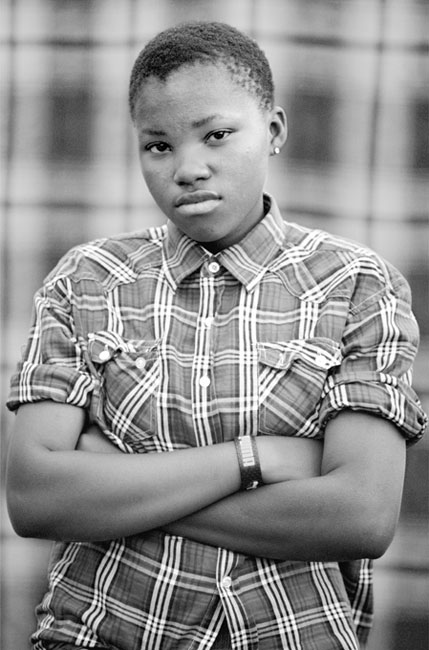
Anele ‘Anza’ Khaba, KwaThema, Springs, Johannesburg, 2010.
Featuring in Faces & Phases by Zanele Muholi
Related articles
2013 Aug. 19: The importance of self acceptance
and
2013 Aug. 22: Am exactly where I’m supposed to be
and
2013 Oct. 12: I just feel she deserves much better
and
2013 March 10: “I love women and they love me”
and
2013 February 28: I am not a Victim but a Victor…

Super polished image of Guccified Gavin…
Profiled by Jeremiah Sepotokele
The day is finally here, having scheduled an interview with the gorgeous and witty Gavin Matseke.
We met at the calm, cool and tranquil outdoors of Glen Austin, in Midrand at a friend’s place. We were going to have a mooi lekker braai, and as I walked towards the venue from the car port I began to get chills like I was in the middle of the North Pole. I learned about Gavin from certain fairies I cannot mention from Gayville Jozi.
He was described as a finicky diva who’s best friends with exclusive parties and le good life.
I just couldn’t wait to get my hands on the dial and book an appointment to find out who is this Sasha Fierce.
Needless to mention that I was late and pink with embarrassment but Gavin was ice-cream cool as he smiled “nice to meet you Jeremiah.”
Without any chaos we swiftly moved outdoors to begin our conversation.
As I sat my cute booty down on the orange soft cube I threw my first question at the man of moment. “Who is Gavin and where does he hail from?” I asked attentively.
He didn’t hesitate for a second to tell me about his humble beginnings with so much energy.
Born, bred and buttered in Alexandra township in Johannesburg. Gavin described himself as a typical Sagittarian who oozes energy and gets bored easily.
He attained his both primary and secondary education in Alexandra and has been focused as long as he could remember.
“I am really quite a motivated individual and I am always involved in various initiatives.”
Gavin maintained assertively that he grew up gay all his entire life as he crossed his legs Elizabethan style.
“I am a boy that loves other boys and I am very comfortable with my sexuality.”
His interesting coming out story made me not to want to miss a single part of it as I drew my recorder closer to his nostrils.
Gavin came out to his mother later in his life after high school.
He has gotten his first apartment in the oh-so lovely leafy suburbs of Melrose.
He was in a relationship with a man for a year and things were really serious.
One sunny day, his mother came for a sweet visit and Gavin was super anxious like a shoplifter awaiting trial.
He was incredibly unsettled and was compelled to tell mommy his pink wrapped secret. “Mom I am gay” revealed Gavin as he received the calmest response from his mother as she claimed to have suspected so.
Gavin says he always knew that he was different from the age of six as he always loved assuming the role of being the mother when was playing house.
He was always in the company of girls and played all the indigenous games like mugusha, which was typically played by girls in the township.
His father passed on when he was twelve and that did not stop him from making something out his life.
“I was never born with a silver spoon but I knew I was going to eat with it” he laughs. Gavin was just as determined to make it in life and knew he had to fend for himself. Education has been an important part of his success as he had schooled himself.
He holds an Education Training and Development Practice (ETDP) which had been obtained in three states in the USA (skhoth so hard)!
“I love studying” he giggled as he shared that he would be graduating in January with a Higher Certificate in Business Management.
The good life has always been in Gavin’s mouth as long as he can remember.
Some of his expensive taste includes the French champagne that costs an arm and a leg. “I just love Moet, I should be appointed as their brand ambassador” he says with a great deal of diva entitlement.
Gavin unapologetically adores “bubbles” as he says it comes with a certain starlight and draws people’s attention in these top Sandton clubs he parties in.
Gucci the luxury brand is also featured in his wardrobe which makes lekker sense why the over-achieved Gavin would have Guccified as his AkA.
I was bothered by the excessive display of opulence in which I took up the opportunity to ask if such had to do with self-esteem.
“Yeah for sure it does” confessed Gavin. However, he says for the longest time in his life it “was about running away from his reality.”
But now he is an affirmed adult that knows better about life.
With the use of hands that fly about during the conversation, the sporadic use of “OMG” it felt like I was catching up with an old friend.
I would have hated myself for not asking about his love life which he was open about. Jonathan is the name of the man that keeps him twirl and twerk.
The two met a party and celebrated their year’s anniversary on the 31st Dec 2013, indeed love is in the air.Gavin was just one lovely soul to speak to and definitely loved his zest for life.
Love him or hate, the world is indeed his oyster!

Gavin’s balanced wheel… snapshot by Penny King
Previous by Jeremiah
by Buli Vimbelela
As the New Year has dawned on us, for many it is a time to reflect. Just like a few weeks ago we got to reflect back on the great life lost in Tata Nelson Mandela. This period brought back a lot of emotions in many of us, sadness, relief and for some uncertainty, but mostly gratitude.
This time got me thinking a lot about where we come from as a country and as a people. Prior to Tata Mandela’s release, it was even more difficult than it is now, to express oneself as an Lesbian Gay Bisexual Transgender Intersex (LGBTI) person/s in South Africa. Through all the reflection, thinking and mourning, I found myself consumed by thoughts of what it means for us to be LGBTI.
For me, being recognized in our constitution, means that we were seen and given a platform. We were given a platform to live freely. Now, one would ask how we can live freely in a society that struggles to accept us. I have found that people are frightened by what they don’t understand and don’t know. The teachings and all the fighting for recognition as the LGBTI community has been done over the years and as we know the persecutions, hate crimes and killings are still happening. Maybe this then calls for a different approach to tackling these issues.
My feeling is that we cannot fight to be recognized while living in hiding. We cannot advance with a spirit of apathy. We have to make ourselves visible in the communities we live in. So, ours is not only to carry flags and posters bearing slogans of whatever issues we are faced with or we are marching for, at the time.
In my view, our role is to be ‘active’ in the way we live our lives. It should be our responsibility to show people that we are no different from others, that we only differ on our sexual orientation/ preferences and that we are more than just our sexual orientation.
People need to know that we get faced with the same struggles that people in heterosexual relationships are faced with.
My partner and I are currently staying within a community where we both grew up. This community is dominated by an older generation and these are the people who struggle with change of all sorts.
Homosexuality being one of them.
With all that said, I am amazed by the welcome and embrace we’ve received from them, as a lesbian couple.
The thought of it used to scare me so much that I felt I needed to hide our relationship. Social norms weighed heavily on me as I was perceived as this noble, good independent single mom. Naturally, some people struggled to understand how this could be. They could not fathom why or how I could be in a relationship with another woman. As intimidating as this was, remained strong in our resolve to be together!
We chose to live our lives in the best way we knew how. It’s true what they say that ‘you teach people how to treat you’ by the way you live your life.
A friend of mine, Thandeka, grew up amongst gays and lesbians in her family, yet she didn’t understand their way of living.
We started hanging out with her, with our other circle of friends within the LGBTI community. She started warming up and realizing that there was actually nothing wrong or strange with being a lesbian or gay.
I remember how she would exclaim ‘Hawu kanti abantu laba, heyi kodwa ziyaphila izitabane’ – lol
[roughly translated: she didn’t realize that homosexuls are normal people and that she’s impressed with the lives they lead].
She has since developed a different perspective about homosexual people.
So my point here is, let’s live our lives with the aim of helping people understand us.
Let’s not only be activists when there is a protest or funeral of one of our own.
And to lesbian mothers, let us love our children; involve them to also help them have a better understanding about us.
(LOOK OUT FOR MY NEXT ARTICLE ON THIS TOPIC).
2013 Nov. 19: Love is a beautiful thing
 | lindiwedhlamini on Let’s go back to the drawing b… |
 | inkanyiso2009 on 6th January 2013: Victory Mini… |
 | Nondlela mjomle on 6th January 2013: Victory Mini… |
 | Elton on 2013 Aug. 27: Because I a… |
 | Nomthandazo Ngwenya on LGBTI Destiny First Gathe… |
 inkanyiso.org